Tag

Seti Institute

All articles tagged with #seti institute

science2 months ago

Comet 3I/ATLAS Approaches Perihelion

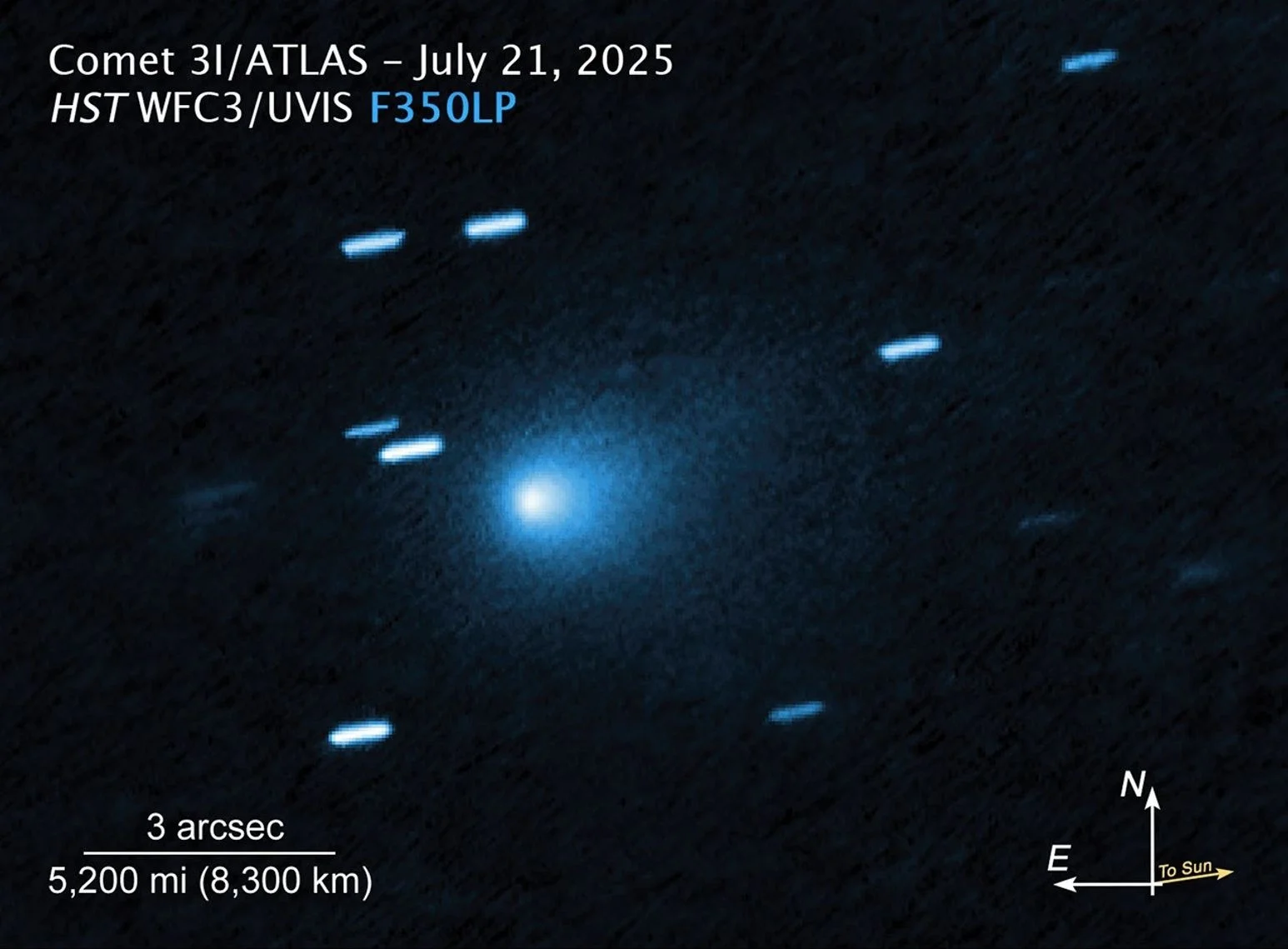
Comet 3I/ATLAS, the third known interstellar object to enter our Solar System, reached perihelion on October 30, 2025. Observations revealed its active sublimation of CO₂ with minimal water vapor, unusual metal ratios, and non-gravitational forces affecting its trajectory. The data from this brief visit enhances understanding of interstellar bodies and prepares for future interstellar missions.

science7 months ago

Humpback Whales Use Bubble Rings to Communicate with Humans

Scientists have observed humpback whales creating bubble rings during friendly encounters with humans, which appear to be attempts at communication. These behaviors, along with previous studies on whale calls and tool use, suggest complex social interactions and potential messaging efforts, drawing parallels to interstellar signal analysis. The research aims to better understand animal communication and develop methods to interpret non-verbal signals, with implications for both terrestrial and extraterrestrial life detection.

science-and-astronomy1 year ago

"SETI Chief: US Lacks Evidence for Alien Technology"

The president and CEO of the SETI Institute, Bill Diamond, stated that there is no evidence of alien technology in our skies and dismissed claims of UFO sightings as lacking compelling evidence. He emphasized the vast distances of interstellar space and the statistical probability of life beyond Earth, but questioned the likelihood of advanced alien civilizations visiting Earth. Diamond also highlighted the absence of government funding for studying UFOs as evidence against the idea of extraterrestrial visitors, and emphasized the need for scientific rigor in evaluating such claims.

astronomy1 year ago

Experts Identify Origin of Mysterious Fireballs Streaking Across Southern California Sky

Mysterious fireballs streaking across the Los Angeles sky were initially speculated to be connected to a SpaceX rocket launch, but experts at the SETI Institute later identified them as the remains of the Chinese Shenzhou 15 orbital module, which re-entered the Earth's atmosphere on Tuesday morning after launching into space in November 2022.

space1 year ago

"Massive Volcanic Discovery: Unveiling Mars' Hidden Giant"

Scientists have discovered a massive volcano, named Noctis, on Mars that spans 280 miles wide and nearly 30,000 feet high near the red planet's equator. The volcano, which was hidden in plain sight for decades, is believed to have been active from ancient through recent times and is accompanied by a buried ice glacier. This discovery presents an exciting new area for potential life search and future exploration, according to a study by the SETI Institute and the Mars Institute based at NASA Ames Research Centre.

astronomy1 year ago

"Scientists Uncover Massive Hidden Volcano on Mars"

A giant volcano, provisionally named "Noctis volcano," has been discovered on Mars near the planet's equator, with possible remnants of glacier ice near its base. The volcano, spanning 450 kilometers in width, has been active from ancient through recent times and presents an exciting new location for studying Mars' geologic evolution, searching for life, and planning future robotic and human exploration. The discovery was announced at the 55th Lunar and Planetary Science Conference and was made possible through the analysis of data from various Mars missions.

science-and-technology1 year ago

"AI's Role in the Search for Extraterrestrial Life"

The Search for Extraterrestrial Intelligence (Seti) is utilizing artificial intelligence (AI) to process massive datasets and identify anomalies in the hunt for alien intelligence. AI is being used to search for new types of radio signals from alien sources and to distinguish between possible real signals from aliens and interference. Additionally, AI is being employed to analyze rock samples from Mars and Earth for signs of present or past life, with promising results. As more data is collected and analyzed, the chances of detecting alien life, if it exists, are increasing.

science-and-technology1 year ago

"SETI Institute's Innovative Ellipsoid Technique for Alien Signal Detection"

Researchers from the SETI Institute, Berkeley SETI Research Center, and the University of Washington have developed the SETI Ellipsoid technique, which uses observations from the TESS mission to identify potential signals from advanced civilizations in the cosmos. This method leverages continuous, wide-field sky surveys to enhance the detection of potential signals and compensates for uncertainties in the estimated time-of-arrival of such signals. The study identified 32 prime targets within the SETI Ellipsoid in the southern TESS continuous viewing zone, demonstrating the feasibility of cross-matching distance measurements with time-domain surveys like TESS to enhance monitoring and anomaly detection capabilities in SETI research.

astronomy1 year ago

Rare Aubrite Meteorite Fragments Explode Over Berlin

Fragments of a meteorite that exploded over Berlin have been identified as a rare type of asteroid known as "aubrites," which contain mainly magnesium silicates enstatite and forsterite. The asteroid, 2024 BX1, was first spotted by a Hungarian astronomer and was tracked by NASA's Scout mission and the ESA's Meerkat Asteroid Guard impact hazard assessment systems. The recovery of the meteorite fragments was led by a team of scientists from various institutions, and the fragments were found in fields just south of the village of Ribbeck, about 50 km west of Berlin. The fragments were analyzed and found to be consistent with an achondrite meteor of the aubrite type, with only material from eleven other observed falls of this type in meteorite collections worldwide.

science-and-astronomy1 year ago

Rare Meteorite Fragments Recovered from Asteroid Impact Over Berlin

Fragments of the meter-sized asteroid 2024 BX1, which exploded over Berlin, have been recovered by a team of scientists and identified as a rare type of asteroid known as "aubrites." These fragments were found in fields near the village of Ribbeck, about 50 km west of Berlin, and were challenging to locate due to their unique appearance. The asteroid was first spotted by a Hungarian astronomer and its trajectory was tracked by NASA's Scout mission and the ESA's Meerkat Asteroid Guard. Initial analyses of the fragments revealed that they are consistent with an achondrite meteor of the aubrite type, marking a significant find as there is limited material from this type in meteorite collections worldwide.

science2 years ago

"Landmark Discovery: Humans Communicate with Humpback Whales"

Researchers from the SETI Institute report what may be the first conversation between humans and humpback whales, using recorded whale noises to initiate communication with a humpback named Twain off the coast of Alaska. The goal is to develop filters for potential extraterrestrial signals by studying non-human communication systems, and the team will now study the non-audio communicative behavior of humpback whales. This approach offers a more powerful tool for examining animal communication and may hold promise for the future of biology.

astronomy2 years ago

Unraveling the Enigma of Mysterious Deep Space Signals

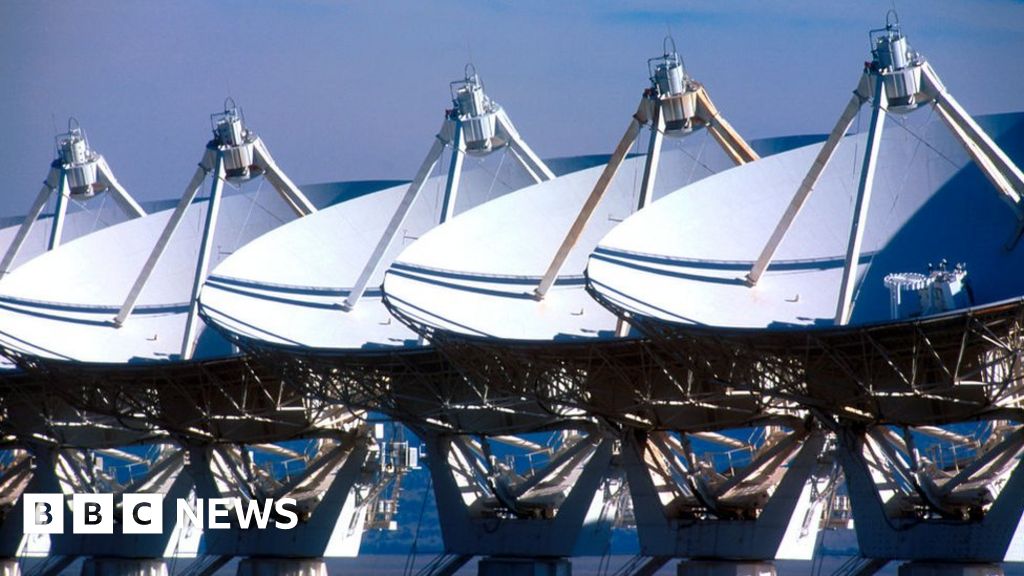
Researchers at the SETI Institute have observed 35 bursts from FRB 20220912A using the Allen Telescope Array, providing new insights into the nature of Fast Radio Bursts (FRBs). The observations revealed intriguing behaviors, including downward frequency drifting, changes in burst duration over time, and a noticeable drop in the center frequency of bursts. The study suggests that extreme cosmic objects like magnetars may be the source of FRBs, but existing models cannot explain all observed properties. The research highlights the important role of telescopes like the ATA in decoding the mysteries of FRBs and advancing our understanding of these cosmic signals.

astronomy2 years ago

Unraveling the Enigma: New Discoveries in Mysterious Space Signals

Astronomers have detected a never-before-seen radio signal known as a Fast Radio Burst (FRB) originating from beyond the Milky Way. The signal, observed over a two-month period, exhibited a unique change in pitch resembling a cosmic slide-whistle. The discovery provides insights into the mystery of deep space and the nature of FRBs, which are believed to be caused by extreme objects such as magnetars or colliding neutron stars. This research contributes to the ongoing quest to unravel the secrets of FRBs, which release an immense amount of energy in a fraction of a second.

science-and-technology2 years ago

"Whale-SETI: Scientists Achieve Groundbreaking Communication with Humpback Whales, Paving the Way for Alien Contact"

Scientists from the SETI Institute have reported what may be the first conversation between humans and humpback whales in the whales' own language. The conversation took place off the coast of Alaska, where a humpback whale named Twain approached and circled the researchers' boat, responding in a conversational style to a recorded humpback 'contact' call played into the sea. This research aims to explore interspecies communication and develop filters to apply to potential extraterrestrial signals. The findings were published in the science journal PeerJ.

astronomy2 years ago

Cracking the Code: New Discoveries in Fast Radio Bursts Shed Light on Mysterious Space Signals

Scientists at the SETI Institute have made significant progress in understanding Fast Radio Bursts (FRBs) through the detailed observation of a repeating FRB. The study, conducted using the Allen Telescope Array (ATA), detected 35 FRBs from the repeater FRB 20220912A, revealing intriguing patterns and behaviors. The observations suggest a connection between FRBs and extreme objects like magnetars, but existing models cannot explain all observed properties. The study also identified a noticeable drop in the center frequency of bursts over time, indicating an unexpected cosmic slide-whistle. The ATA's unique capabilities and ongoing upgrades play a crucial role in decoding the mysteries of FRBs and advancing our understanding of these captivating cosmic signals.