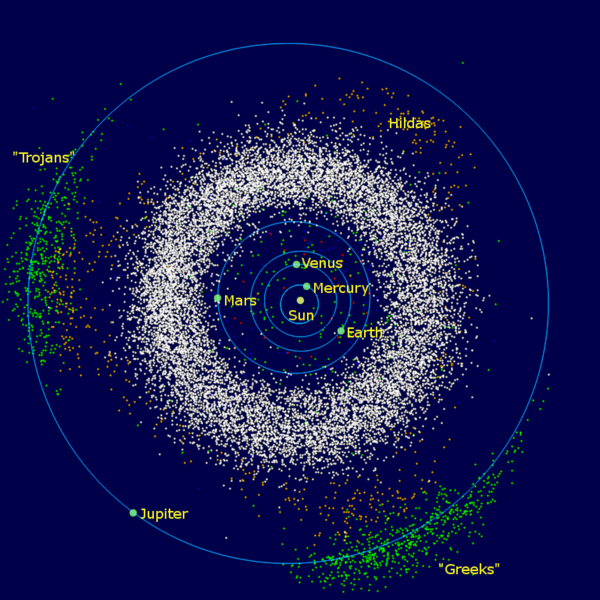
The article explores why the interstellar object 3I/ATLAS has an orbital inclination of about 5 degrees relative to the ecliptic plane, considering the unlikely coincidences and possible extraterrestrial origins, and discusses the implications of its trajectory and the potential for advanced alien observation technologies.
Research suggests that plate tectonics and balanced atmospheric CO2 are crucial for long-term habitability and the emergence of technological civilizations, making such planets extremely rare in the galaxy. The study estimates that for multiple civilizations to coexist, they would need to last tens of millions of years, and the closest ETI could be about 33,000 light-years away, highlighting the challenges in detecting extraterrestrial intelligence.
NASA has dismissed claims by Harvard's Avi Loeb that the interstellar comet 3I/Atlas might be an alien-made artifact, emphasizing that the object behaves like a natural comet and poses no threat to Earth, despite Loeb's speculative hypotheses about its origin and potential implications for humanity.
The president and CEO of the SETI Institute, Bill Diamond, stated that there is no evidence of alien technology in our skies and dismissed claims of UFO sightings as lacking compelling evidence. He emphasized the vast distances of interstellar space and the statistical probability of life beyond Earth, but questioned the likelihood of advanced alien civilizations visiting Earth. Diamond also highlighted the absence of government funding for studying UFOs as evidence against the idea of extraterrestrial visitors, and emphasized the need for scientific rigor in evaluating such claims.
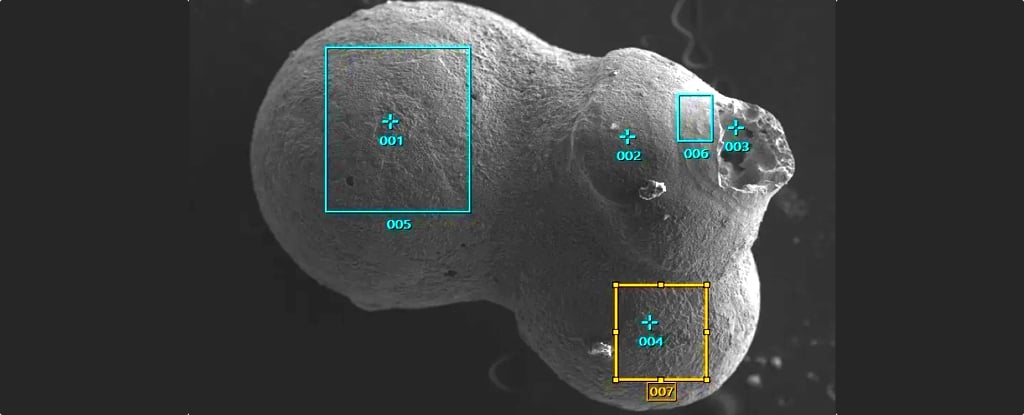
Seismic monitoring data used to track a purported interstellar meteor's path into the sea off the coast of Papua New Guinea may actually show a passing truck rumbling down a nearby road, casting doubt on the claim. The team of scientists who found tiny spherules on the seafloor, speculated to contain evidence of alien technology, may have used the wrong signal and looked in the wrong place. Furthermore, the velocity of the meteor was likely overestimated, and evidence for an interstellar origin was probably incorrect. The findings will be presented at the Lunar and Planetary Science Conference 2024.
A new article in the Journal of the British Interplanetary Society explores the possibility of intelligent civilizations being trapped on their home worlds, particularly on ocean worlds or super-Earths with high escape velocities. Elio Quiroga introduces the concept of the exoplanet escape factor (Fex) and fishbowl worlds, which could inhibit space travel and communication for potential extraterrestrial civilizations. These factors add complexity to the Drake equation and raise questions about the potential existence of civilizations that may never know the universe beyond their own worlds.
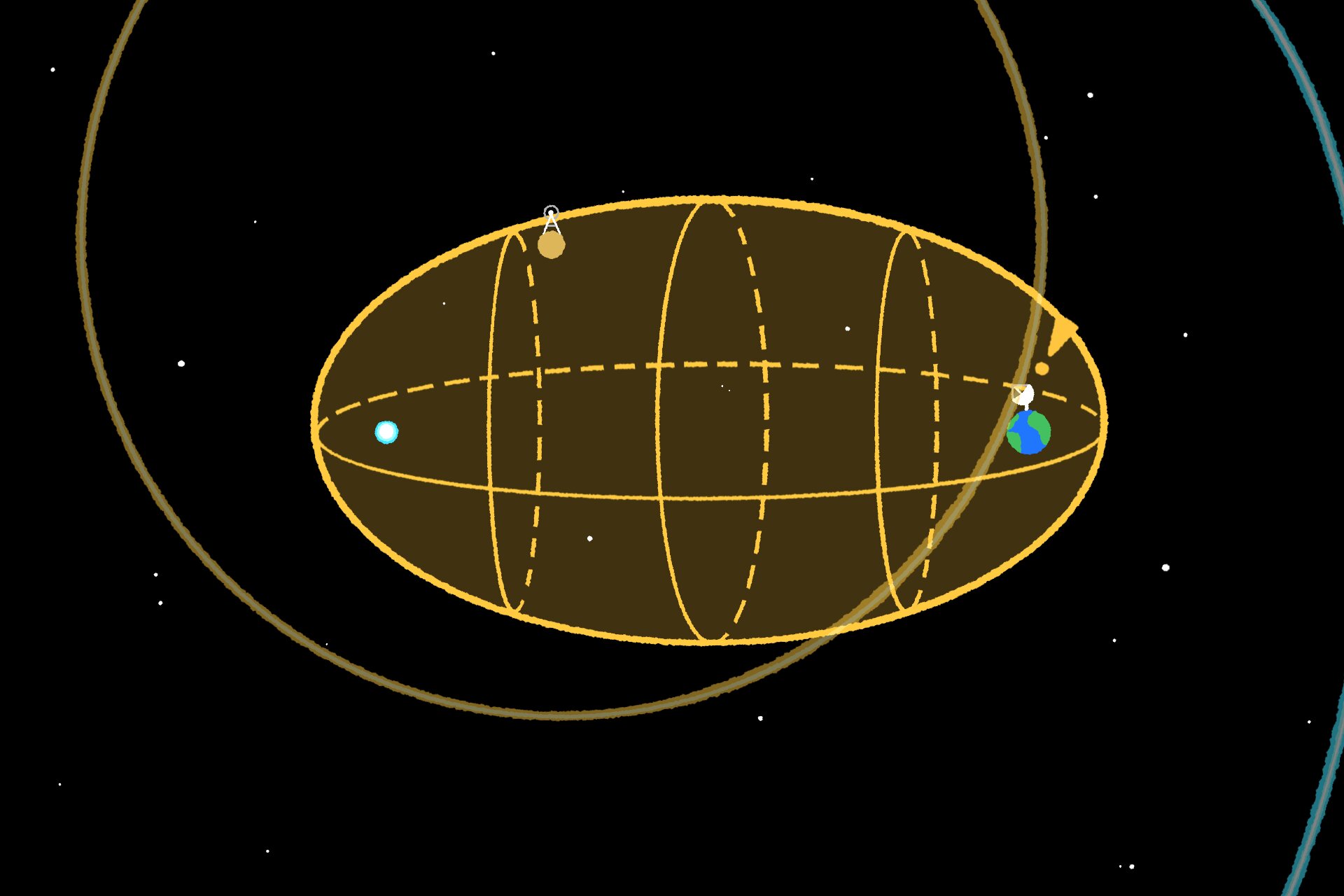
Researchers from the SETI Institute, Berkeley SETI Research Center, and the University of Washington have developed the SETI Ellipsoid technique, which uses observations from the TESS mission to identify potential signals from advanced civilizations in the cosmos. This method leverages continuous, wide-field sky surveys to enhance the detection of potential signals and compensates for uncertainties in the estimated time-of-arrival of such signals. The study identified 32 prime targets within the SETI Ellipsoid in the southern TESS continuous viewing zone, demonstrating the feasibility of cross-matching distance measurements with time-domain surveys like TESS to enhance monitoring and anomaly detection capabilities in SETI research.
Researchers from the SETI Institute report what may be the first conversation between humans and humpback whales, using recorded whale noises to initiate communication with a humpback named Twain off the coast of Alaska. The goal is to develop filters for potential extraterrestrial signals by studying non-human communication systems, and the team will now study the non-audio communicative behavior of humpback whales. This approach offers a more powerful tool for examining animal communication and may hold promise for the future of biology.
A team including a UC Davis professor and a scientist from SETI has had a 20-minute "conversation" with a humpback whale in the wild, leading to breakthroughs in understanding non-human intelligence communication. The study suggests that studying humpback whales can help develop "intelligence filters" for the search for extraterrestrial intelligence. The researchers observed turn-taking and matching of rhythm during the exchange, indicating cohesion and bonding. The team also plans to study humpback whale communication through bubble rings. This research challenges the assumption that narrow-band radio signals are the only way to make contact with extraterrestrial intelligence.
Scientists from UC Davis, the Alaska Whale Foundation, and SETI have conducted a groundbreaking experiment in which they communicated with a humpback whale named Twain using a "contact call" similar to a human greeting. Twain responded to the call each time, even matching the intervals, suggesting intentional exchange. This study has implications for understanding how intelligent alien races may seek contact with humanity. The researchers are working on creating intelligent filters to aid in the search for extraterrestrial intelligence and hope to carry out similar work with other intelligent animals on Earth.
Scientists from the SETI Institute have reported what may be the first conversation between humans and humpback whales in the whales' own language. The conversation took place off the coast of Alaska, where a humpback whale named Twain approached and circled the researchers' boat, responding in a conversational style to a recorded humpback 'contact' call played into the sea. This research aims to explore interspecies communication and develop filters to apply to potential extraterrestrial signals. The findings were published in the science journal PeerJ.
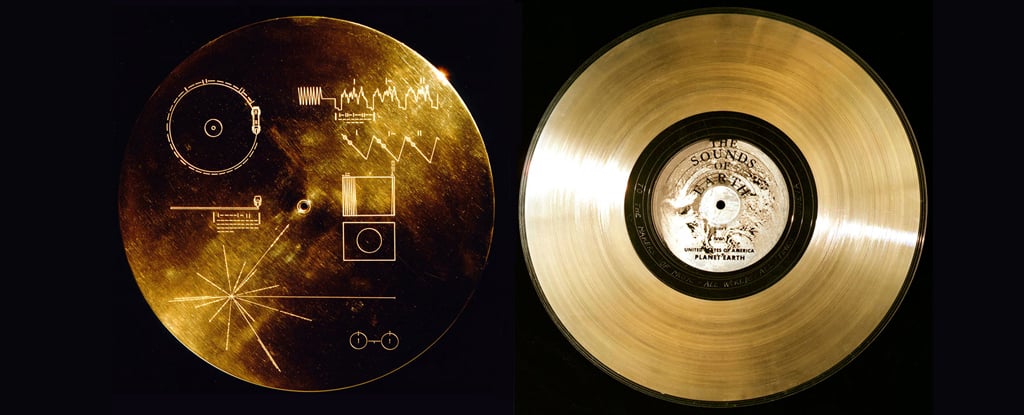
Researchers are considering creating new editions of Voyager's Golden Records, which were launched into space in 1977 as a message to potential intelligent life. The Golden Records contain sounds and images that represent life on Earth, and the researchers propose updating the content to reflect current technology and times. They suggest including a scroll with simple images for less advanced recipients and a small minicomputer for more advanced recipients. The goal is to share humanity's collective knowledge, emotions, innovations, and aspirations in a way that provides a universal understanding of human society and our hopes for the future. The researchers also emphasize the importance of considering the recipient's perspective and including a timestamp to indicate when the message was launched. The new Golden Records would serve as a time capsule and a testament to humanity's journey and aspirations.
Garrett Graff, author of the book "UFO: The Inside Story of the US Government's Search for Alien Life Here―and Out There," discusses the history of UFO investigations by the US government and the recent shift in the conversation from fringe to mainstream. Graff highlights the advancements in science and astronomy, including the discovery of potentially habitable planets, which suggest that the existence of intelligent life beyond Earth is probable. However, he also acknowledges that the vast distances in the universe make it unlikely for us to ever make contact with extraterrestrial beings.
Astronomers have discovered a new type of fast radio bursts (FRBs) called "ultra-fast radio bursts" that last for a mind-boggling ten millionths of a second or less, which is significantly shorter than the previously known thousandths of a second. The study used data from the Breakthrough Listen project and identified eight ultra-fast radio bursts lasting ten millionths of a second or less. These findings suggest that FRBs occur more frequently and with greater diversity than initially thought, and could provide insights into the interactions between galaxies and the surrounding environment. However, the challenge lies in finding data files with sufficient time resolution for further analysis.
Scientists at the Breakthrough Listen project have developed a new technique to vet possible radio signals from extraterrestrial civilizations. The technique checks for evidence that the signal has passed through interstellar space, eliminating the possibility of it being radio interference from Earth. By analyzing the scintillation of narrowband signals caused by the interstellar medium, researchers can differentiate between signals originating from distant sources and those produced locally. This advancement in the search for extraterrestrial intelligence will significantly increase confidence in future detections of alien life.