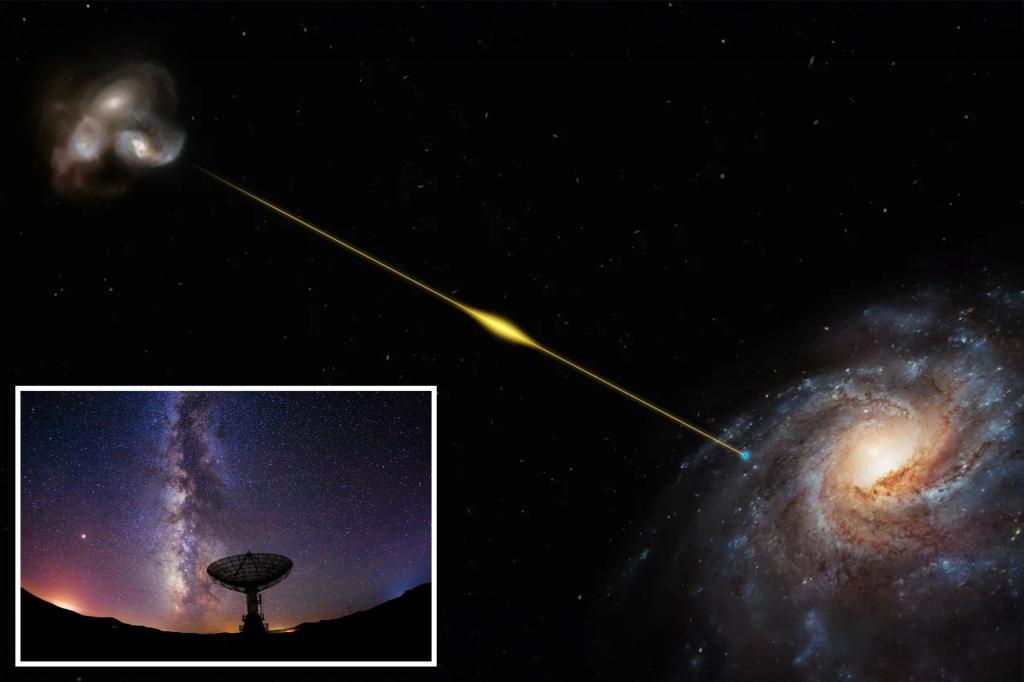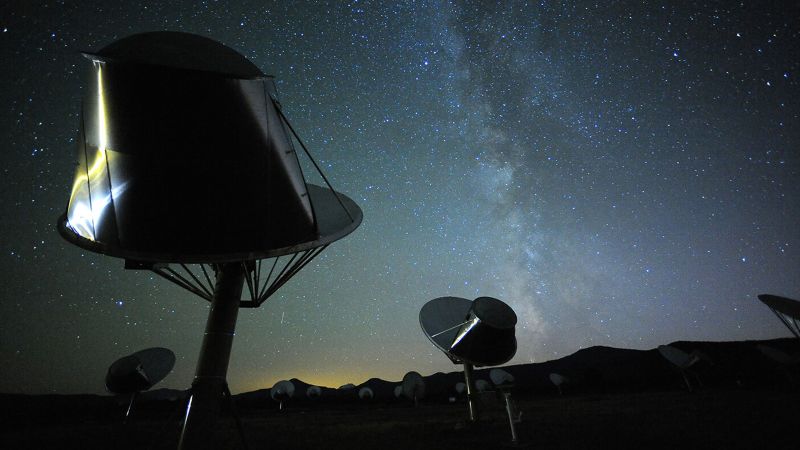
Researchers at the SETI Institute have observed 35 bursts from FRB 20220912A using the Allen Telescope Array, providing new insights into the nature of Fast Radio Bursts (FRBs). The observations revealed intriguing behaviors, including downward frequency drifting, changes in burst duration over time, and a noticeable drop in the center frequency of bursts. The study suggests that extreme cosmic objects like magnetars may be the source of FRBs, but existing models cannot explain all observed properties. The research highlights the important role of telescopes like the ATA in decoding the mysteries of FRBs and advancing our understanding of these cosmic signals.
Scientists have detected a "never-before-seen" burst of fast radio bursts (FRBs) using the SETI Institute's Allen Telescope Array. Unlike previous FRBs, this burst dropped in the center frequency of the bursts, and no regular timing was detected. The findings provide confirmation of known FRB properties and the discovery of new ones, helping scientists narrow down the source of FRBs, possibly extreme objects like magnetars. However, no existing model can explain all the observed properties of FRBs, highlighting the mystery surrounding these celestial phenomena.
Astronomers have made significant progress in understanding Fast Radio Bursts (FRBs), mysterious and powerful flashes of intergalactic light. In a recent study, researchers observed repeating FRB 20220912A and discovered a drop in the center frequency of the bursts, resembling a celestial slide whistle. However, the bursts did not exhibit a specific pattern, highlighting their unpredictability. Scientists are narrowing down potential sources, such as magnetars, but no existing model can explain all observed properties. Despite the breakthrough, the secret behind these interstellar radio waves remains elusive.
Astronomers have discovered a new quirk in a repeating fast radio burst (FRB) called FRB 20220912A. The burst, detected using the Allen Telescope Array, exhibited a noticeable drop in the center frequency, resembling a celestial slide whistle. The researchers were unable to find a pattern in the timings between each burst, suggesting that FRBs can be unpredictable. The study provides valuable clues to understanding the source of FRBs, which may originate from extreme objects such as magnetars, but existing models cannot explain all observed properties. The findings highlight the importance of new telescopes like the ATA in unraveling the mysteries of FRBs.
Scientists at the SETI Institute have made significant progress in understanding Fast Radio Bursts (FRBs) through the detailed observation of a repeating FRB. The study, conducted using the Allen Telescope Array (ATA), detected 35 FRBs from the repeater FRB 20220912A, revealing intriguing patterns and behaviors. The observations suggest a connection between FRBs and extreme objects like magnetars, but existing models cannot explain all observed properties. The study also identified a noticeable drop in the center frequency of bursts over time, indicating an unexpected cosmic slide-whistle. The ATA's unique capabilities and ongoing upgrades play a crucial role in decoding the mysteries of FRBs and advancing our understanding of these captivating cosmic signals.