Tag

Satellite Constellations

All articles tagged with #satellite constellations

science-and-technology1 year ago

Concerns Mount Over Starlink's Impact on Space and Earth

Elon Musk's Starlink satellites, while providing valuable internet services globally, are causing significant interference with astronomical observations, particularly in radio astronomy. Scientists express concerns that the increasing number of satellites, which could reach 100,000 by 2030, are obstructing views of the universe and complicating the detection of faint signals from distant celestial objects. Efforts are underway to mitigate these impacts, including collaboration between SpaceX and scientific organizations to develop solutions like shielding and signal avoidance techniques.

science-and-technology1 year ago

"Rising Space Junk Threat Sparks Global Alarm"

A Saskatchewan farmer discovered debris on his farm that likely came from a SpaceX Crew Dragon trunk, highlighting the growing issue of space junk. Astronomer Samantha Lawler confirmed the debris' origin and expressed concerns about the environmental impact of increasing satellite launches and reentries, which contribute to atmospheric pollution and light pollution. The incident underscores the need for better regulation and accountability in space activities.

space1 year ago

"China's Ambitious 2024 Space Agenda: 100 Launches and Moon Mission"

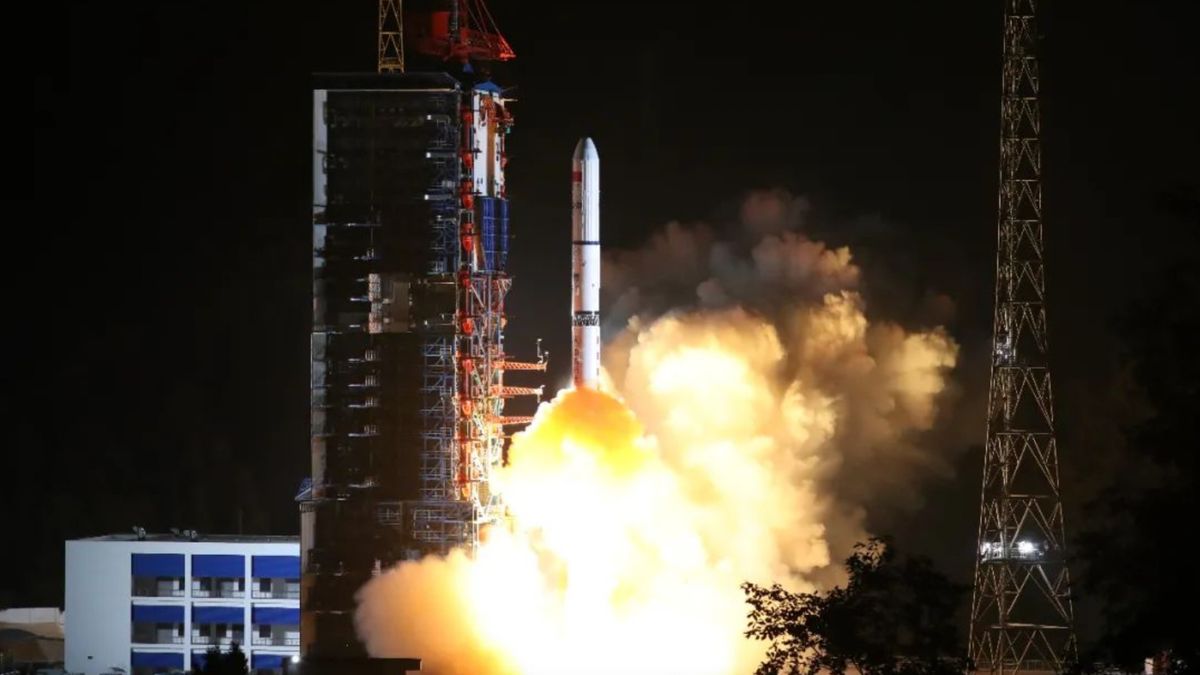
China plans to debut new Long March rockets in 2024, including the Long March 6C, Long March 12, and a modified version of the Long March 8, to enhance its options for space launches. These rockets will offer increased capacity for high-frequency launch missions and the ability to carry larger payloads to low Earth orbit or sun-synchronous orbit. Additionally, China is developing super heavy-lift rockets for large space infrastructure and crewed moon missions, with a goal of launching around 100 missions this year, including an ambitious lunar far side sample return mission.

space-science1 year ago

"Risks of Satellite Megaconstellations on Earth's Environment"

The increasing number of rocket stages and satellites burning up in the Earth's atmosphere is leaving behind metal aerosols that could potentially affect the Earth's magnetic field. Research suggests that these aerosols, originating from space objects, may increase the Debye length of the ionosphere, but the exact effects are still unknown. With the growing number of objects being launched into space, including satellite constellations like Starlink, the potential impact on the stratosphere and ionosphere warrants further research to understand and mitigate any potential consequences.

space-technology2 years ago

"Pentagon's $2.5 Billion Contracts for Missile-Tracking Satellites Awarded to L3Harris, Lockheed, and Sierra Space"

The Space Development Agency has awarded contracts worth $2.5 billion to L3Harris, Lockheed Martin, and Sierra Space to build and operate 54 satellites equipped with infrared sensors for tracking hypersonic missiles in low orbit. The satellites are part of the Tranche 2 Tracking Layer and are projected to launch in 2027. The contracts include incentives for on-time delivery, and the procurement is contingent on Congress passing a 2024 defense budget.

technology2 years ago

Amazon's Project Kuiper: A New Frontier in Satellite Technology

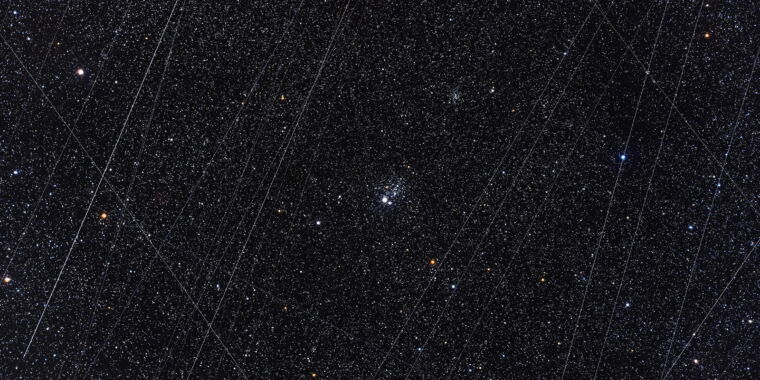
Amazon is preparing to launch two satellite prototypes for its Project Kuiper network, which aims to have over 3,200 satellites in orbit. This rapid growth of satellite constellations, including SpaceX's Starlink, has raised concerns among astronomers and fans of the night sky. Satellites can interfere with astronomical observations, streak across images, and create light pollution. Studies have shown that even darkened satellites are still twice as bright as the limit recommended by astronomers. A conference organized by the International Astronomical Union's Centre for the Protection of the Dark and Quiet Sky from Satellite Constellation Interference is addressing these concerns and seeking solutions to mitigate the impact on space science.

technology2 years ago

"Astronomers' Light-Pollution Woes Intensify with Amazon's Project Kuiper Satellites"

Amazon is preparing to launch two satellite prototypes for its Project Kuiper network, which aims to have over 3,200 satellites in orbit. This rapid growth of satellite constellations, including SpaceX's Starlink, has raised concerns among astronomers and fans of the night sky. Satellites can interfere with astronomical observations, streak across images, and create light pollution. Studies have shown that even darkened satellites are still twice as bright as the limit recommended by astronomers. A conference organized by the International Astronomical Union's Centre for the Protection of the Dark and Quiet Sky from Satellite Constellation Interference is addressing these concerns and seeking solutions to mitigate the impact on space science.

science-and-technology2 years ago

"Concerns Rise as Enormous Satellite Outshines Stars in Night Sky"

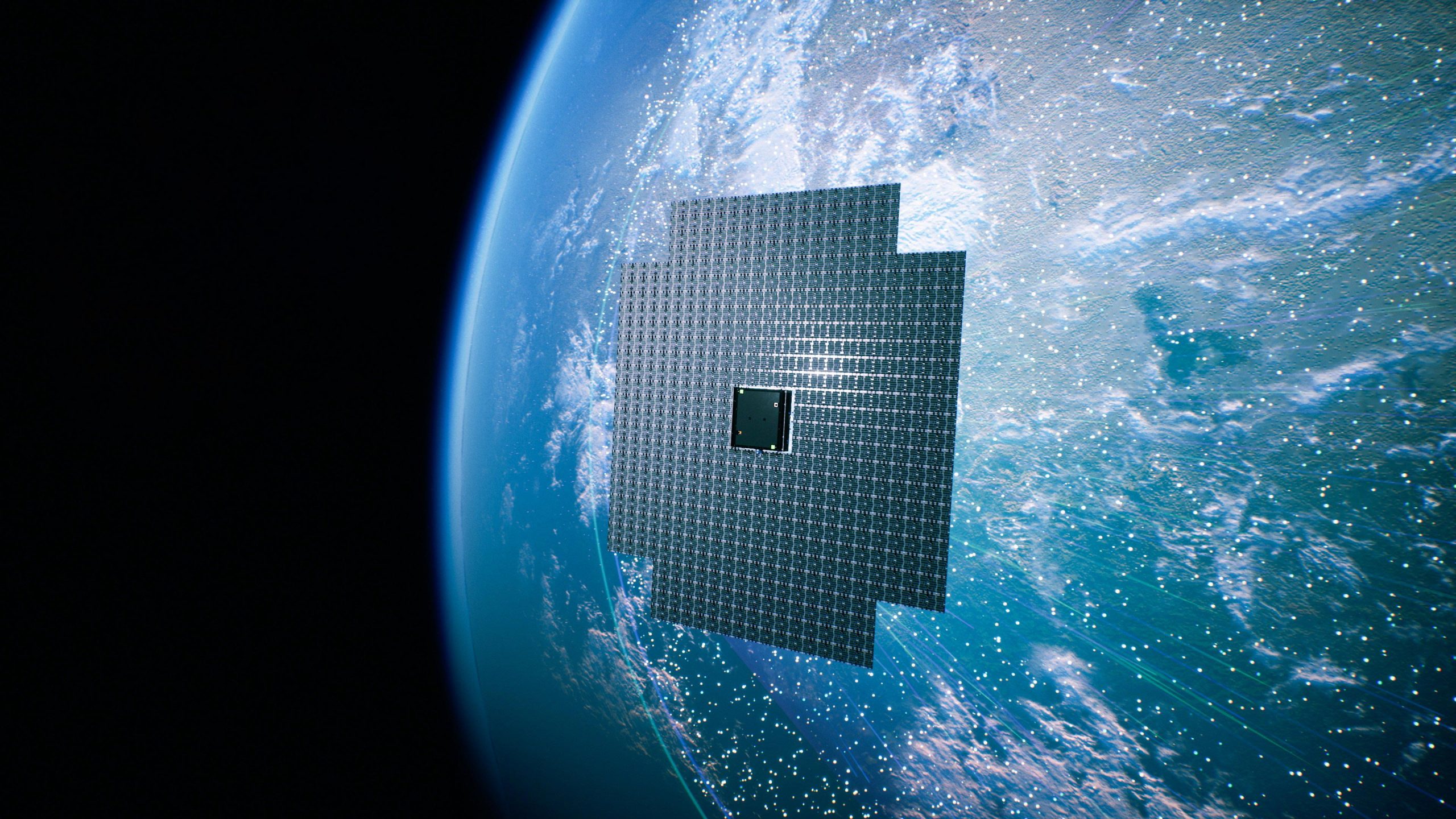
The prototype satellite BlueWalker 3, part of a planned constellation for global mobile communications, has raised concerns among astronomers due to its brightness, outshining all but the brightest stars in the night sky. The satellite's potential to disrupt astronomical observations and radio astronomy has prompted an international team of scientists to assess its impact. The data collected show an abrupt increase in brightness coinciding with the unfolding of the satellite's antenna array. The interference with radio astronomy is also a concern, as BlueWalker 3 transmits at frequencies close to those used by radio telescopes. Efforts are being made to develop strategies to protect existing and upcoming telescopes from the numerous satellites planned for launch in the next decade.

technology2 years ago

"SpaceX's Starlink Satellites: Leaking Radiation and Dodging Objects in Orbit"

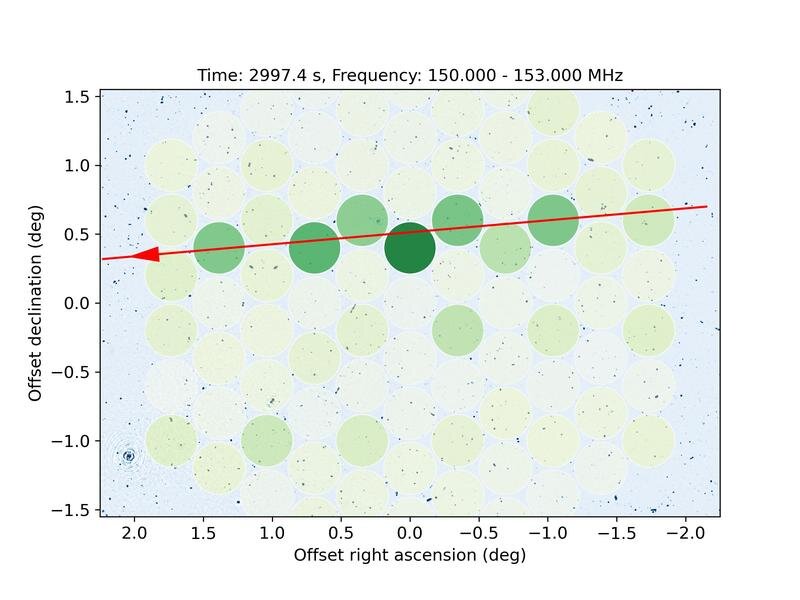
Some SpaceX Starlink satellites are emitting low-frequency radio waves, which could potentially interfere with astronomical research, according to scientists who used the Low Frequency Array (LOFAR) telescope in the Netherlands to observe the electromagnetic radiation from satellites in large constellations for the first time. The radiation, detected from onboard electronics, was found to be within a protected band allocated to radio astronomy. While SpaceX is not violating any rules, the International Astronomical Union called for collaboration between satellite operators and astronomers to proactively mitigate the impact of unintended emissions on important astronomical projects. SpaceX has reportedly offered to discuss possible ways to address the issue and has already introduced changes to its next generation of satellites.

space-governance2 years ago

Space Governance and the Tumbling Motion of Space Debris: A Sustainable Challenge

The rapid increase in the number of satellites and debris in low Earth orbit is challenging the international governance model for space activities. The United Nations' Committee on the Peaceful Uses of Outer Space (COPUOS) has been handling space governance, but its consensus-based model and large size make progress slow. Efforts are underway to address space sustainability through alternative mechanisms, including the United Nations' Summit of the Future in 2024 and the development of binding agreements or widely adopted norms and guidelines. Other initiatives, such as the World Economic Forum's guidelines for mitigating orbital debris and the European Space Agency's Zero Debris Charter, aim to promote responsible space practices. However, the need for a global space government framework becomes increasingly urgent as low Earth orbit becomes more congested.

science-and-technology2 years ago

SpaceX's Starlink Satellites: Radiation Leaks and Collision Avoidance Maneuvers

Scientists have confirmed that SpaceX's Starlink satellites are emitting low-frequency radio waves, separate from their allocated downlink bands, which could interfere with radio astronomy. The leakage was detected using the LOw Frequency ARray (LOFAR) in Europe, and the emissions were found to be unintentional and within a protected band allocated to radio astronomy. While the current impact is relatively small, the increasing number of satellites in orbit could amplify the interference. SpaceX is working on reducing or eliminating this unintentional leakage, and researchers are calling for support from the satellite industry and regulators to address the issue.

science-and-technology2 years ago

Starlink's Satellite Radiation Continues to Disrupt Radio Astronomy

Scientists have used the LOFAR telescope to observe unintended electromagnetic radiation from SpaceX's satellites, which could disrupt astronomical research. The study calls for regulation to protect radio astronomy from such unintended radiation and commends SpaceX for collaborating on mitigation efforts. The researchers detected "unintended electromagnetic radiation" emanating from onboard electronics, different from regular communication signals. They encourage satellite operators and regulators to consider the impact on radio astronomy in spacecraft development and regulatory processes. The study highlights the need for collaboration between satellite operators and astronomers to proactively mitigate the effects of unintended emissions.

science-and-technology2 years ago

Satellite Constellations' Radio Interference Threatens Astronomical Observations

Scientists using the LOFAR telescope have detected unintended electromagnetic radiation emanating from SpaceX's Starlink satellites. This unintended radiation, separate from communications transmissions, could impact radio astronomy and the study of faint signals from the universe. The researchers urge satellite operators and regulators to consider this impact and develop regulations to protect radio astronomy bands. SpaceX has expressed willingness to collaborate and has made changes to mitigate the emissions in their next generation of satellites. Further research is planned to investigate unintended emissions from other satellite constellations.

science-and-technology2 years ago

"Satellite Constellations' Radio Noise Threatens Astronomical Observations"

Astronomers have detected radio emissions from SpaceX's Starlink satellites, likely caused by electromagnetic noise within the spacecraft. The emissions, detected at low frequencies, create an additional source of interference for radio astronomers. While the impact on radio astronomy is still unclear, the emissions span a protected frequency range. Although SpaceX has been willing to discuss mitigation measures, astronomers are concerned about similar emissions from other satellite constellations and the lack of clear regulations to protect radio astronomy bands. The detection of these emissions from Starlink satellites may encourage other operators to take proactive steps to mitigate interference.

defense2 years ago

"US Military Adapts to New Threats in Space with Innovative Programs and Allies"

The US Space Force's Chief of Space Operations, Gen. Chance Saltzman, has warned that the US is facing a "new era" of space threats from strategic competitors like Russia and China. Saltzman said that the threats to on-orbit capabilities have grown substantially, and the congestion in space has increased exponentially. He added that the mix of weapons and the pace with which they've been developed are very concerning. To respond to evolving threats and secure space assets more quickly, Saltzman is looking to further augment the service's capabilities to make satellite constellations more resilient and acquire more launch services by tapping into a burgeoning cadre of commercial space players.