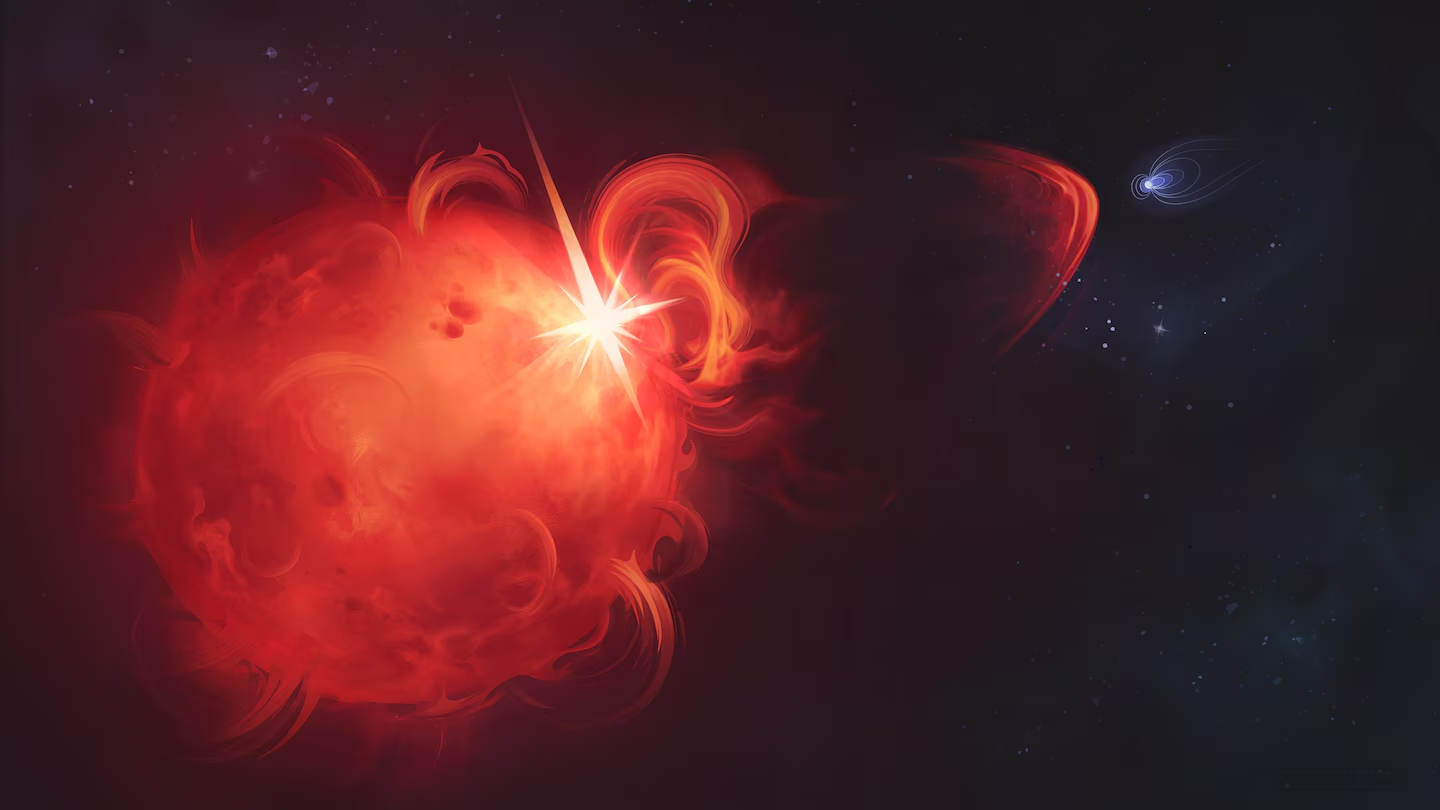
Astronomers have detected a massive stellar eruption from a star 130 light-years away, providing the first strong evidence of coronal mass ejections beyond our solar system, which could impact the habitability of nearby planets and inform our understanding of space weather risks.
A recent study suggests that humanity might be an outlier in the universe, as our Sun and Earth are unusual compared to most stars and planets, raising questions about the likelihood of finding extraterrestrial life around red dwarf stars and emphasizing the need to focus astrobiology efforts on Sun-like stars.
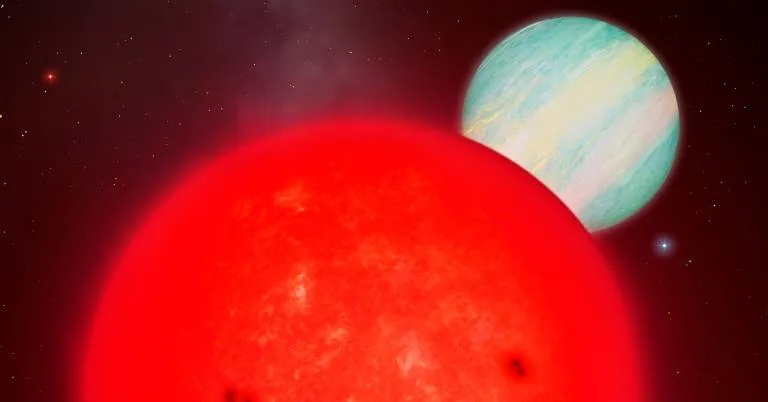
A gas giant similar in size to Saturn has been discovered orbiting a small red dwarf star, TOI-6894, challenging traditional ideas about how planets form around such stars and prompting a reevaluation of cosmological theories.
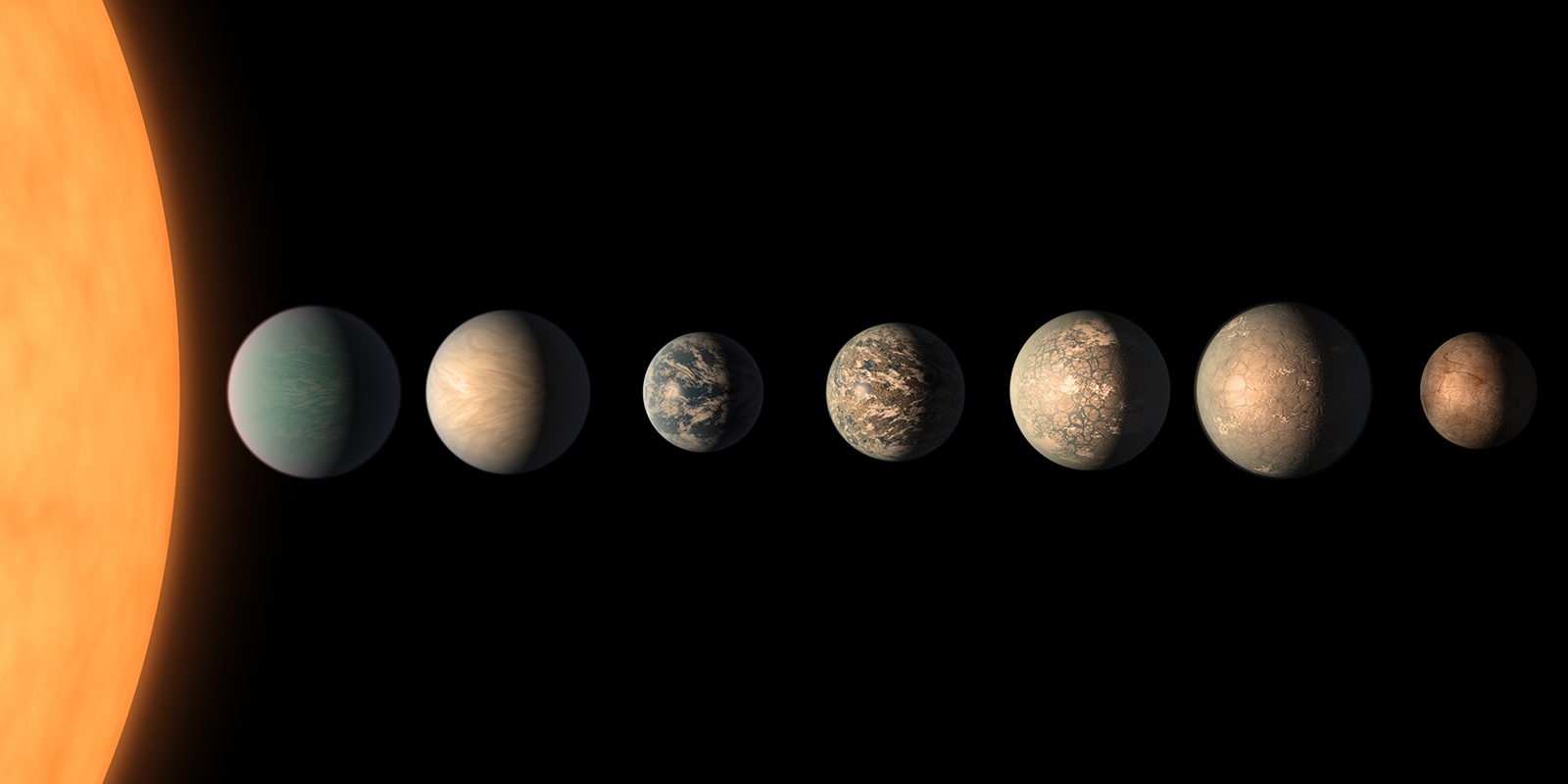
A new study suggests that the Trappist-1 system's planets are likely barren and stripped of their atmospheres, making the existence of life in the system unlikely. The study indicates that the intense radiation from the system's red dwarf star has likely caused the planets to lose their atmospheres at a rapid rate, rendering them warm, dry rocks. This finding has significant implications for the potential habitability of planets orbiting red dwarf stars, which make up a large portion of the stars in our galaxy.
A recent scientific paper by Cody J. Shakespeare and Jason H. Steffen explores the possibility of tide-locked planets "flipping" their orientation, leading to drastic climate change. This concept provides fertile ground for science fiction authors to imagine scenarios of unforeseen planetary disasters. The article highlights five classic SF works that depict rapid and radical alterations to a planet's habitability, including stories of technological collapse, deadly atmospheres, interspecies conflict, impending natural disasters, and the consequences of strip-mining planets. These stories showcase the creativity and imagination of SF writers in exploring the potential consequences of planetary upheavals.
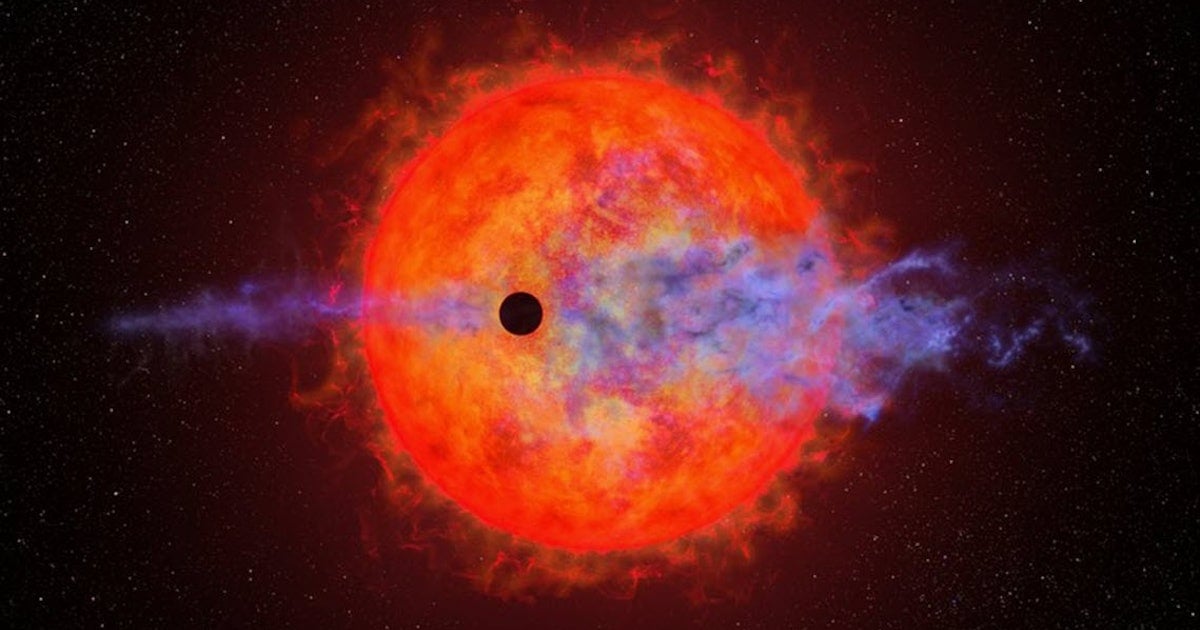
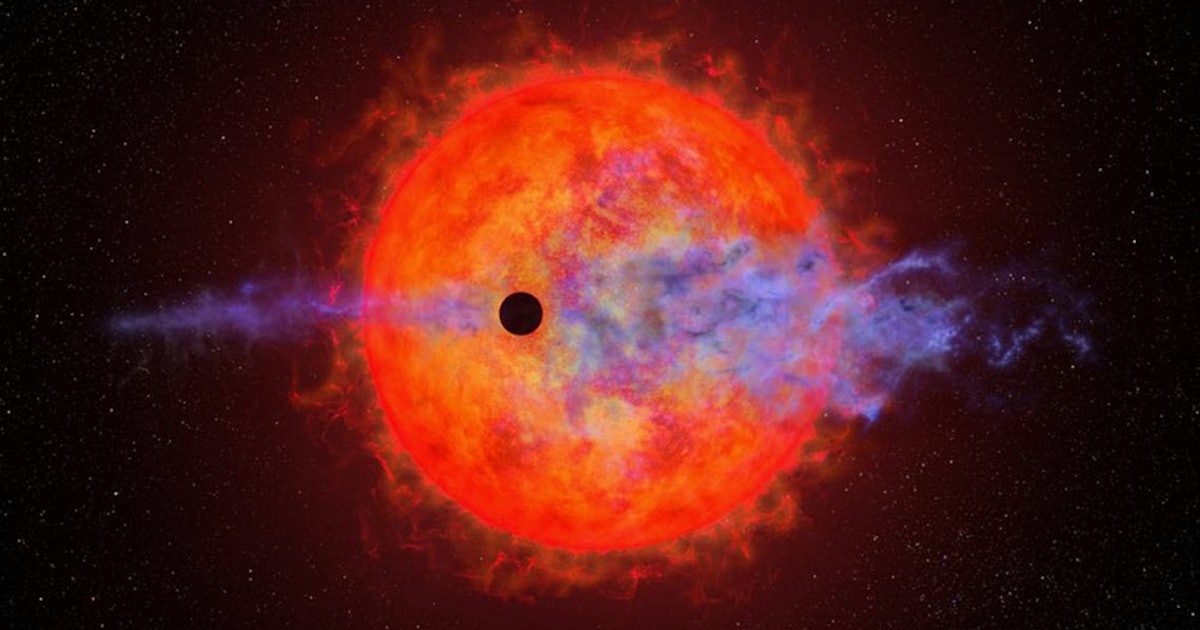
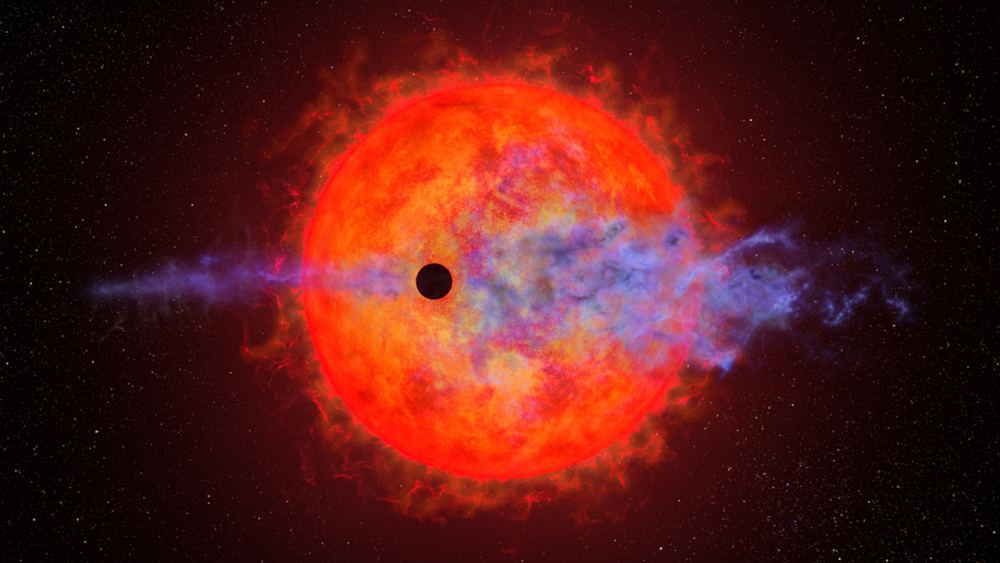
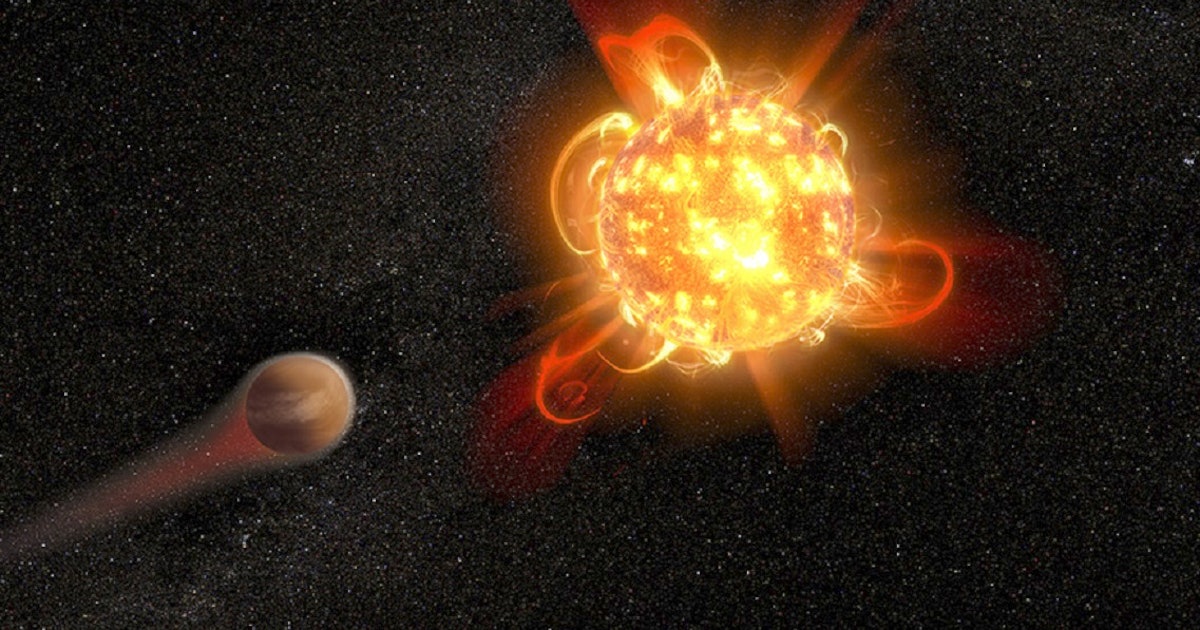
Astronomers have observed the Neptune-sized planet AU Microscopii b losing its atmosphere in a highly variable and unpredictable manner due to the intense flaring activity of its young red dwarf star. The planet's hydrogen atmosphere is being torn away in fits and starts, with periods of significant loss followed by minimal loss. This unusual behavior raises questions about the survivability and habitability of planets close to red dwarfs. Further observations are needed to understand the mechanisms behind this atmospheric loss and its implications for exoplanet compositions and potential habitability.
Astronomers have observed the Neptune-sized planet AU Microscopii b losing its atmosphere in a highly variable and unpredictable manner due to the intense flaring activity of its young red dwarf star. The planet's hydrogen atmosphere is being torn away in fits and starts, with periods of significant loss followed by minimal loss. This unusual behavior raises questions about the survivability and habitability of planets close to red dwarfs. Further observations are needed to understand the mechanisms behind this atmospheric loss and its implications for exoplanet compositions and habitability.
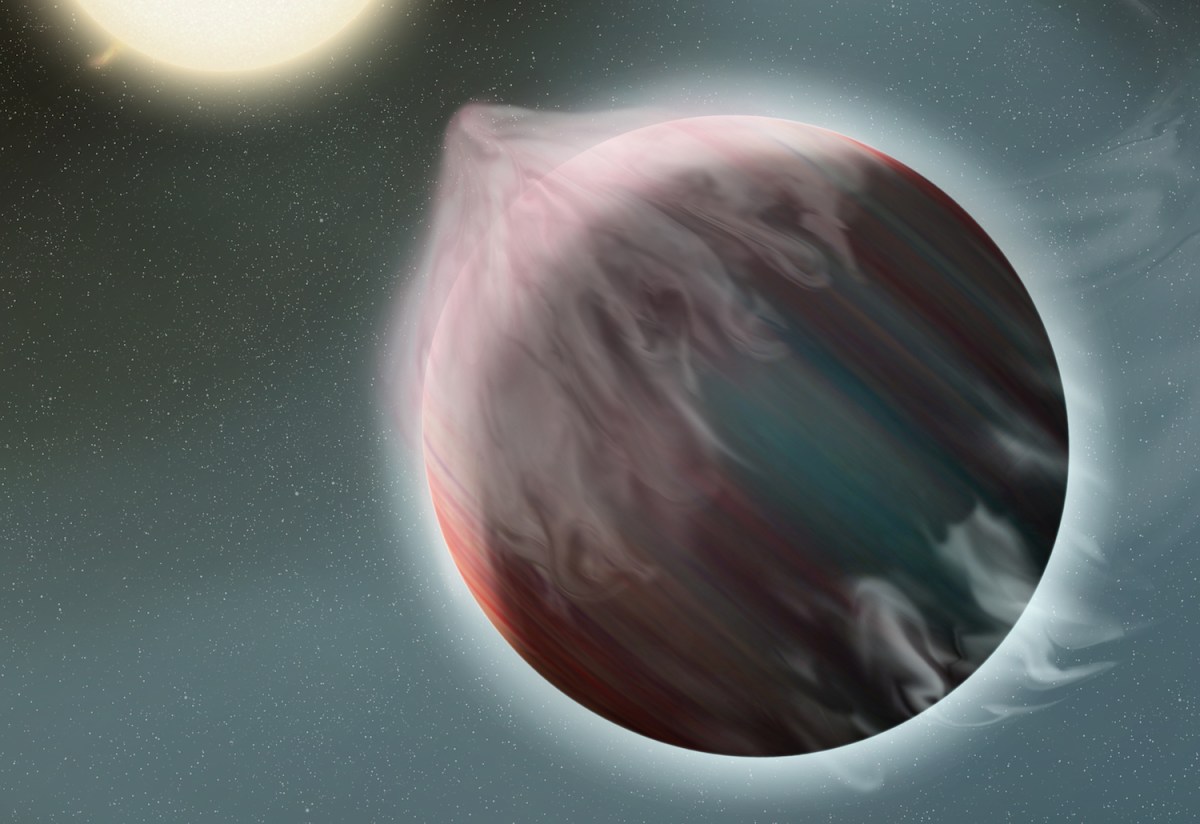
Astronomers have observed the Neptune-sized exoplanet, AU Microscopii b, losing its atmosphere in a variable and unpredictable manner due to flares from its young and unstable red dwarf star. This unusual atmospheric loss raises questions about the survivability and habitability of planets close to red dwarfs. The hydrogen atmosphere of AU Microscopii b is being photoionized by the star's extreme heat and flare activity, causing it to be transparent to light and undetectable at times. Further observations are needed to understand the mechanisms behind this atmospheric loss and its implications for similar planets.
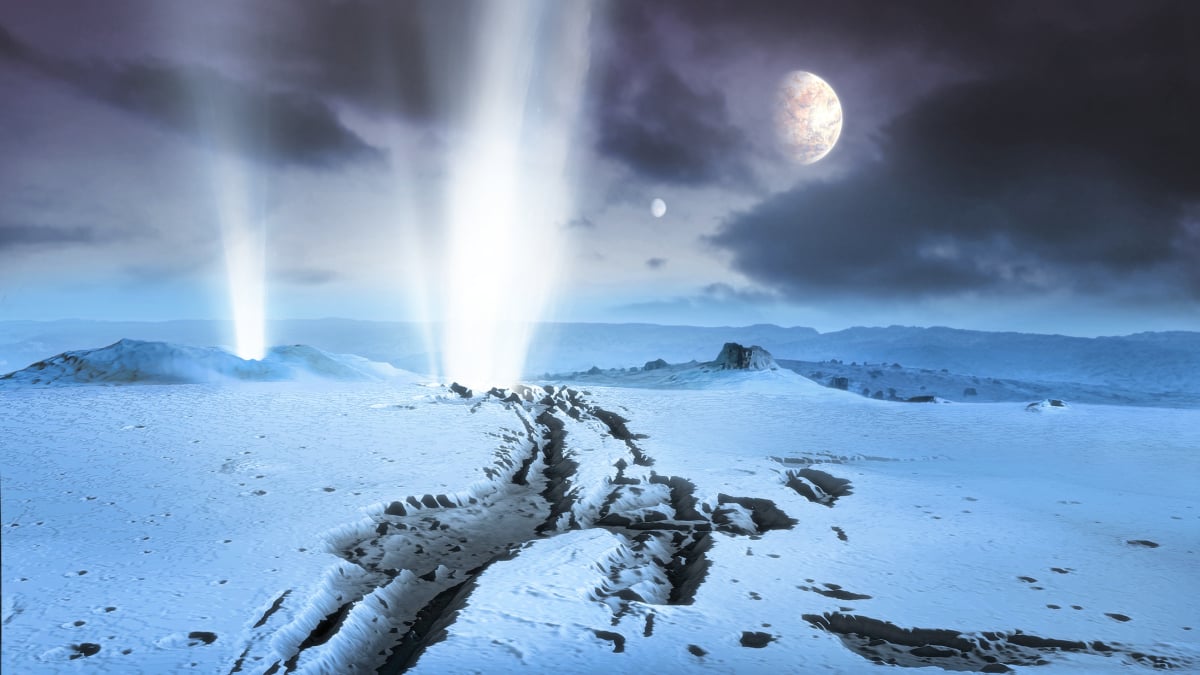
A new study suggests that the chances of finding exoplanets with water, a key requirement for Earth-like life, could be 100 times greater than previously estimated. Researchers used computer modeling to analyze planets around red dwarf stars in the Milky Way and concluded that many of these exoplanets could have internal sources of heat capable of creating lakes beneath ice sheets. This expands the probability of finding liquid water on rocky planets to one world for every star. The discovery of subglacial lakes on Earth and the presence of oceans beneath the icy shells of moons like Europa and Enceladus further support the idea that water worlds could be more common than previously thought.
A recent study by the University of Florida examined the orbital eccentricities of exoplanets orbiting red dwarf stars and found that one-third of them could exist within their star’s habitable zone, which could encompass hundreds of millions of potentially habitable exoplanets throughout the Milky Way. The researchers also discovered that red dwarfs with multiple exoplanets held the highest promise of exhibiting more circular orbits, meaning they could house liquid water on their surfaces. The study used data from NASA’s Kepler mission, which confirmed the existence of almost 2,800 exoplanets during its 9-year mission.
A recent study by the University of Florida found that one-third of exoplanets orbiting red dwarf stars could exist within their star’s habitable zone, which is the approximate distance from their star where liquid water can exist on the surface. The researchers analyzed the orbital eccentricities of 163 exoplanets orbiting red dwarf stars across 101 systems using data from NASA’s Kepler mission. Red dwarfs give off far less energy and heat than our Sun, meaning the habitable zone exists much closer to the star, resulting in shorter orbital periods for planets that orbit within the HZ.
Astronomers using the James Webb Space Telescope (JWST) to study exoplanets are facing a challenge in distinguishing between the atmosphere of a planet and the outer layers of the red dwarf star it orbits. The issue arises because stars are known to hold water vapor, which can mimic a planet's atmosphere in transit data. To solve the mystery, astronomers will have to find different ways to measure what's going on with the planet and its star. Red dwarf stars are prone to flares, prominences, starspots, and other activity mostly fueled by magnetic fields, but we don't know enough about their inner structures to model that activity in detail.
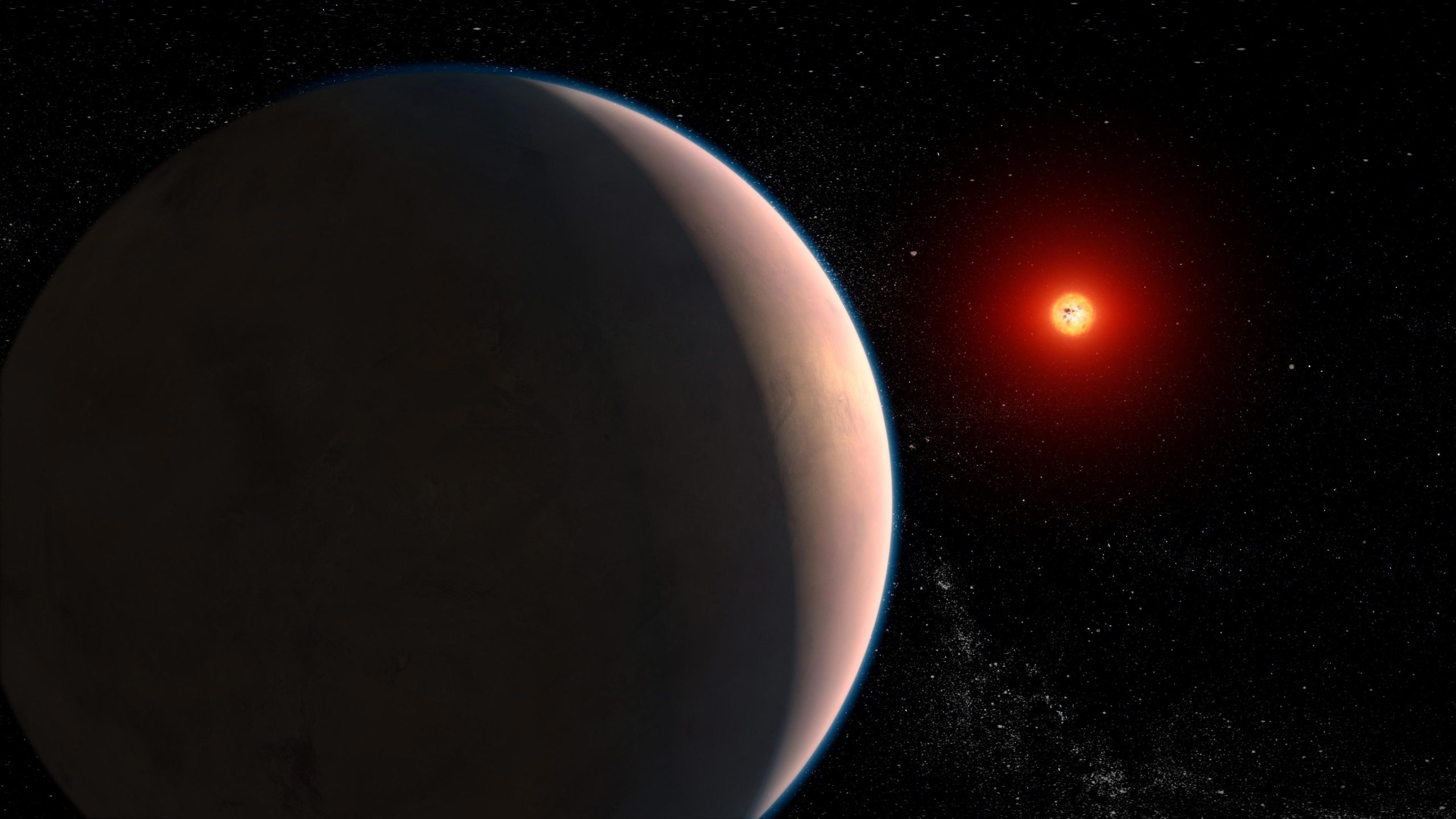
The James Webb Space Telescope has detected hints of water vapor on a rocky exoplanet known as GJ 486 b, which orbits a red dwarf star. However, the water vapor could be on the star itself and not from the planet at all. Additional observations are needed to determine if the planet has an atmosphere or if the water vapor is from the star. If the water vapor is associated with the planet, that would indicate that it has an atmosphere despite its scorching temperature and close proximity to its star.