Tag

Atmospheric Escape

All articles tagged with #atmospheric escape

science24 days ago

Earth's Atmosphere Is Leaking to the Moon, Revealing a Hidden Connection

Scientists have discovered that Earth's magnetic field allows atmospheric particles to escape and be deposited on the Moon, turning lunar soil into a record of Earth's ancient atmosphere. This process occurs as the Moon passes through Earth's magnetotail, where charged particles from Earth's upper atmosphere are guided onto the lunar surface, providing valuable insights into Earth's atmospheric history and the dynamics of planetary magnetospheres.
space1 year ago

"Unveiling Venus: BepiColombo's Surprising Discoveries in the Planet's Magnetosphere"

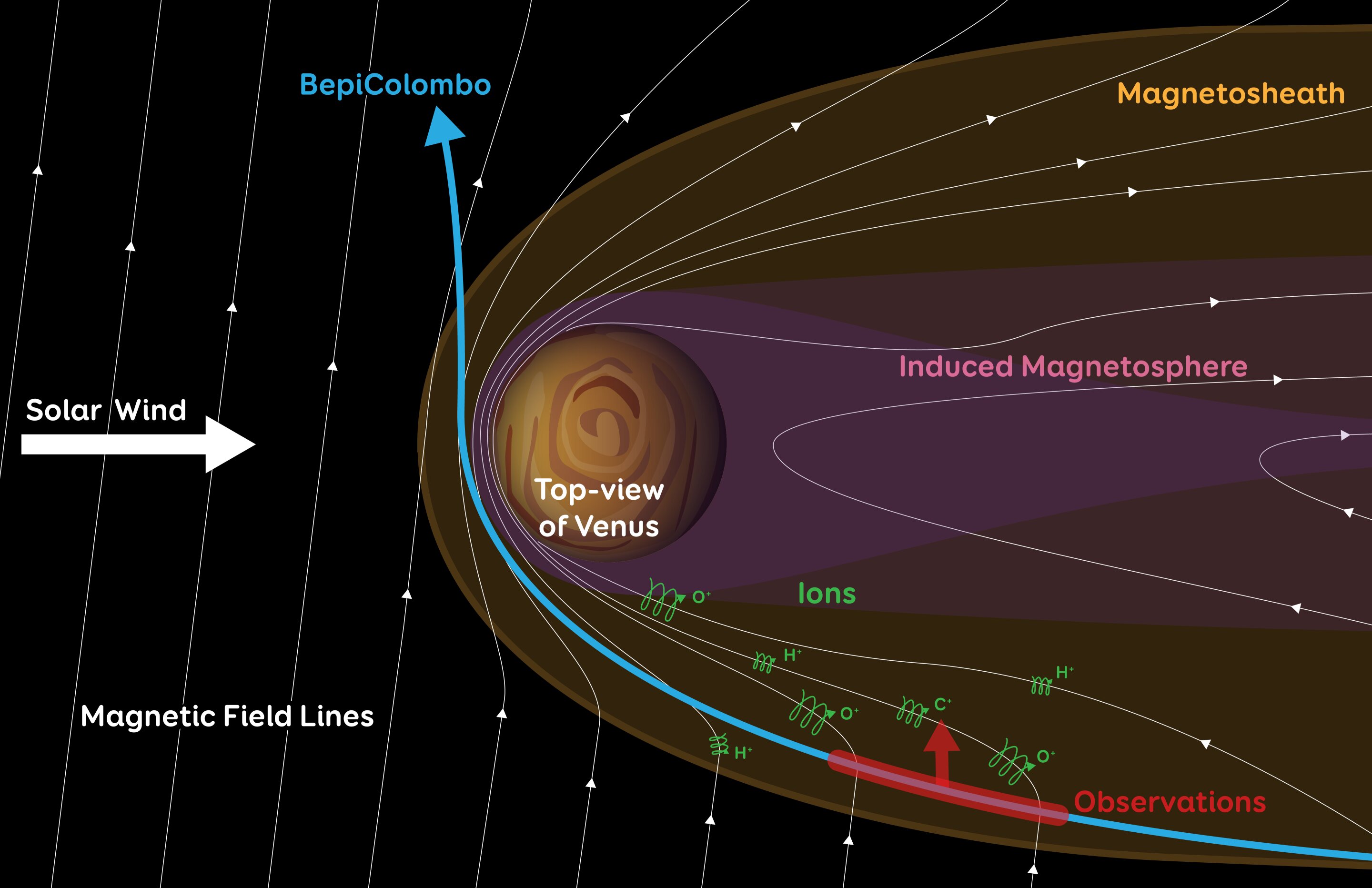
The BepiColombo mission's brief encounter with Venus has uncovered new findings about the escape of oxygen and carbon from the planet's upper atmosphere. Observations in an unexplored region of Venus's magnetosphere revealed the acceleration of carbon and oxygen ions to speeds allowing them to escape Venus's gravitational pull. This discovery sheds light on the mechanisms driving atmospheric escape and the historical evolution of Venus's atmosphere, which has lost its water content over time. The study's data were obtained during BepiColombo's flyby using specialized instruments, and upcoming missions to Venus are expected to provide further insights into the planet's environment.

space-exploration1 year ago

"Small Package, Big Discoveries: The CUTE Mission's Innovative Observations of Extreme Exoplanets"

NASA's Colorado Ultraviolet Transit Experiment (CUTE) mission, launched in September 2021, utilizes an innovative design to observe extreme exoplanets from a small spacecraft. The mission employs a novel, rectangular Cassegrain telescope and a miniature, low-resolution spectrograph to measure near-ultraviolet (NUV) flux, enabling the observation of escaping exoplanet atmospheres. CUTE has successfully observed between 6 and 11 transits of seven different exoplanetary systems, revealing extended NUV atmospheres and potential time variability in atmospheric transmission spectra. The mission's success has led to the adoption of its design approach by other NASA and international missions, demonstrating that precision achieved by large UV astronomy missions can also be achieved by a CubeSat.

space-science2 years ago

Mars' Magnetosphere Expands as Solar Wind Disappears

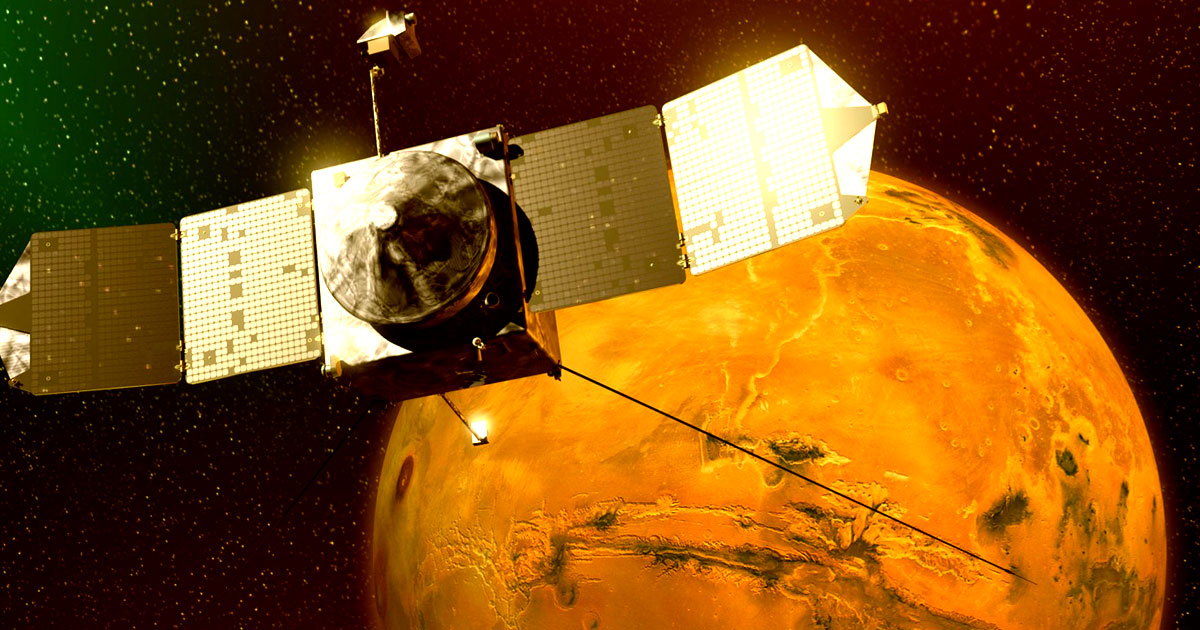
NASA's MAVEN spacecraft observed a rare event on Christmas Day last year, where the solar wind, the stream of charged particles from the Sun, almost completely disappeared. This sudden lack of pressure allowed the Martian atmosphere and magnetosphere to expand by thousands of miles, more than tripling its regular size. The event provided valuable insights into how Mars responds when the solar wind is effectively removed, shedding light on the planet's atmospheric escape process. MAVEN's scientific instruments captured the event, providing exceptional data for further study.

astronomy2 years ago

"Explosive Spiral: Hot Jupiter Planet Discovered 950 Light Years Away"

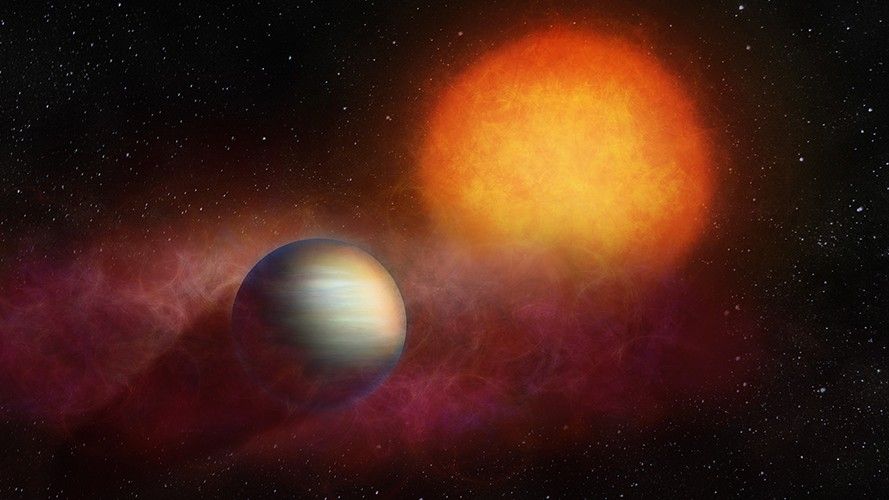
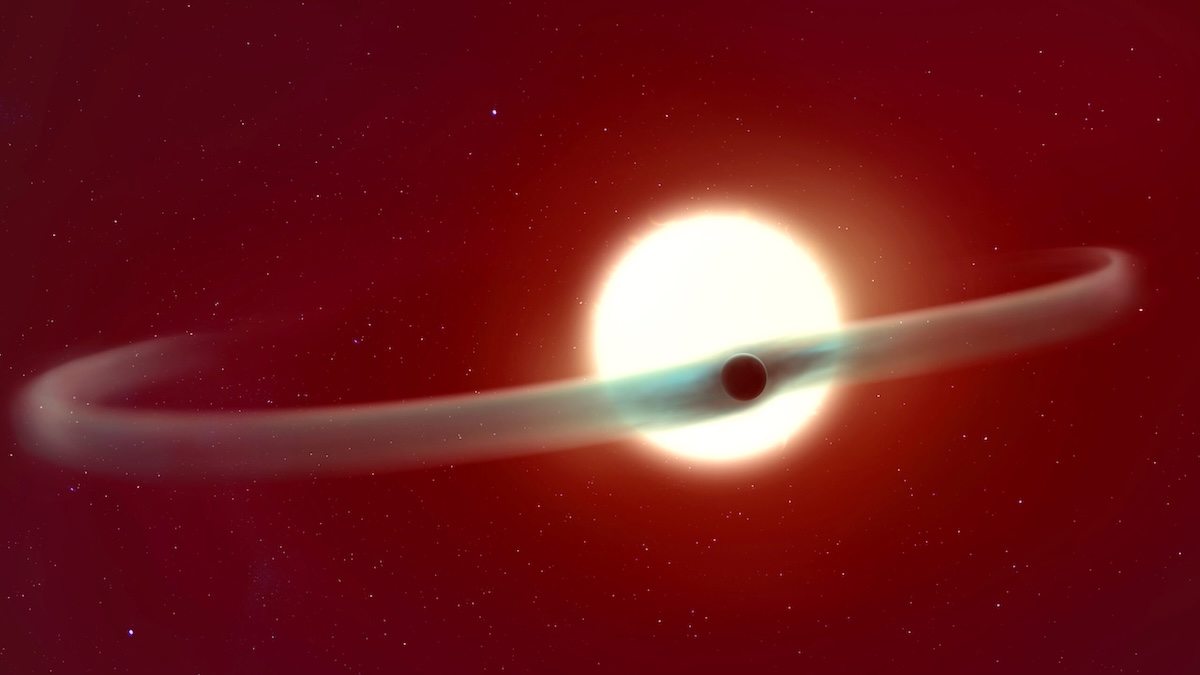
A study has revealed that the exoplanet HAT-P-32b, located 950 light years away from Earth, is losing its atmospheric helium, resulting in the creation of massive gas trails. This makes it the largest known planetary structure in space. HAT-P-32b is a "hot Jupiter" with a short orbital rotation and a mass of approximately 0.68 Jupiter. Scientists hope to gain insights into the phenomenon of atmospheric escape by studying this planet.

astronomy2 years ago

"Exoplanet's Atmosphere Loses Helium: New Observations Reveal"

Astronomers have detected the escape of helium from the atmosphere of a nearby mini-Neptune exoplanet called TOI-2134 b. Using the Near Infrared Spectrometer (NIRSPEC) on the Keck II Telescope, the researchers found that TOI-2134 b has the smallest helium signal among exoplanets with detected helium. The observations suggest that the atmospheric escape of helium in TOI-2134 b is likely due to photoevaporation by stellar XUV, and the results provide insights into the nature of atmospheric escape in alien worlds.

astronomy2 years ago

Violent Star Strips Planet's Atmosphere in Intense Encounter

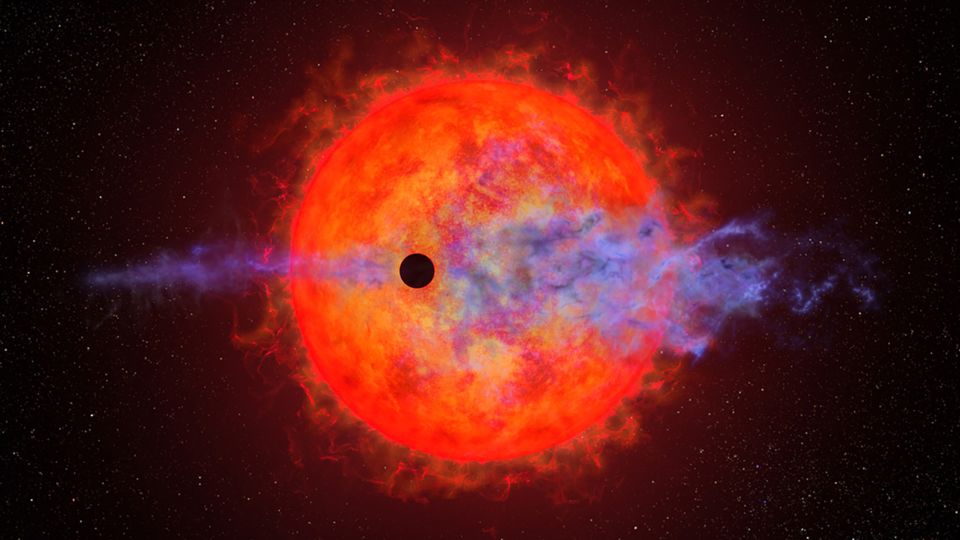
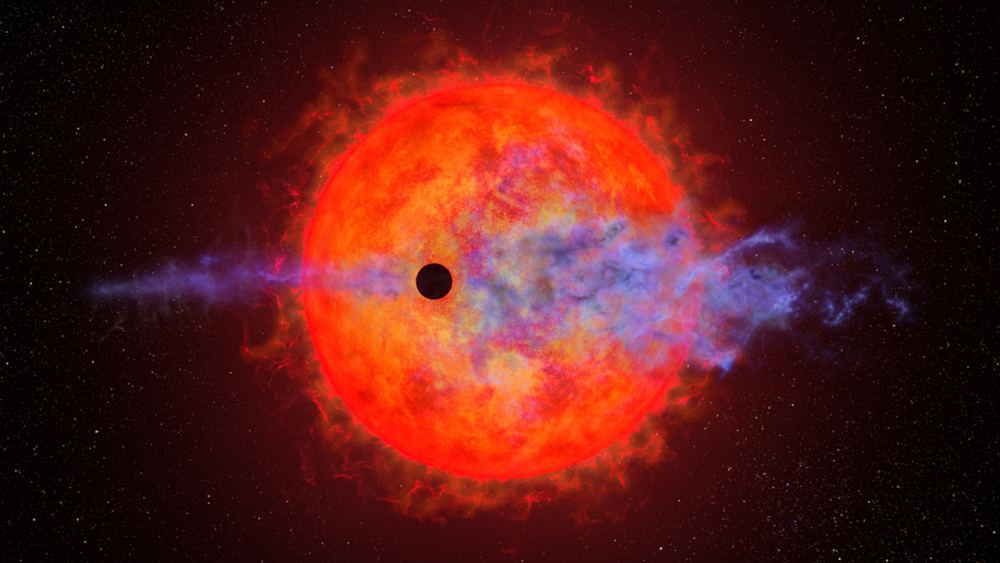
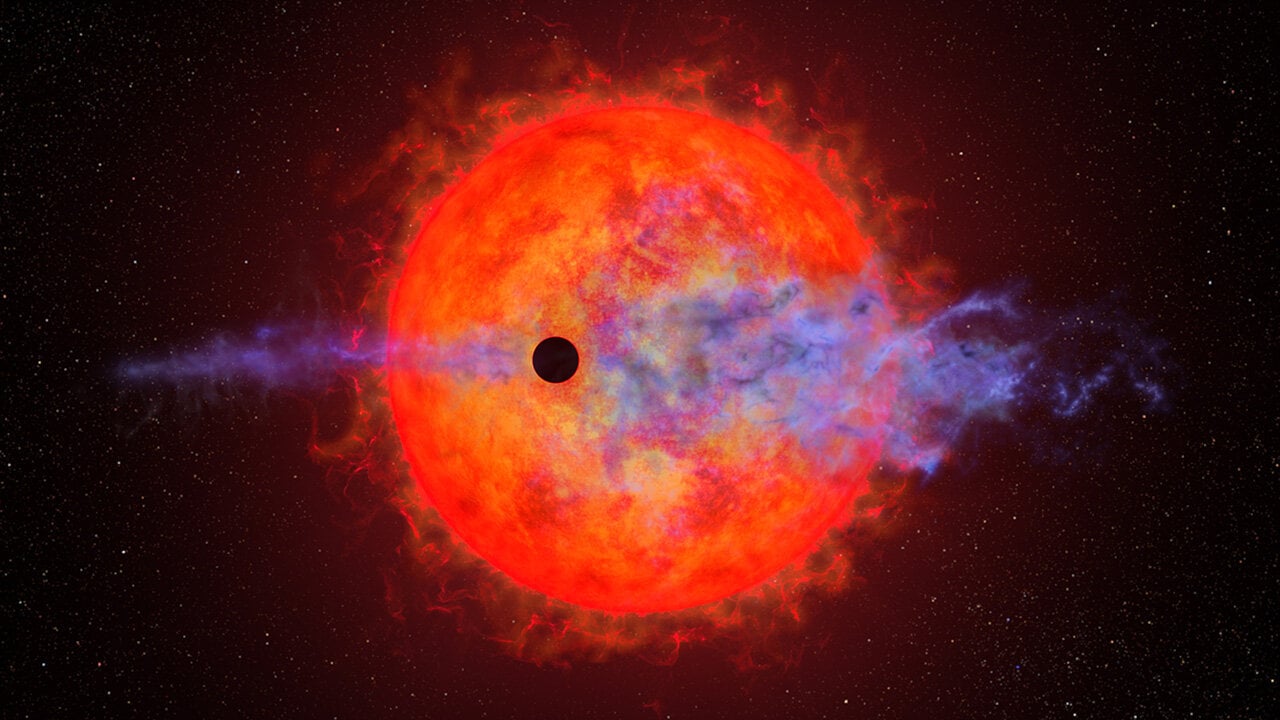
A young star, AU Microscopii, is causing its orbiting exoplanet, AU Mic b, to experience sporadic atmospheric escape. The Neptune-sized exoplanet, located just 32 light-years from Earth, is subjected to intense stellar winds, flares, and X-ray light from the active star. The unusual observation of the atmosphere rapidly switching on and off in a single orbit provides valuable insights into the interplay between the star and the planet during their early stages. The research aims to understand the mechanisms behind atmospheric stripping and the evolution of exoplanets, which is crucial for identifying habitable worlds and the potential for life beyond Earth.

space-science2 years ago

Hubble's Stunning Capture: Star Blasts Away Planet's Atmosphere

The Hubble Space Telescope has captured an unexpected observation of a nearby planet, AU Mic b, having its atmosphere blasted away by energetic outbursts from its star, AU Microscopii. This red dwarf star is home to one of the youngest planetary systems ever observed and is less than 100 million years old. The planet's hydrogen atmosphere is being evaporated by the star's radiation, resulting in atmospheric escape. This observation challenges current models of planetary evolution and raises questions about the habitability of planets closely orbiting red dwarf stars. Astronomers will conduct further observations to understand the interplay between the star and the planet and the long-term effects on the planet's composition.

astronomy2 years ago

Hubble Telescope Observes Planet's Atmosphere Vanishing in Space

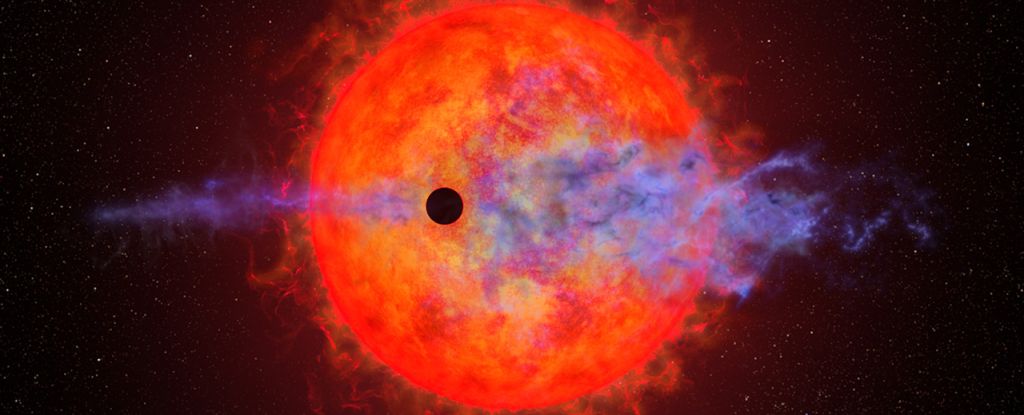
Astronomers have observed the Neptune-sized exoplanet, AU Microscopii b, losing its atmosphere in a variable and unpredictable manner due to flares from its young and unstable red dwarf star. This unusual atmospheric loss raises questions about the survivability and habitability of planets close to red dwarfs. The hydrogen atmosphere of AU Microscopii b is being photoionized by the star's extreme heat and flare activity, causing it to be transparent to light and undetectable at times. Further observations are needed to understand the mechanisms behind this atmospheric loss and its implications for similar planets.

astronomy2 years ago

"Hubble Observes Planet Experiencing Hiccups as it Evaporates"

The Hubble Space Telescope has observed an evaporating planet, AU Microscopii b, orbiting a young and volatile red dwarf star, AU Microscopii. The planet's hydrogen atmosphere is being stripped off due to the star's intense magnetic fields and super-flares. However, the observations have revealed unexpected variability in the planet's atmospheric loss, with one orbit showing no material loss and another orbit showing clear signs of atmospheric escape. This unpredictability challenges current models of planetary evolution and highlights the complex interplay between the star and the planet. Further observations will help scientists understand the extreme variability and evolution of exoplanetary atmospheres.