
James Webb Telescope Discovers Water Vapor on Distant Exoplanet
TL;DR Summary
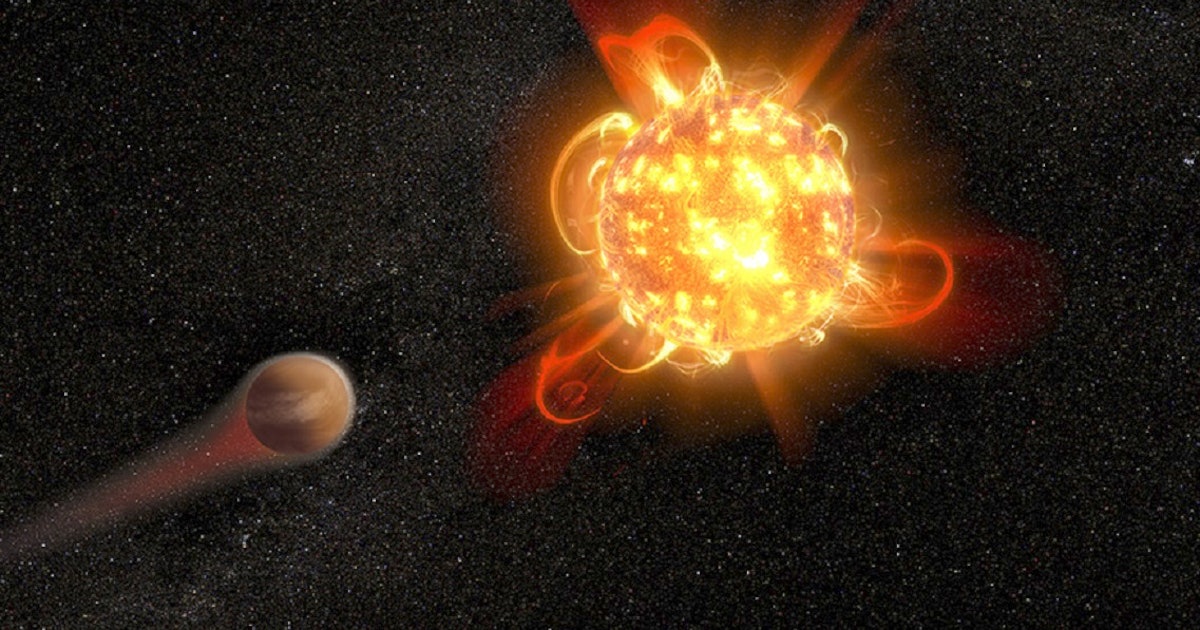
Astronomers using the James Webb Space Telescope (JWST) to study exoplanets are facing a challenge in distinguishing between the atmosphere of a planet and the outer layers of the red dwarf star it orbits. The issue arises because stars are known to hold water vapor, which can mimic a planet's atmosphere in transit data. To solve the mystery, astronomers will have to find different ways to measure what's going on with the planet and its star. Red dwarf stars are prone to flares, prominences, starspots, and other activity mostly fueled by magnetic fields, but we don't know enough about their inner structures to model that activity in detail.
- The Webb Telescope Could Help Astronomers Finally Solve One of Space's Most Irritating Questions Inverse
- James Webb Telescope Detects Mysterious Water Vapor Around Alien Planet Futurism
- Nasa’s Webb telescope spots intriguing distant planet with signs of water vapour atmosphere The Independent
- James Webb managed to find a planet with water vapor California18
- James Webb telescope may have found a rocky exoplanet with an atmosphere Mashable
Reading Insights
Total Reads
0
Unique Readers
0
Time Saved
6 min
vs 8 min read
Condensed
92%
1,407 → 108 words
Want the full story? Read the original article
Read on Inverse