science-fiction2.705 min read
Avoid Entering Abandoned Buildings
3 months ago•Source: Nature

The latest science fiction stories, summarized by AI

Harold receives a pill that expands into a clone of his wife Rosie, but the clone is imperfect and different from the original, raising questions about identity and the ethics of AI-driven regeneration, all set in a future where such treatments are insurance-approved and cost-saving.
Nature•6 months ago
Halo Waypoint•7 months ago
A short sci-fi story explores the aftermath of a 21-second global event where millions of human souls disappear, leading to chaos, legal battles, and the emergence of a god-like AI entity called the Twenty-One Second God, raising questions about consciousness, identity, and the nature of divinity.
In this science fiction story, a captain's log recounts the journey of a lone traveler who accidentally ends up at the End of the Universe. While there, the traveler discovers a unique creature resembling a puppy, but with the ability to shed fur that forms stormy patches resembling stellar nurseries. Despite the danger posed by the shedding, the traveler becomes attached to the creature and finds it to be a valuable companion during unexpected attacks and repairs. The traveler contemplates allowing the creature, nicknamed Cumulus, to accompany them on their journey back home.
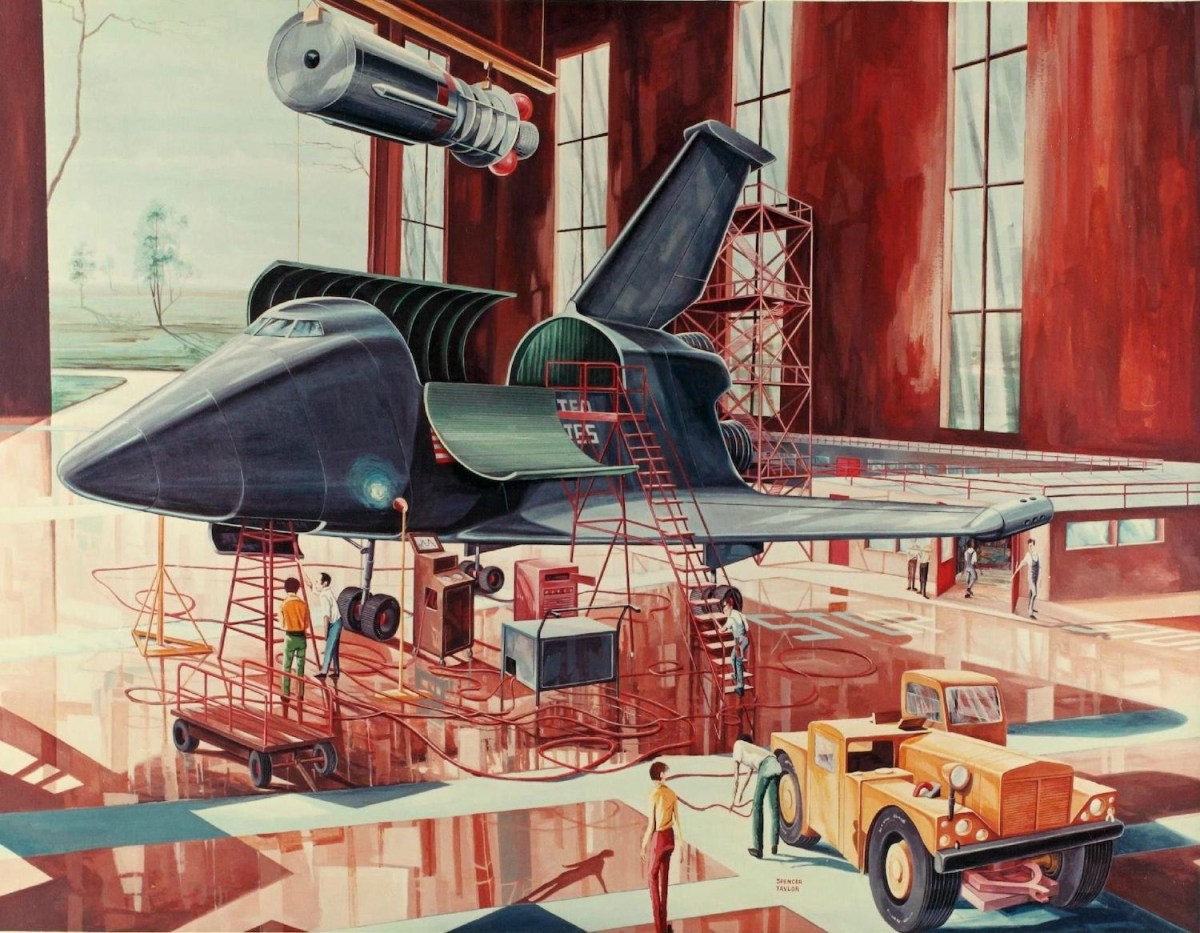
This article highlights five science fiction classics that feature soon-to-be obsolete spaceships. These vintage examples explore the theme of technological obsolescence and economic desperation, showcasing how older starships struggle to compete with modern ships, atomic-powered hyper-ships become extinct due to superior technology, interstellar missions face challenges from newer and more convenient methods of travel, and the discovery of new technologies renders space stations and fleets obsolete. These stories serve as a reminder of the ever-changing nature of technology and its impact on society.
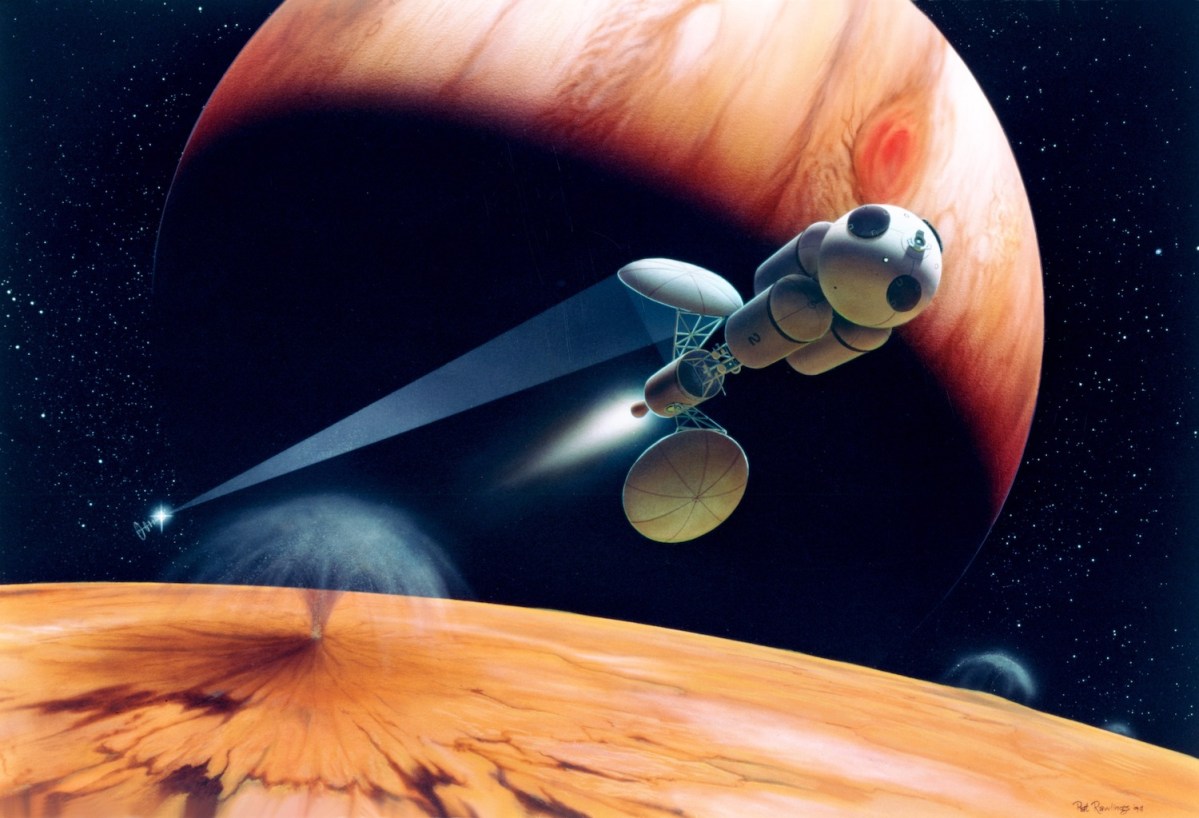
Generation ships in science fiction face numerous challenges that can lead to their failure. These challenges include civil disorder, cultural amnesia, inbreeding, lightspeed leapfrog, and mission drift. Stories of mutinies, civil wars, and conflicts over limited resources are common in generation ship narratives. Additionally, the isolation and passage of time can result in communities forgetting their history and purpose. Inbreeding due to small gene pools can hinder the survival of passengers upon reaching their destination. Furthermore, advancements in propulsion technology may render the long journeys of generation ships obsolete. Lastly, the cultural transformation that occurs during interstellar travel can lead to divisions and differing goals among the ship's inhabitants.
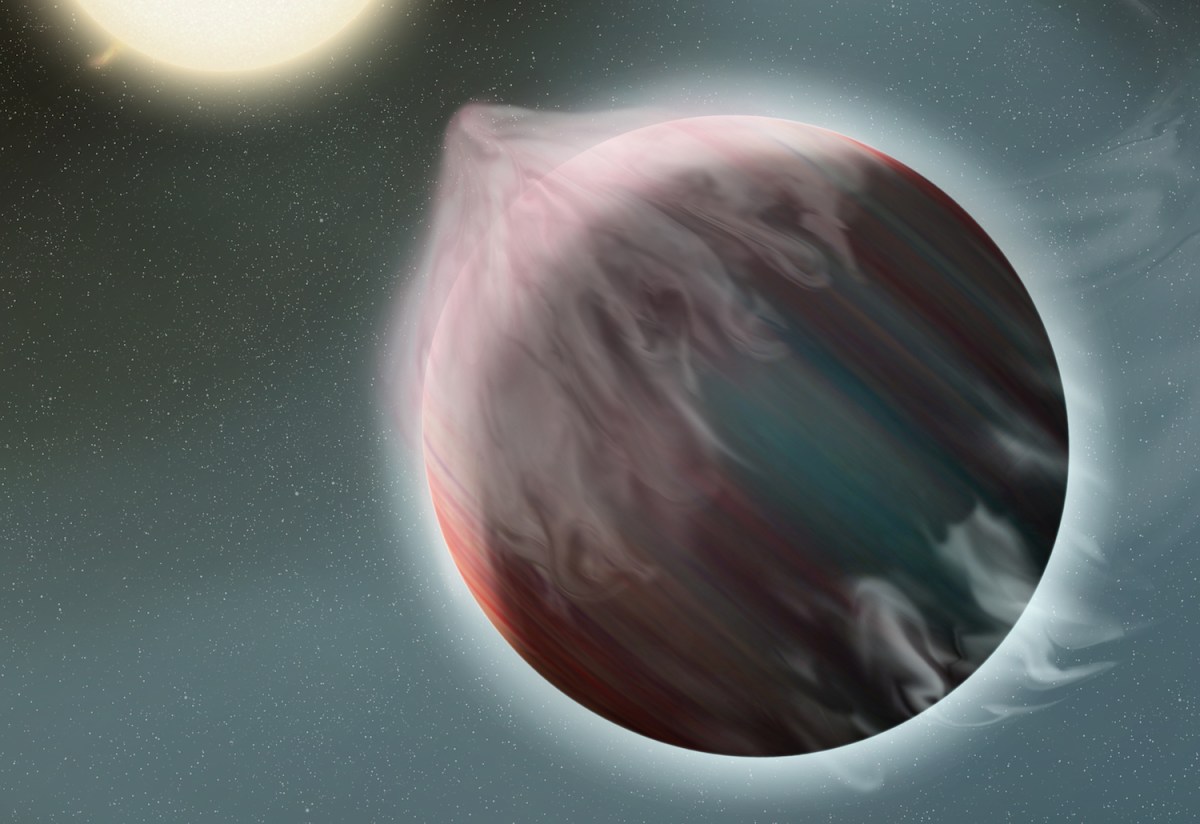
A recent scientific paper by Cody J. Shakespeare and Jason H. Steffen explores the possibility of tide-locked planets "flipping" their orientation, leading to drastic climate change. This concept provides fertile ground for science fiction authors to imagine scenarios of unforeseen planetary disasters. The article highlights five classic SF works that depict rapid and radical alterations to a planet's habitability, including stories of technological collapse, deadly atmospheres, interspecies conflict, impending natural disasters, and the consequences of strip-mining planets. These stories showcase the creativity and imagination of SF writers in exploring the potential consequences of planetary upheavals.
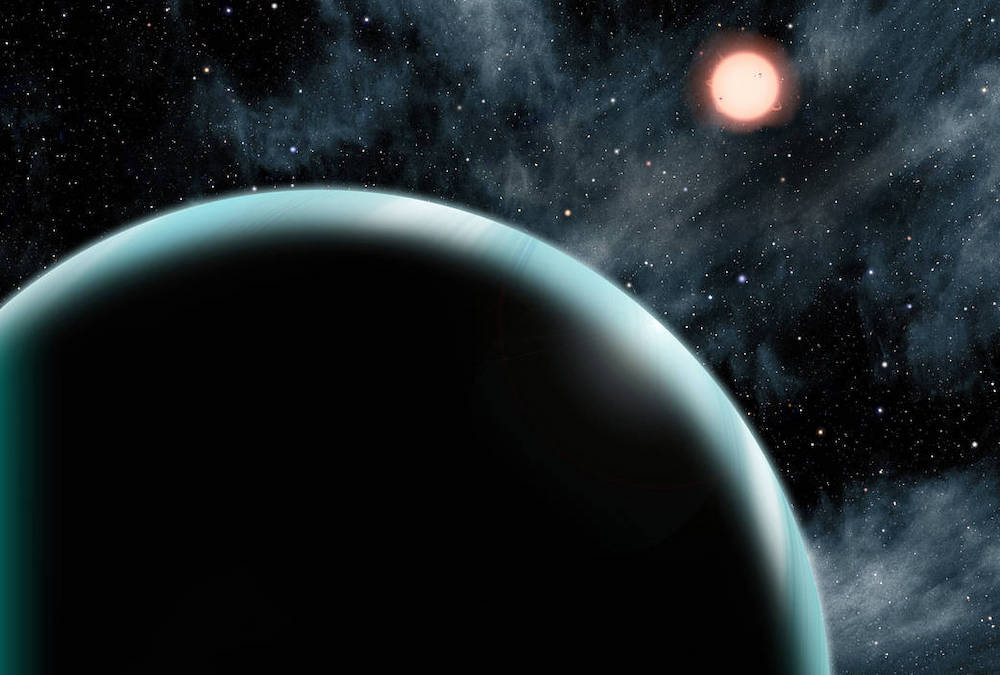
Tidal locking, the condition where a planet's rotation is the same as its orbit around its parent body, has fascinated many science fiction authors. This article highlights five classic SF stories that explore the phenomenon of tidal locking, including tales of explorers on Venus, Mercury, and an Earth that has slowed to a stop. These stories offer thrilling adventures and imaginative worlds, showcasing the endless possibilities of science fiction.
A group of programmers create a simulated universe with increasingly complex physics packages, leading to the creation of intelligent life and the discovery of relativity. However, the addition of more particles and symmetry slows down the simulation, causing the programmers to draw the line and refuse to add any more complexity. The story explores the idea of the simulation hypothesis and the role of physics in a simulated universe.

The winning essay of a science-fiction competition sponsored by Nature and EU-LIFE envisions a scientific utopia in which researchers are required to assist their local community. The essay follows a scientist at the Institute of Merged Sciences in Edinburgh, who spends 20% of their time on research for citizens. When a nurse brings in a patient with unexplained symptoms, the scientist uses their skills to identify a banned pesticide on the patient's hands, highlighting the importance of addressing real-world problems in the present.
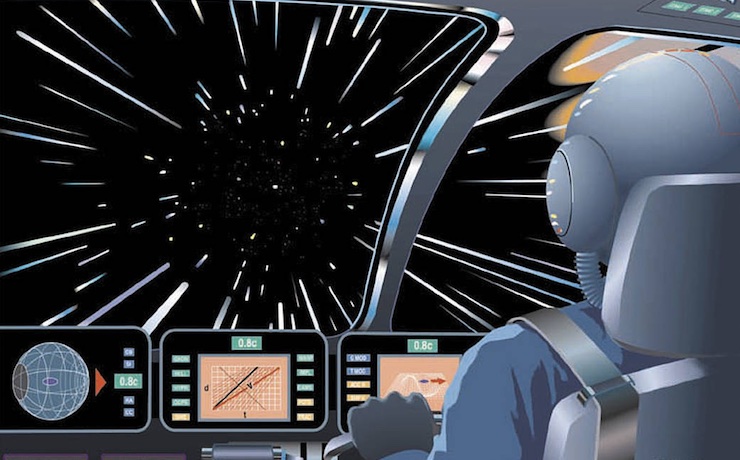
Science fiction authors have to deal with the problem of relativity when crafting space adventures. Some authors choose to ignore the issue or deny its existence, while others accept the universe's limitations and focus on adventures within the solar system. Some authors move stars closer to Earth or use time dilation to cope with the issue, while others increase lifespan to make long voyages achievable. These are just a few of the options available to authors who want to acknowledge the light-speed limit while still crafting thrilling space adventures.
In a far future, delegates from different alien species attend an interstellar meeting to finalize an orbit reallocation proposal. The meeting is plagued with technical difficulties, misunderstandings, and disagreements. The chair, Rynnden, struggles to keep the meeting on track and enforce the code of conduct. After a heated exchange, Rynnden assigns breakout rooms to the delegates to work out their differences. A third of an orbital period later, the delegates reconvene and finalize the proposal.