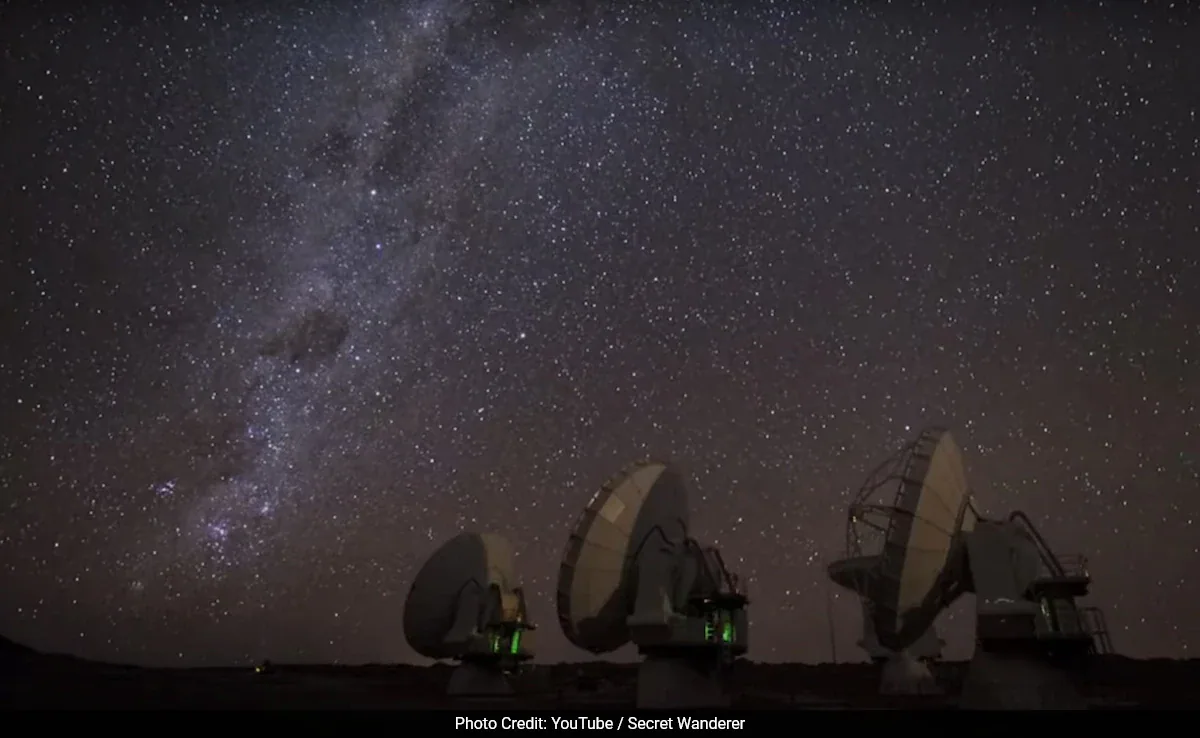
A rare snowstorm in July temporarily covered parts of the extremely dry Atacama Desert in Chile, affecting the ALMA radio telescope and highlighting potential impacts of climate change on hyperarid regions.
The MeerKAT radio telescope in South Africa is preparing for a second observation window as 3I/ATLAS approaches its closest point to Earth on December 19, with the potential to detect signals that could indicate extraterrestrial intelligence, raising profound scientific and societal questions.
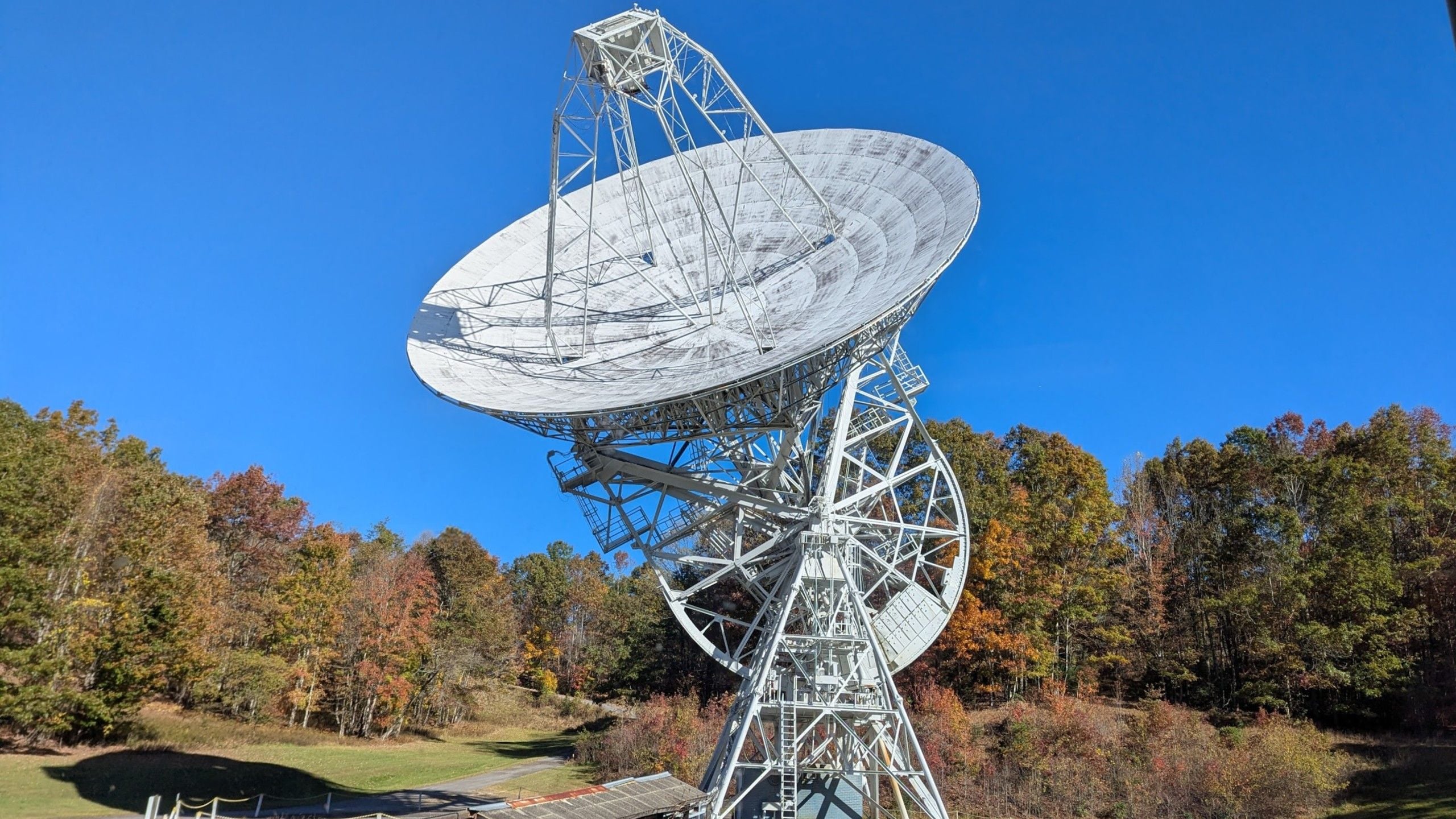
A historic 26-meter radio telescope in North Carolina, originally built for NASA's space tracking in 1962 and later used for military and intelligence purposes, is now for sale. The Pisgah Astronomical Research Institute (PARI) owns the site, which continues to support space research and education, and is seeking partners to help preserve its mission while exploring new uses, including private sector collaborations.
Scientists have captured the first radio image of two black holes orbiting each other in the quasar OJ 287, confirming the existence of black hole pairs and providing new insights into their behavior using advanced space-based radio imaging technology.
The SKA's datacenter in Western Australia, nearly complete, is protected by two Faraday cages to prevent RF leaks that could interfere with the world's largest radio telescope, which aims to explore the universe with unprecedented sensitivity. The project involves extensive antenna installation and will continue until 2029, with scientific proposals starting in 2024 and initial tests in 2027.
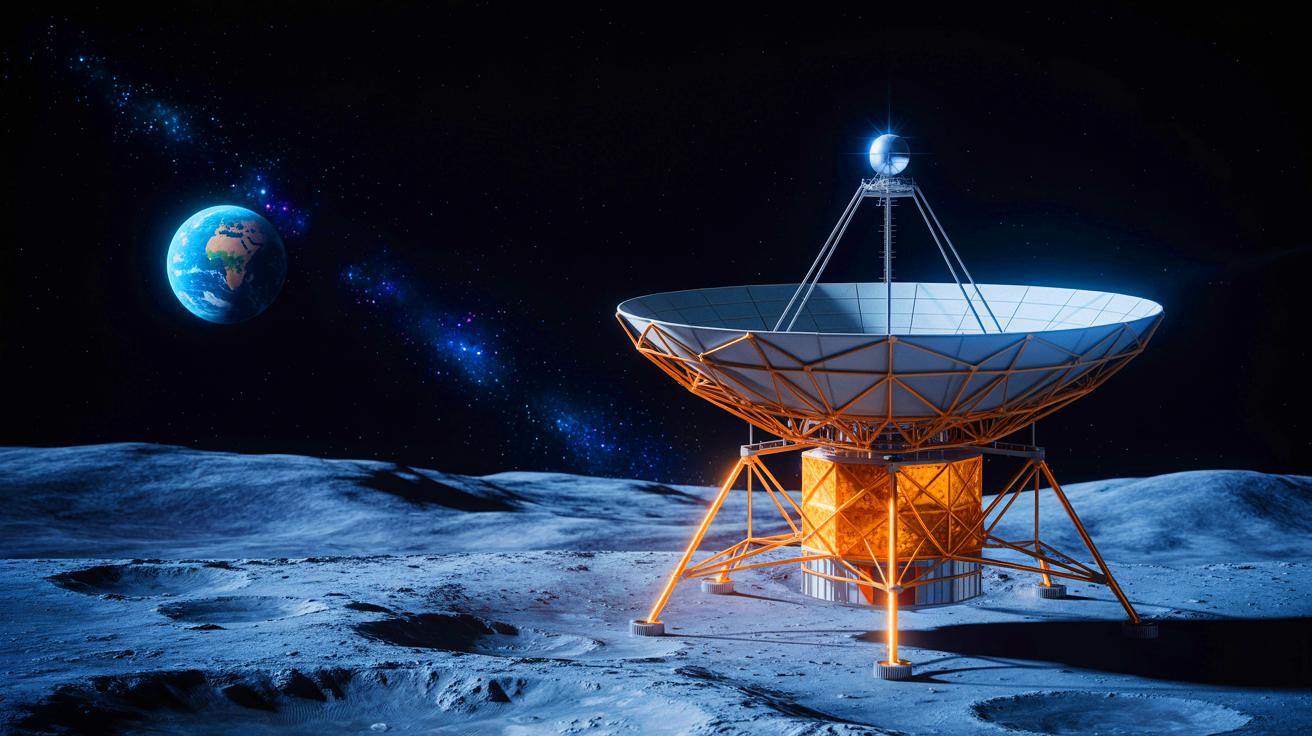
NASA and partners are deploying the LuSEE-Night radio telescope on the Moon’s far side to avoid Earth's radio interference, aiming to explore the universe's Dark Ages and potentially revolutionize lunar-based cosmic observation, with future plans to transform lunar craters into massive radio dishes.
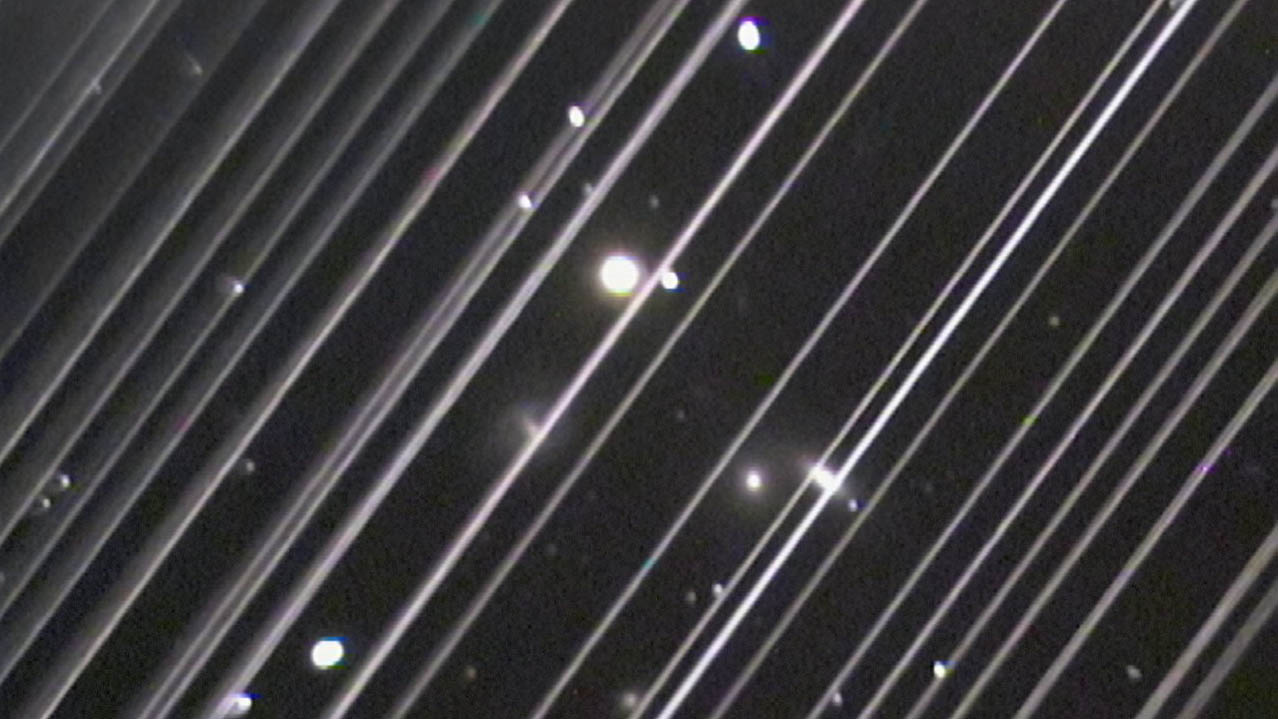
A study analyzing 76 million radio telescope images found that SpaceX's Starlink satellites cause significant interference, affecting up to 30% of some datasets, with over 112,000 emissions detected from 1,806 satellites, including unintended emissions in protected radio bands, raising concerns about the impact on astronomical research and the need for updated regulations.
A rare snowfall in the Atacama Desert has temporarily halted operations of the ALMA radio telescope array, highlighting potential impacts of climate change on extreme weather events in this hyper-arid region, which could affect future astronomical observations.
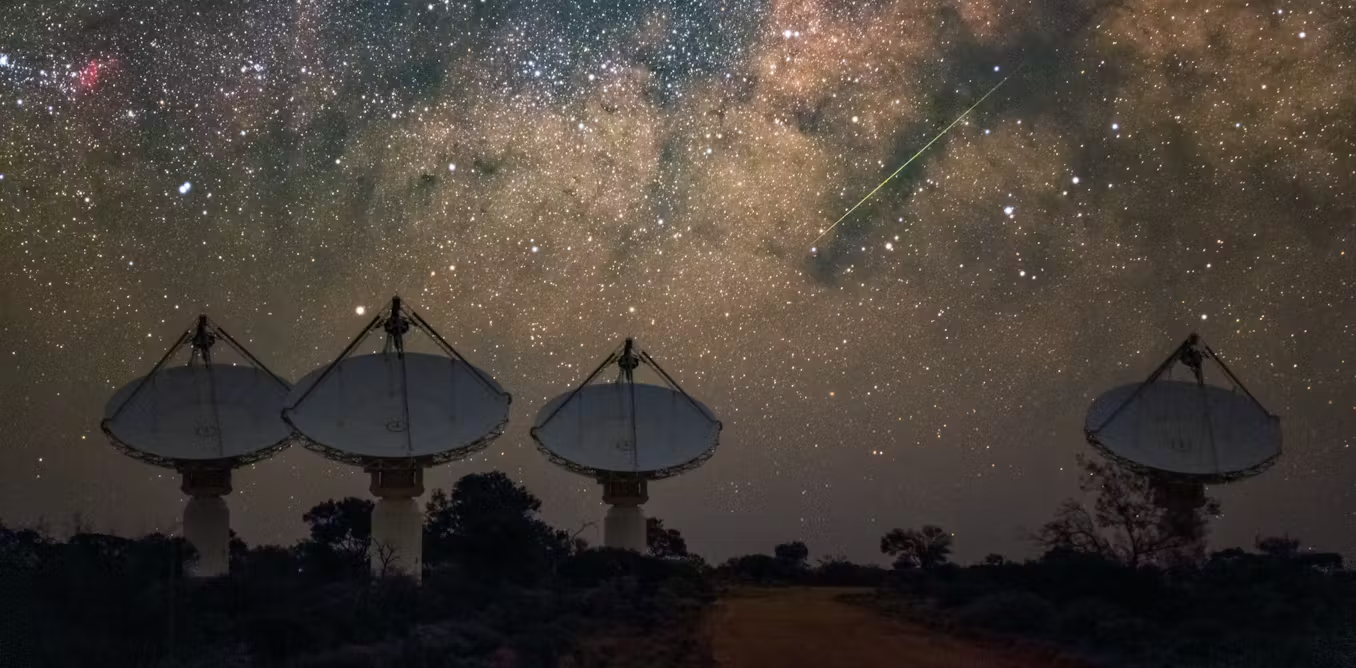
Astronomers using the ASKAP radio telescope in Australia detected a brief, bright radio burst originating from within 4500 km of Earth, traced to the old Relay 2 satellite, likely caused by an electrostatic discharge or space debris impact. This discovery highlights the potential for ground-based monitoring of satellite activity and the ongoing search for cosmic signals.
Astronomers have discovered the largest black hole jet ever observed, stretching about 200,000 light-years, in a distant quasar from when the universe was less than 1.2 billion years old, revealing insights into early galaxy evolution and black hole activity using advanced radio and infrared telescopes.
NASA is planning to build the Lunar Crater Radio Telescope on the moon's far side by the 2030s to study the universe and avoid interference from Earth's atmosphere and satellite signals, with funding and technical development currently underway.
NASA is planning to build the Lunar Crater Radio Telescope on the moon's far side to study the universe and protect radio astronomy from satellite interference, with construction potentially starting in the 2030s and costing over $2 billion.
Indian astronomers from NISER have made a significant discovery in the tri-star system GG Tau A, located 489 light years away, using the APEX radio telescope in Chile. This system, with its unique three-star configuration and massive protoplanetary disk, offers new insights into planetary formation. The team, led by Liton Majumdar, detected molecular emissions in the coldest regions of the system, crucial for understanding the building blocks of planets. This research enhances our understanding of complex gravitational interactions in multi-star systems.
China is constructing a 120-meter diameter fully steerable radio telescope in Huadian, Jilin, which will become the world's largest of its kind. The telescope aims to enhance understanding of planets and asteroids by receiving and transmitting electromagnetic waves. Expected to be completed by 2028, it will join other notable radio telescopes like the defunct Arecibo Observatory and the Green Bank Telescope. This project is part of China's broader efforts to advance its capabilities in radio astronomy and space exploration.
A report by the National Academies of Sciences, Engineering, and Medicine has identified "zinc creep" as the cause of the Arecibo Observatory's radio telescope collapse in Puerto Rico. The zinc-filled sockets supporting the steel cables failed, leading to the platform's fall. The report suggests low-current electroplasticity may have accelerated the zinc's deformation. Recommendations include further study of the remaining components and better monitoring of aging facilities. The telescope, once a key research tool, will not be rebuilt, but a $5 million education center is planned for the site.