Tag

Quantum Theory

All articles tagged with #quantum theory

Celebrating a Century of Quantum Mechanics Advancements

Originally Published 6 months ago — by Home | CERN

Featured image for Celebrating a Century of Quantum Mechanics Advancements
Source: Home | CERN

A century ago, Werner Heisenberg revolutionized physics by developing quantum mechanics, moving away from classical atomic models, with his ideas and correspondence with Pauli laying the foundation for modern quantum theory, which continues to evolve and challenge our understanding today.


Scientists Discover a Mind-Bending, Impossible Form of Time

Originally Published 6 months ago — by Yahoo

Featured image for Scientists Discover a Mind-Bending, Impossible Form of Time
Source: Yahoo

Scientists at the University of Maryland have experimentally measured a phenomenon called imaginary time, a concept from quantum theory, by observing how microwave radiation interacts with materials. This discovery could enhance sensing and storage technologies and improve understanding of how information is affected as light travels through different media.

Unveiling the Universe: From Big Bang Certainty to Cosmic Beginnings

Originally Published 1 year ago — by ScienceAlert

Featured image for Unveiling the Universe: From Big Bang Certainty to Cosmic Beginnings
Source: ScienceAlert

The Big Bang theory, which describes the universe's origin as a massive expansion nearly 14 billion years ago, is supported by evidence such as the cosmic microwave background radiation and the expansion of galaxies. While the theory is widely accepted, the exact conditions at the universe's inception remain uncertain due to the limitations of current physics, particularly in reconciling general relativity with quantum mechanics. Cosmic inflation, a rapid expansion phase, is thought to have shaped the universe's large-scale structure, but the precise nature of the universe's beginning, potentially involving spacetime foam, remains a mystery.

Tachyons: Faster-Than-Light Particles That Align with Einstein's Relativity

Originally Published 1 year ago — by The Debrief

Featured image for Tachyons: Faster-Than-Light Particles That Align with Einstein's Relativity
Source: The Debrief

An international team of physicists has proposed that tachyons, hypothetical particles that travel faster than light, could be compatible with Einstein's special theory of relativity. Their research suggests that incorporating both the initial and final states of a system into calculations resolves previous theoretical challenges, potentially allowing tachyons to exist and offering new insights into quantum theory and the formation of matter.

"Anti-Universe Model Explains Cosmic Expansion Without Dark Energy"

Originally Published 1 year ago — by Phys.org

Featured image for "Anti-Universe Model Explains Cosmic Expansion Without Dark Energy"
Source: Phys.org

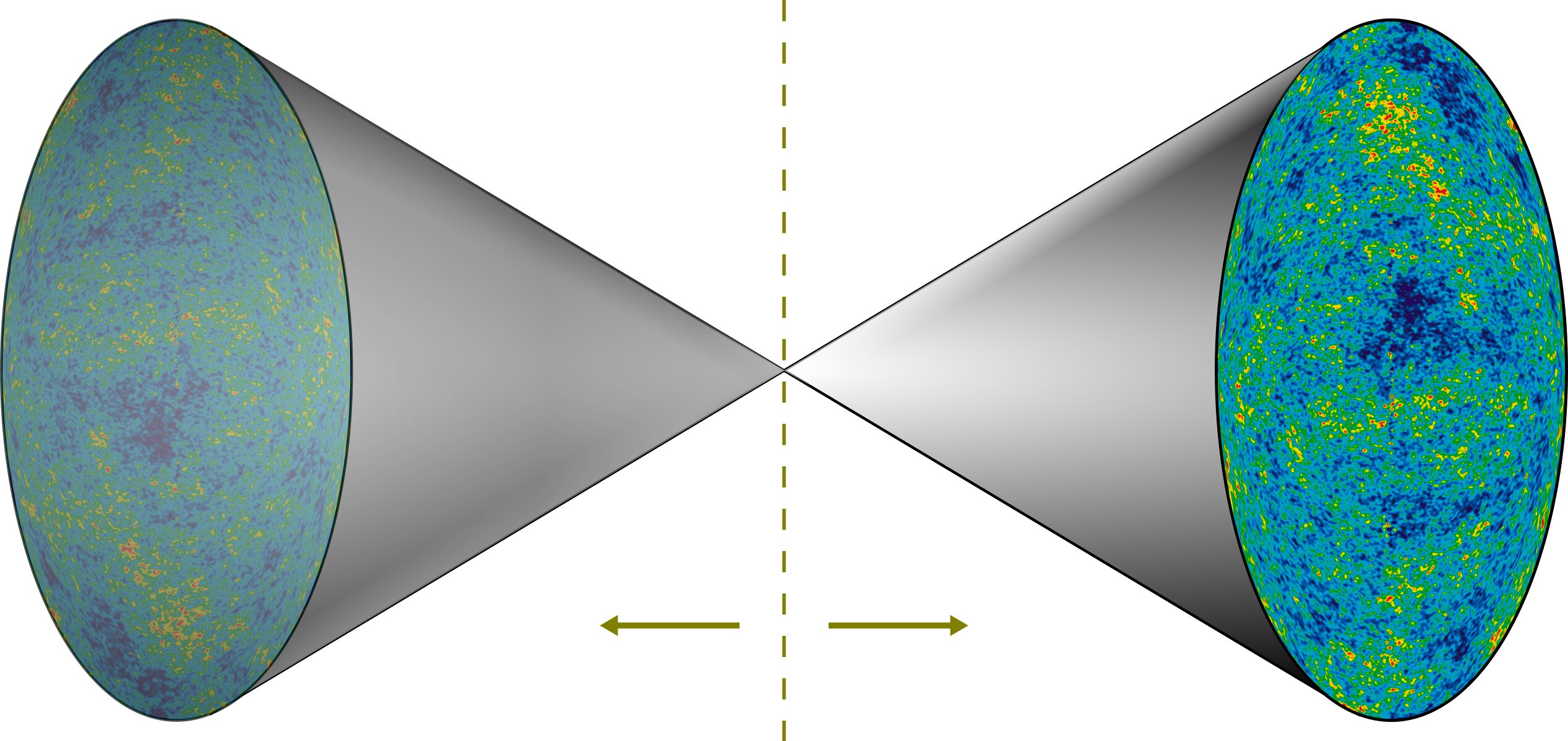
A new model proposed by physicist Naman Kumar suggests that the accelerated expansion of the universe can be explained by the existence of a partner anti-universe, eliminating the need for dark energy. This model leverages concepts from quantum theory and general relativity, indicating that a universe created in pairs naturally expands in an accelerated manner.

"New Quantum Secrecy Foundation Unveiled by Cryptographers"

Originally Published 1 year ago — by Quanta Magazine

Featured image for "New Quantum Secrecy Foundation Unveiled by Cryptographers"
Source: Quanta Magazine

Researchers have discovered that secure quantum encryption can be achieved even in hypothetical scenarios where all classical computational problems are easy, relying instead on the inherent difficulty of distinguishing certain quantum states. This breakthrough suggests that quantum cryptography could remain secure even if classical cryptography fails, potentially requiring a new theoretical framework to fully understand quantum information.

"Quantum Entanglement May Prove Time Is an Illusion"

Originally Published 1 year ago — by BGR

Featured image for "Quantum Entanglement May Prove Time Is an Illusion"
Source: BGR

A new theory proposes that time may be an illusion created by quantum entanglement, challenging the traditional view of time as a fundamental aspect of physical reality. Researchers suggest that changes over time are due to objects being entangled with a clock, making the universe appear static to an external observer. While promising, this theory requires further exploration and testing to fully understand its implications.

"Consciousness and Quantum Theory: New Support for Brain as a Quantum System"

Originally Published 1 year ago — by Walter Bradley Center for Natural and Artificial Intelligence

Featured image for "Consciousness and Quantum Theory: New Support for Brain as a Quantum System"
Source: Walter Bradley Center for Natural and Artificial Intelligence

Physicist Rob Sheldon explains the connection between quantum mechanics (QM) and consciousness, citing Roger Penrose's hypothesis that quantum mechanics plays a crucial role in understanding human consciousness due to its non-algorithmic and non-deterministic nature. Penrose suggests that the collapse of the quantum wavefunction is significant in brain function, and proposes that microtubules in neurons have elongated wavefunctions, allowing for a distributed and non-local response to inputs. This theory challenges the traditional materialistic view of consciousness and opens up new possibilities for understanding the mind.

"Quantum Theory's Growing Connection to Consciousness"

Originally Published 2 years ago — by Walter Bradley Center for Natural and Artificial Intelligence

Featured image for "Quantum Theory's Growing Connection to Consciousness"
Source: Walter Bradley Center for Natural and Artificial Intelligence

The Orch Or Theory proposes that consciousness arises from quantum phenomena in the brain, specifically from gravitational instabilities collapsing quantum wave functions in microtubules inside neurons. Recent research suggests that some quantum processing does occur in the brain, such as in bird compasses and human decision-making. Scientists are now more willing to consider the idea that quantum processes in the brain may shed light on the mysteries of biology and consciousness, challenging traditional materialistic views of the mind.

"Revolutionary Theory Unifies Gravity, Spacetime, and Quantum Physics"

Originally Published 2 years ago — by ScienceAlert

Featured image for "Revolutionary Theory Unifies Gravity, Spacetime, and Quantum Physics"
Source: ScienceAlert

Physicist Jonathan Oppenheim of University College London has proposed a new theory that could potentially resolve the mathematical incompatibility between general relativity and quantum theory. Oppenheim suggests that space-time may not be quantized but instead governed by classical physics, resulting in wobbly and unpredictable fluctuations. These fluctuations could be experimentally tested to verify the theory. While Oppenheim's theory faces opposition, the experimental exploration of space-time's nature is crucial for understanding the fundamental laws of nature.

Unveiling the Hidden Quantum Realm: The Overlooked Experiment

Originally Published 2 years ago — by Quanta Magazine

Featured image for Unveiling the Hidden Quantum Realm: The Overlooked Experiment
Source: Quanta Magazine

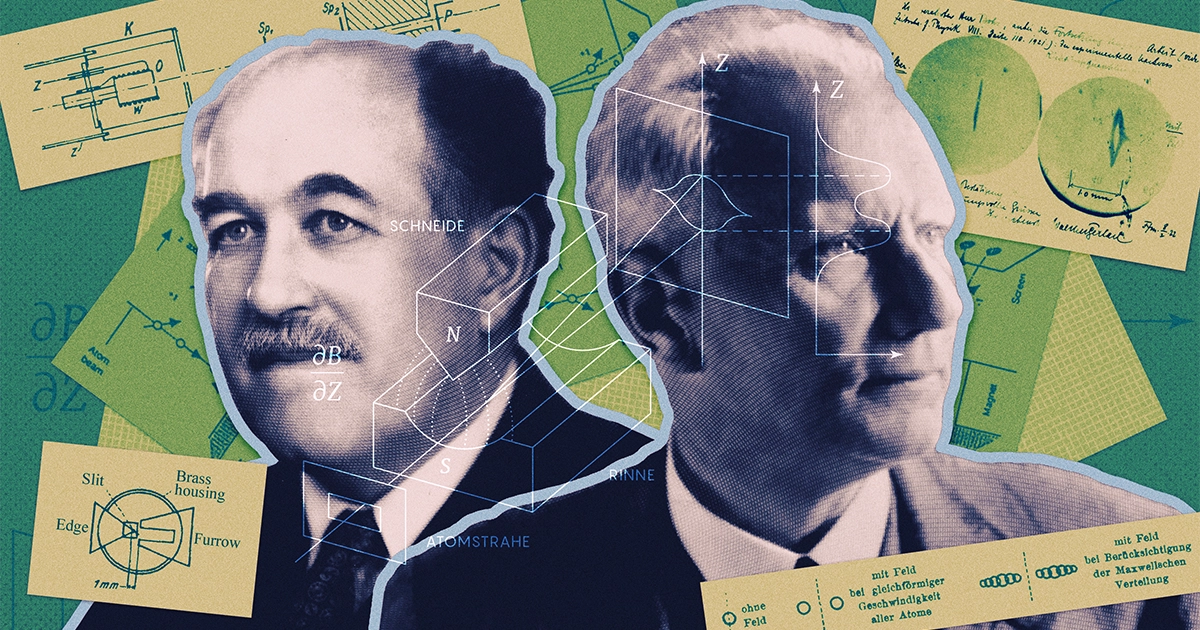
The Stern-Gerlach experiment, conducted in 1922, confirmed the existence of quantum phenomena and played a crucial role in the development of quantum theory. The experiment involved shooting silver atoms at a detector and observing the splitting of the silver deposit. While the scientists initially attributed the splitting to the orbit of the atom's outermost electron, it was later discovered that it was actually due to the quantization of the electron's internal angular momentum, known as spin. This unexpected result led to a deeper understanding of quantum mechanics and challenged previous interpretations of the experiment.

Exploring the Enigma of Black Holes and White Holes with Einstein, Hawking, and Rovelli

Originally Published 2 years ago — by Big Think

Featured image for Exploring the Enigma of Black Holes and White Holes with Einstein, Hawking, and Rovelli
Source: Big Think

Black holes pose a conceptual challenge to the compatibility of quantum theory and general relativity, pushing scientists to seek a unified theory of gravity. They are crucial in understanding the nature of space, time, and the fundamental laws of physics. The event horizon, the boundary between the external universe and the interior of a black hole, and the concept of Hawking radiation have revolutionized our understanding of these cosmic objects. The question of what happens to the information of objects that fall into a black hole, known as the black hole information paradox, is still being explored. The study of black holes offers a glimpse into a deeper theory of gravity and the emergence of space and time from smaller underlying components.

'Groundbreaking Discovery: Magnetic Monopoles Finally Detected in Alice Ring Experiment'

Originally Published 2 years ago — by Interesting Engineering

Featured image for 'Groundbreaking Discovery: Magnetic Monopoles Finally Detected in Alice Ring Experiment'
Source: Interesting Engineering

Researchers have observed "Alice Rings," a type of circular magnetic monopoles, for the first time in super cold gas. These quantum phenomena, named after "Alice in Wonderland," have previously only existed in theory and could have significant implications for quantum theory. The observation suggests that monopoles can form through the frothing of quantum fields, creating short-lived anomalies before vanishing.

Quantum Leap: Unveiling the Vibrational Secrets of Atomic Nuclei

Originally Published 2 years ago — by SciTechDaily

Featured image for Quantum Leap: Unveiling the Vibrational Secrets of Atomic Nuclei
Source: SciTechDaily

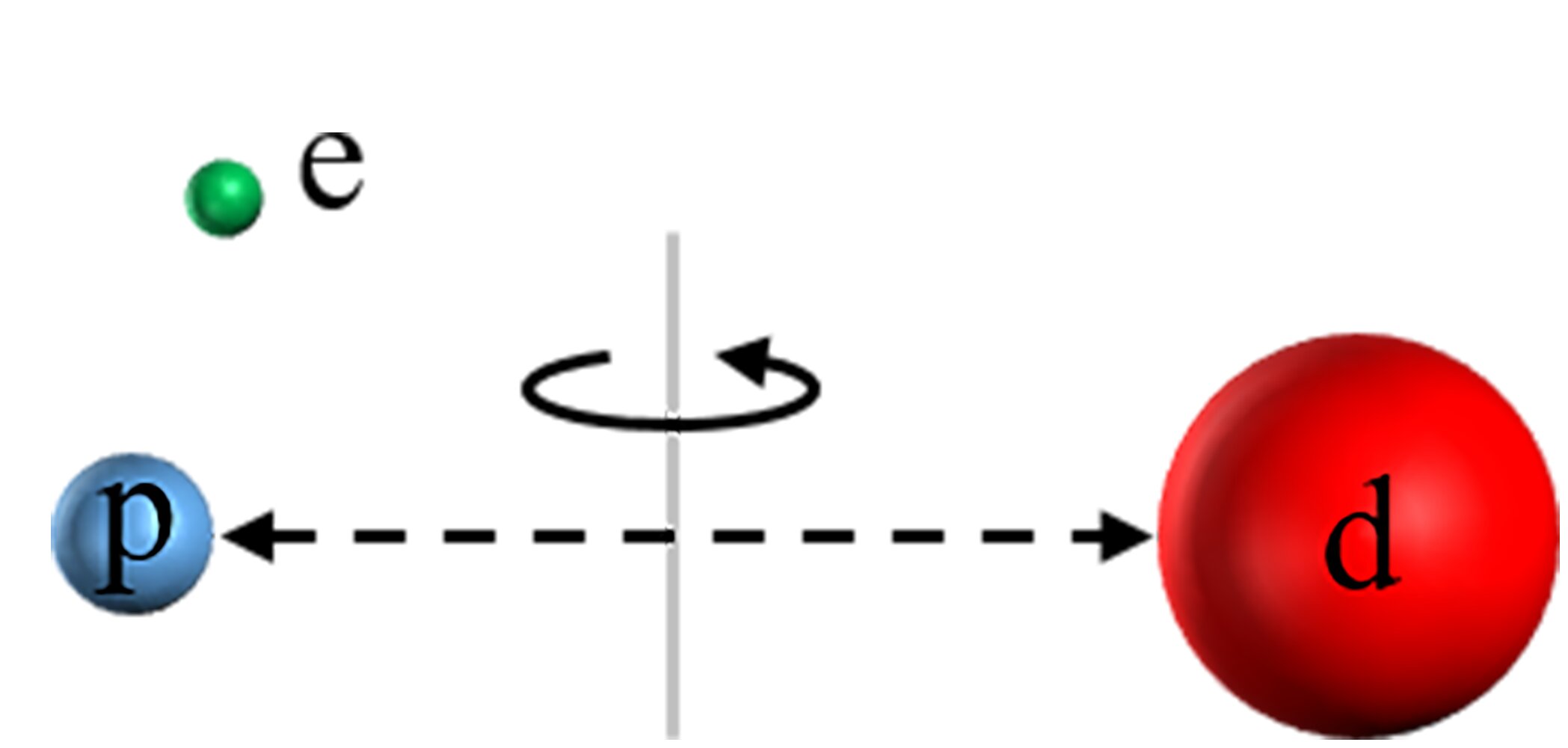
Physicists led by Professor Stephan Schiller have used ultra-high-precision laser spectroscopy to measure the wave-like vibration of atomic nuclei in simple molecules, confirming the established force between atomic nuclei and refining our understanding of quantum theory. The measurements offer the most precise confirmation to date of the wave-like movement of nuclear material and provide important tests for new physical effects related to Dark Matter. The researchers have not found evidence of any deviation from the established force, but continue to search for further fundamental forces that may be connected to Dark Matter.

Unveiling the Laser-like Vibrations of Atomic Nuclei

Originally Published 2 years ago — by Phys.org

Featured image for Unveiling the Laser-like Vibrations of Atomic Nuclei
Source: Phys.org

Physicists at Heinrich Heine University Düsseldorf have used ultra-high-precision laser spectroscopy to measure the wave-like vibration of atomic nuclei with unprecedented precision. By studying the molecular hydrogen ion (MHI), they confirmed the wave-like movement of nuclear material and found no evidence of any deviation from the established force between atomic nuclei. The researchers improved experimental precision to a level better than theory, establishing the most precise test of the quantum motion of charged baryons. Their findings provide valuable insights into the behavior of atomic nuclei and could potentially contribute to the search for new physical effects related to Dark Matter.