Tag

Physics Research

All articles tagged with #physics research

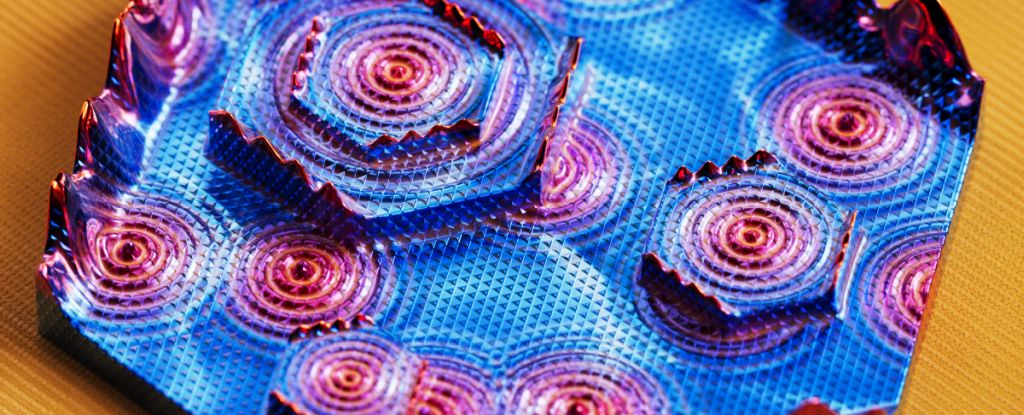
Microscopic Engine Surpasses Sun's Heat, Challenges Physics

Originally Published 2 months ago — by ScienceAlert

Featured image for Microscopic Engine Surpasses Sun's Heat, Challenges Physics
Source: ScienceAlert

Physicists have created a microscopic Stirling engine using a silica particle levitated in electric fields, capable of simulating temperatures up to 13 million kelvin, providing insights into thermodynamics at extreme scales and potential applications in understanding biological processes and particle behavior in complex environments.


Tachyons: Faster-Than-Light Particles That Align with Einstein's Relativity

Originally Published 1 year ago — by The Debrief

Featured image for Tachyons: Faster-Than-Light Particles That Align with Einstein's Relativity
Source: The Debrief

An international team of physicists has proposed that tachyons, hypothetical particles that travel faster than light, could be compatible with Einstein's special theory of relativity. Their research suggests that incorporating both the initial and final states of a system into calculations resolves previous theoretical challenges, potentially allowing tachyons to exist and offering new insights into quantum theory and the formation of matter.

"Advancements in Thorium-229 Excitation Propel Development of Nuclear Clock"

Originally Published 1 year ago — by physicsworld.com

Featured image for "Advancements in Thorium-229 Excitation Propel Development of Nuclear Clock"
Source: physicsworld.com

Researchers in Germany and Austria have made progress in developing a nuclear clock based on thorium-229, demonstrating the ability to put nuclei of the isotope into a low-lying metastable state with exceptionally low excitation energy. This advancement could lead to a more stable and practical solid-state nuclear clock, offering potential applications in detecting time variations related to new physics beyond the Standard Model and measuring time dilation due to gravitational differences.

"Novel Quantum State Discovered in Arsenic Surface Could Revolutionize Quantum Electronics"

Originally Published 1 year ago — by ScienceAlert

Featured image for "Novel Quantum State Discovered in Arsenic Surface Could Revolutionize Quantum Electronics"
Source: ScienceAlert

Physicists have discovered a never-before-seen hybrid quantum state on the surface of an arsenic crystal, combining two different means of current. This unexpected finding has the potential to advance quantum physics research and technologies such as quantum computing, as it opens up a new frontier in material science and novel physics. The discovery, published in Nature, could lead to the development of new topological materials and quantum devices not currently accessible through existing platforms.

"Scientists Successfully Capture 4D 'Ghost' in CERN Accelerator"

Originally Published 1 year ago — by ScienceAlert

Featured image for "Scientists Successfully Capture 4D 'Ghost' in CERN Accelerator"
Source: ScienceAlert

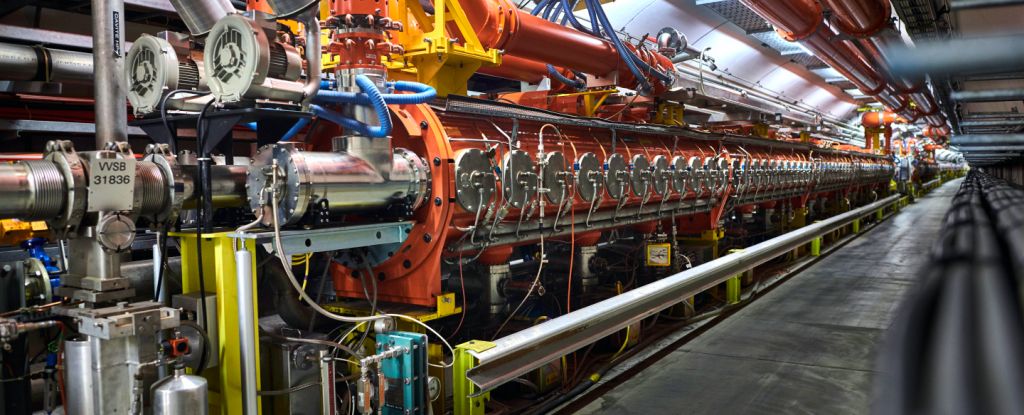
Physicists at CERN have successfully measured and quantified a 4D resonance structure in the Super Proton Synchrotron particle accelerator, which can cause beam degradation and hinder particle research. This structure, resulting from a phenomenon known as resonance, requires four states to represent and affects the path of particles in the accelerator. By carefully measuring particle positions, the researchers were able to map the resonance and demonstrate how individual particles behave within it. Understanding this phenomenon could lead to new ways to mitigate beam degradation and achieve high-fidelity beams for future particle acceleration experiments.

"Theoretical Description of Topological Water Wave Structures by Researchers"

Originally Published 1 year ago — by Phys.org

Featured image for "Theoretical Description of Topological Water Wave Structures by Researchers"
Source: Phys.org

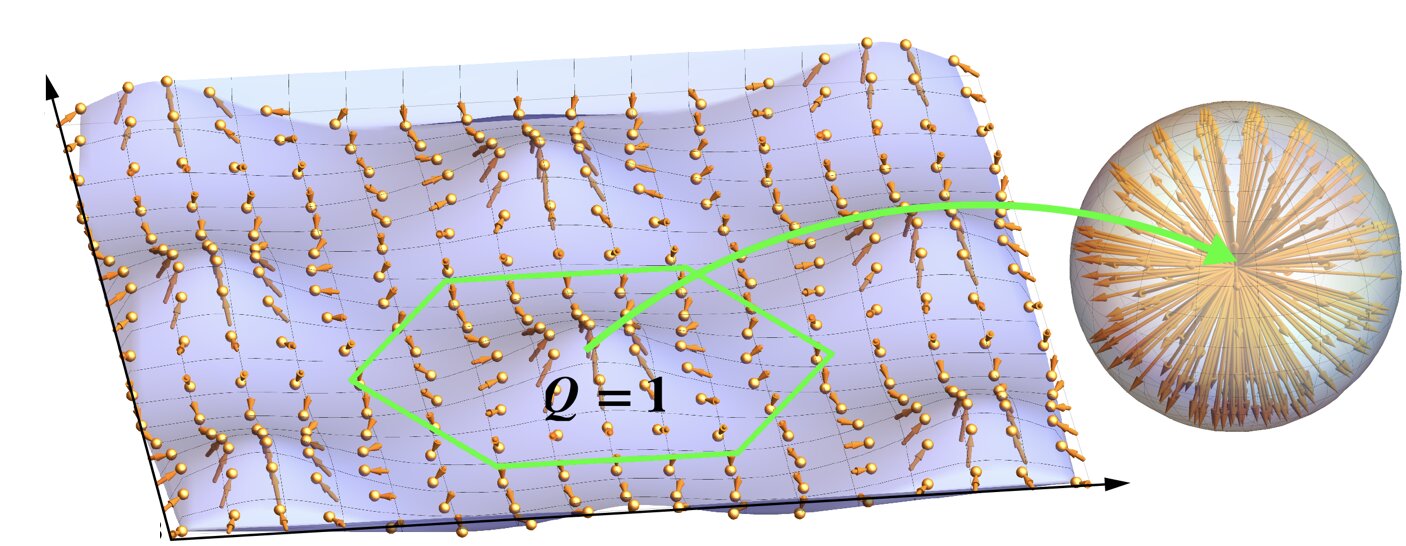
Researchers at RIKEN have provided a theoretical framework for describing various topological wave structures in water waves, such as vortices and skyrmions, which have not been systematically studied before. Their work, published in Physical Review Letters, outlines four different types of topological wave structures and could inform future experiments aimed at emulating these phenomena. The study shows that classical water waves can exhibit topologically nontrivial structures with interesting physical properties, paving the way for new research in fluid mechanics and potential applications in microfluidic manipulation and modeling complex wave phenomena.

"Unveiling the Mysteries: Advancing Particle Physics with a Next-Generation Supercollider"

Originally Published 1 year ago — by Business Insider

Featured image for "Unveiling the Mysteries: Advancing Particle Physics with a Next-Generation Supercollider"
Source: Business Insider

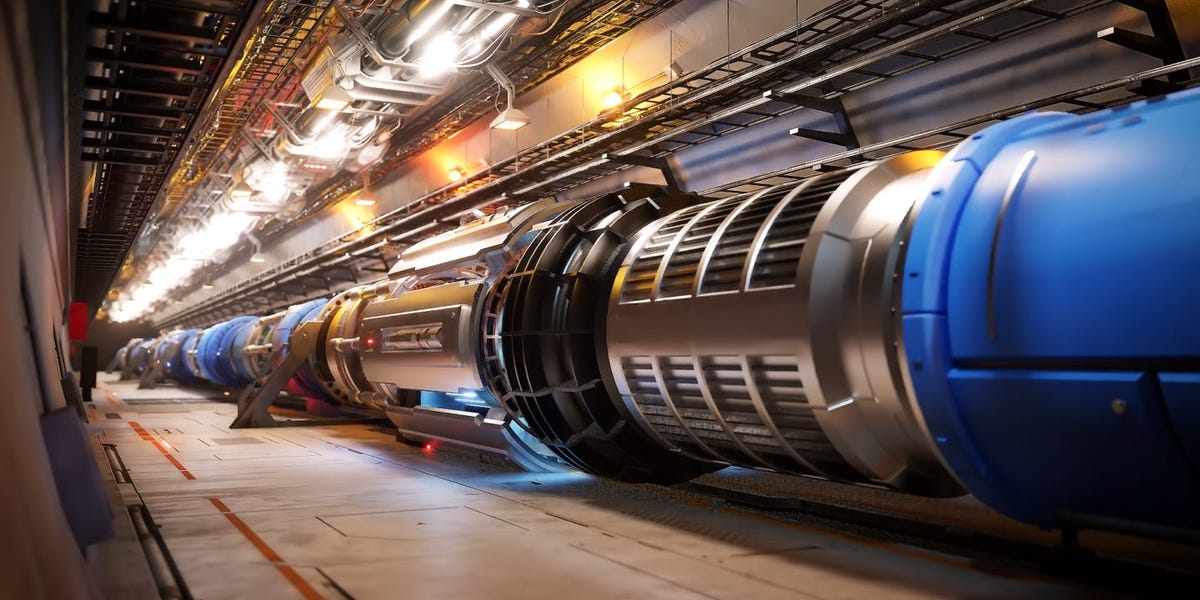
CERN is designing a new supercollider, the Future Circular Collider (FCC), which will be 8 times more powerful than the LHC and could potentially solve mysteries about the nature of the universe, including dark matter and dark energy. The first phase of the FCC could be operational by 2045, and it aims to reproduce 11 years of physics data in about 2 minutes. The FCC would consist of two phases, with the second phase aiming to uncover fundamental forces and particles that have never been observed. However, constructing the supercollider is a massive undertaking, with the first phase alone estimated to cost around $15 billion.

"Breakthrough: Physicists Measure Quantum Gravity at Microscopic Level"

Originally Published 1 year ago — by Gizmodo

Featured image for "Breakthrough: Physicists Measure Quantum Gravity at Microscopic Level"
Source: Gizmodo

Physicists in England and Europe have successfully measured a tiny gravitational pull on the smallest mass ever recorded, using a 0.000015 ounce mass in a cryostat cooled to just over absolute zero. This breakthrough could help bridge the gap between quantum mechanics and Newtonian gravity, shedding light on mysteries such as the origins of the universe, black holes, and unifying all forces into one theory. Understanding gravity at its extremes has implications for phenomena like black holes, neutron stars, and dark matter, and this new technique may pave the way for measuring quantum gravity and unlocking more secrets about the universe's fabric.