Researchers have achieved quantum entanglement between two atomic nuclei separated by 20 nanometres using electrons as 'telephones', a breakthrough that could enable scalable, integrated quantum computers based on silicon technology.
Researchers have demonstrated quantum entanglement between two atomic nuclei separated by 20 nanometres using electrons as 'telephones', a breakthrough that could enable scalable, reliable quantum computers integrated with existing silicon technology.
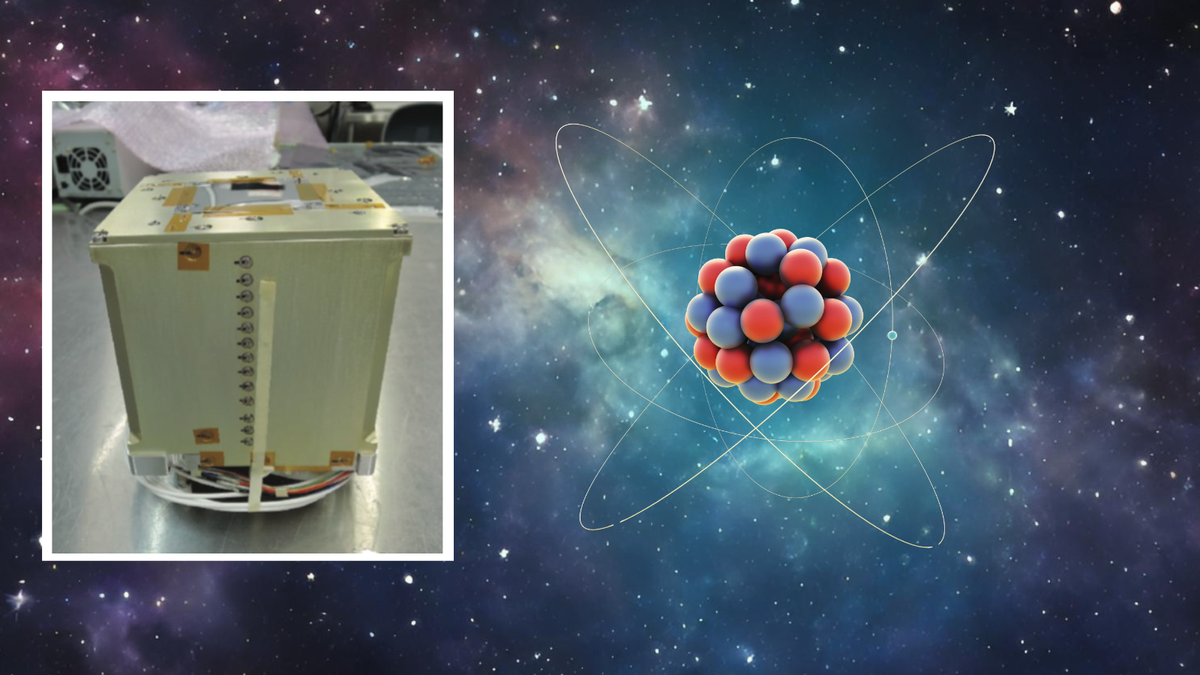
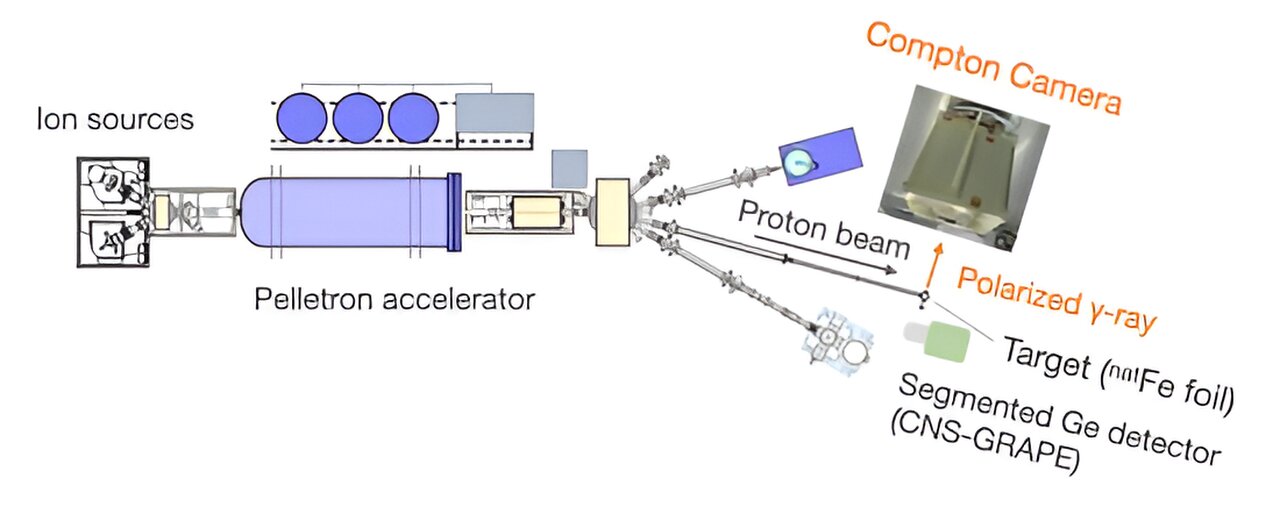
Scientists repurpose a Compton camera, originally designed for deep-space astronomy, to investigate the internal structure and changes within unstable atomic nuclei. By measuring the polarization of high-energy gamma rays emitted from atomic nuclei, the camera reveals insights into nuclear structure and phenomena associated with unstable atomic nuclei. The camera's high-detection efficiency and precise accuracy make it well-suited for nuclear spectroscopy, as demonstrated in experiments at the RIKEN research institute. This research opens up possibilities for using space instruments to investigate atomic nuclei and is published in the journal Scientific Reports.
Researchers have repurposed a multi-layer semiconductor Compton camera, originally designed for astronomy observation, to capture the polarization of gamma rays emitted from atomic nuclei, revealing the internal structure of the nuclei. This method significantly reduces uncertainties in determining spin and parity for quantum states in rare atomic nuclei, allowing for the study of structural changes in nuclear structure. The research could lead to a deeper understanding of the fundamental principles underlying the formation of the universe and the characteristics of matter, including the disintegration process of magic numbers in exotic, unstable nuclei.
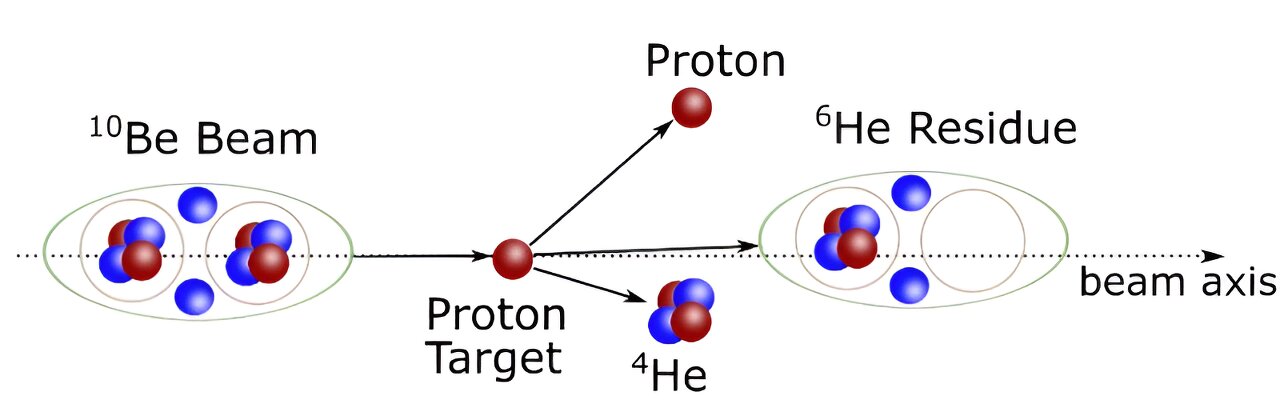
Scientists at the Institute of Modern Physics have discovered molecular-type structures in the ground state of atomic nuclei, providing experimental evidence for a long-standing hypothesis. Using a novel experimental method, they validated the presence of a molecular-type structure in the ground state of beryllium-10, a neutron-rich nucleus. This groundbreaking research opens new paths in nuclear physics research and paves the way for further exploration of cluster structures in neutron-rich nuclear ground states.
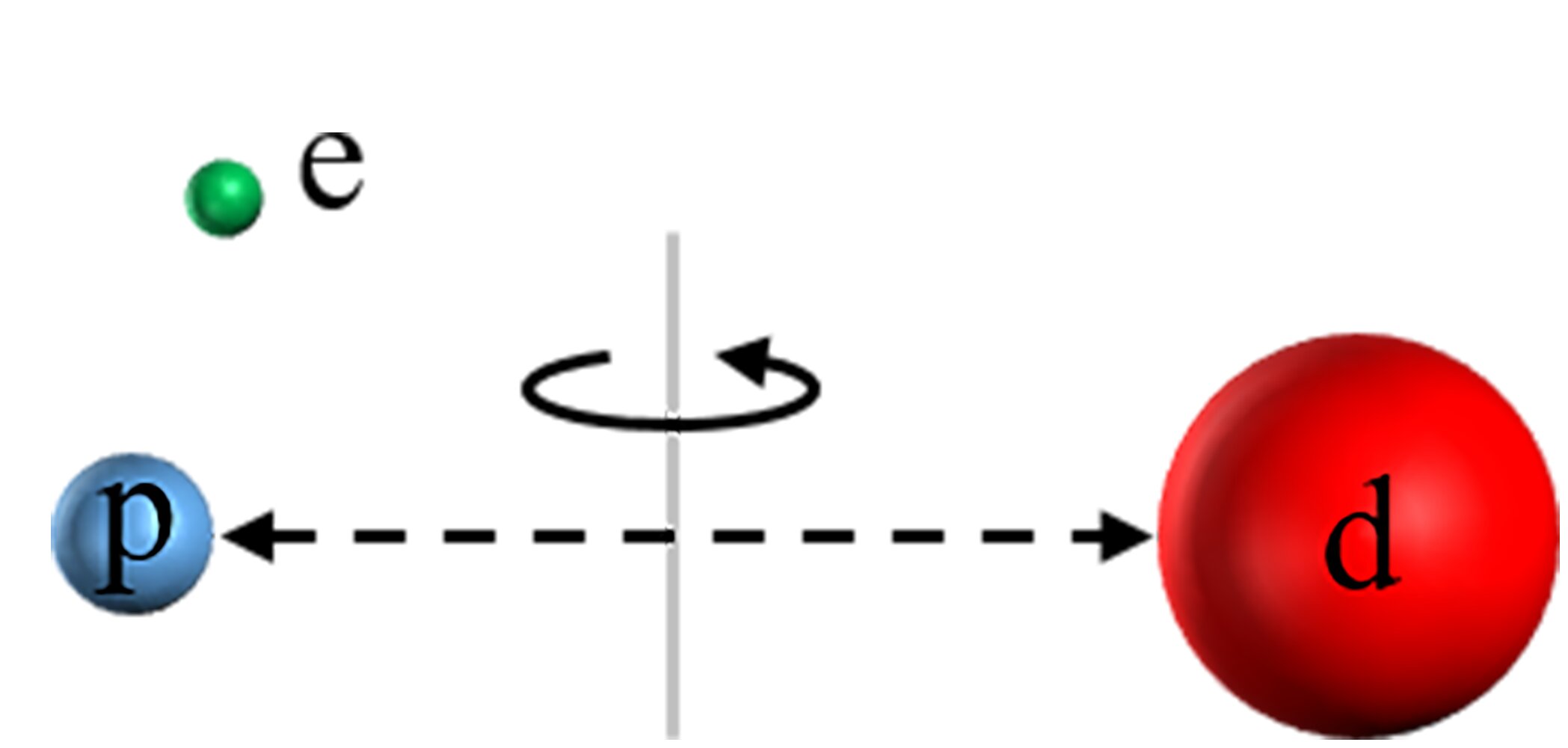
Physicists from the Institute of Modern Physics (IMP) of the Chinese Academy of Sciences have discovered a molecular-type structure in the ground state of atomic nuclei. Using a novel experimental method, they validated the presence of a molecular-type structure in the ground state of beryllium-10, a neutron-rich nucleus. The experimental results support the long-standing hypothesis of a molecular-state structure in beryllium-10's ground state, suggesting the formation of an α–α dumbbell-shaped core with two valence neutrons rotating perpendicular to the core axis. This study provides the first experimental evidence for the theoretical description of molecular-state structures in atomic nuclei's ground state.
Ultra-high-energy cosmic rays, which are particles produced in high-energy processes throughout the Universe, have been observed exceeding the theoretical limit known as the GZK cutoff. While most cosmic rays are protons, the highest-energy particles may be composed of heavier atomic nuclei, such as helium, carbon, oxygen, and iron. These heavier nuclei do not experience the same energy loss when colliding with photons, allowing them to maintain their high energies. Although the origin of these ultra-high-energy cosmic rays remains a mystery, the simplest explanation for their existence is that they are heavy ions traveling at high speeds throughout the Universe.
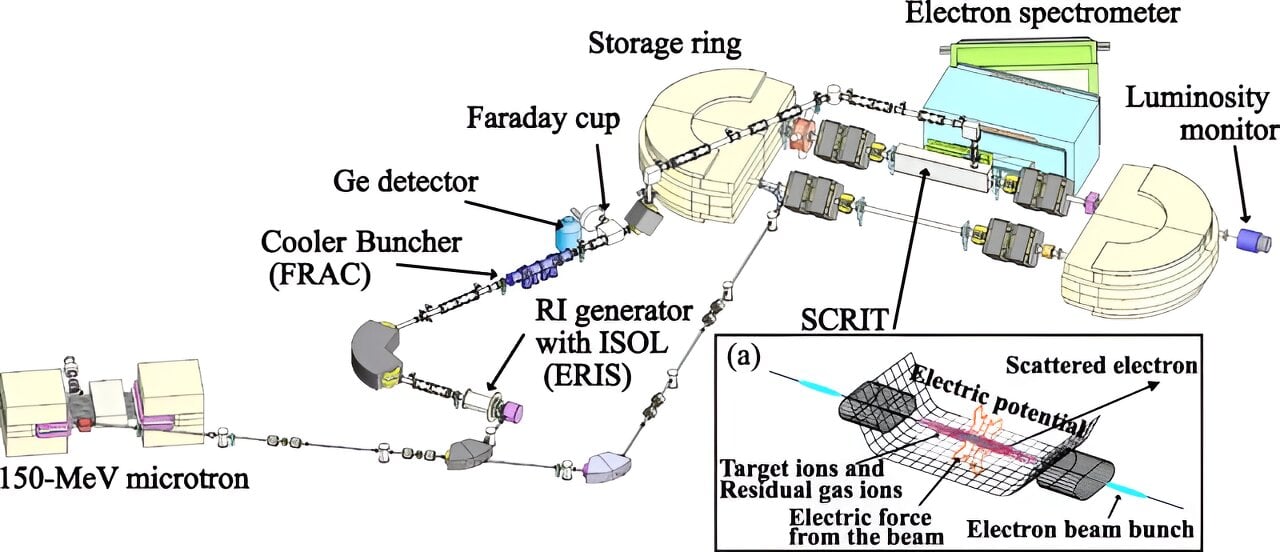
Researchers from Japan have observed electron scattering from radioisotopes that do not occur naturally for the first time. Using a particle accelerator, the team directed energized electrons to collide with a block of uranium carbide, resulting in the production of cesium-137 ions. These ions were then trapped in a three-dimensional space aligned with an electron beam, allowing for collisions between them. The interference patterns of the electron scattering were recorded using a magnetic spectrometer. This breakthrough opens up new research avenues and the potential for developing a unified theory to describe the structure of atomic nuclei.
Researchers at Oak Ridge National Laboratory have discovered a long-lived excited state of radioactive sodium-32, which challenges our understanding of nuclear shapes and energy levels. The unexpected finding raises questions about how nuclei evolve and interact, and could have implications for our understanding of nuclear physics and the formation of elements. The discovery was made using data collected from the Facility for Rare Isotope Beams (FRIB) at Michigan State University, and further experiments are planned to determine the shape of the excited state.
Physicists led by Professor Stephan Schiller have used ultra-high-precision laser spectroscopy to measure the wave-like vibration of atomic nuclei in simple molecules, confirming the established force between atomic nuclei and refining our understanding of quantum theory. The measurements offer the most precise confirmation to date of the wave-like movement of nuclear material and provide important tests for new physical effects related to Dark Matter. The researchers have not found evidence of any deviation from the established force, but continue to search for further fundamental forces that may be connected to Dark Matter.
Physicists at Heinrich Heine University Düsseldorf have used ultra-high-precision laser spectroscopy to measure the wave-like vibration of atomic nuclei with unprecedented precision. By studying the molecular hydrogen ion (MHI), they confirmed the wave-like movement of nuclear material and found no evidence of any deviation from the established force between atomic nuclei. The researchers improved experimental precision to a level better than theory, establishing the most precise test of the quantum motion of charged baryons. Their findings provide valuable insights into the behavior of atomic nuclei and could potentially contribute to the search for new physical effects related to Dark Matter.