Tag

Information Paradox

All articles tagged with #information paradox

science1 year ago

New Paper Proposes Solution to Hawking's Black Hole Paradox

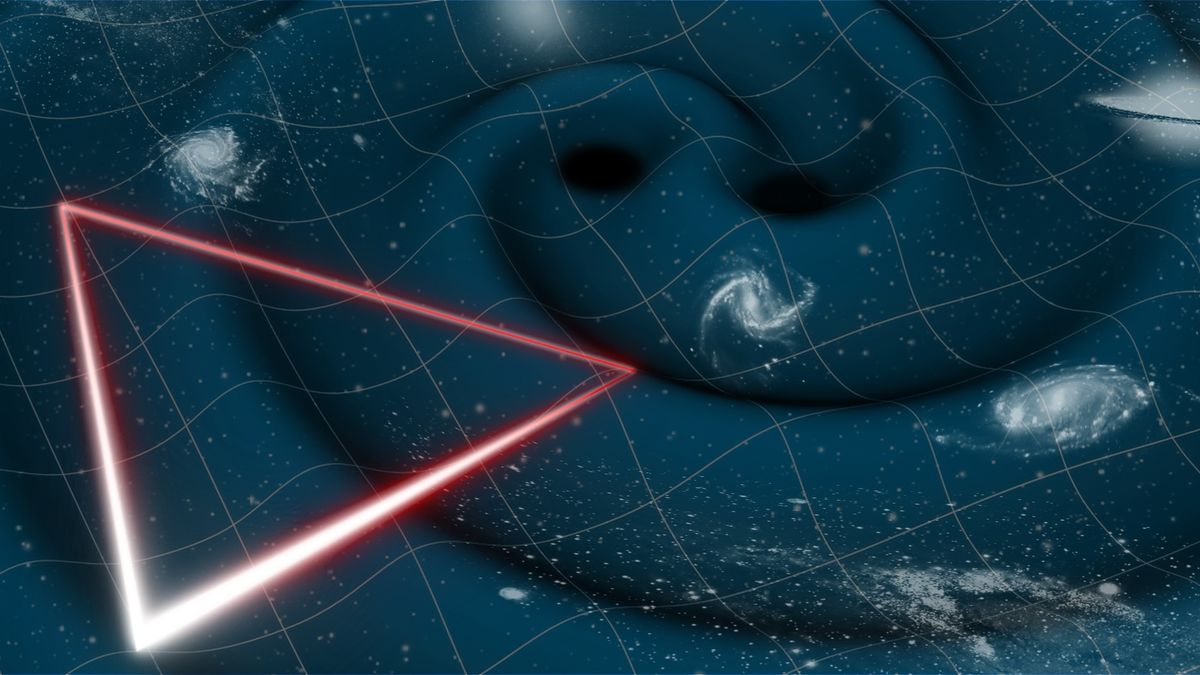
A new study suggests a potential solution to the black hole information paradox, a problem that has puzzled scientists since Stephen Hawking's discovery of Hawking radiation. The research proposes that black holes may leak information through nonviolent nonlocality, where quantum connections between the inside and outside of a black hole create subtle signatures in gravitational waves. While current detectors lack the sensitivity to confirm this hypothesis, future instruments might be able to test it, potentially resolving the paradox.
science2 years ago

Cracking the Enigma: Unraveling the Black Hole Information Paradox

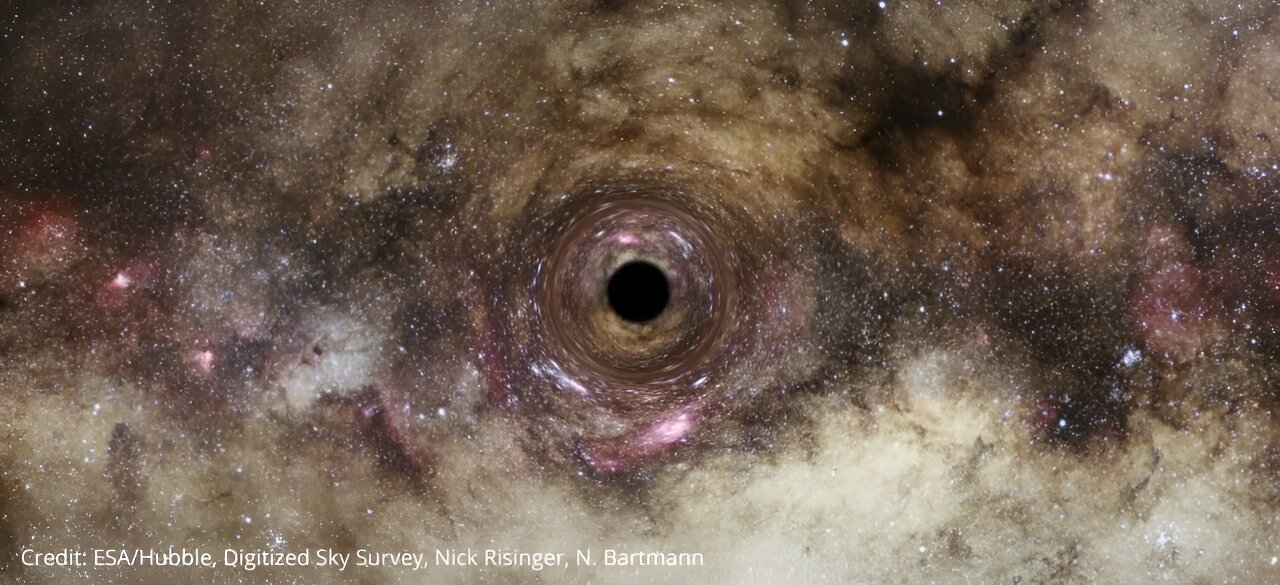
The black hole information paradox, which has puzzled physicists for over half a century, arises from the conflict between the principles of quantum mechanics and general relativity. While information cannot be destroyed, the emission of Hawking radiation from black holes appears to be featureless and devoid of unique information. This paradox challenges our understanding of the fundamental nature of black holes and the fate of information that falls into them. Although no definitive solution has been found yet, ongoing research in quantum gravity offers promising clues towards resolving this paradox and advancing our understanding of the universe.

science2 years ago

Exploring the Enigma of Black Holes and White Holes with Einstein, Hawking, and Rovelli

Black holes pose a conceptual challenge to the compatibility of quantum theory and general relativity, pushing scientists to seek a unified theory of gravity. They are crucial in understanding the nature of space, time, and the fundamental laws of physics. The event horizon, the boundary between the external universe and the interior of a black hole, and the concept of Hawking radiation have revolutionized our understanding of these cosmic objects. The question of what happens to the information of objects that fall into a black hole, known as the black hole information paradox, is still being explored. The study of black holes offers a glimpse into a deeper theory of gravity and the emergence of space and time from smaller underlying components.

science-and-technology2 years ago

Cracking Hawking's Black Hole Paradox: New Escape Route Revealed

Physicists have proposed a new theory that could resolve the information paradox of black holes, which was first proposed by Stephen Hawking. The theory involves encoding the interior information of a black hole into its exterior using a two-step algorithm. The first step scrambles the information, while the second step involves postselection, a process that allows for desired outcomes. The encoded information exists in the radiation outside the black hole, and as the black hole evaporates, the interior information becomes increasingly detached from reality. The theory suggests that semiclassical physics fails to accurately capture phenomena that require exponential complexity. While some physicists have raised questions and alternative solutions, others have found the theory intriguing and are exploring its implications.

science2 years ago

Uncovering Black Hole Histories through Gravitational Waves.

Physicists from King’s College London have suggested that gravitational waves could help resolve the information paradox brought about by Hawking radiation. They argue that almost all of the information about any object sucked into a black hole would be retrievable by measuring the gravitational radiation given off as that object disappears into oblivion. However, other researchers are sceptical about the utility of these gravitational-wave signatures, and the authors acknowledge that their analysis will never recover all of the information from a black hole.

science2 years ago

Solving Stephen Hawking's Black Hole Paradox.

New research suggests that information about the creation of black holes may be found in the radiation around them, known as "quantum hair," and could be retrieved to retell the origins of those black holes. This may finally resolve the "Hawking information paradox," which states that black holes destroy all information about the stars that created them. The research proposes a modification to Hawking radiation that makes it "non-thermal" and thus capable of carrying information with it away from the final fate of the black hole. However, there is currently no way to measure this effect, and further simulations of black holes in labs on Earth may be necessary to progress this theory.