Tag

Quantum Sensors

All articles tagged with #quantum sensors

science-and-technology1 year ago

"Breakthrough in Quantum Sensors Enables Data Collection from the Past"

Researchers at Washington University in St. Louis, along with collaborators from NIST and the University of Cambridge, have developed a quantum sensor leveraging quantum entanglement that could potentially collect data from the past. This breakthrough, detailed in a study published in Physical Review Letters, involves a two-qubit superconducting quantum processor and demonstrates a quantum advantage that could enable temporally manipulated measurements, marking a significant step toward practical time-travel technology.

science-and-technology1 year ago

"Quantum States and Spin-Boson Discovery Unlock New Device Potential"

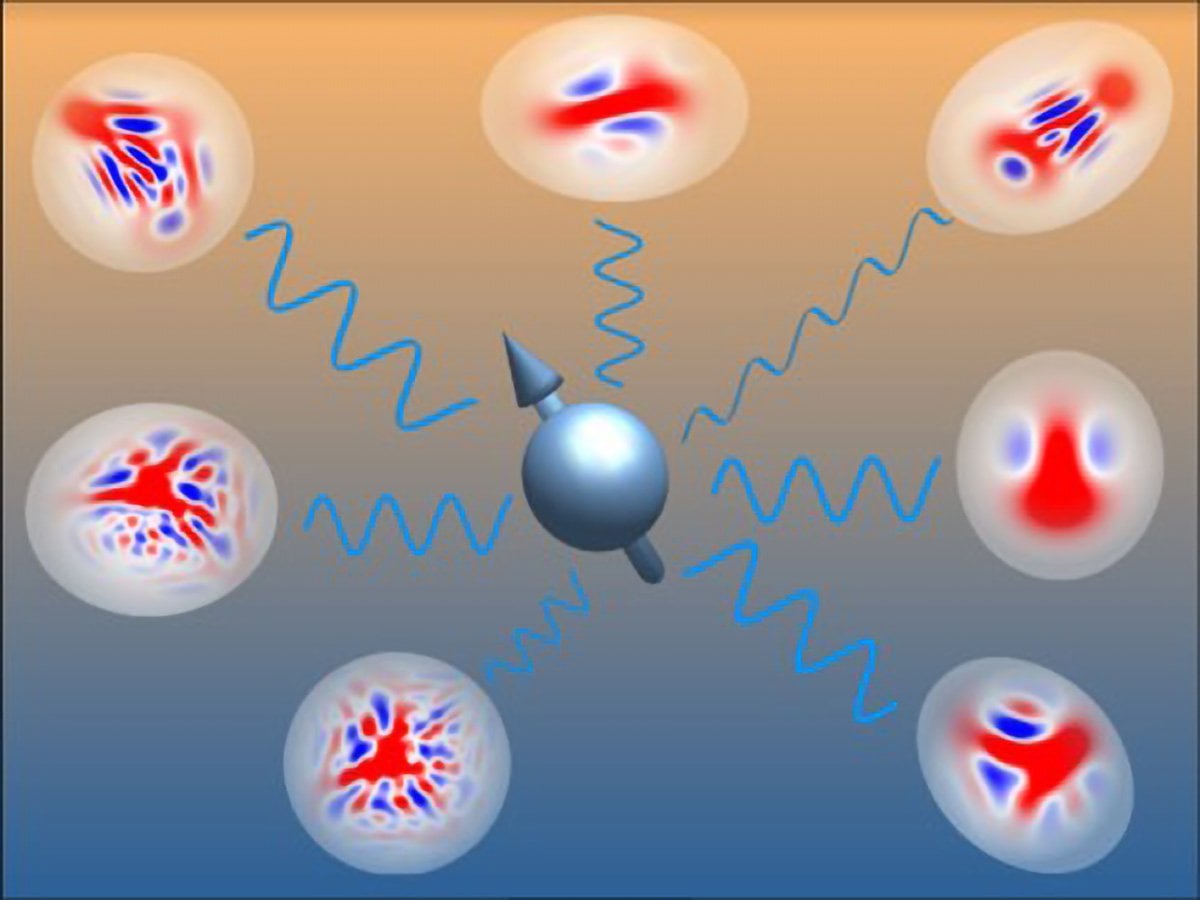
Researchers from Amsterdam have developed a new method using non-Gaussian states to efficiently describe and configure quantum spin-boson systems, which could significantly advance quantum computing and sensing. This approach allows for the preparation of complex quantum states, potentially enhancing quantum simulation, error correction, and sensor sensitivity. The method, demonstrated for a single spin, aims to extend to multiple spins and bosonic modes, with ongoing efforts to account for environmental disturbances.

science-and-technology2 years ago

Quantum Sensor Development Overcomes Major Obstacle

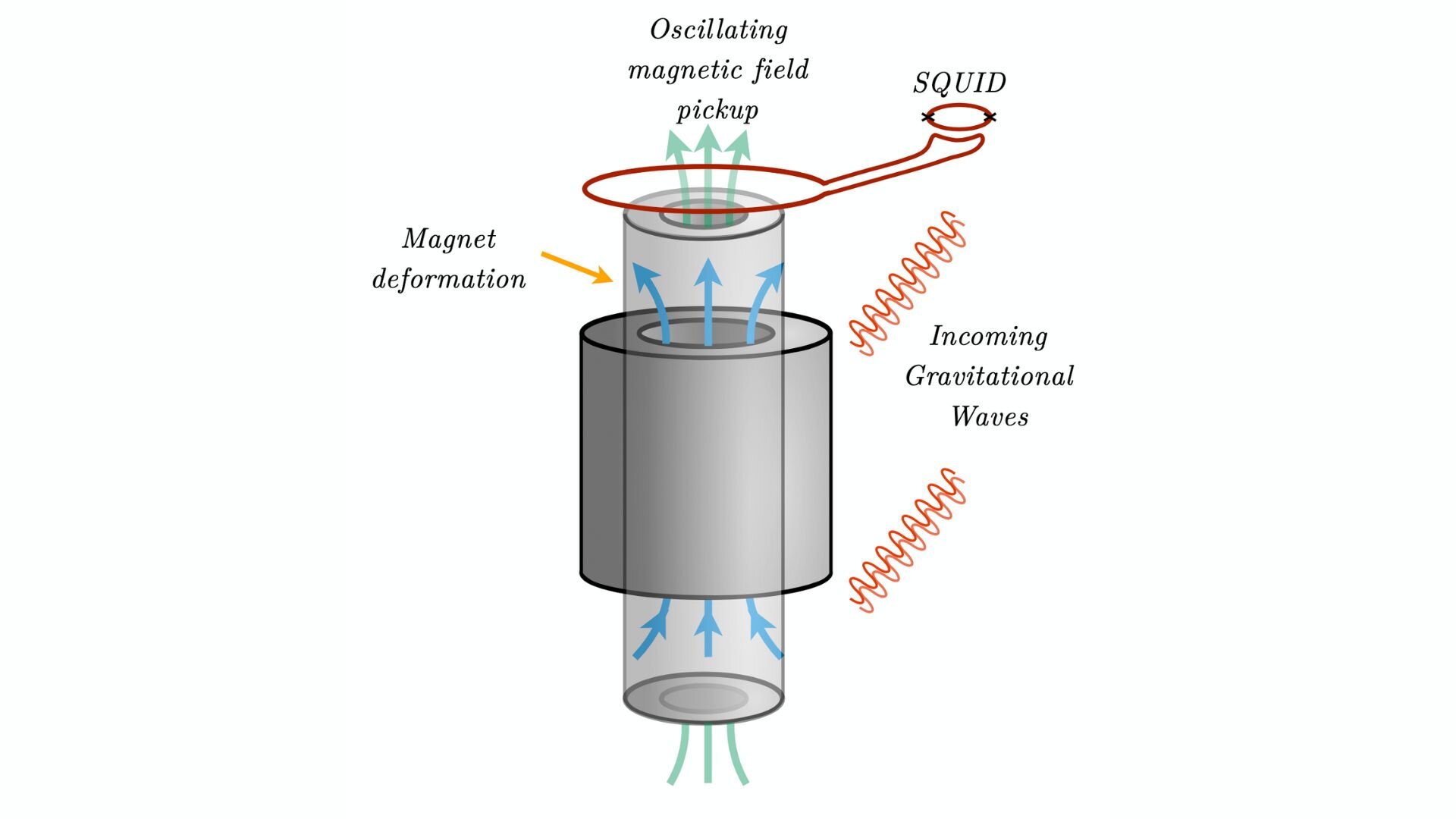
Researchers from the Niels Bohr Institute have made significant progress in the development of quantum sensors by overcoming a major obstacle in distinguishing signals of interest from various types of noise. Quantum sensors have the potential to revolutionize medical examinations and other fields by detecting extremely small variations in magnetic fields and tissue conductivity. The findings bring quantum sensors closer to practical applications, with potential uses in monitoring the health of unborn children, brain monitoring, and even gravitational wave detection in astrophysics.

science-and-technology2 years ago

"Breakthrough: Physicists Invent Revolutionary Radio Wave Antenna"

Physicists at the University of Otago have developed a new form of antenna for radio waves using a small glass bulb containing an atomic vapor. The antenna, enabled by atoms in a Rydberg state, offers superior performance with high sensitivity, broad tunability, and small physical size. It eliminates the need for multiple antennas to cover different frequency bands and can be accessed via laser light, making it useful in defense, communications, and satellite technology. The portable design allows for field testing, and the researchers believe it will make quantum sensors more robust and cost-effective for real-world applications.

technology2 years ago

Harnessing Laser-Controlled Filaments to Advance Neuromorphic Computing in Vanadium Dioxide

Scientists have developed a dynamic network structure for neuromorphic computing using laser-controlled conducting filaments in vanadium dioxide (VO2). VO2 undergoes a metal-insulator transition at a specific temperature, making it suitable for various applications. Its ability to mimic the behavior of biological neurons and adapt its conductivity makes it ideal for neuromorphic computing. The researchers used focused lasers and quantum sensors to manipulate and study the conducting filaments within VO2, achieving precise control over their location. The artificial synapses demonstrated long-term and short-term potentiation, resembling the learning and processing capabilities of neural networks. The researchers aim to build more complex neural networks using multilayer electrodes and light fields for synaptic connectivity.

science-and-technology2 years ago

"Unleashing Quantum Power: Physicists Harness Imperfect Crystals' Hidden Potential"

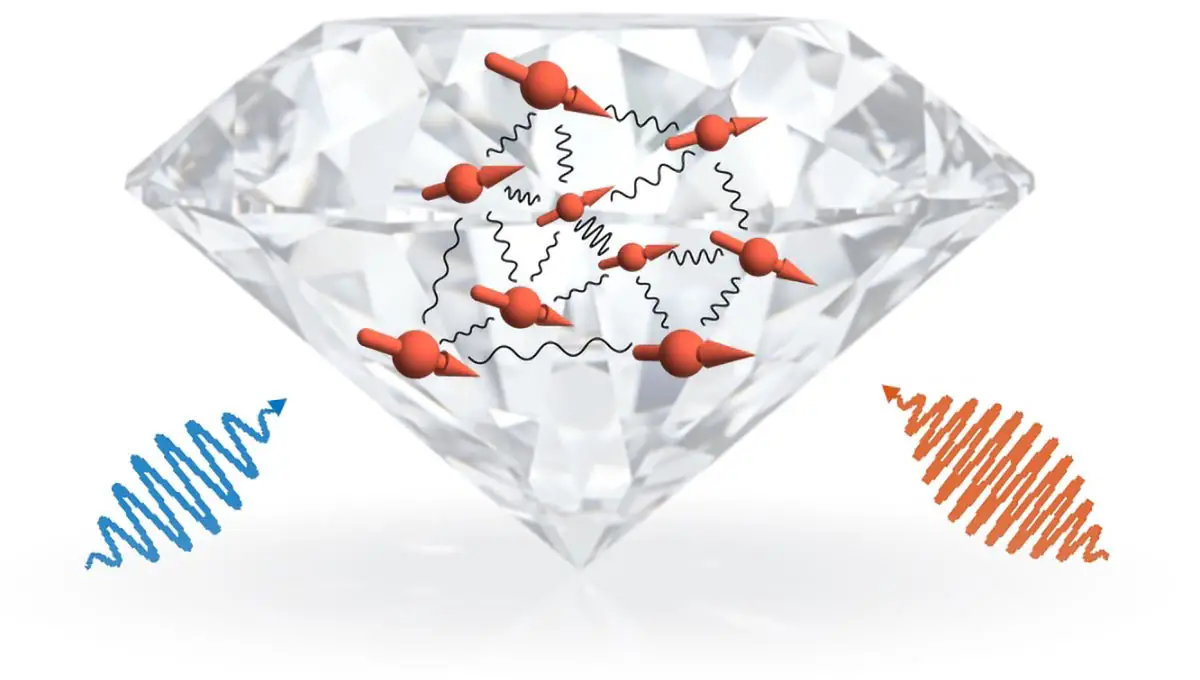
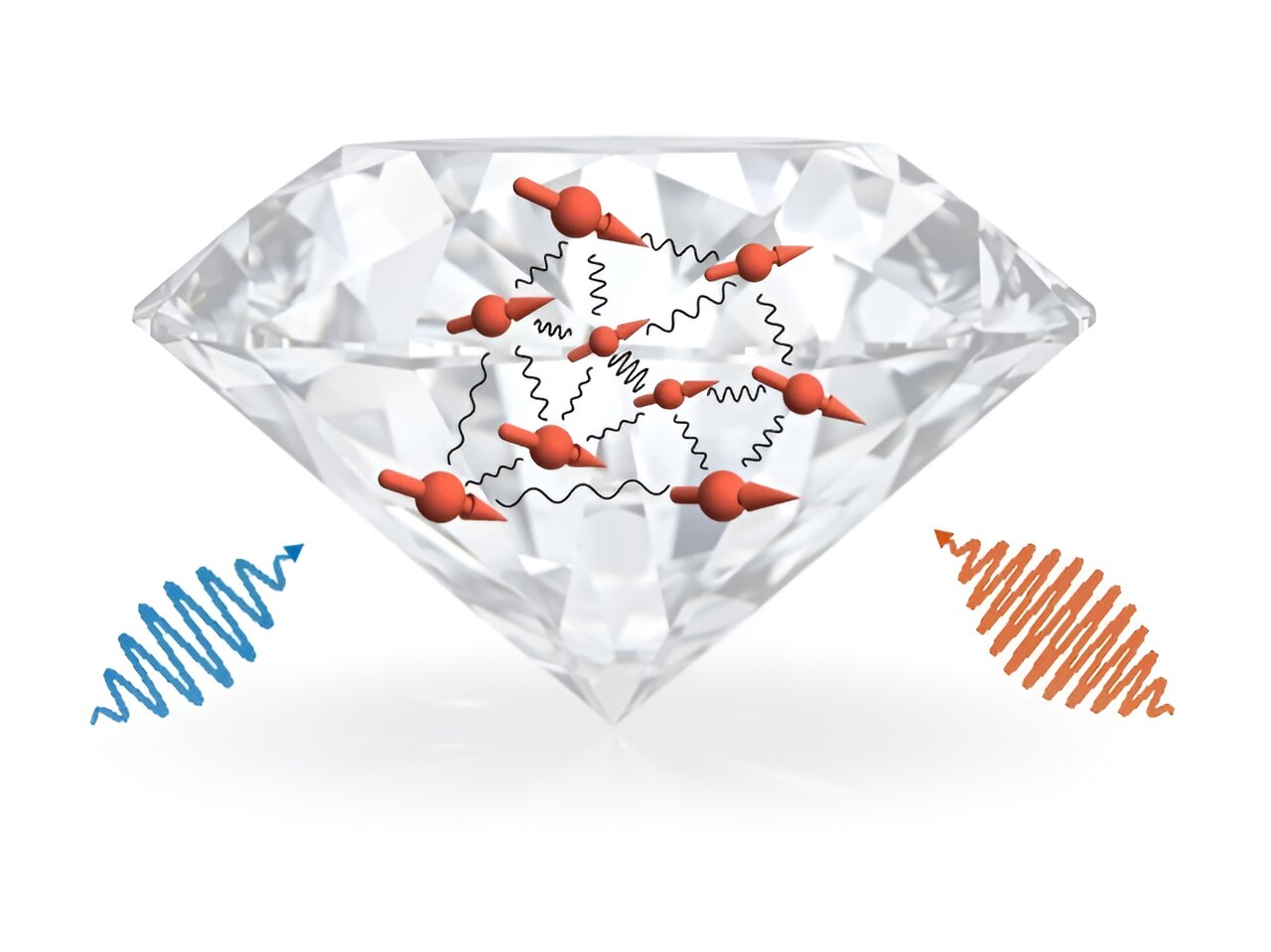
Physicists at Washington University in St. Louis have made significant progress in turning diamonds into quantum simulators by bombarding them with nitrogen atoms to create flaws in the crystal structure. These imperfections can be filled with electrons that possess quantum properties, allowing for the measurement and manipulation of quantum systems. The researchers demonstrated the feasibility of directly simulating complex quantum dynamics using a controllable quantum system, which is difficult to achieve with classical computers. The diamond-based system operated at room temperature and maintained stability by preventing thermalization. This breakthrough opens up possibilities for studying quantum physics, developing sensitive quantum sensors, and exploring interdisciplinary collaborations.

science-and-technology2 years ago

"Diamonds: The Future of Quantum Simulation"

Researchers at Washington University in St. Louis have made progress in turning diamonds into a quantum simulator. By bombarding diamonds with nitrogen atoms, they create flaws in the crystal structure that can be filled with electrons possessing quantum properties. The team demonstrated that their diamond-based system can simulate complex quantum dynamics and keep the system stable for up to 10 milliseconds at room temperature. This advancement opens up possibilities for studying quantum physics, developing sensitive quantum sensors, and collaborating across disciplines.

technology2 years ago

MIT's Breakthrough Technique Enhances Quantum Device Performance by Eliminating Noise

MIT physicists have developed a technique inspired by noise-canceling headphones to extend the coherence time of quantum bits, or qubits, by 20-fold. By using an "unbalanced echo" approach, the team was able to counteract system noise and significantly improve the coherence times for nuclear-spin qubits. This breakthrough has implications for quantum computing, quantum sensors, gyroscopes, and quantum memory. The researchers believe that further improvements are possible by exploring other sources of noise.