Tag

Precision Measurement

All articles tagged with #precision measurement

science-and-technology1 year ago

Breakthrough: Speed of Quantum Entanglement Measured

Scientists at TU Wien have achieved a groundbreaking measurement of quantum entanglement speed using attosecond precision, revealing intricate details of quantum processes. This research, led by Prof. Joachim Burgdörfer and Prof. Iva Březinová, involves using high-frequency laser pulses to observe entanglement formation between electrons. The findings, which measure timing differences at 232 attoseconds, have significant implications for quantum computing, secure communications, and other advanced technologies, marking a major leap in understanding and controlling quantum systems.

science-and-technology2 years ago

Revolutionizing Timekeeping: Unleashing the Potential of Scandium in Next-Gen Atomic Clocks

An international research team has made a significant breakthrough in the development of atomic clocks by creating a pulse generator based on scandium that is a thousand times more precise than the current standard atomic clock based on cesium. Using the X-ray laser at the European XFEL, the team achieved an accuracy of one second in 300 billion years, compared to the current standard of one second in 300 million years. Atomic clocks have numerous applications, including precise positioning using satellite navigation, and the breakthrough opens up possibilities for ultrahigh-precision spectroscopy and the measurement of fundamental physical effects.

science-and-technology2 years ago

Measuring Earth's Rotation: Precision and Accuracy with Gyroscopes

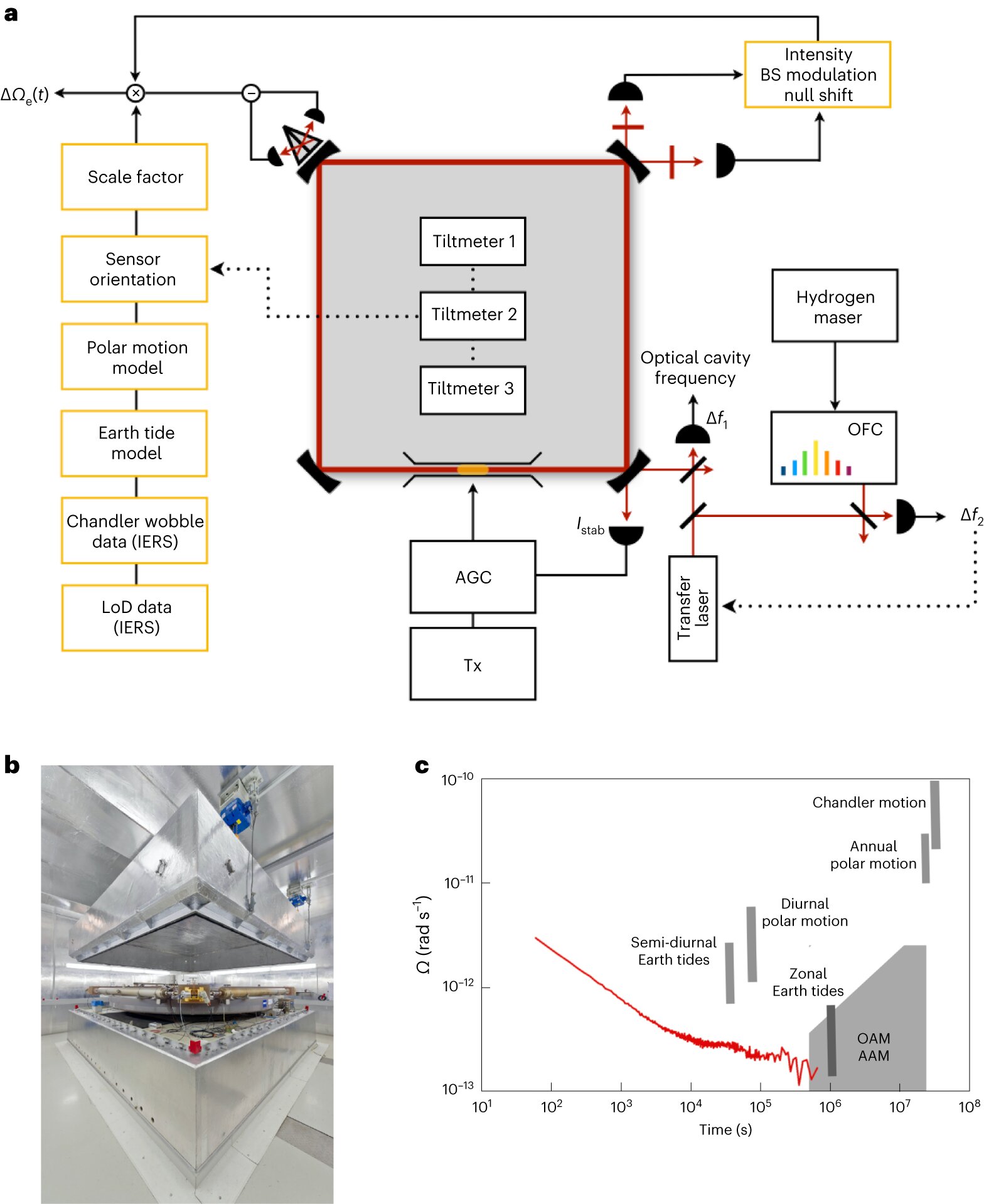
Scientists have developed a new method to measure variations in the Earth's rotation using a gyroscope. The gyroscope, named "G," is a 16-meter-long laser cavity that creates an interference pattern based on the interaction of dual laser beams traveling in opposite directions. Fluctuations in the interference pattern reflect fluctuations in the Earth's rate of rotation, allowing researchers to calculate the distance traveled by a given point on Earth over time. This method provides precise measurements of day-length variations and could be used to build better geophysical models for global transport.

science2 years ago

"Muon G-2 Experiment Unveils Groundbreaking Discovery: A New Force of Nature"

Fermilab's Muon g-2 experiment has revealed a new precision measurement of the muon's magnetic property, indicating the possibility of undiscovered particles and a potential breakthrough in physics. The results highlight a discrepancy between theory and experiment, setting the stage for a final showdown in 2025. The measurement improves the precision of previous results by a factor of 2 and may provide evidence of new physics beyond the Standard Model. The experiment, conducted at Fermilab, involved sending muons into a superconducting magnetic storage ring and analyzing their precession. The collaboration aims to release their final measurement in 2025, which will further challenge the Standard Model theory.

science2 years ago

Quantum Leap: Unveiling the Vibrational Secrets of Atomic Nuclei

Physicists led by Professor Stephan Schiller have used ultra-high-precision laser spectroscopy to measure the wave-like vibration of atomic nuclei in simple molecules, confirming the established force between atomic nuclei and refining our understanding of quantum theory. The measurements offer the most precise confirmation to date of the wave-like movement of nuclear material and provide important tests for new physical effects related to Dark Matter. The researchers have not found evidence of any deviation from the established force, but continue to search for further fundamental forces that may be connected to Dark Matter.

science-and-technology2 years ago

Record Precision Achieved in Measuring Higgs Boson's Mass at Large Hadron Collider

The ATLAS experiment at CERN has achieved a record precision measurement of the Higgs boson's mass, reporting a value of 125.11 billion electronvolts with minimal uncertainty. This measurement, derived from a combination of diphoton and four-lepton channels, is crucial for understanding the fundamental structure of the Universe and testing the Standard Model. The advanced calibration techniques and powerful reconstruction algorithms used in the analysis contributed to this unprecedented level of precision.

science-and-technology2 years ago

Advancements in Remote Sensing and Quantum Computing with Harvard's "Points of Darkness"

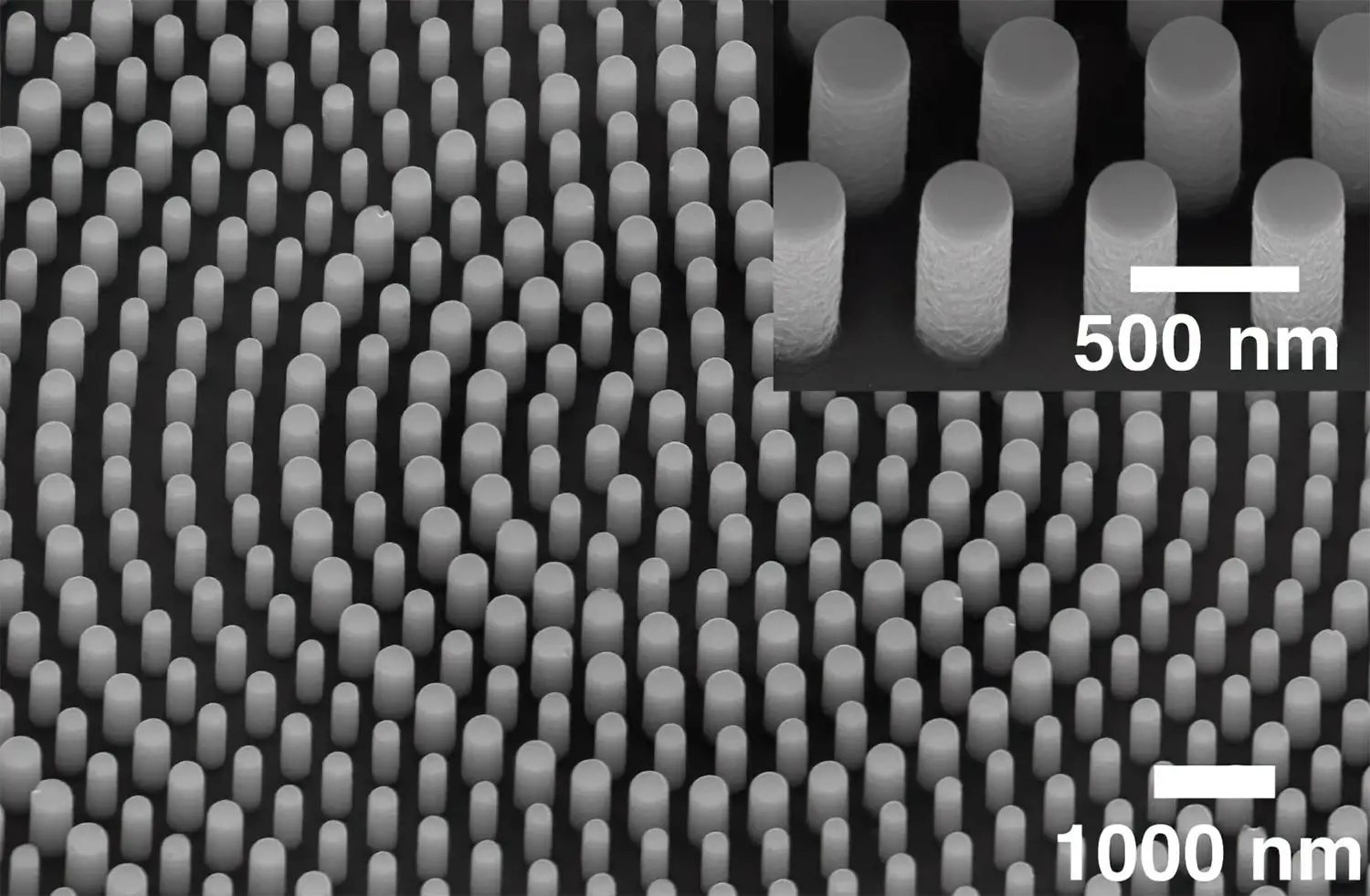
Harvard researchers have developed techniques to control "points of darkness" in light using metasurfaces, allowing for applications in remote sensing, precision measurement, and covert detection. The team created precise dark spots that can capture atoms or act as measurement points for imaging, and developed resilient "polarization singularities," stable dark spots in polarized optical fields. These advancements have implications for improving imaging systems, simplifying optical architecture in atomic physics labs, and enabling the masking of bright sources while imaging scenes.

physics2 years ago

Quantum Spin Behavior Altered by Gravity

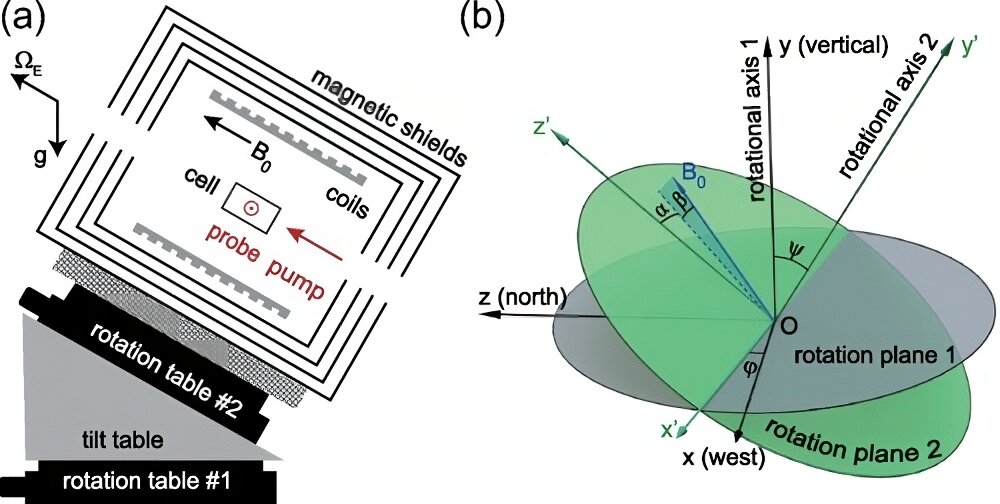
Researchers from the University of Science and Technology of China investigated the coupling effect between neutron spin and gravitational force using a high-precision xenon isotope magnetometer. The weight difference between neutron's spin-up and spin-down states was found to be less than two sextillionths, setting a new upper limit on the coupling strength of this effect. The study improves the precision of various fundamental physical effects by an order of magnitude and compresses the upper limit of the neutron's spin-gravity coupling strength by a factor of 17.

science-and-technology2 years ago

Record Precision Achieved in Direct Comparison of Spin-Squeezed Optical Lattice Clocks.

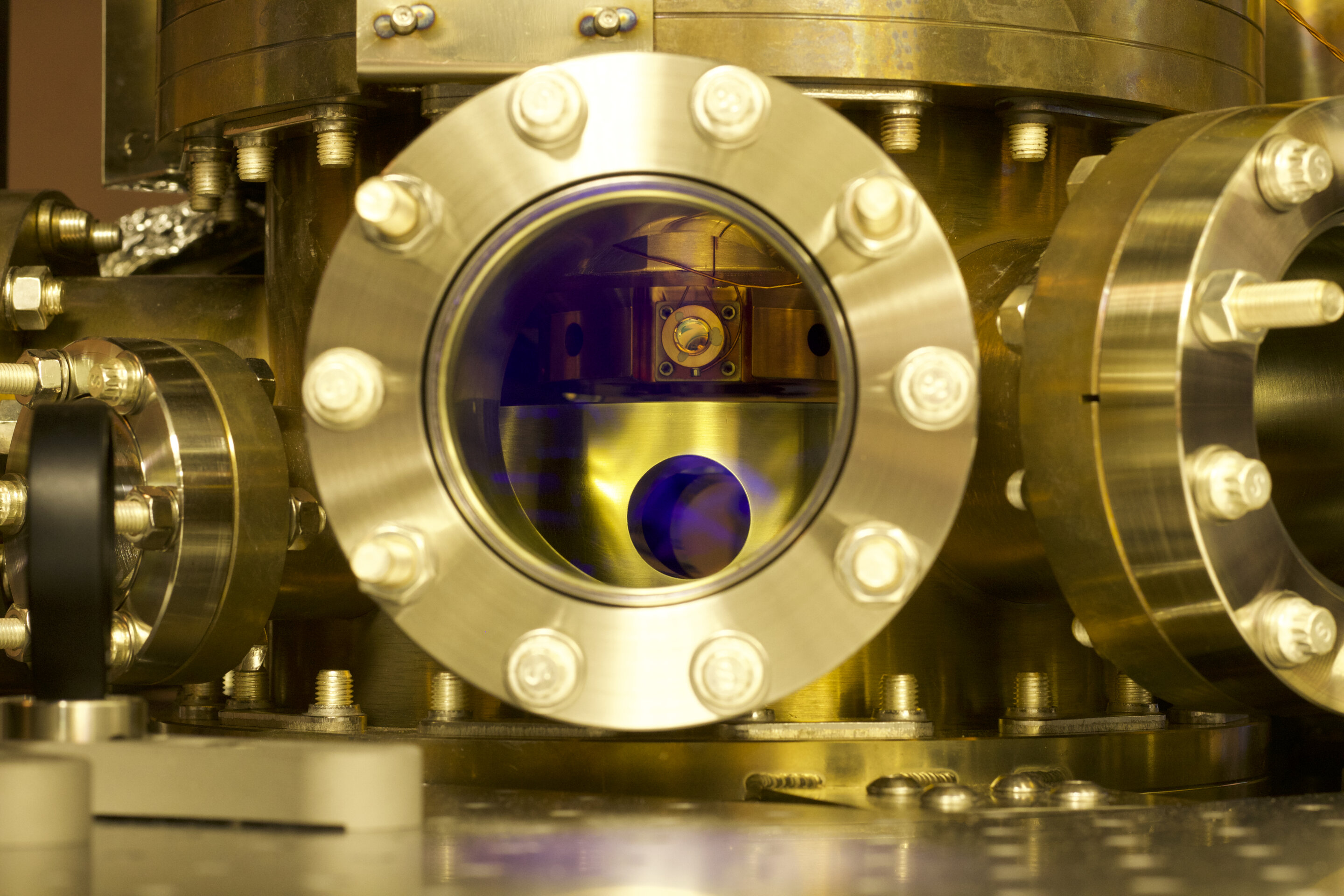
Researchers have demonstrated the first direct observations of an optical-lattice clock operating below the classical quantum projection noise (QPN) limit, averaging down to a measurement precision level of 10−17. By entangling the atomic sample, the researchers were able to reduce the QPN limit and improve the frequency stability of optical lattice clocks, which can be used for practical applications such as GPS and exploring fundamental physics. This represents a major step toward improving state-of-the-art optical lattice clocks through spin squeezing.