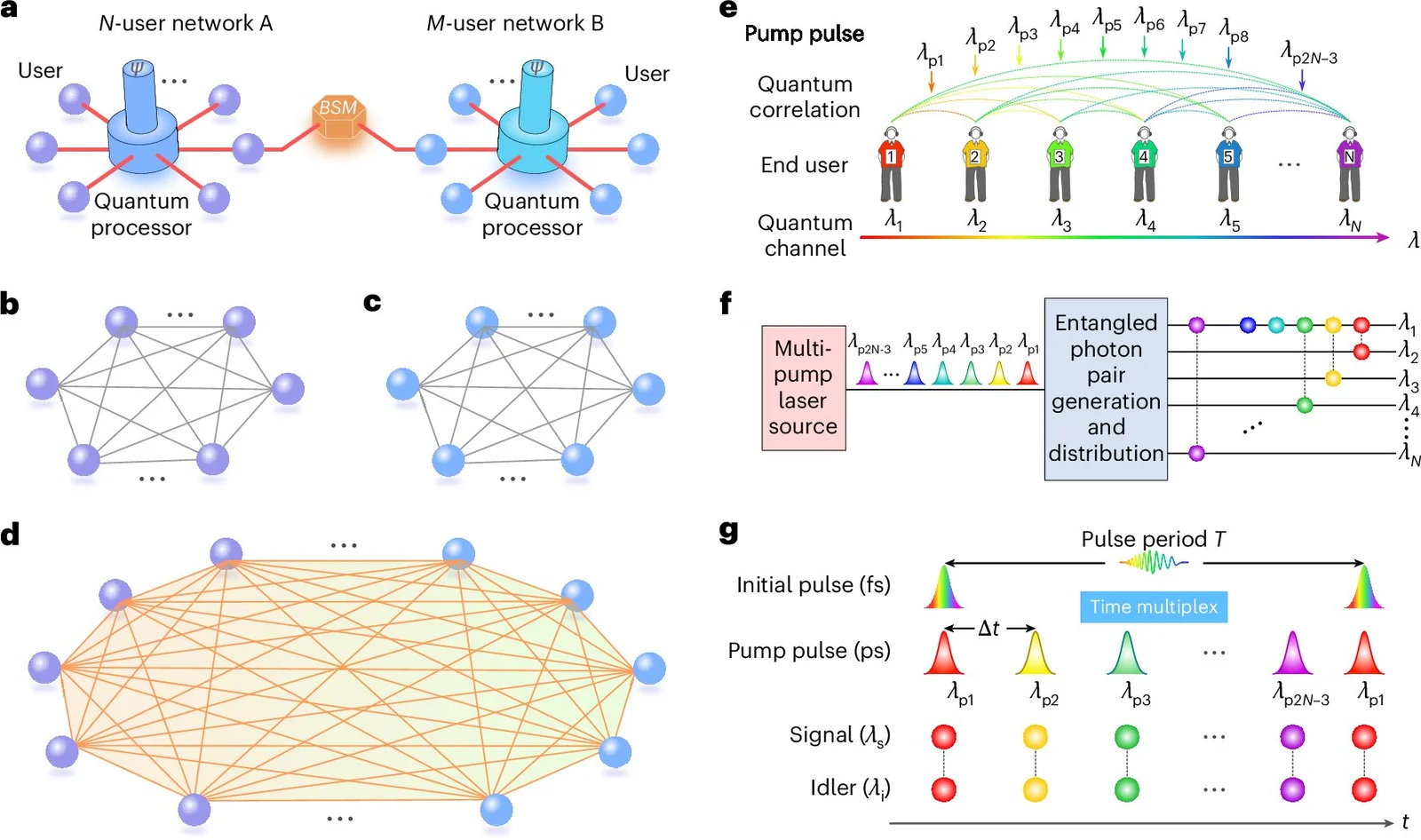
Researchers at Shanghai Jiao Tong University successfully fused two independent quantum networks with 18 users using multi-user entanglement swapping, marking a significant step toward a global quantum internet, though challenges like quantum repeaters remain for larger-scale implementation.
Researchers at Tohoku University have developed optimized quantum sensor networks using superconducting qubits that significantly enhance the detection of faint dark matter signals, potentially unlocking new ways to explore the universe's mysterious missing substance.
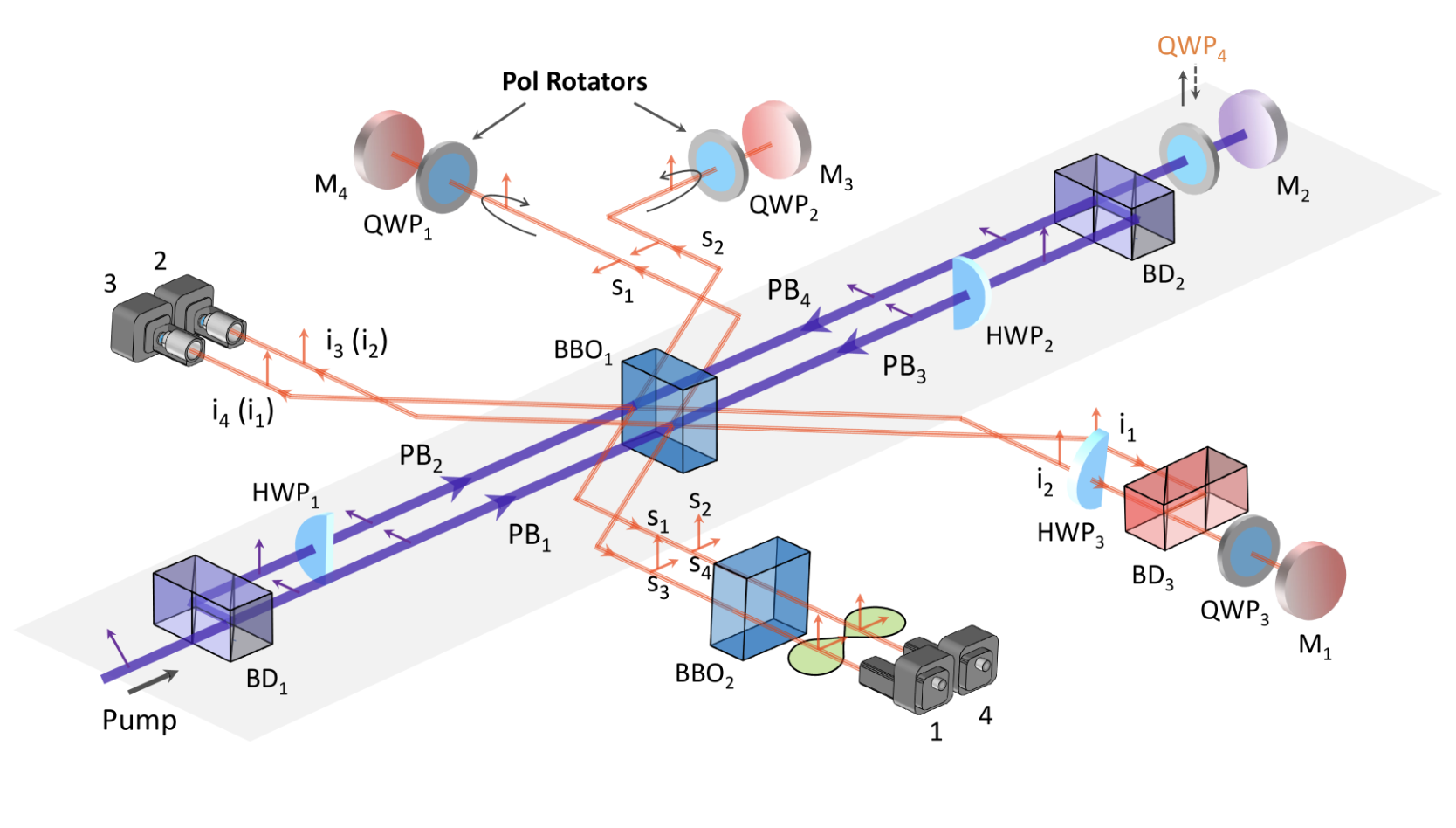
Researchers from Nanjing University and the Max Planck Institute have discovered a simpler method to create quantum entanglement between distant photons using an AI tool called PyTheus. This approach, which avoids traditional methods like Bell-state measurements, relies on the indistinguishability of photon paths to generate entanglement, challenging long-held assumptions in quantum networking. The AI's unexpected solution reduces complexity and resource requirements, potentially advancing quantum communication and information processing.
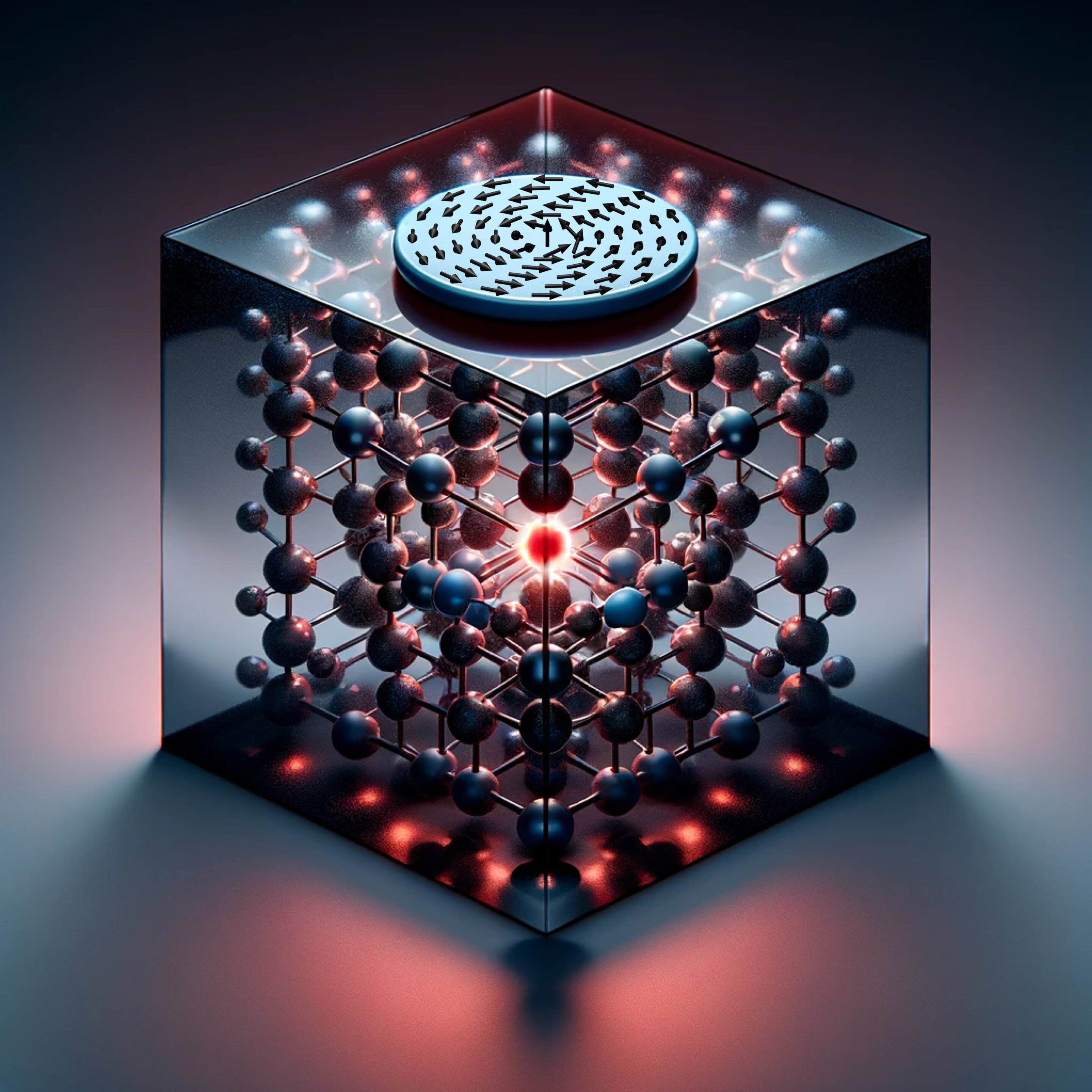
Researchers at HZDR have manipulated atomic-sized qubits in silicon carbide using wave-like excitations in magnetic disks called magnons, presenting a new approach for transducing quantum information. This method could potentially enable the transduction of information within quantum networks, addressing the need for efficient communication between distinct quantum modules. The team's research demonstrates the feasibility of addressing qubits exclusively with magnons, offering insights for the development of a practical quantum computer in the future.
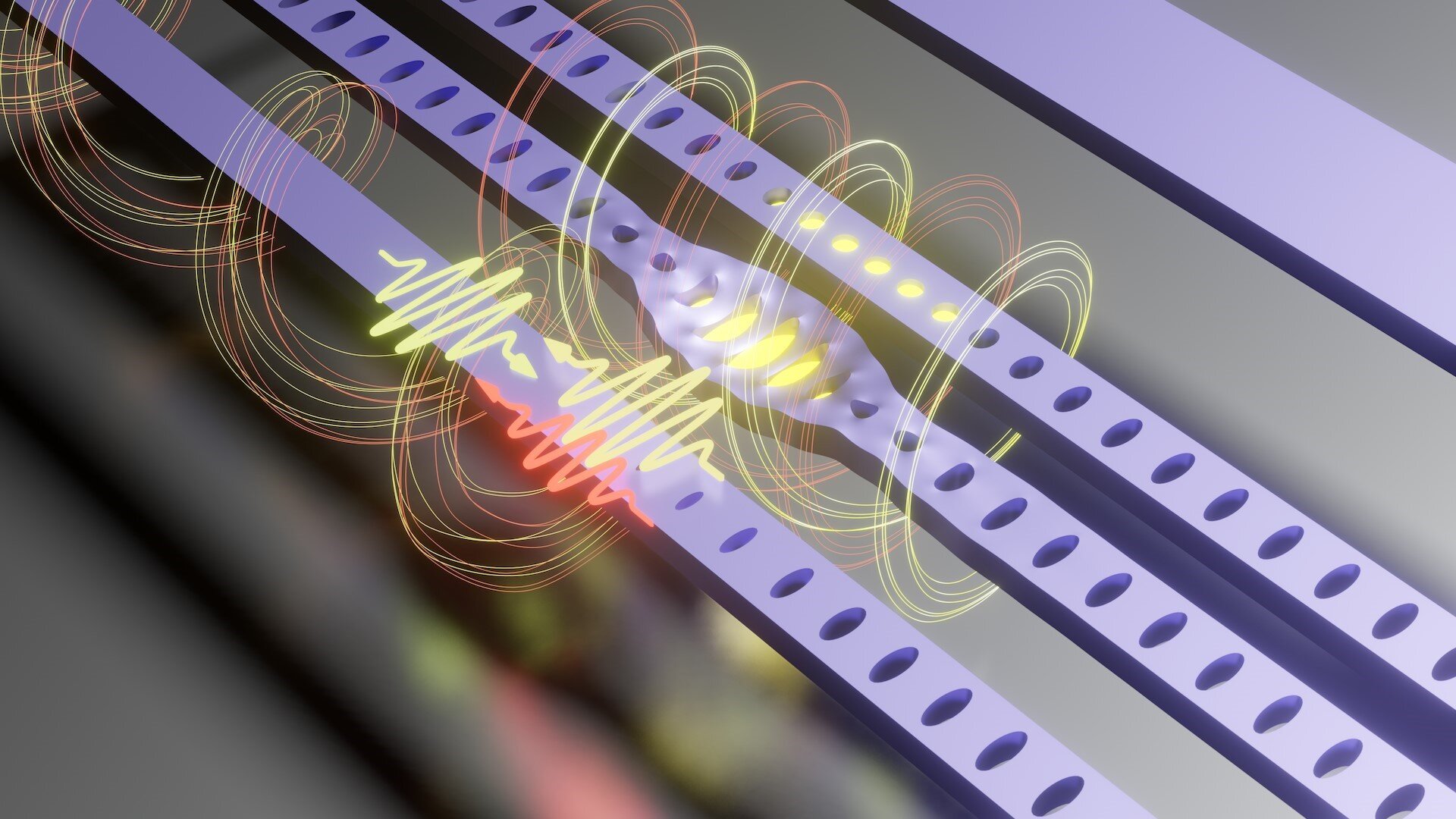
Researchers at the State University of Campinas (UNICAMP) in Brazil, in collaboration with colleagues at ETH Zurich and TU Delft, have conducted a study on the use of nanometric optomechanical cavities for the development of advanced quantum networks. The study introduces dissipative optomechanics, allowing for direct scattering of photons from the waveguide to the resonator, enabling tighter control of optoacoustic interaction. The researchers achieved a tenfold rise in the optomechanical coupling rate and raised the mechanical frequency by two orders of magnitude, offering promising prospects for more effective devices. The study also lays the foundation for future research in manipulating mechanical modes individually and mitigating optical non-linearities in optomechanical devices.
Researchers have developed a theoretical framework that provides deeper insights into quantum nonlocality, a vital property for quantum networks to outperform classical technology. The study unified previous nonlocality research and showed that nonlocality is achievable only through a restricted set of quantum operations. This framework could aid in evaluating the quality of quantum networks and broaden our understanding of nonlocality.
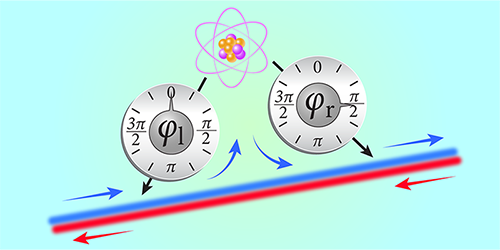
Researchers from the California Institute of Technology have developed a nonreciprocal device, an "artificial atom" made from a superconducting circuit, which can be coupled exclusively to either left- or right-moving signals in a microwave waveguide. This chiral design could be used in quantum networks to enable control over information flow between multiple artificial atoms coupled to a waveguide. The researchers achieved this by using additional superconducting artificial atoms as couplers between the emitter atom and the waveguide, and the relative phase between the modulations of the two couplers yielded the crucial phase difference that either let forward- or backward-propagating light pass through the waveguide.