Tag

Quantum Dynamics

All articles tagged with #quantum dynamics

"Formation of Ultracold Field-Linked Tetratomic Molecules"

Originally Published 1 year ago — by Nature.com

Featured image for "Formation of Ultracold Field-Linked Tetratomic Molecules"
Source: Nature.com

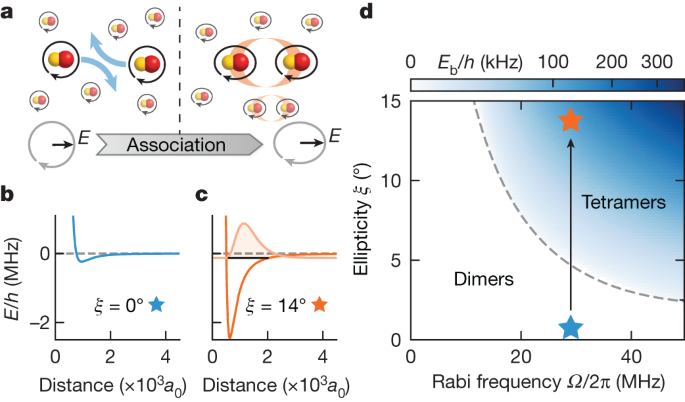
Researchers have demonstrated a new method to create weakly bound ultracold tetratomic molecules by electroassociating pairs of fermionic NaK molecules in microwave-dressed states. These tetratomic molecules are created at ultracold temperatures and exhibit highly tunable properties with the microwave field. The approach can be applied to a wide range of polar molecules and opens up possibilities for investigating quantum many-body phenomena.
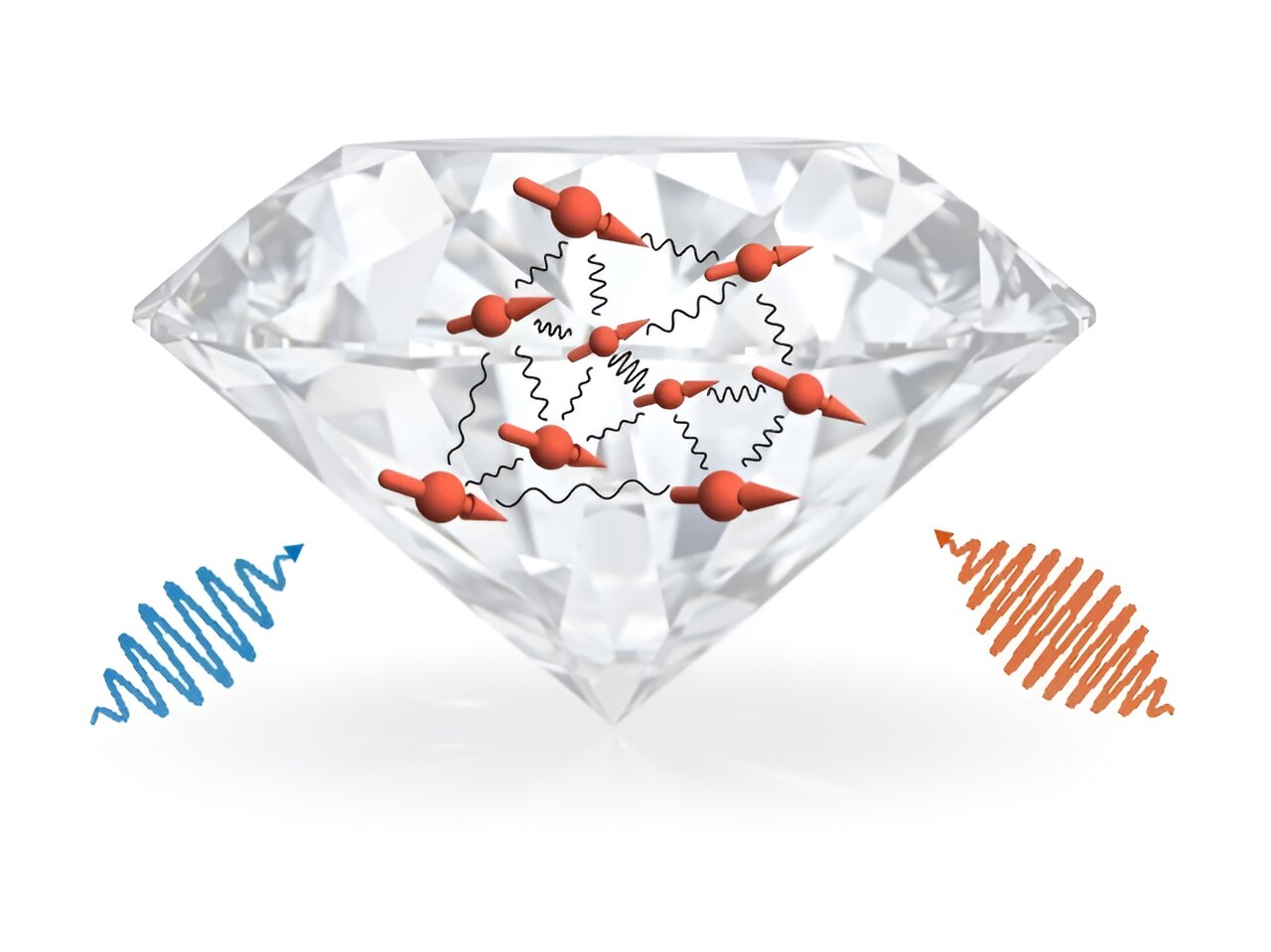

"Diamonds: The Future of Quantum Simulation"

Originally Published 2 years ago — by Phys.org

Featured image for "Diamonds: The Future of Quantum Simulation"
Source: Phys.org

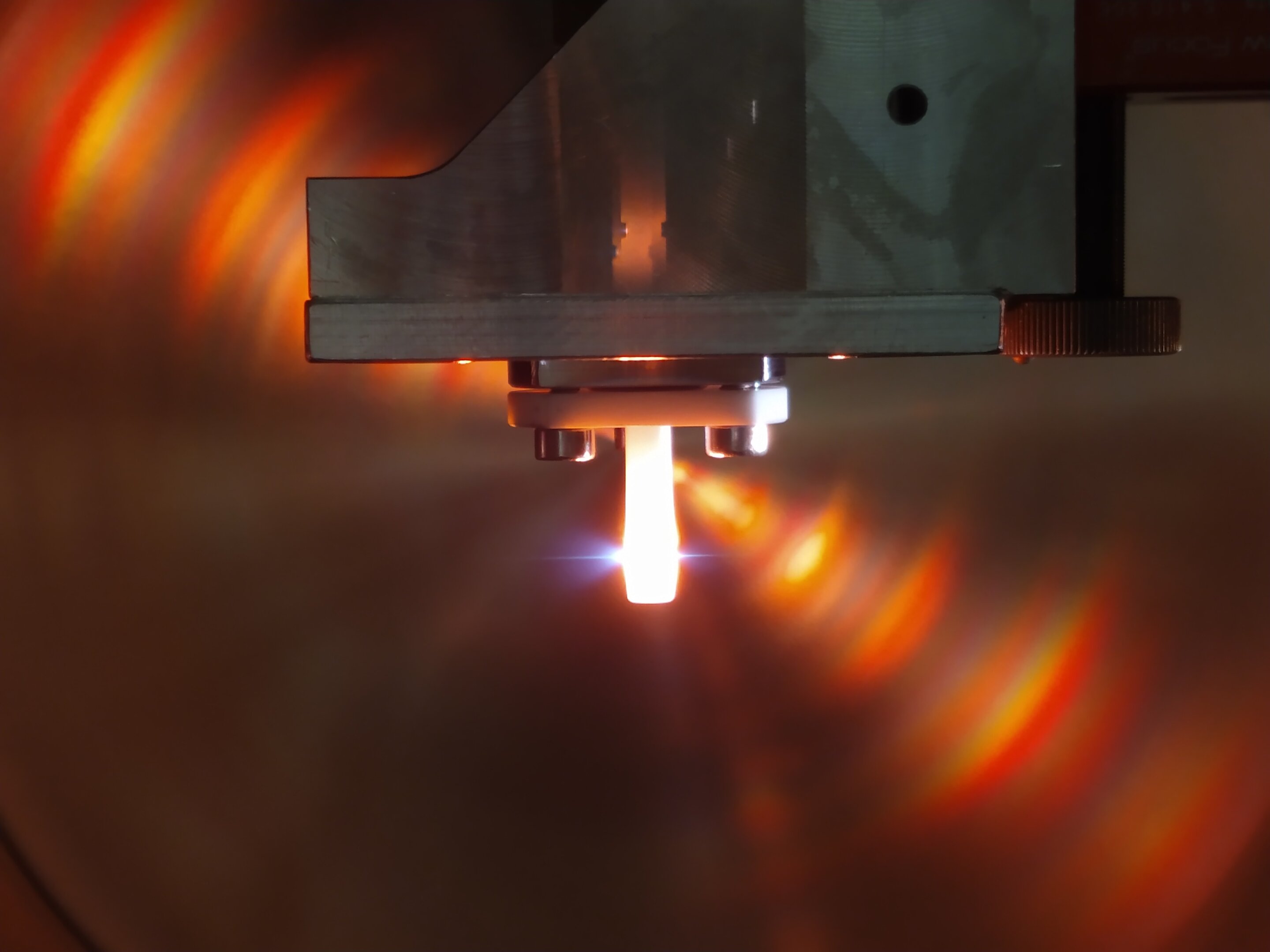
Researchers at Washington University in St. Louis have made progress in turning diamonds into a quantum simulator. By bombarding diamonds with nitrogen atoms, they create flaws in the crystal structure that can be filled with electrons possessing quantum properties. The team demonstrated that their diamond-based system can simulate complex quantum dynamics and keep the system stable for up to 10 milliseconds at room temperature. This advancement opens up possibilities for studying quantum physics, developing sensitive quantum sensors, and collaborating across disciplines.

"Revolutionary Algorithm Unlocks Accurate Qubit Calculation in Quantum Complexity"

Originally Published 2 years ago — by SciTechDaily

Featured image for "Revolutionary Algorithm Unlocks Accurate Qubit Calculation in Quantum Complexity"
Source: SciTechDaily

Scientists have developed the Automated Compression of Arbitrary Environments (ACE) algorithm, which simplifies the computation of quantum dynamics by studying the interactions of qubits with their surrounding environment. This algorithm, based on Feynman's interpretation of quantum mechanics, offers new avenues for understanding and harnessing quantum systems, potentially advancing quantum computing and telephony. The ACE algorithm allows for more precise predictions about quantum coherence and entanglement, and it can estimate the time until entangled photon pairs in quantum telephony lines become disentangled or the distance to which a quantum particle can be "teleported." The algorithm is publicly available and implemented as computer code, providing new possibilities for the computation of multiple quantum systems' dynamics.

Unveiling the Dynamic Transformation of Quantum Systems

Originally Published 2 years ago — by Phys.org

Featured image for Unveiling the Dynamic Transformation of Quantum Systems
Source: Phys.org

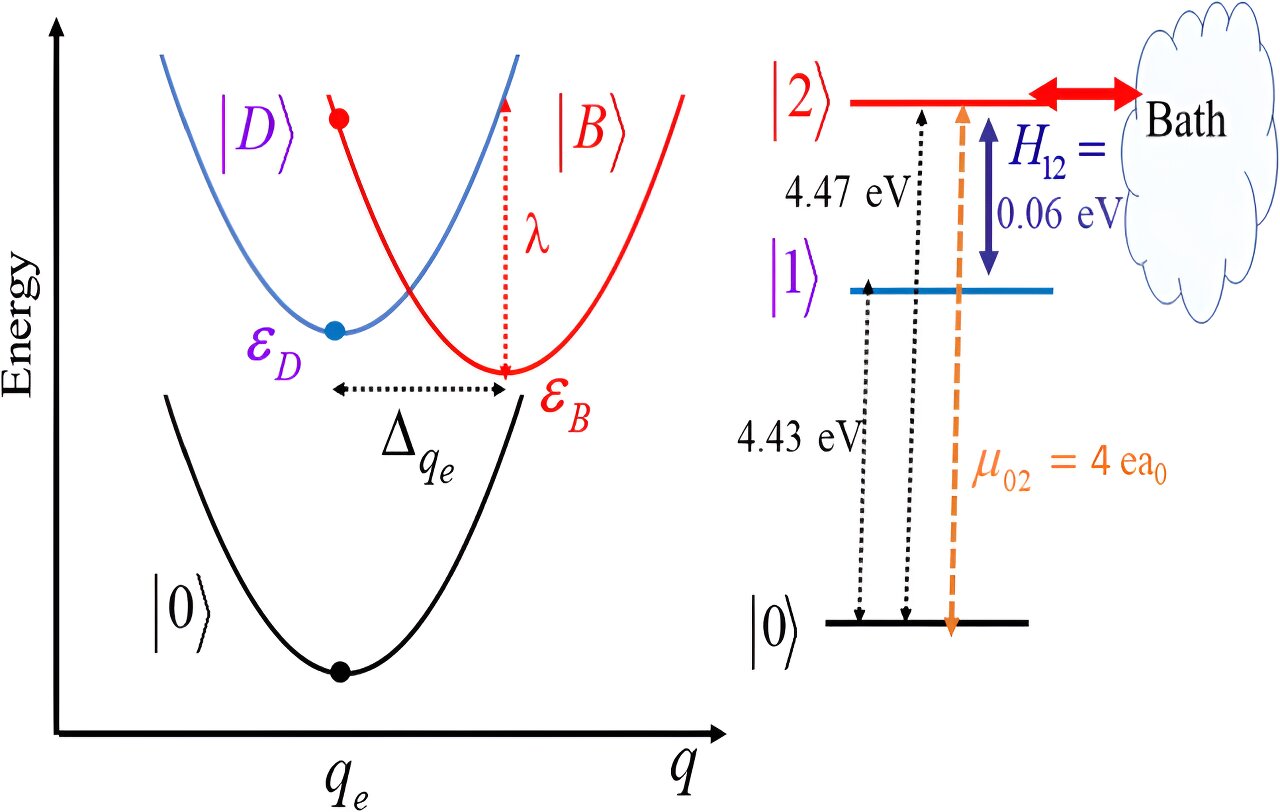
Researchers have demonstrated how mathematical representations called tensor trains can be used to capture and simulate the dynamics of evolving quantum systems. By implementing tensor trains using the theoretical framework of hierarchical equations of motion (HEOM), the team aims to describe the evolution and dynamics of quantum systems embedded in their environments. This research could provide valuable insights for understanding and simulating a wide range of evolving quantum systems, including those relevant to quantum computing.

"Quantum Computing Advancements: Algorithms and AI Comparison"

Originally Published 2 years ago — by SciTechDaily

Featured image for "Quantum Computing Advancements: Algorithms and AI Comparison"
Source: SciTechDaily

Researchers at RIKEN have developed a hybrid quantum-computational algorithm that can efficiently calculate atomic-level interactions in complex materials, enabling the use of smaller quantum computers or conventional ones to study condensed-matter physics and quantum chemistry. The algorithm can compile time-evolution operators at a lower computational cost, making it practical for small quantum computers. The team intends to clarify how the time-evolution operators optimized by their method can be applied to various quantum algorithms that can compute the properties of quantum materials.

Real-time tracking of electron re-collision.

Originally Published 2 years ago — by Phys.org

Featured image for Real-time tracking of electron re-collision.
Source: Phys.org

Physicists at the Max Planck Institute for Nuclear Physics have developed a novel method to track the motion of an electron in a strong infrared laser field in real time. The method links the absorption spectrum of the ionizing extreme ultraviolet pulse to the free-electron motion driven by the subsequent near-infrared pulse. The technique used is attosecond transient absorption spectroscopy together with the reconstruction of the time-dependent dipole moment, which connects the time-dependent dipole moment with the classical motion of the ionized electrons. The new method demonstrated here for helium can be applied to more complex systems such as larger atoms or molecules for a broad range of intensities.

Revolutionizing Electronics: Laser-Controlled Attosecond Electron Emission from Nanometric Metal Tips

Originally Published 2 years ago — by Nature.com

Featured image for Revolutionizing Electronics: Laser-Controlled Attosecond Electron Emission from Nanometric Metal Tips
Source: Nature.com

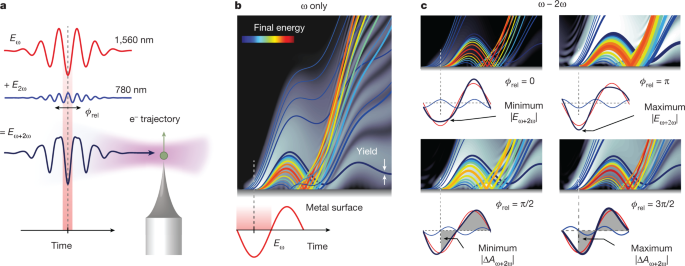
Researchers have measured the quantum dynamics of electron emission from solids with attosecond precision using two-colour modulation spectroscopy of backscattering electrons. The experiment measured photoelectron spectra of electrons emitted from a sharp metallic tip as a function of the relative phase between the two colours. The emission duration was found to be 710 ± 30 attoseconds, opening the door to the precise active control of strong-field photoemission from solid state and other systems.