Scientists have created a long-lasting (two seconds) dipolar Bose-Einstein condensate of sodium-cesium molecules at near absolute zero using a novel dual-microwave technique, opening new avenues for exploring exotic quantum matter and phases.
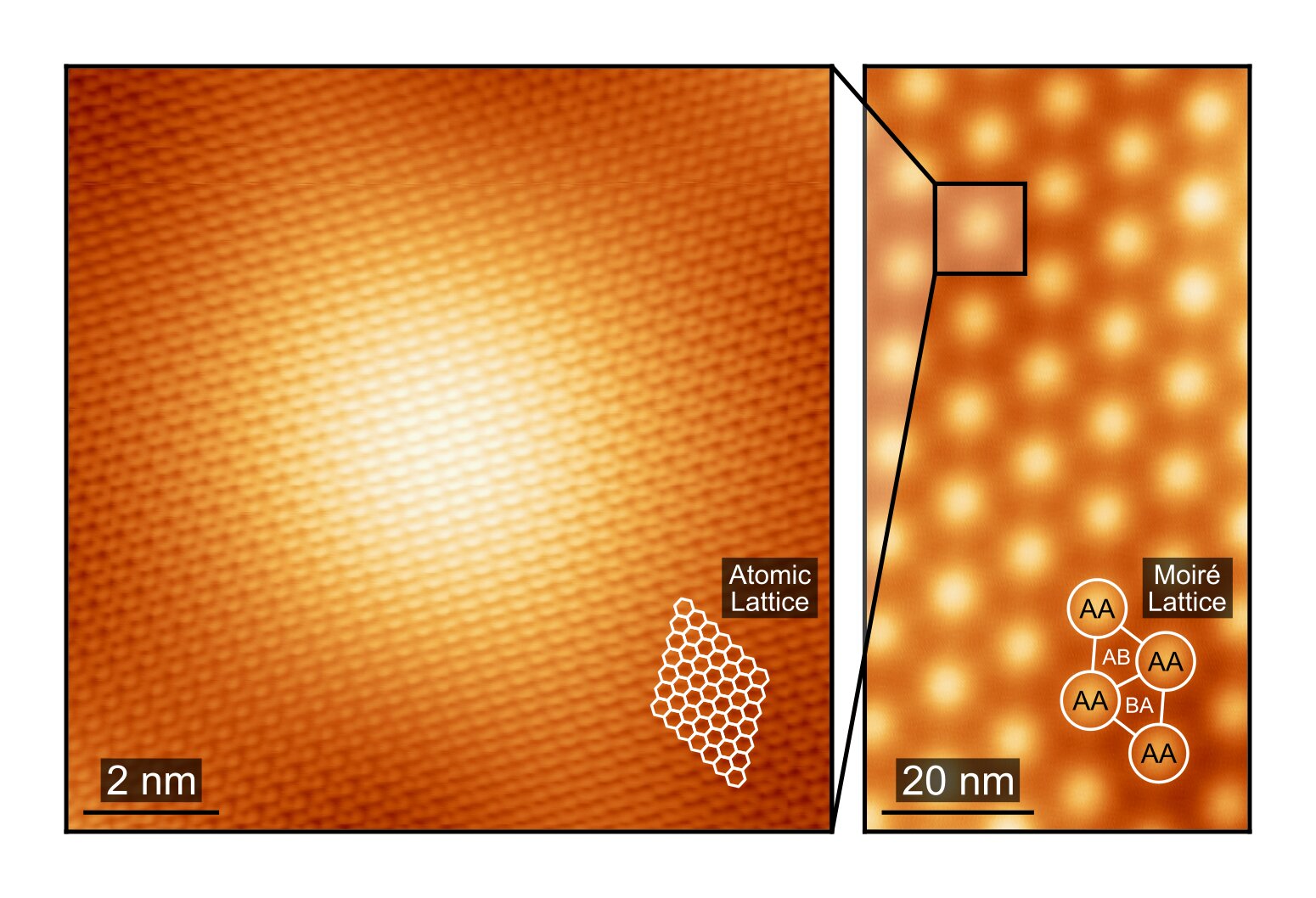
A team of scientists from Princeton University has successfully visualized the microscopic behavior of interacting electrons in magic-angle twisted bilayer graphene (MATBG), a material that has demonstrated various quantum phases. Using scanning tunneling microscopy, the researchers captured precise images of the insulating quantum phase and developed a theoretical framework to interpret the behaviors. The study provides insights into the origins of quantum phases in MATBG and may contribute to the understanding of other unusual superconductors and the development of next-generation quantum technologies.