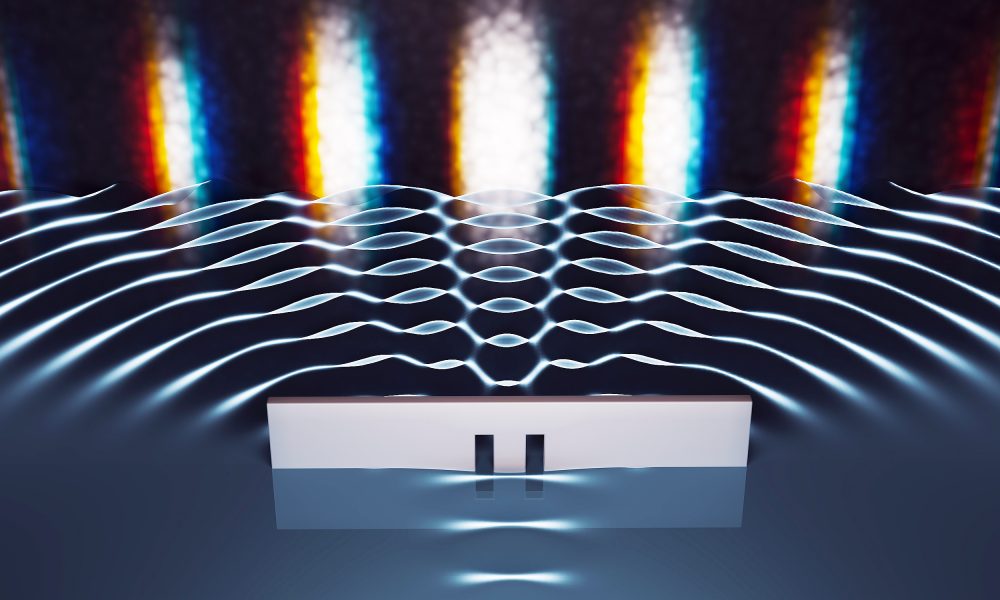
A new study challenges the long-held belief that light behaves as both a wave and a particle, proposing that interference patterns can be explained solely through quantum particles and dark photon states, potentially reshaping fundamental physics concepts.
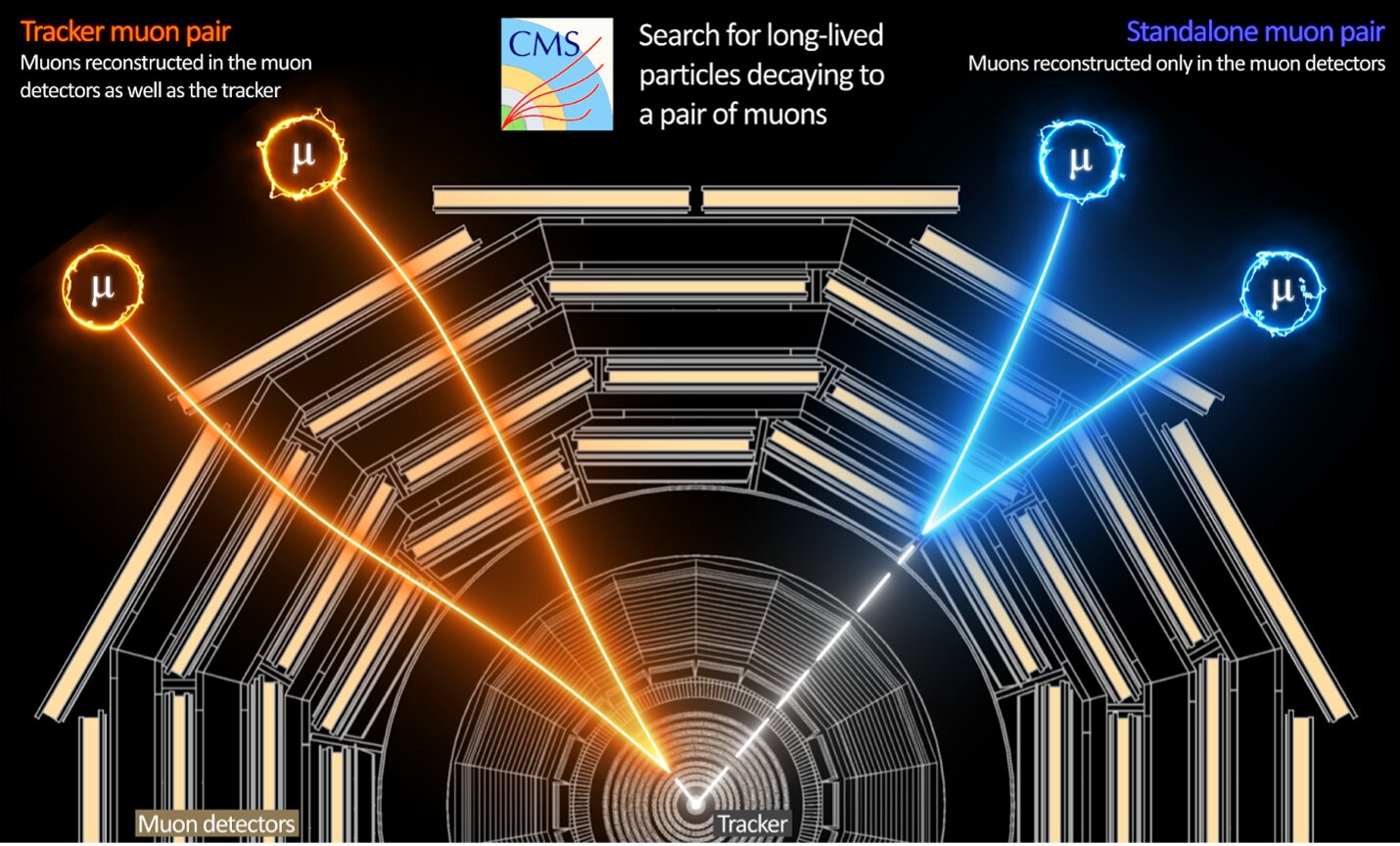
The CMS collaboration at CERN has presented its latest search for "dark photons" using data from Run 3 of the Large Hadron Collider. Dark photons are exotic long-lived particles that are not part of the Standard Model of particle physics. The study focuses on the possibility of dark photon production in the decay of Higgs bosons. The CMS team has refined their trigger system to search for these particles, allowing them to collect more events and explore new regions where long-lived particles may be hiding. The search for physics beyond the Standard Model continues as researchers analyze the data from Run 3.
Dark photons, hypothetical particles associated with dark matter, could potentially explain certain data from high-energy scattering experiments, according to a new analysis by physicists at the University of Adelaide. Dark matter, which makes up around 85% of the universe's mass, remains a mystery, and attempts to detect it have been unsuccessful. The analysis suggests that a model incorporating dark photons is preferred over the Standard Model hypothesis in explaining deep inelastic scattering experiments. However, further research and confirmation are needed to fully understand the nature of dark matter and its interactions.
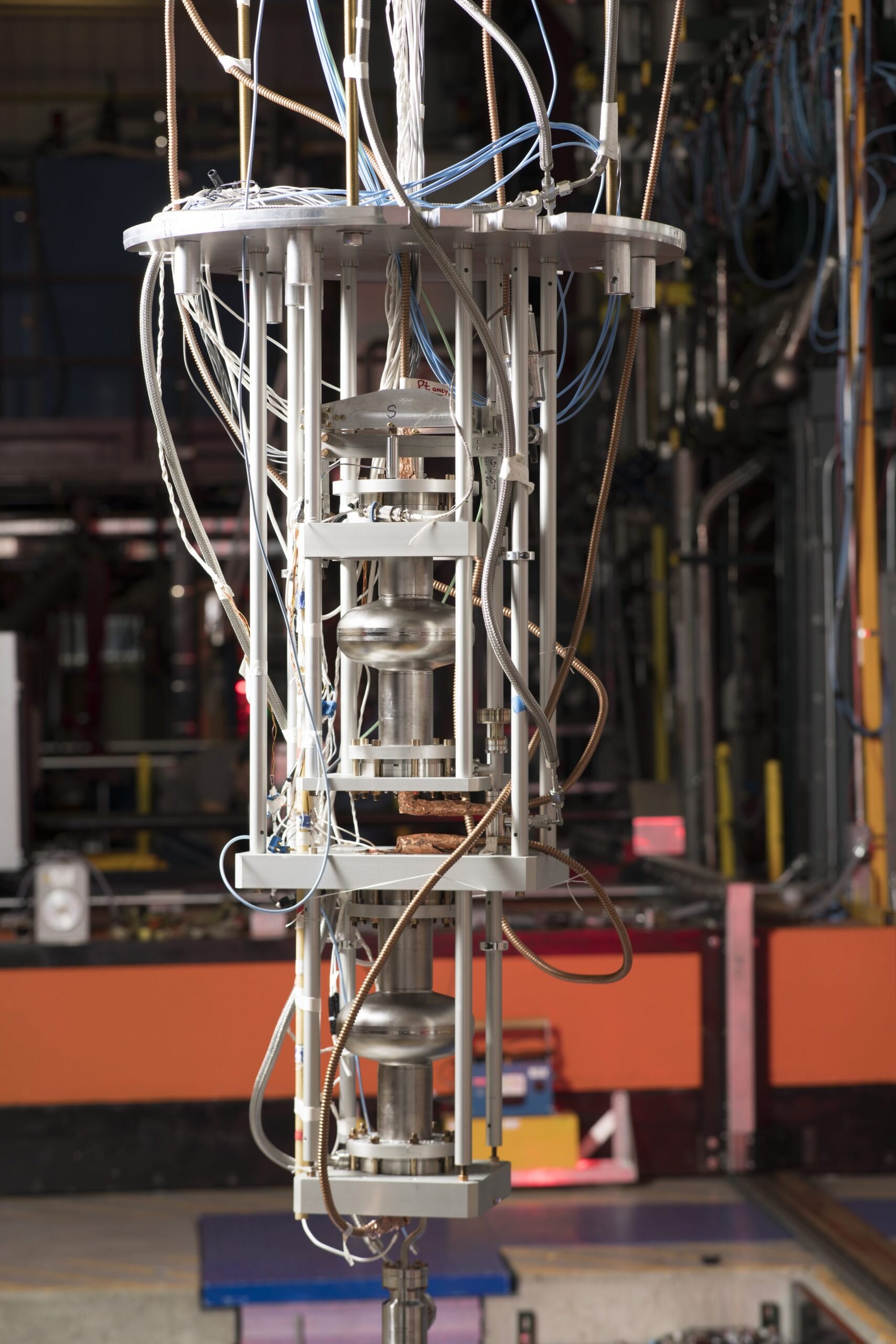
Scientists at Fermilab's Dark SRF experiment have achieved unprecedented sensitivity in their search for dark photons, theorized particles that could explain the existence of dark matter. By using superconducting radio frequency (SRF) cavities to trap and detect the transition of ordinary photons into dark photons, the experiment has set the world's best constraint on the existence of dark photons in a specific mass range. The innovative use of SRF cavities, typically used in particle accelerators, has allowed for greater sensitivity and opens up new possibilities for future experiments in the field of particle physics.
Scientists from the California Institute of Technology (Caltech) have developed a new method to detect hidden "dark photons," a potential candidate for dark matter. Dark matter, which makes up around 85% of the matter in the universe, remains invisible due to its weak or nonexistent interaction with light. Dark photons, theorized to possess mass, could explain the heating of the early universe and the structure of the cosmic web. The researchers used quantum-limited amplifiers and conducted their search at extremely low temperatures, setting new constraints on the characteristics of dark photons. Although no dark photons were detected, this approach could aid in future dark matter searches.
Researchers at Tsinghua University, the Purple Mountain Observatory, and Peking University have explored the possibility of directly detecting dark photons, prominent dark matter candidates, using radio telescopes. Their study suggests that radio telescopes could potentially enable the direct detection of dark photons, particularly ultra-light dark photons. The analyses conducted by this team of researchers suggest that the Five-hundred-meter Aperture Spherical radio Telescope (FAST) in China could discover dark photon dark matter if it is composed of dark photons and is in the right mass region.