A vintage Volvo PV544 has been customized with a Nixie tube instrument cluster, including speedometer, tachometer, and gauges, controlled by a microcontroller resembling a modern ECU, blending retro aesthetics with modern tech, and showcasing a creative vintage car hack.

Freesia Gaul, a young innovator inspired by MIT's free online courses, developed an award-winning VR prototype and co-founded a tech startup, demonstrating how accessible education can empower youth to create groundbreaking technology.
A DIY enthusiast creates a professional-looking handheld terminal using a Raspberry Pi Zero 2W, a 3D printed case, and various off-the-shelf components, addressing cable management and accessibility issues in compact designs.
A DIY enthusiast modified a military target holding mechanism by adding a ruggedized remote control unit to operate it wirelessly, allowing for dropping or raising the target from several hundred feet away. The original vibration switches still work, enabling the target to drop when shot, and the creator plans to outfit the mechanism with a cardboard cutout figure for display at a Vintage Computer Festival event.
Inspired by Nanoleaf's glowing wall tiles, [Projects with Red] created their own gem-shaped wall panels using 3D printed housings, translucent acrylic sheets, and addressable LED strips connected to an ESP32 for control. The panels can function as a large clock and offer flexibility for reconfiguration, making them a cost-effective DIY alternative to Nanoleaf's products.
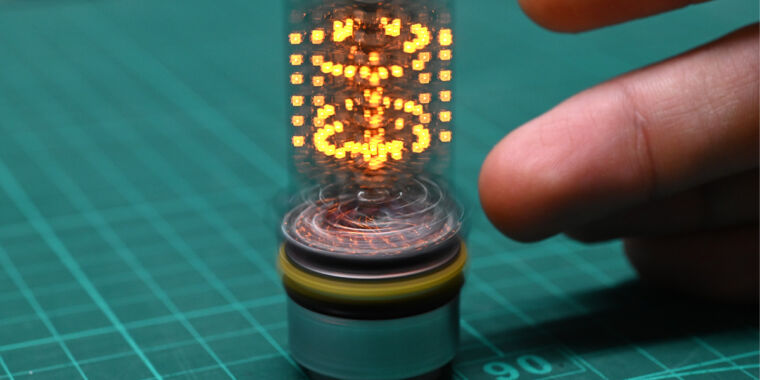
A maker known as mitxela has created a DIY LED candle that features a volumetric display, allowing it to look the same from any angle. The device utilizes an LED matrix board, electronics, an infrared sensor, a coin battery, and a CD drive motor. By making everything spin, including the battery, mitxela was able to create collapsing stars, pouring liquid, and candle flames. The prototype exceeded expectations, and future versions will include more LEDs and improved alignment. The project details, including source code, are available on mitxela's blog.
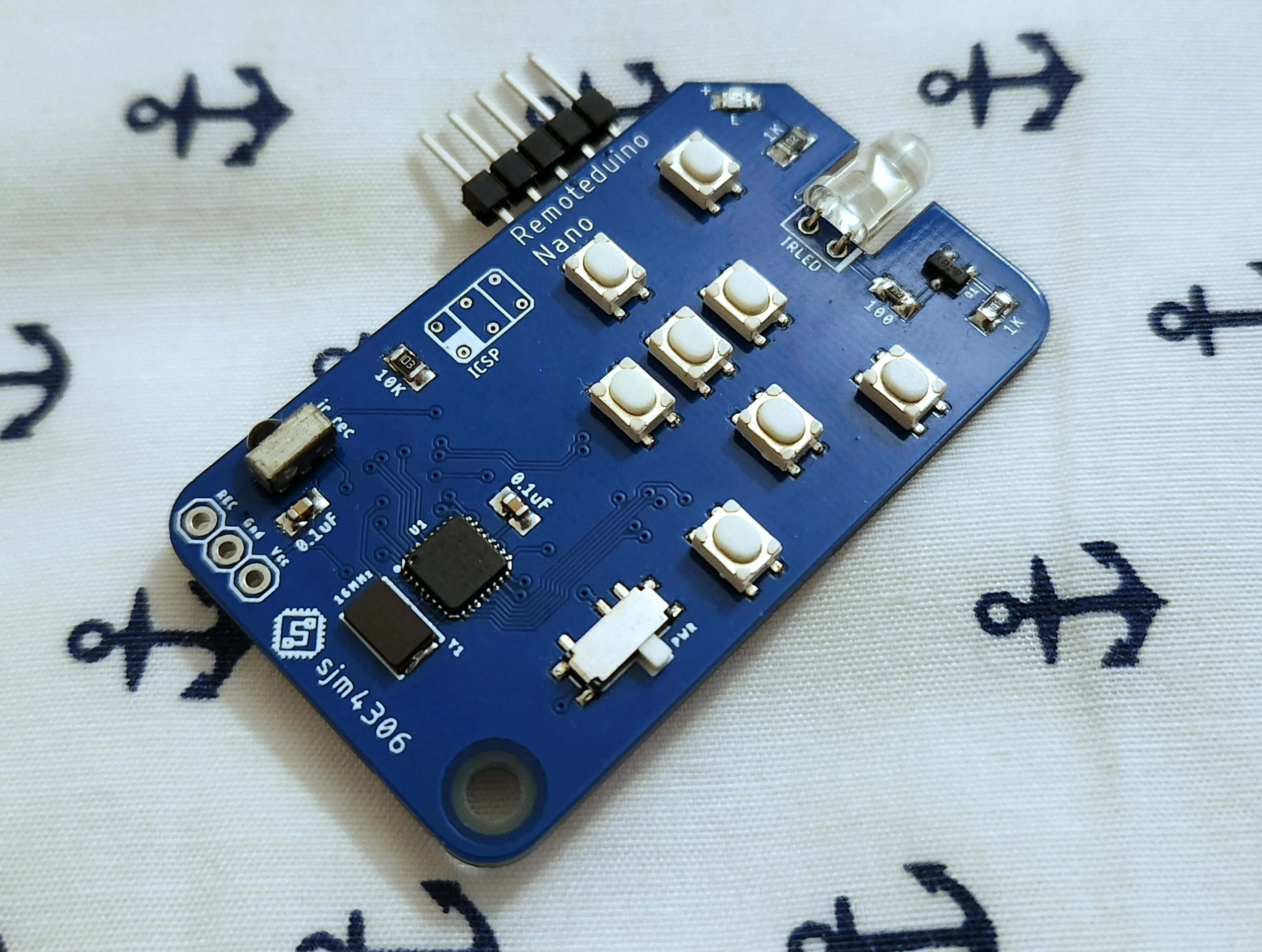
The Remoteduino Nano is a fully programmable IR remote that allows users to map eight buttons to any desired code. It runs on an ATmega328p and includes a five-pin header to program the device through its serial port. The tiny size of the Nano makes it a convenient tool for those who like to tinker with A/V systems and keep losing their remotes. The project's code and Gerber files are freely available for download.
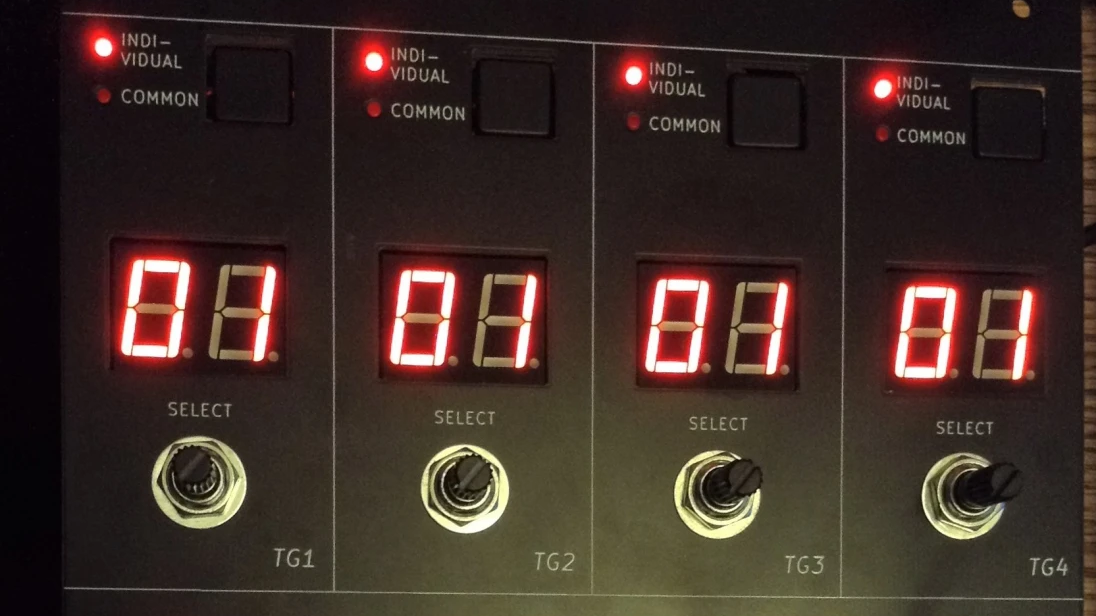
Simple DIY ElectroMusic Projects has released a complete DIY modular design for simulating the classic 80s Yamaha TX816 DX/FM modular digital synthesizer using a Raspberry Pi and custom PCBs. The design includes a user interface for four of the eight channels, a GY-PCM5102 I2C DAC, and MIDI connectors. The MiniDexed firmware running bare-metal on a Raspberry Pi allows for a compatible synth without breaking the bank.
SMD stencils, typically used for applying solder paste to PCBs, can also be used to create custom designs on LED matrix displays. By using Adobe Illustrator to generate the artwork for the stencils, users can easily create one simple shape and copy it over the whole array with proper spacing. The possibilities for custom designs are limited only by imagination.