Tag

Mond

All articles tagged with #mond

science2 months ago

New Study Confirms Dark Matter Follows Gravity Like Ordinary Matter

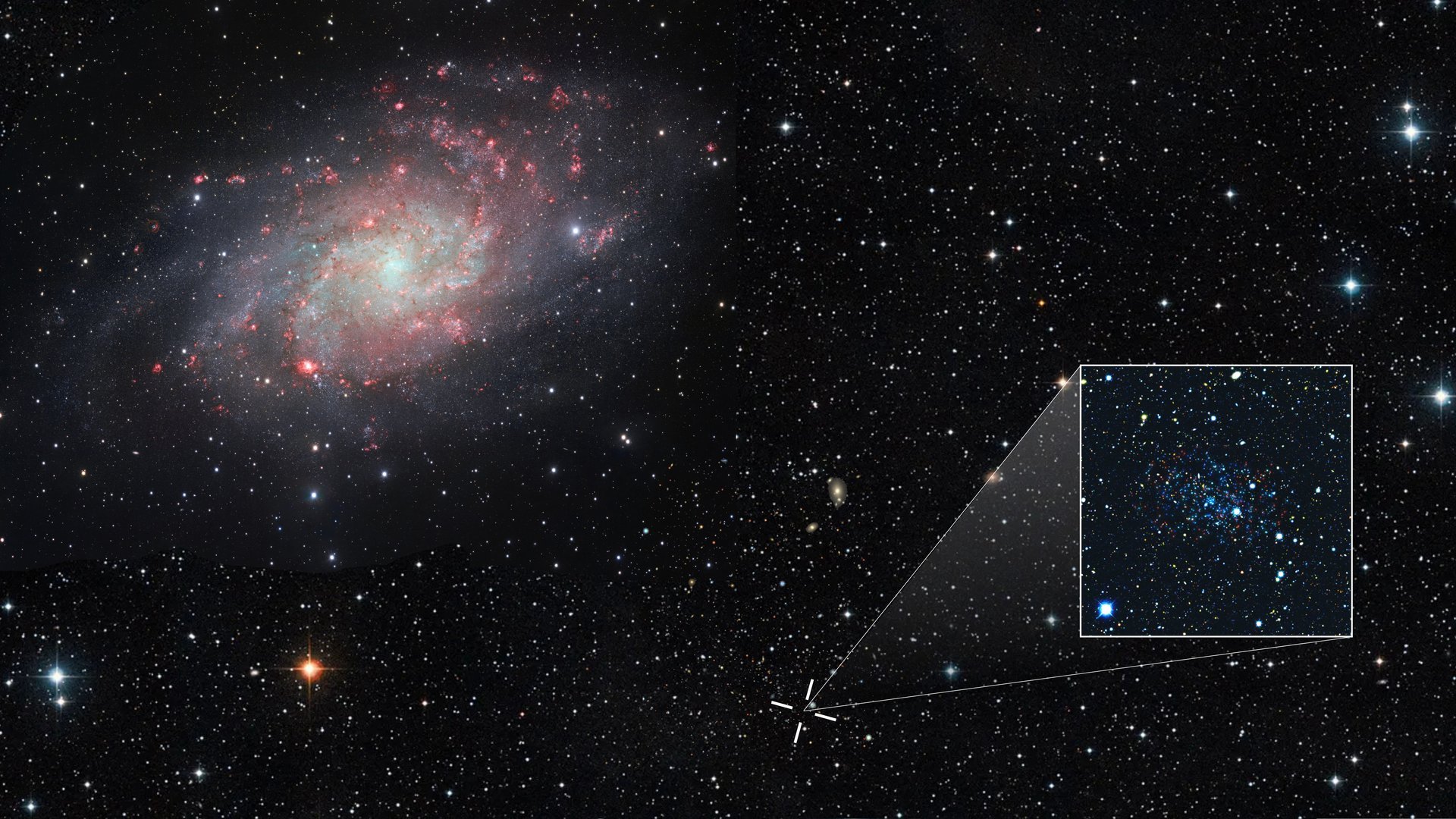
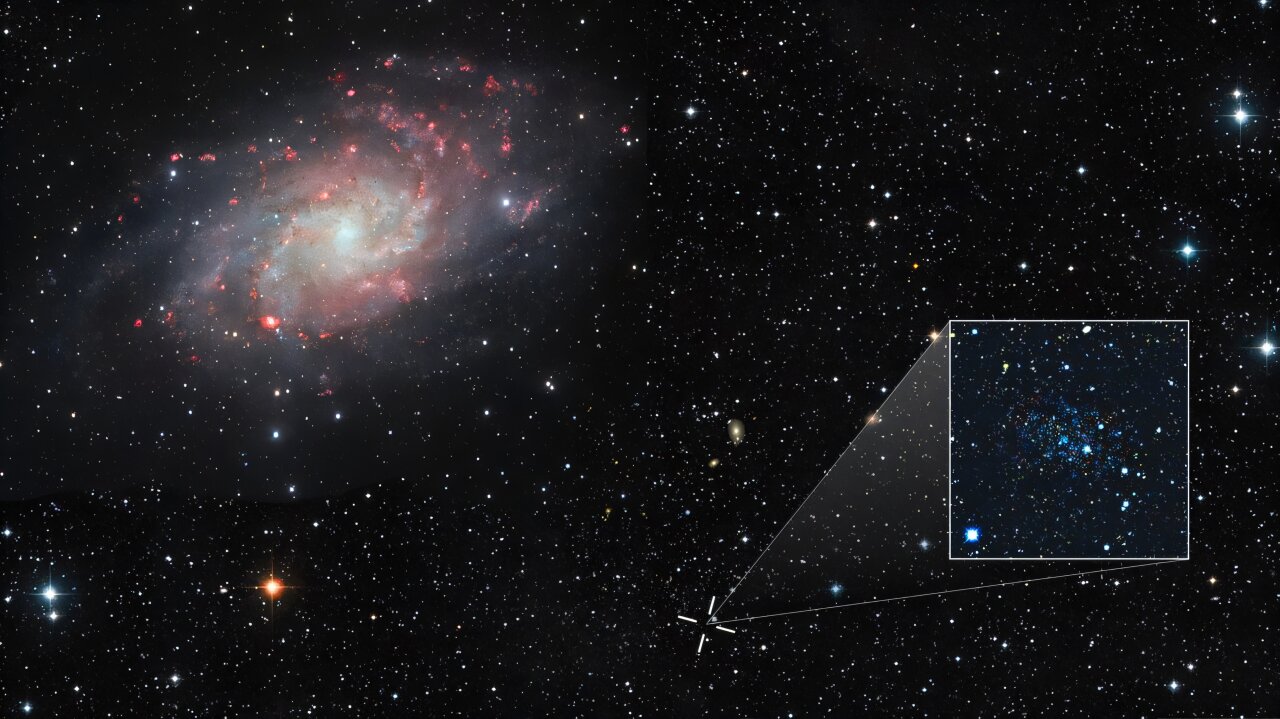
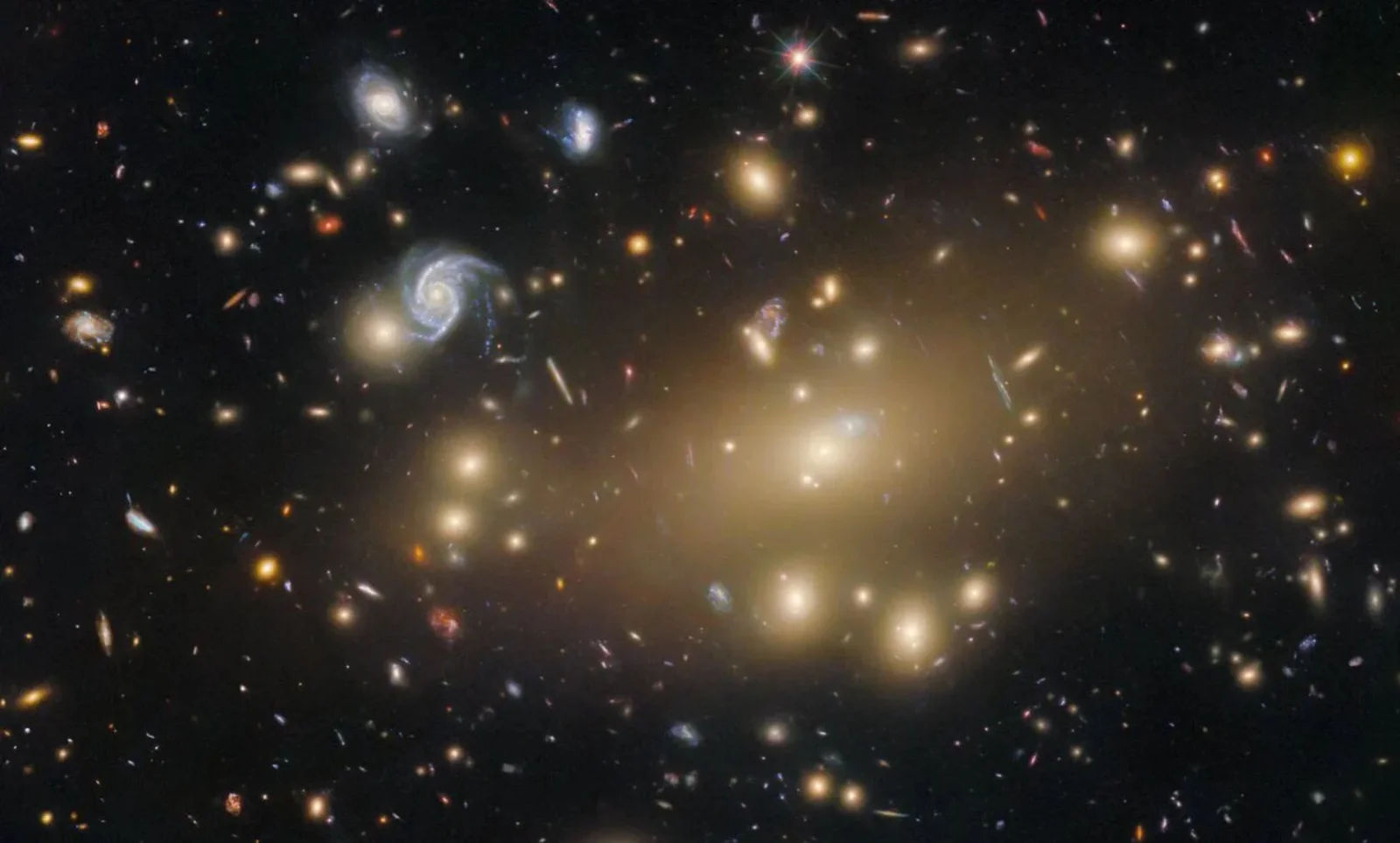
A recent study analyzing 12 dwarf galaxies provides strong evidence supporting the existence of dark matter, challenging alternative theories like Modified Newtonian Dynamics (MOND). The findings show that the gravitational fields of these galaxies cannot be explained by visible matter alone, reinforcing the dark matter hypothesis and narrowing the search for its nature.

science1 year ago

JWST's 'Red Monster' Galaxies Challenge Galaxy Formation Theories

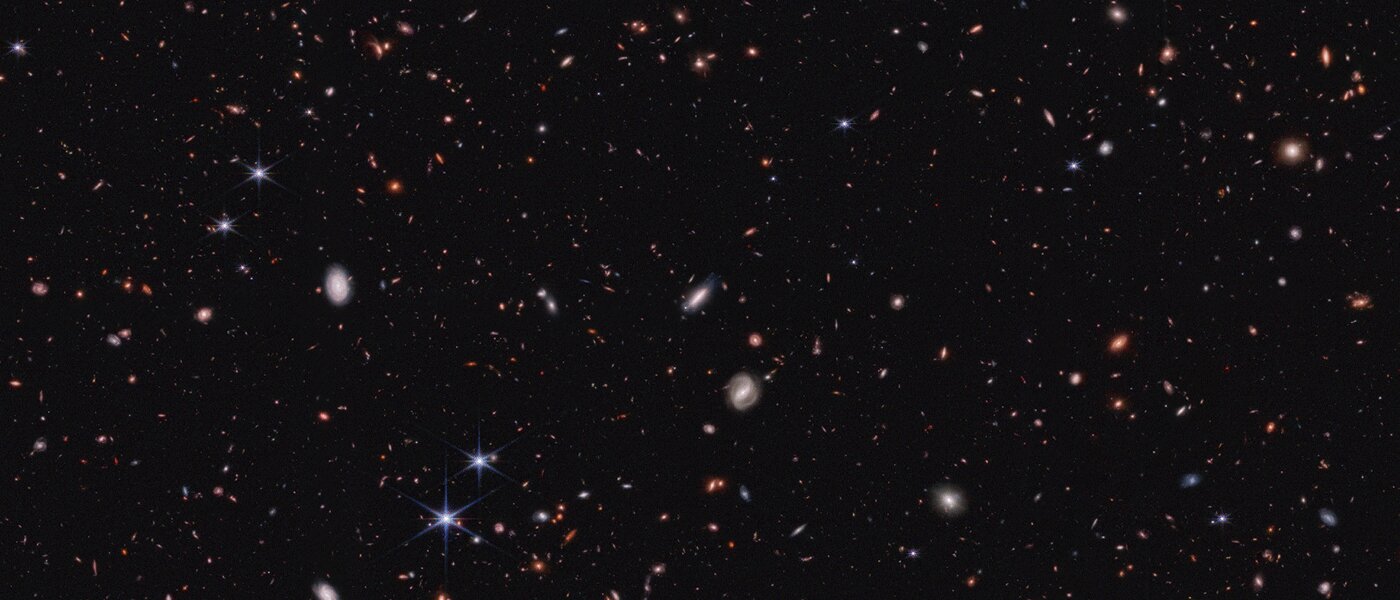
Observations from the James Webb Space Telescope (JWST) have revealed that some of the universe's oldest galaxies are brighter and heavier than expected, challenging the standard dark matter model of galaxy formation. These findings support the alternative theory of modified Newtonian dynamics (MOND), which suggests that Newton's laws break down at cosmic scales. While MOND has made accurate predictions about galaxy behavior, it remains controversial, as it cannot explain all cosmological phenomena. The study highlights the ongoing debate between MOND and dark matter theories.

science1 year ago

Webb Telescope Insights Question Dark Matter and Galaxy Formation Theories

A study using data from the James Webb Space Telescope suggests that some early galaxies appear larger and brighter than expected, challenging the conventional dark matter model. These observations align with modified Newtonian dynamics (MOND), an alternative theory to dark matter, which predicts such rapid galaxy growth. While MOND has faced criticism for not fitting into a broader cosmological framework, its accurate predictions suggest it may offer insights into the universe's structure, despite its current lack of widespread acceptance.

science1 year ago

James Webb Telescope Sparks Rethink of Galaxy Formation and Early Universe Theories

New research from Case Western Reserve University, published in The Astrophysical Journal, challenges the dark matter theory in galaxy formation. Observations from the James Webb Space Telescope (JWST) show large and bright early galaxies, contradicting the standard model that dark matter facilitated the clumping of early stars and galaxies. Instead, the findings align with the Modified Newtonian Dynamics (MOND) theory, which suggests rapid galaxy formation without dark matter. This challenges existing astronomical theories and highlights the need for a theory compatible with both MOND and General Relativity.

science2 years ago

"Gravity's Behavior at Low Accelerations Explored in New 'MOND' Paper"

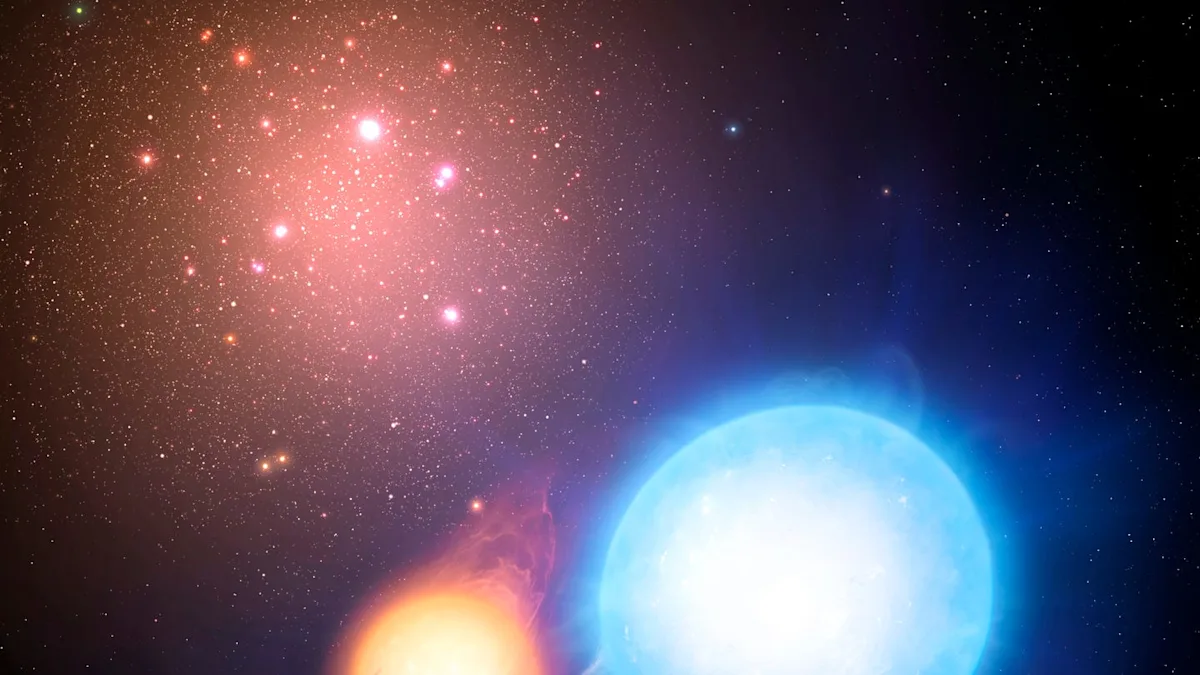
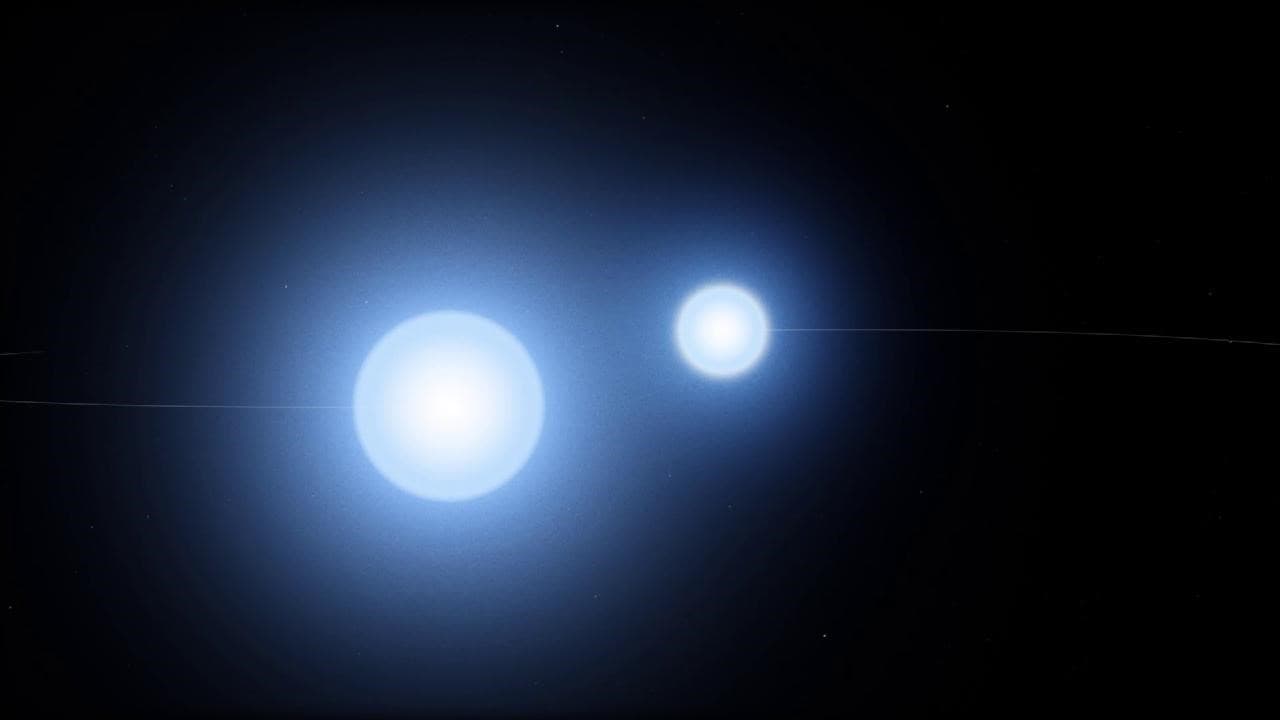
A new paper supports the hypothesis of MOdified Newtonian Dynamics (MOND) by claiming that pairs of widely separated binary stars show a deviation from Newton's Second Law, suggesting that gravity is stronger than predicted at very low levels. However, the hypothesis is heavily disputed within the scientific community, with astrophysicists and cosmologists undecided on whether the data supports or discourages MOND. While research on MOND continues, it remains an unpopular field, and the overall trend in astronomical publication counts is increasing, with the "MOG" type of "MOdified Gravity" gaining popularity.

astronomyphysics2 years ago

"Revealing Modified Gravity: Wide Binary Stars and the MOND Debate"

A new study published in The Astrophysical Journal provides further evidence for modified gravity at low acceleration, reinforcing previous findings from 2023. The study, conducted by Kyu-Hyun Chae of Sejong University, analyzed wide binary stars observed by the Gaia space telescope and revealed that these systems experience larger accelerations than predicted by Newtonian physics at low gravitational forces. This anomaly aligns with predictions from modified gravity theories such as MOND, suggesting a potential paradigm shift in our understanding of gravity and its implications for astrophysics and cosmology.

science2 years ago

"Scientists Debunk Popular Dark Matter Alternative Theory"

Scientists have ruled out the alternative theory of Modified Newtonian Dynamics (MOND) as an explanation for the motion of galaxies. Dark matter, an invisible form of matter, is widely accepted as the dominant form of matter in the universe. However, a small group of researchers have argued that our understanding of how objects move is incomplete. In a recent study using data from the Gaia satellite, researchers found that Newtonian dynamics accurately described the orbital behavior of wide binary stars, favoring it over MOND. While this does not prove the existence of dark matter, it refutes the specific theory of MOND and opens up possibilities for other alternative explanations.

physics2 years ago

Gravity's Strange Behavior in Binary Star Systems Challenges Established Theories

A study analyzing data from the Gaia space mission suggests evidence of gravity acting contrary to the predictions of Newton and Einstein, favoring modified gravity over dark matter. The study focused on the orbital motions of 26,500 wide-binary star systems and found discrepancies in gravitational acceleration at wide separations, matching predictions of a specific model of modified gravity called MOND. However, other researchers caution against drawing conclusions too soon, citing previous studies that found no evidence for MOND. Further follow-up work using different instruments may provide confirmation.

science2 years ago

"Revolutionary Findings: Debunking Newton's and Einstein's Theories with Modified Gravity"

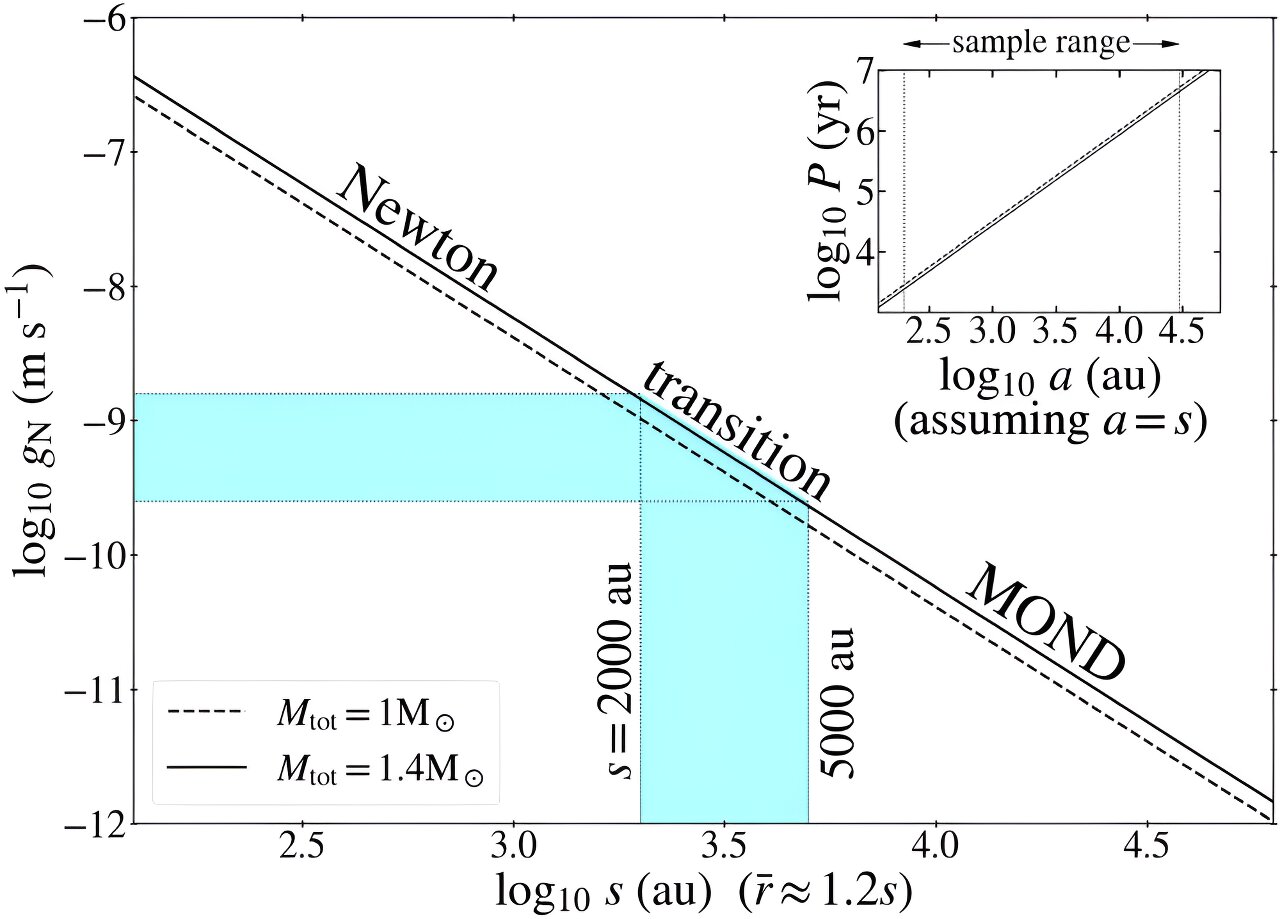
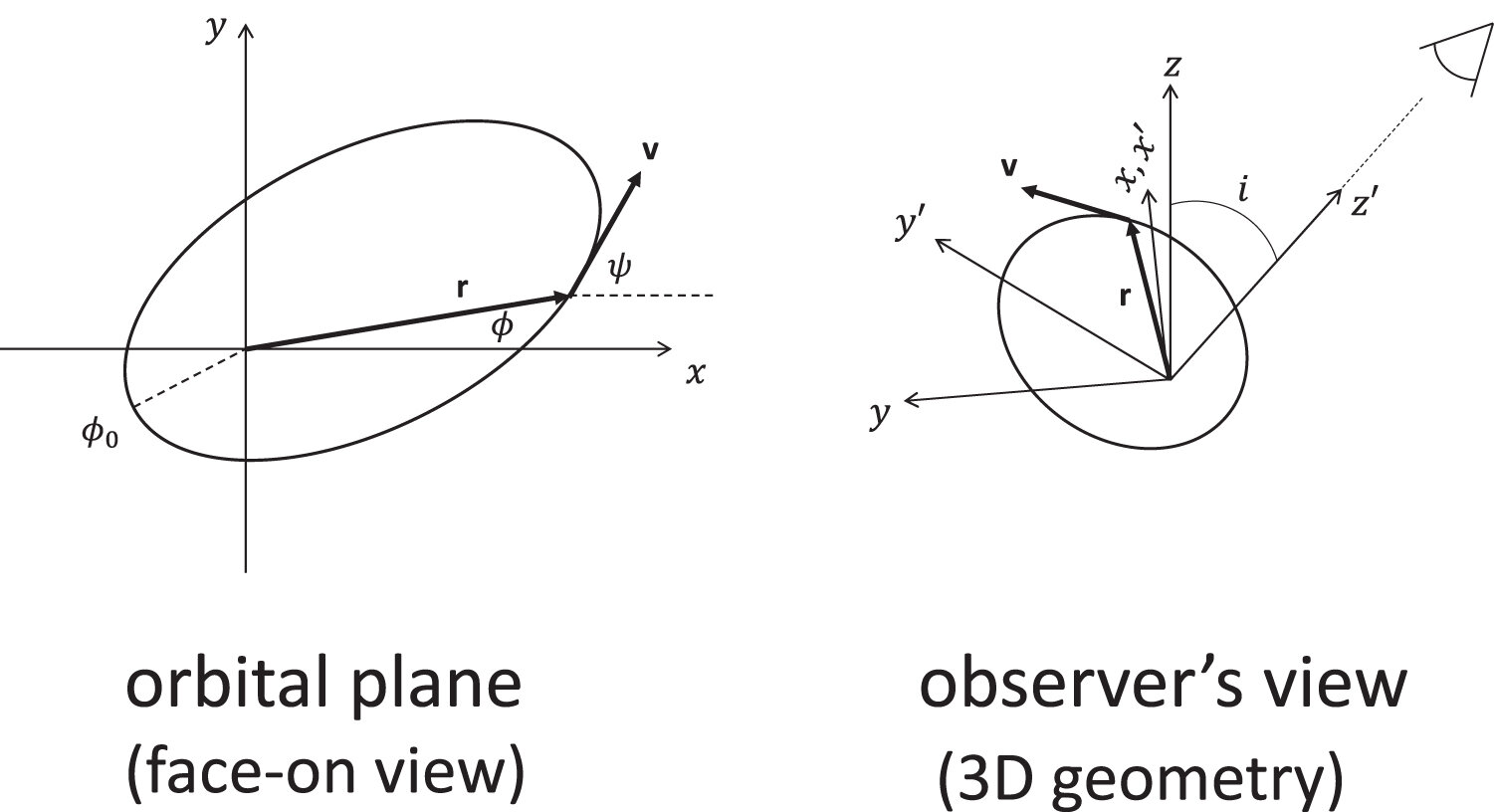
A recent study analyzing the orbital motions of wide binaries has provided conclusive evidence for the breakdown of standard gravity at low accelerations, challenging Newton's and Einstein's theories. The study, which examined data from 26,500 wide binaries, found that accelerations below one nanometer per second squared deviate from the predicted gravitational laws. This discovery aligns with a modified theory called MOND and has significant implications for astrophysics, physics, and cosmology, potentially revolutionizing our understanding of gravity and the need for dark matter.

science2 years ago

"Gaia Observations Reveal Smoking-Gun Evidence of Modified Gravity in Low Acceleration"

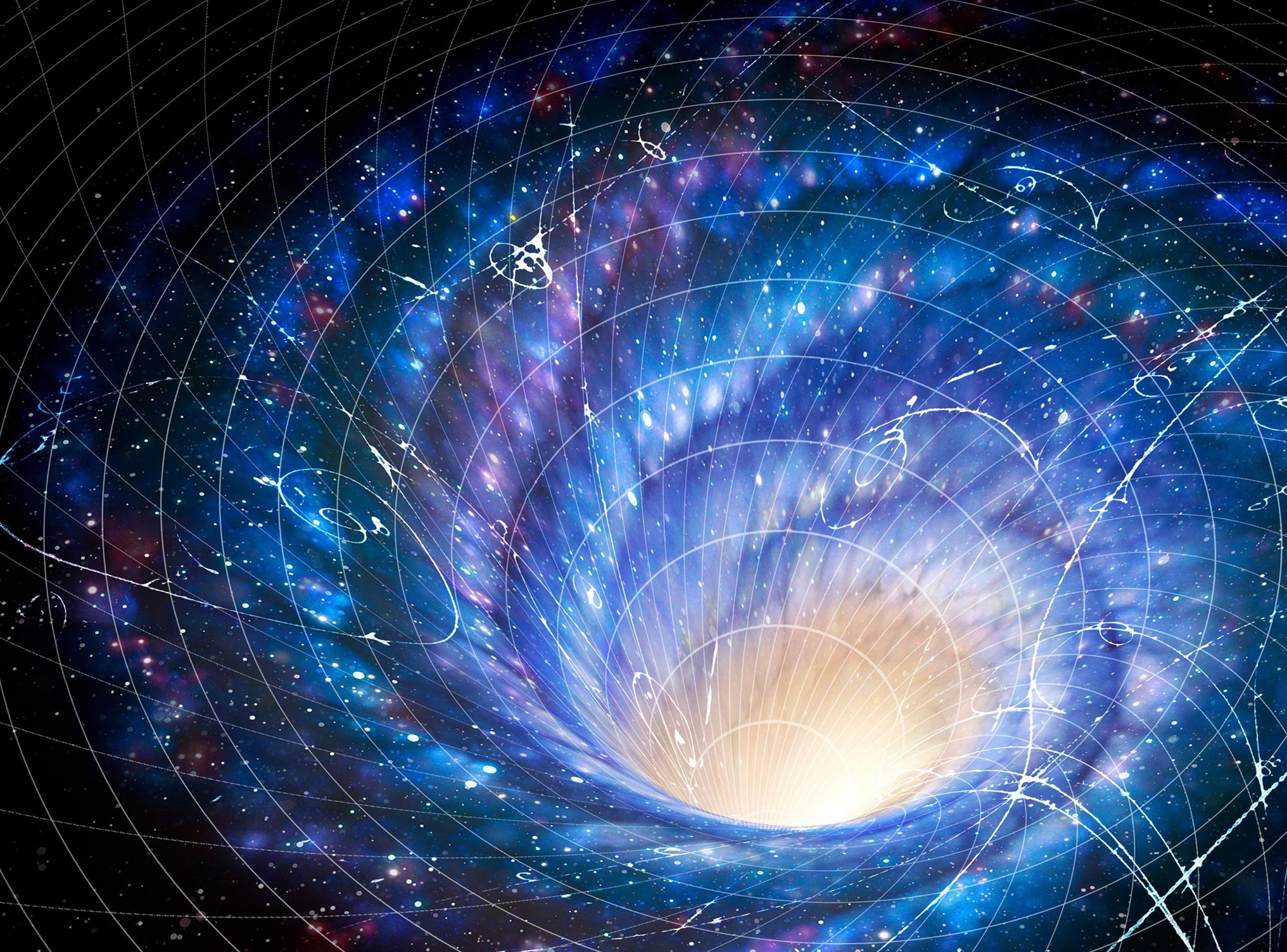
A new study using data from the Gaia space telescope provides conclusive evidence for the breakdown of standard gravity in the low acceleration limit. By analyzing the orbital motions of wide binary stars, the study finds that accelerations lower than about one nanometer per second squared deviate from the predictions of Newton's universal law of gravitation and Einstein's general relativity. This breakdown of standard gravity at low accelerations aligns with the predictions of modified Newtonian dynamics (MOND) and suggests the need for a new theory to explain phenomena in the weak acceleration limit. The findings have significant implications for astrophysics, cosmology, and fundamental physics.