
Tag

Gaia Space Mission

All articles tagged with #gaia space mission

astronomy1 year ago

"Scientists Uncover 'Fountain of Youth' Phenomenon Extending Stars' Lifespans by Billions of Years"

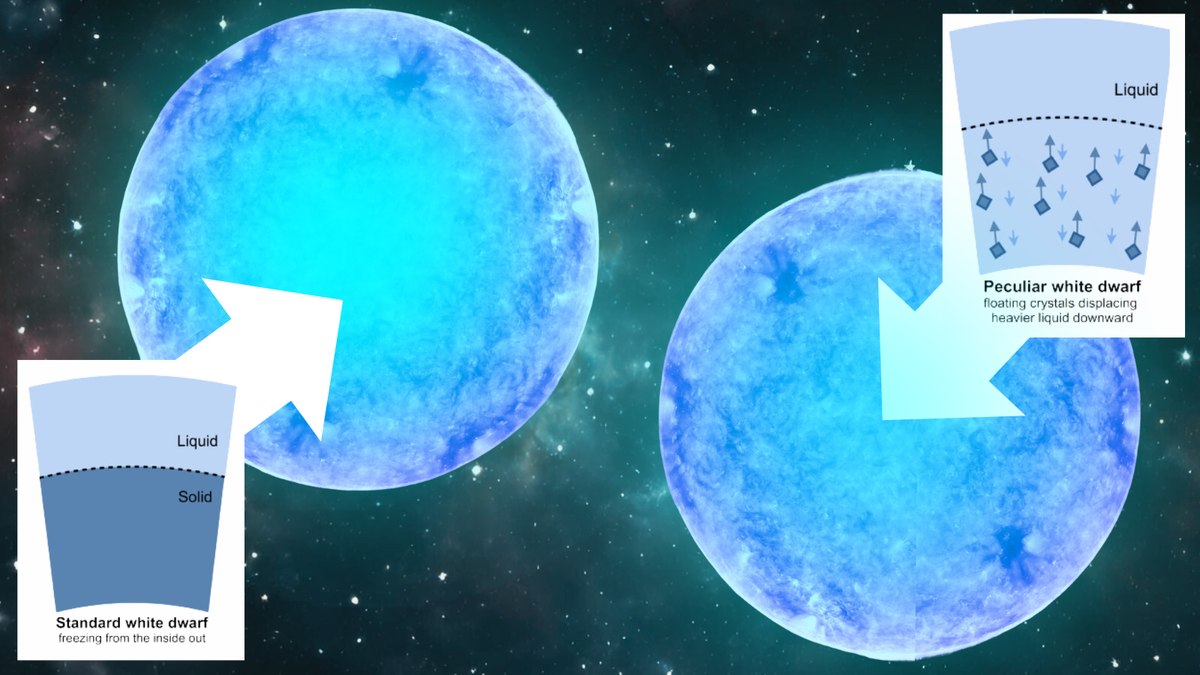
Scientists have discovered a population of white dwarfs that appear to have stopped cooling for billions of years, defying the classical understanding of these stellar remnants. A team of researchers has proposed a mechanism behind this phenomenon, suggesting that some white dwarfs generate energy through the formation of solid crystals that displace liquid material, releasing gravitational energy and halting the cooling process. This discovery challenges the way astronomers date stars and may redefine our understanding of stellar evolution.
astronomy1 year ago

"Revealing the Eternal Youth of White Dwarf Stars"

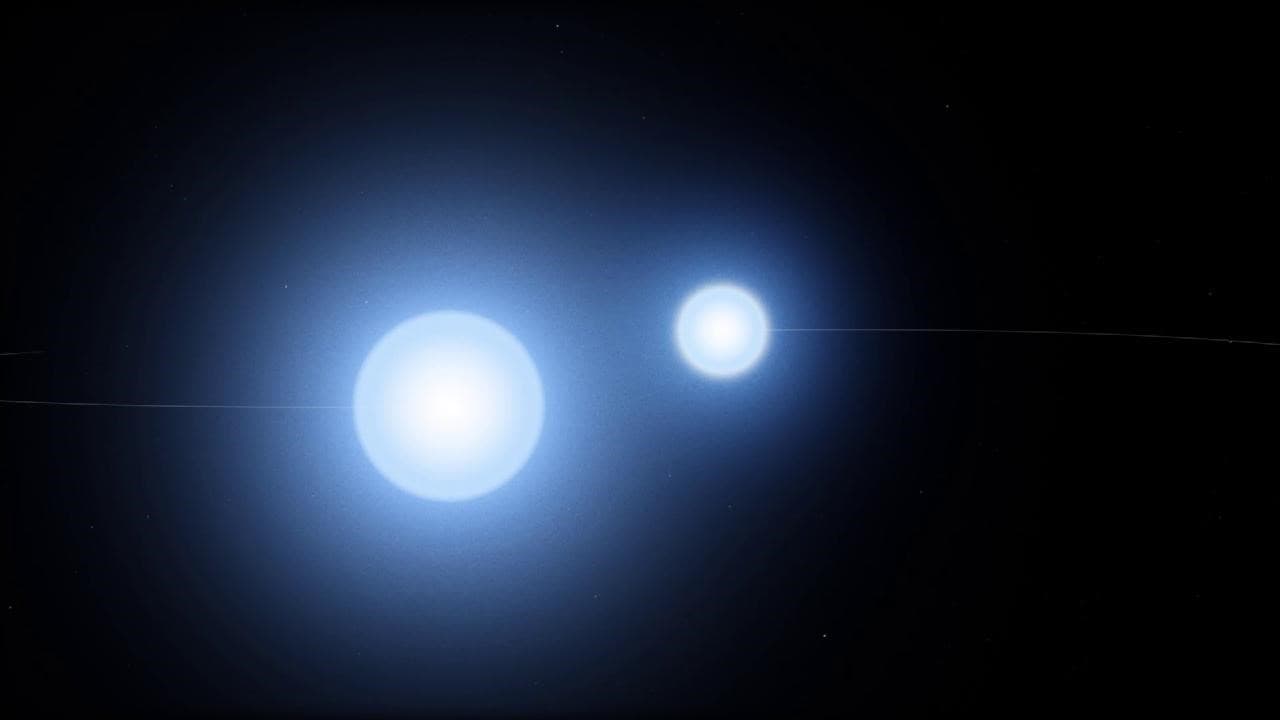
Some white dwarfs may take longer to cool off than previously expected, indicating a way of generating energy after their "deaths" and defying the classical picture of them being inert dead stars. Researchers have discovered a population of white dwarfs that seem to have stopped cooling for billions of years and propose a mechanism involving the creation of solid crystals that float upon denser liquid, releasing gravitational energy and halting the cooling process. This discovery may redefine the way astronomers date stars and complicate age-dating and the use of white dwarfs to reconstruct the formation of our galaxy.

physics2 years ago

Gravity's Strange Behavior in Binary Star Systems Challenges Established Theories

A study analyzing data from the Gaia space mission suggests evidence of gravity acting contrary to the predictions of Newton and Einstein, favoring modified gravity over dark matter. The study focused on the orbital motions of 26,500 wide-binary star systems and found discrepancies in gravitational acceleration at wide separations, matching predictions of a specific model of modified gravity called MOND. However, other researchers caution against drawing conclusions too soon, citing previous studies that found no evidence for MOND. Further follow-up work using different instruments may provide confirmation.