Tag

Astronomyphysics

All articles tagged with #astronomyphysics

"Revolutionary 3D Cosmic Map Challenges Dark Energy and Einstein's Theories"

Originally Published 1 year ago — by Business Insider

Featured image for "Revolutionary 3D Cosmic Map Challenges Dark Energy and Einstein's Theories"
Source: Business Insider

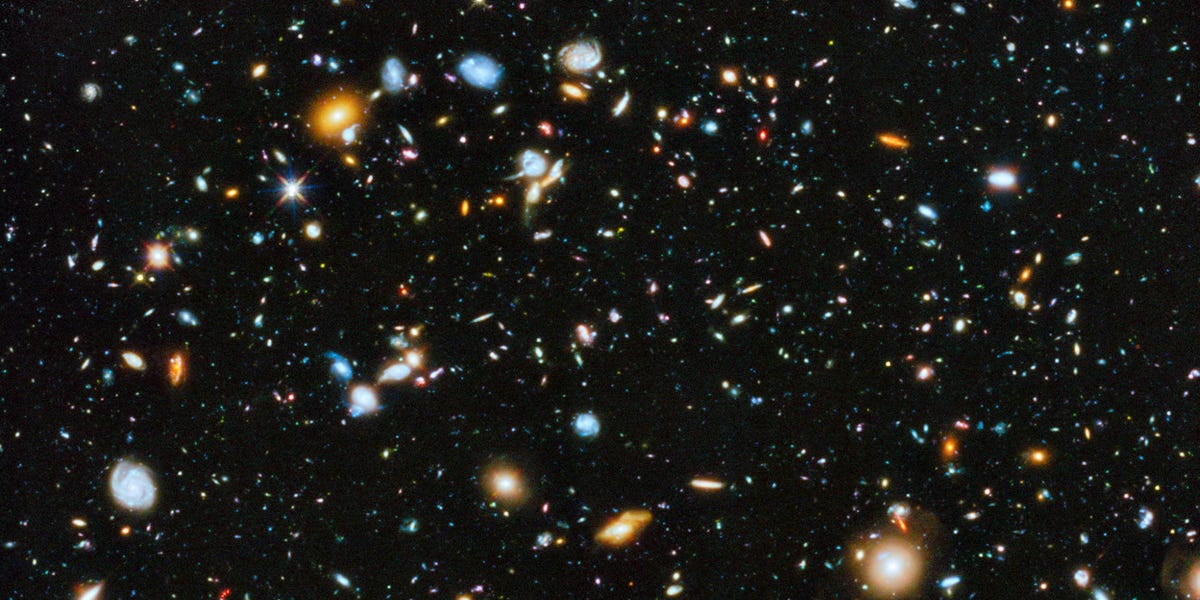
Scientists have created the largest 3-D map of the universe using the Dark Energy Spectroscopic Instrument (DESI), revealing potential differences in the behavior of dark energy. The map suggests that dark energy may be evolving and weakening, contrary to the long-held belief that it is a constant force, potentially challenging Einstein's theory of general relativity. If confirmed, this discovery could lead to a deeper understanding of the universe and its accelerating expansion, marking a significant development in the field of cosmology.
"Controversial Study: Universe Has No Dark Matter and Is 27 Billion Years Old"

Originally Published 1 year ago — by Futurism

Featured image for "Controversial Study: Universe Has No Dark Matter and Is 27 Billion Years Old"
Source: Futurism

A new paper by University of Ottawa physics professor Rajendra Gupta challenges the existence of dark matter, suggesting that the universe is twice as old as current models suggest and doesn't require dark matter to exist. Gupta's theory, which builds on his previous work about the universe's age, proposes a revised model based on a "covarying coupling constant" and the tired light hypothesis, arguing that dark matter doesn't have to be part of the equation at all. This controversial claim directly contradicts prevailing theories and is expected to face pushback from Gupta's peers.

"Nested Gravitational Stars: Unraveling Black Hole Weirdness"

Originally Published 1 year ago — by ScienceAlert

Featured image for "Nested Gravitational Stars: Unraveling Black Hole Weirdness"
Source: ScienceAlert

Physicists have proposed a new solution to the equations describing black holes, envisioning them as nested "bubble-like" structures called nestars, which could help make sense of the mysterious behavior of these celestial objects. This concept, reminiscent of a matryoshka doll, offers a unique twist on the traditional depiction of black holes and may provide insights into their enigmatic nature, despite the current lack of understanding on how such structures could be created.

"Unraveling the Mystery of Cosmic Rays: Black Hole Accelerators and Astrophysical Jets"

Originally Published 1 year ago — by Business Insider

Featured image for "Unraveling the Mystery of Cosmic Rays: Black Hole Accelerators and Astrophysical Jets"
Source: Business Insider

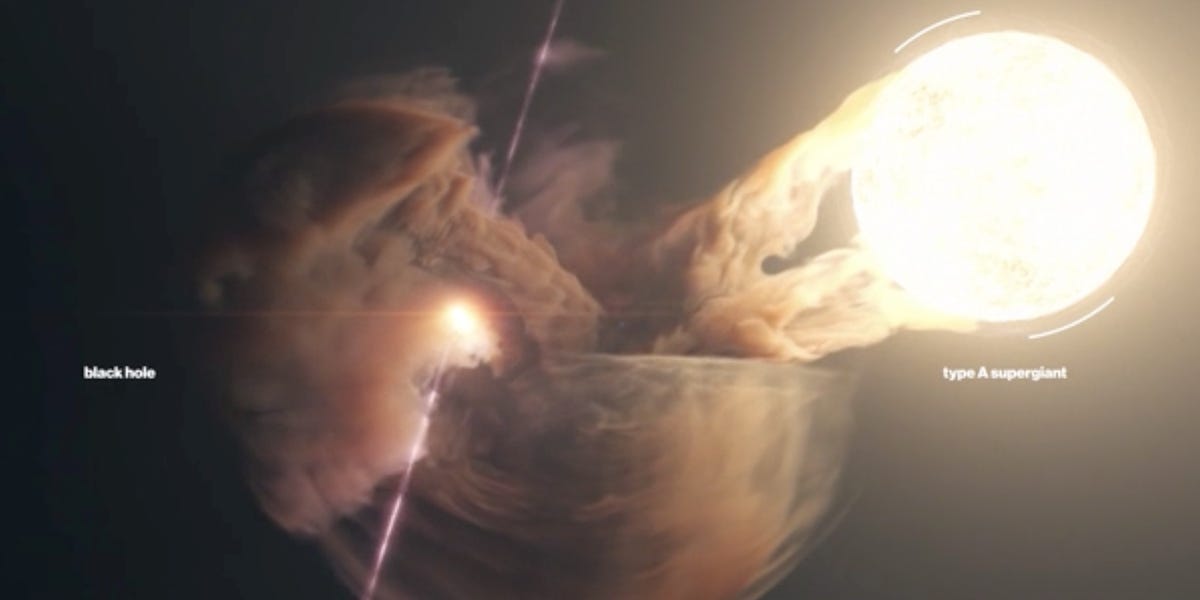
Scientists have discovered a naturally occurring particle accelerator near a small black hole called SS 433, shedding light on the mystery of how high-energy cosmic rays reach Earth at nearly the speed of light. This finding provides unprecedented detail into the acceleration of cosmic rays and suggests that particles are accelerated to near the speed of light by encountering an invisible wall, causing energy to build up and propel them into space. The discovery, published in the journal Science, marks a significant step towards understanding the origins of these mysterious cosmic rays.

"Revealing Modified Gravity: Wide Binary Stars and the MOND Debate"

Originally Published 2 years ago — by Phys.org

Featured image for "Revealing Modified Gravity: Wide Binary Stars and the MOND Debate"
Source: Phys.org

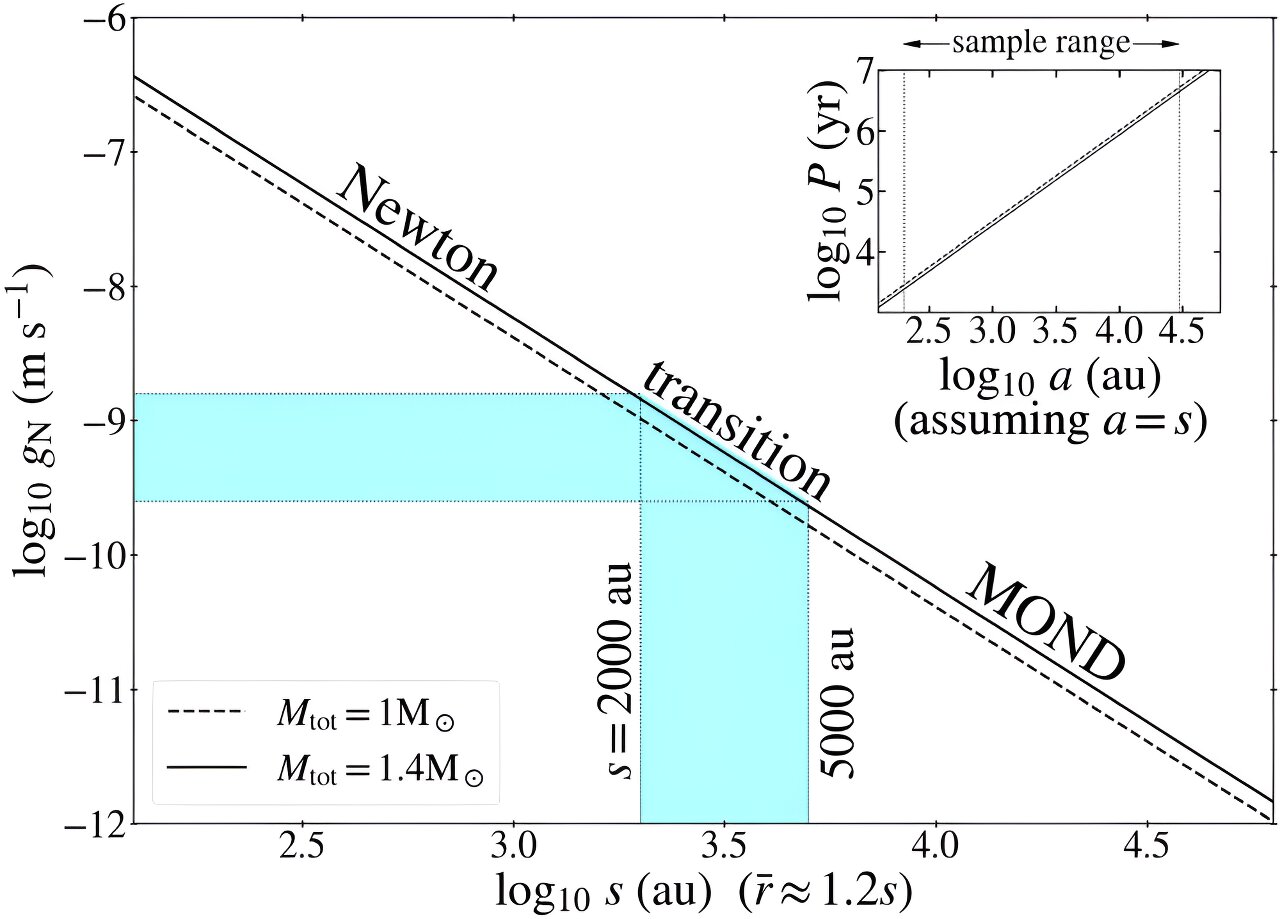
A new study published in The Astrophysical Journal provides further evidence for modified gravity at low acceleration, reinforcing previous findings from 2023. The study, conducted by Kyu-Hyun Chae of Sejong University, analyzed wide binary stars observed by the Gaia space telescope and revealed that these systems experience larger accelerations than predicted by Newtonian physics at low gravitational forces. This anomaly aligns with predictions from modified gravity theories such as MOND, suggesting a potential paradigm shift in our understanding of gravity and its implications for astrophysics and cosmology.