Tag

Meerkat

All articles tagged with #meerkat

science4 months ago

Deep Space Radio Bursts Hit Earth in Rapid Succession

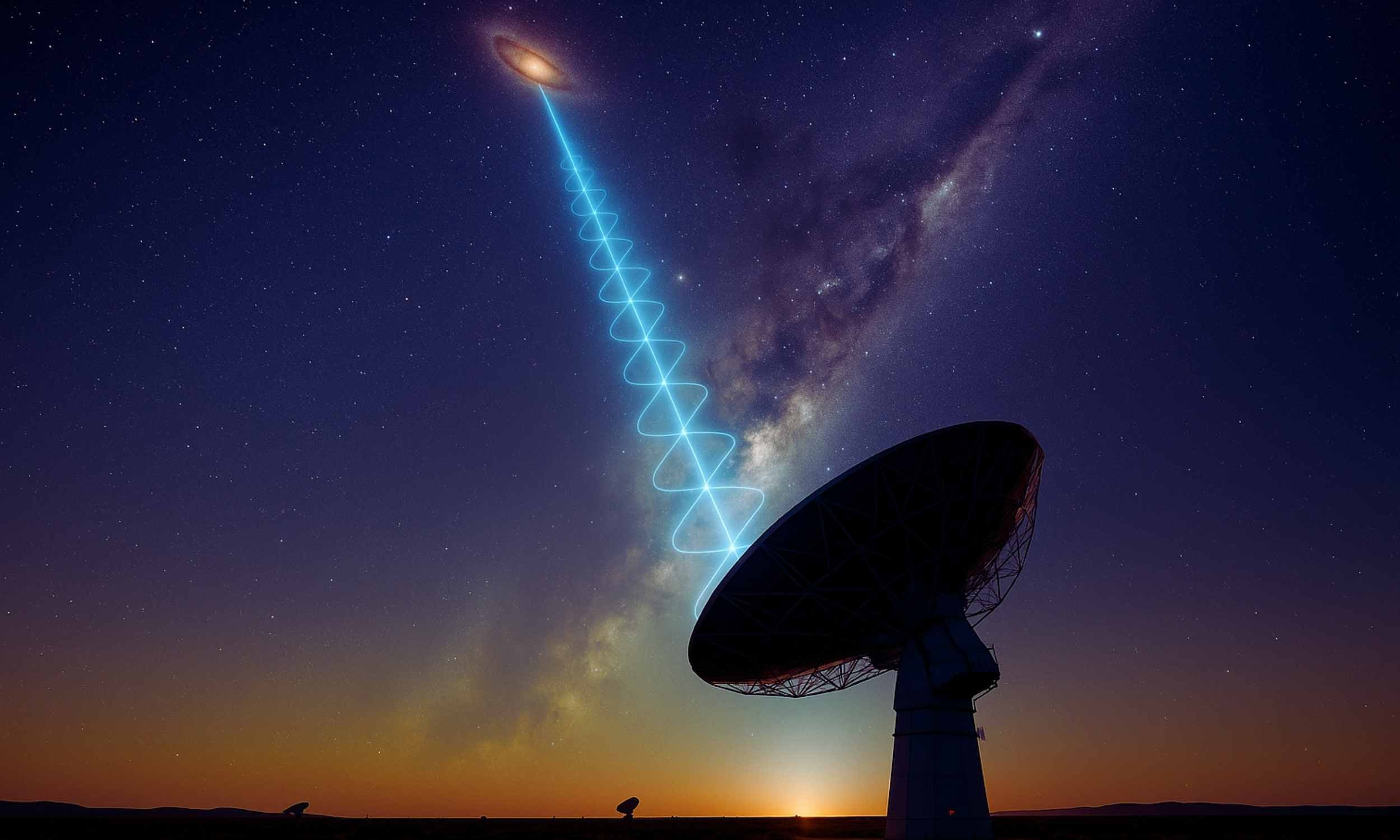
A team using MeerKAT in South Africa discovered a highly active repeating fast radio burst source, FRB 20240619D, emitting hundreds of short radio pulses across multiple frequencies, providing valuable insights into the nature of these cosmic phenomena and their potential origins near magnetars, while also setting limits on optical counterparts and helping map the universe's ionized gas.

science1 year ago

Gravitational Waves Unveil Hidden Cosmic Structures and Black Holes

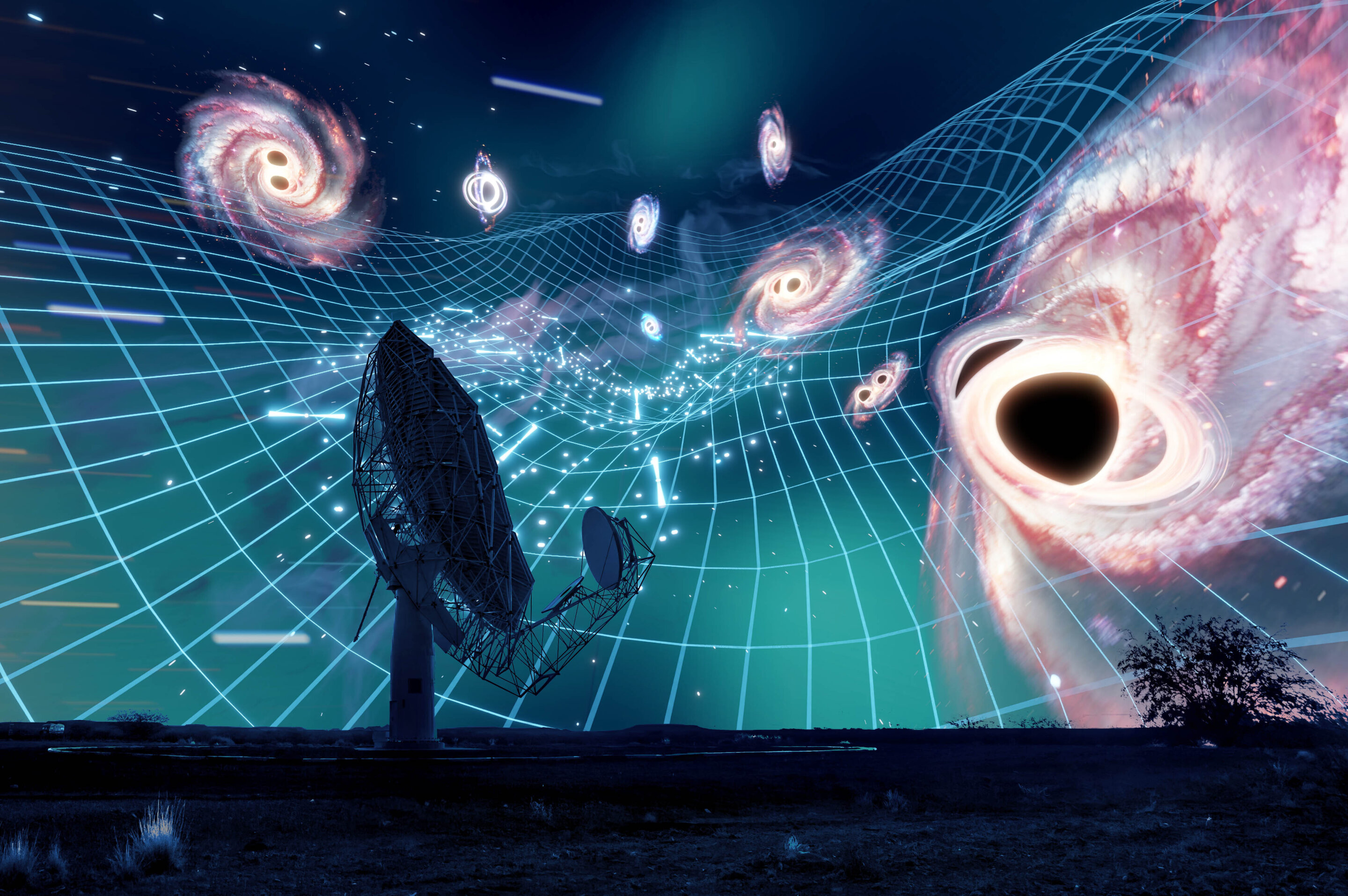
Astronomers from Swinburne University have created the most detailed maps of gravitational waves, revealing hidden black holes and cosmic structures. Using the MeerKAT Pulsar Timing Array, they detected a strong gravitational wave signal from merging supermassive black holes, uncovering unexpected hotspots that suggest directional biases. This research offers new insights into the universe's evolution and the formation of massive black holes, challenging previous assumptions about the gravitational wave background's distribution.

science1 year ago

MeerKAT Unveils New Giant Radio Galaxy

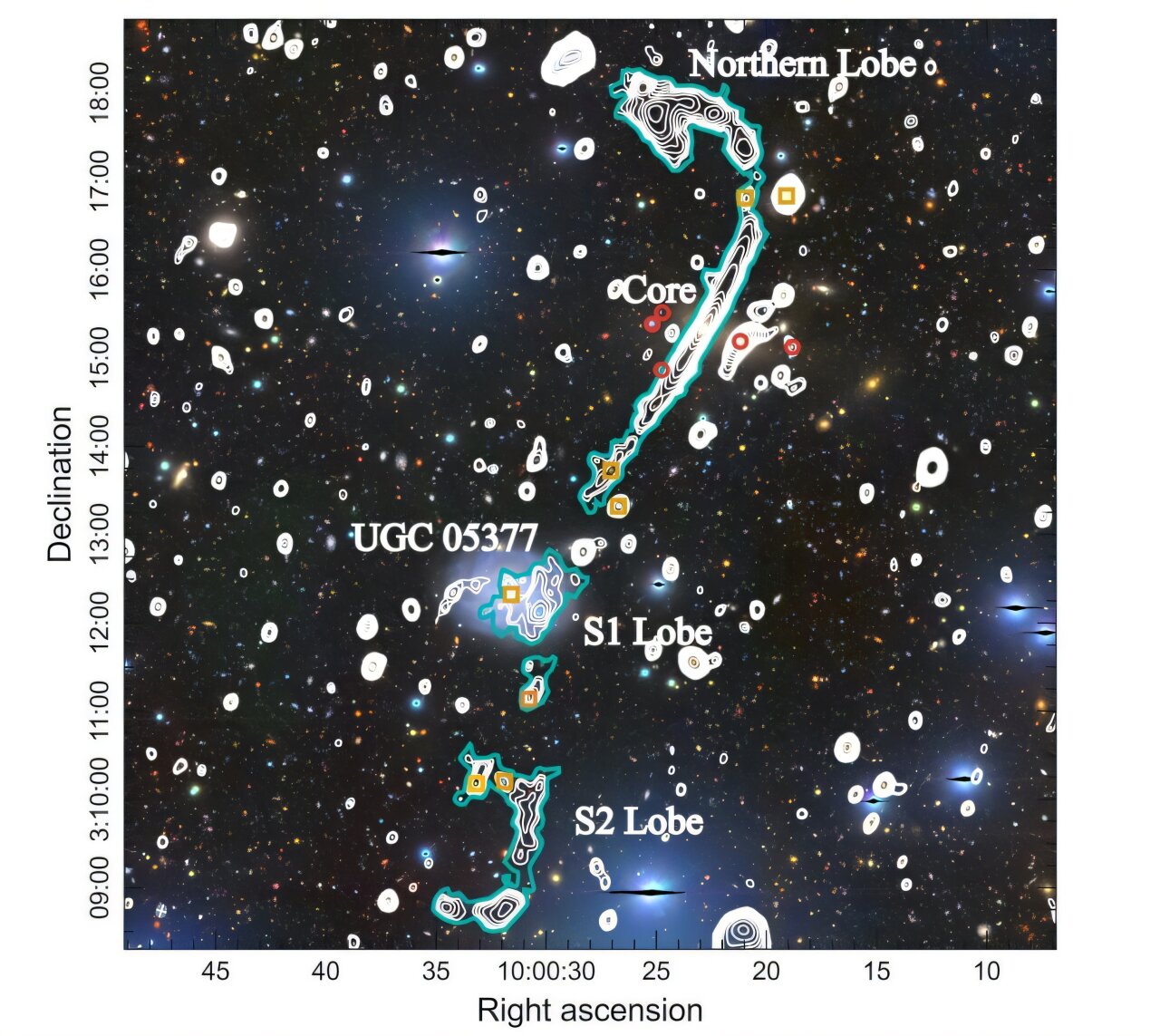
Astronomers using the MeerKAT radio telescope have discovered a new giant radio galaxy, MGTC J100022.85+031520.4, in the COSMOS field. This galaxy, hosted by an elliptical galaxy with a redshift of 0.1034, spans about 4.2 million light years and is one of the few GRGs located in a galaxy cluster. The discovery, part of the MIGHTEE survey, provides insights into the formation and evolution of radio sources.

astronomy1 year ago

"MeerKAT Scan Unearths 49 New Galaxies in Record Time"

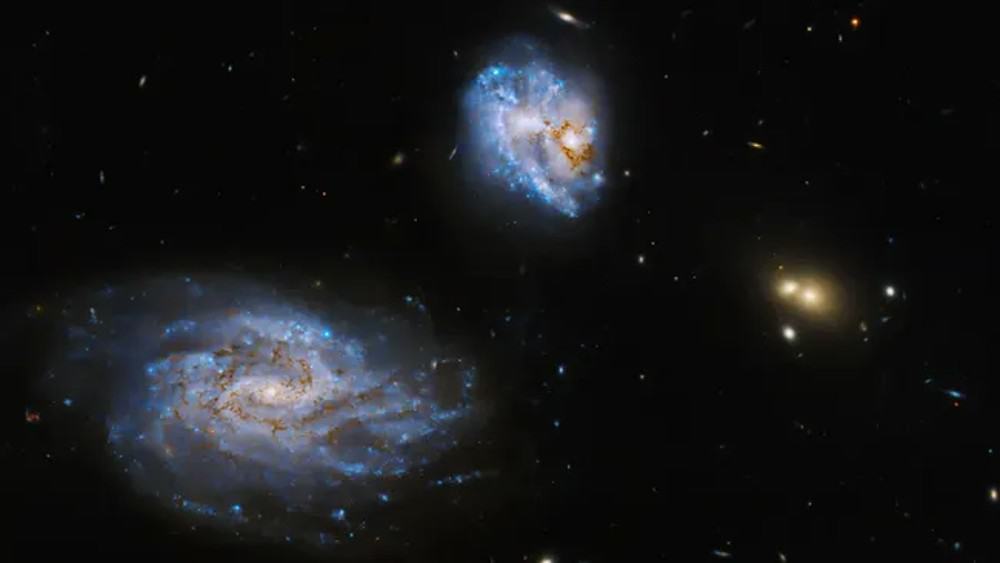
Astronomers using the MeerKAT radio telescope in South Africa have discovered 49 new galaxies while investigating the presence of hydrogen gas within a specific galaxy. The discovery provides insights into dynamic galactic interactions, with some galaxies actively siphoning gas from their neighbors. The MeerKAT radio telescope, a cornerstone in astronomical exploration, is part of the Square Kilometre Array (SKA) project and has detected radio galaxies and examined the Milky Way’s galactic center. Planned projects include surveys exploring star-forming hydrogen gas within new and existing galaxies, aiming to understand the evolutionary processes of galaxies.

astronomy1 year ago

"MeerKAT Telescope Discovers 49 New Galaxies in Record Time"

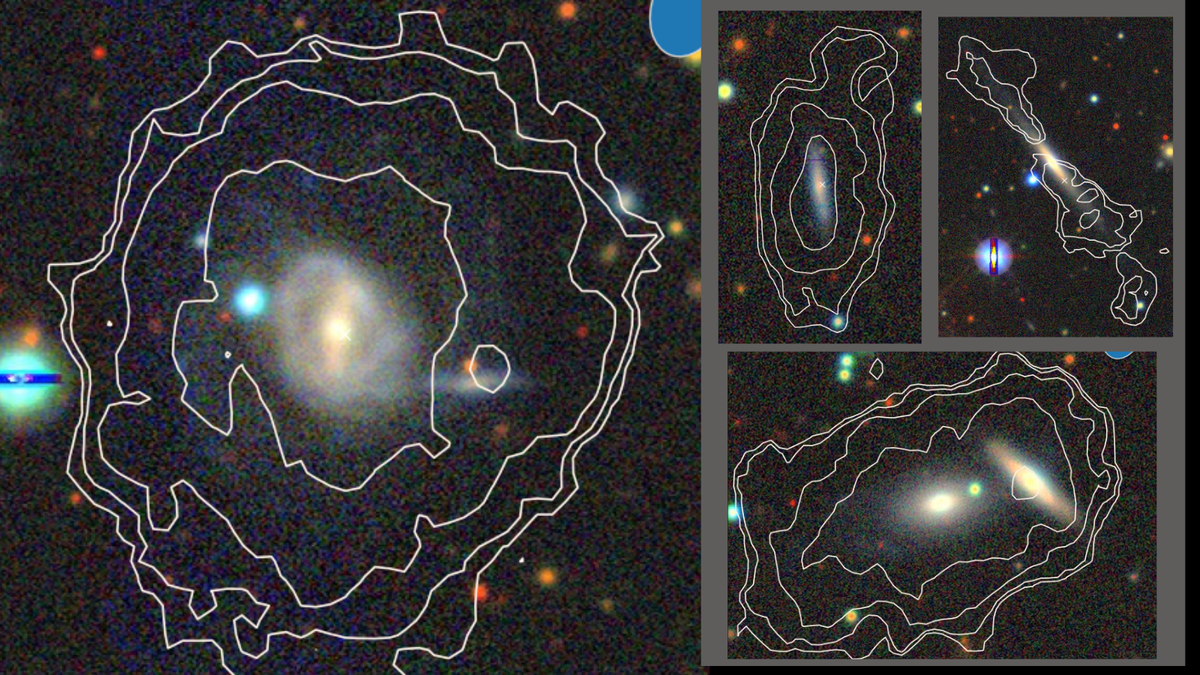
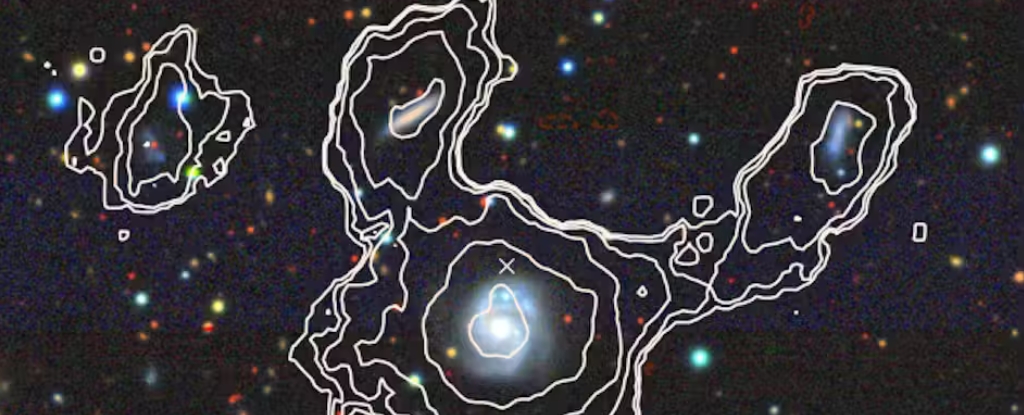
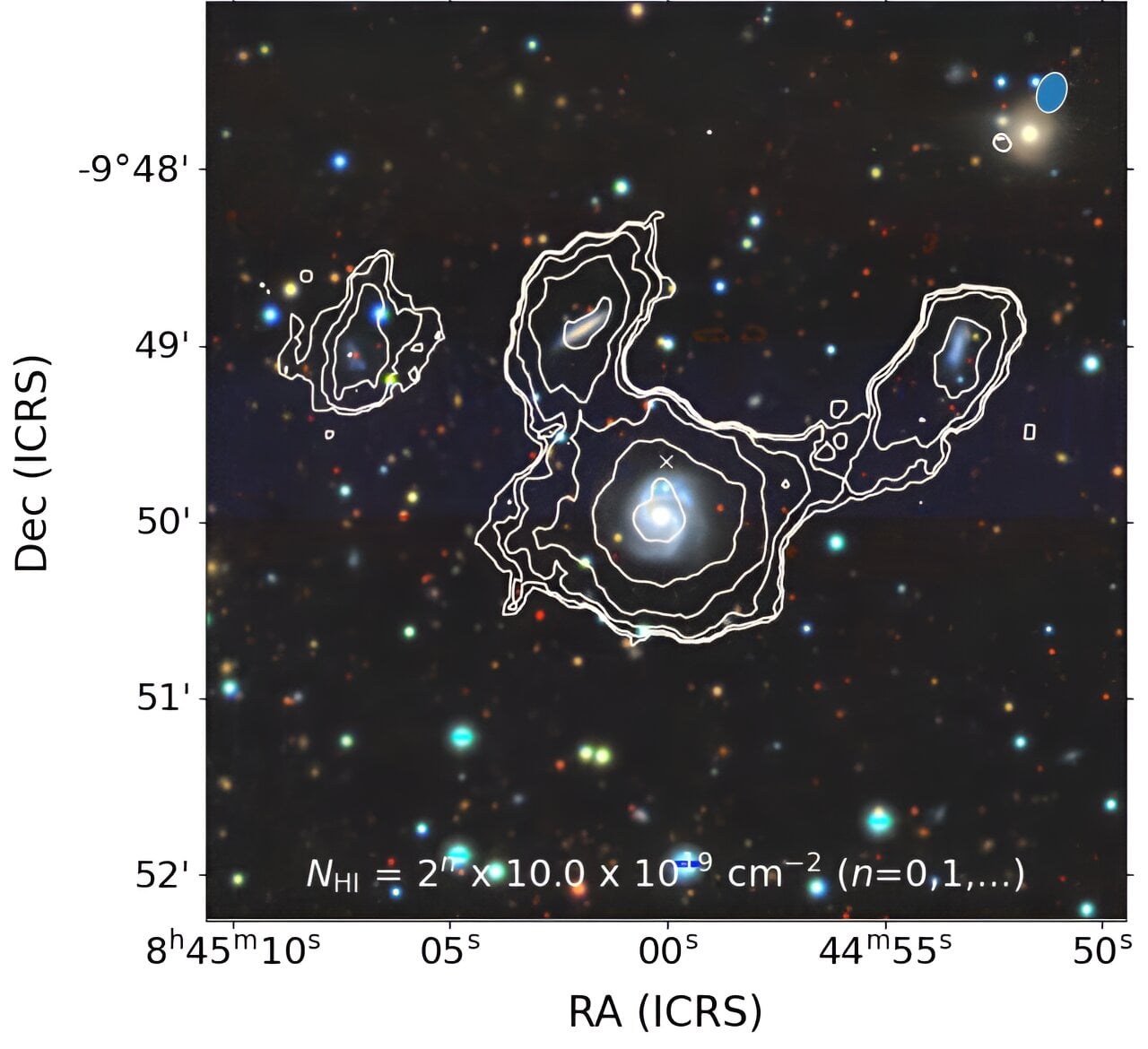
Astronomers using the MeerKAT radio telescope in South Africa discovered 49 new gas-rich galaxies in just three hours, dubbing them the "forty-niners." The galaxies were found while studying star-forming gas in a single radio galaxy, demonstrating the telescope's power in revealing star-forming gas. Many of the newfound galaxies are located in close proximity to each other and form galaxy groups, with three in particular capturing the researchers' interest due to their interconnected gas content. The team's research was published in the Monthly Notices of the Royal Astronomical Society, and they hope to continue sharing more discoveries of new gas-rich galaxies with the wider community.

astronomy1 year ago

"MeerKAT's Rapid Scan Unveils 49 New Gas-Rich Galaxies"

Using the MeerKAT radio telescope in South Africa, astronomers discovered 49 previously unknown galaxies in just under three hours, while originally aiming to observe hydrogen gas in a specific galaxy. The findings, published in the Monthly Notices of the Royal Astronomical Society, shed light on the importance of studying gas in galaxies to understand their formation and evolution. The MeerKAT telescope, part of the Square Kilometre Array project, has proven to be a valuable tool for such discoveries and is expected to reveal more insights into the universe's mysteries.

astronomy1 year ago

"Surprise Discovery: Astronomers Uncover 49 New Galaxies in Record Time"

An international team of astronomers using the MeerKAT radio telescope in South Africa discovered 49 new gas-rich galaxies in under three hours, with the galaxies informally nicknamed the "49ers." The observations, facilitated by IDIA, revealed that many of the galaxies are near each other, forming galaxy groups, with some directly connected by their gas content. The discovery highlights the power of MeerKAT as an imaging instrument and the methods developed for studying these galaxies will be useful for future large science surveys and observing campaigns.

astronomy1 year ago

"Breakthrough Discovery: Unusual Space Object Challenges Astrophysics"

Astronomers have discovered a celestial object in the star cluster NGC 1851 that challenges existing astrophysical classifications, possibly uncovering a new type of cosmic entity at the edge of known physics. The enigmatic system, known as NGC 1851E, consists of a millisecond pulsar and a massive, invisible companion object, which could be a pulsar in orbit around the remains of a merger of two neutron stars. This discovery holds immense promise for understanding extreme matter in the universe and may lead to the identification of a new, as yet unknown, astrophysical object at the boundary between neutron stars and black holes.

astronomy2 years ago

"Discovery of Two Pulsars in NGC 6522 Sheds Light on Stellar Evolution"

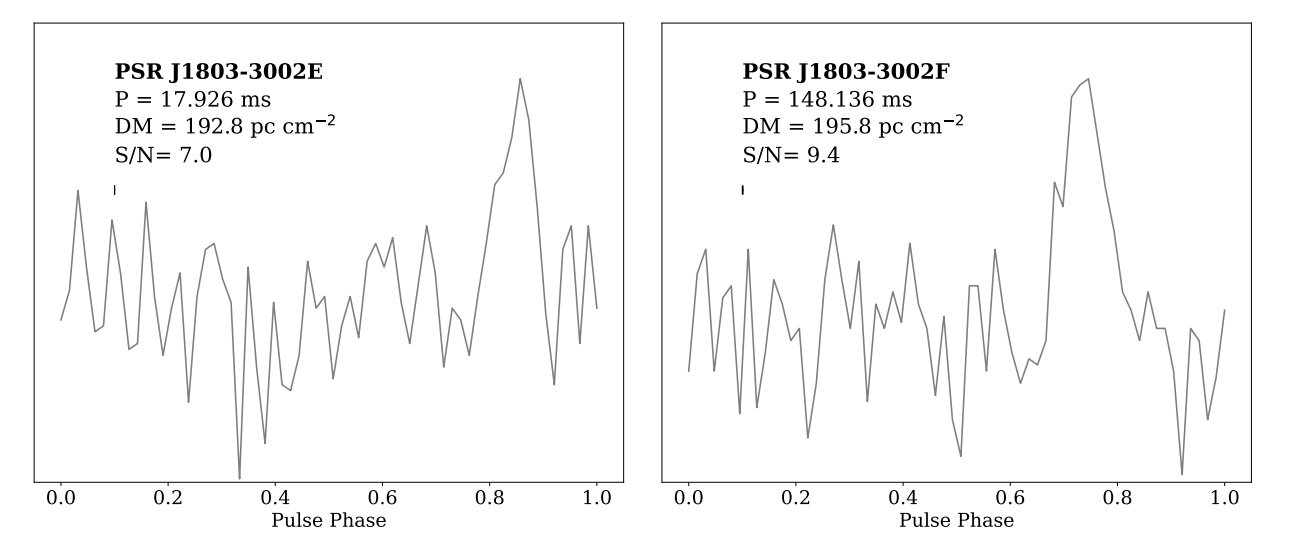
Astronomers using the MeerKAT radio telescope have discovered two new isolated pulsars in the globular cluster NGC 6522. The pulsars, designated as PSR J1803−3002E and PSR J1803−3002F, bring the total number of known pulsars in NGC 6522 to six. PSR J1803−3002E is a mildly recycled millisecond pulsar found near the center of the cluster, while PSR J1803−3002F is a slow pulsar located at a distance from the cluster's center. The discovery suggests a possible link between the formation of these pulsars and the evolutionary stage of the cluster.

astronomy2 years ago

Mysterious Cosmic Strands Discovered at Milky Way's Core

Astronomers have discovered hundreds of mysterious cosmic threads that point towards the supermassive black hole at the heart of the Milky Way, after a survey of the galaxy. The strange filaments, each of which stretches five to 10 light years through space, resemble the dots and dashes of morse code on a vast scale. They spread out from the galactic centre 25,000 light years from Earth like fragmented spokes on an enormous wheel.

astronomy2 years ago

Supernova Explosion Sends Star's Core Across Galaxy.

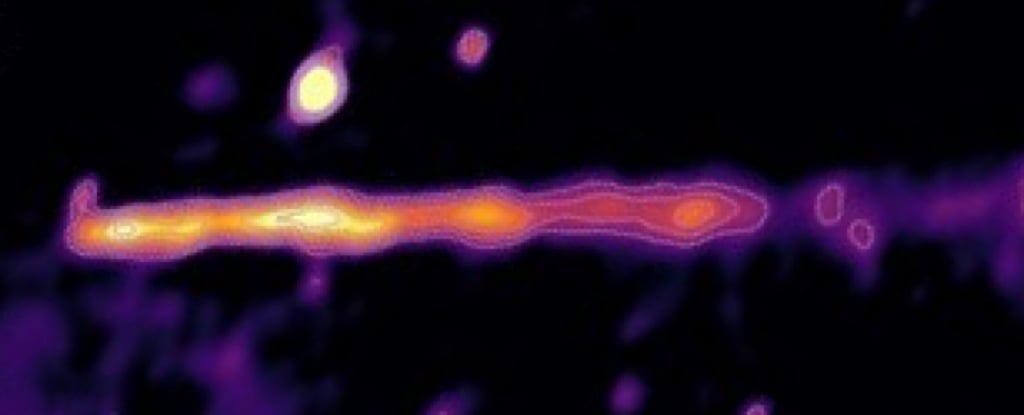
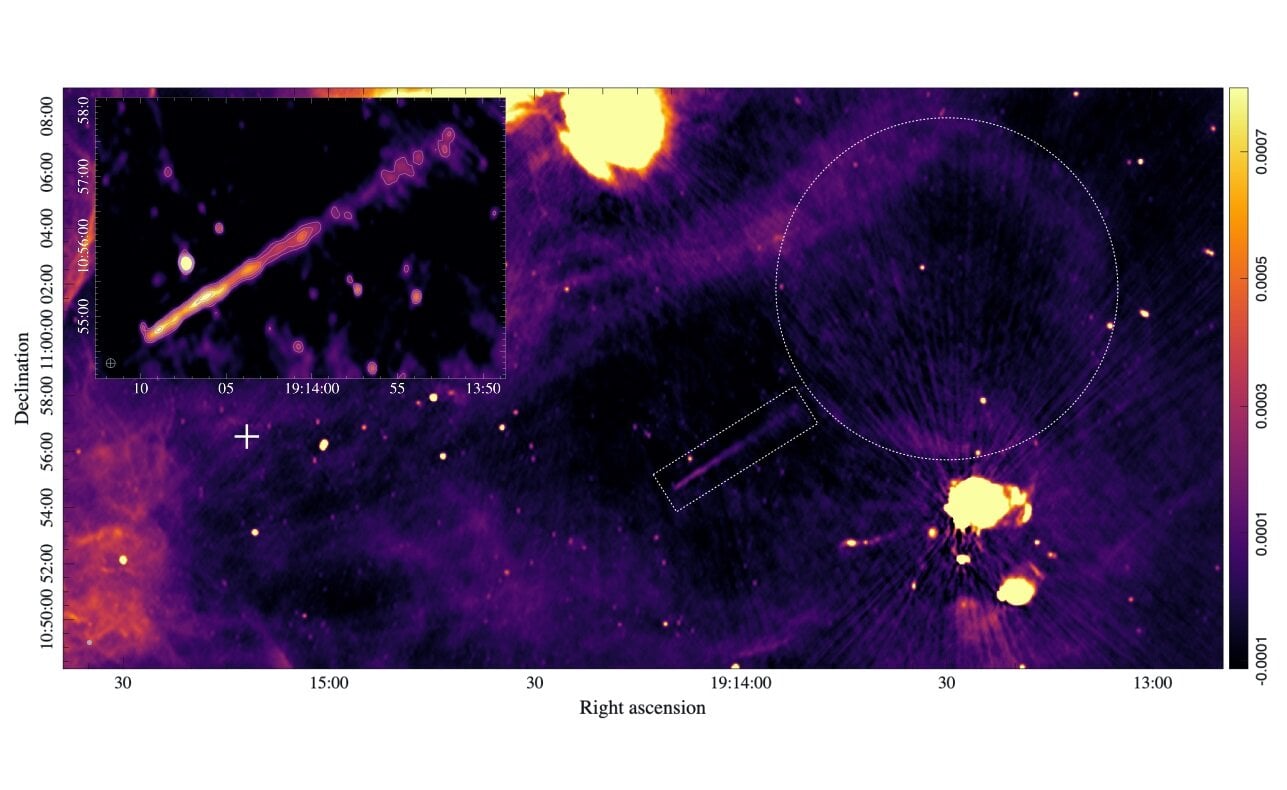
Astronomers have discovered a dead star, PSR J1914+1054g, rocketing away from its birth supernova, leaving a comet-like trail of radio emission in its wake. The star is just the fourth known of its kind: a radio pulsar kicked at high velocity across space, for which astronomers have observed not just the pulsar but the trail behind it known as a bow-shock nebula, and the supernova remnant from which it was kicked. The discovery will help astronomers better understand pulsars and their winds, supernova explosions, the local interstellar medium, high-speed particles, and wind-generated shocks.

astronomy2 years ago

MeerKAT telescope captures celestial 'Mini Mouse'

The MeerKAT radio telescope has discovered a new radio nebula, dubbed "the Mini Mouse," during observations of the black hole binary GRS 1915+105. The Mini Mouse is a young radio pulsar escaping its birth site and creating a radio nebula with a cometary-like morphology. The pulsar, PSR J1914+1054g, has a spin period of approximately 138.9 milliseconds and dispersion measure of about 418.9 pc/cm3. The distance to the pulsar was estimated to be 26,700 light years. This is the fourth case of a bow shock associated with an escaping pulsar, for which both the pulsar signal and the supernova remnant associated with its birth have been observed.

astronomy2 years ago

MeerKAT discovers unusual radio relics and circle.

Astronomers using the MeerKAT radio telescope have discovered a double radio relic and an odd radio circle while observing the merging galaxy cluster PSZ2 G277.93+12.34. The double radio relic consists of two large radio relics forming a partial circle, while the odd radio circle is a mysterious gigantic ring of radio waves. The discovery could provide crucial information about cluster mergers and the resultant emission.