Tag

Gravitationalwaves

All articles tagged with #gravitationalwaves

science1 year ago

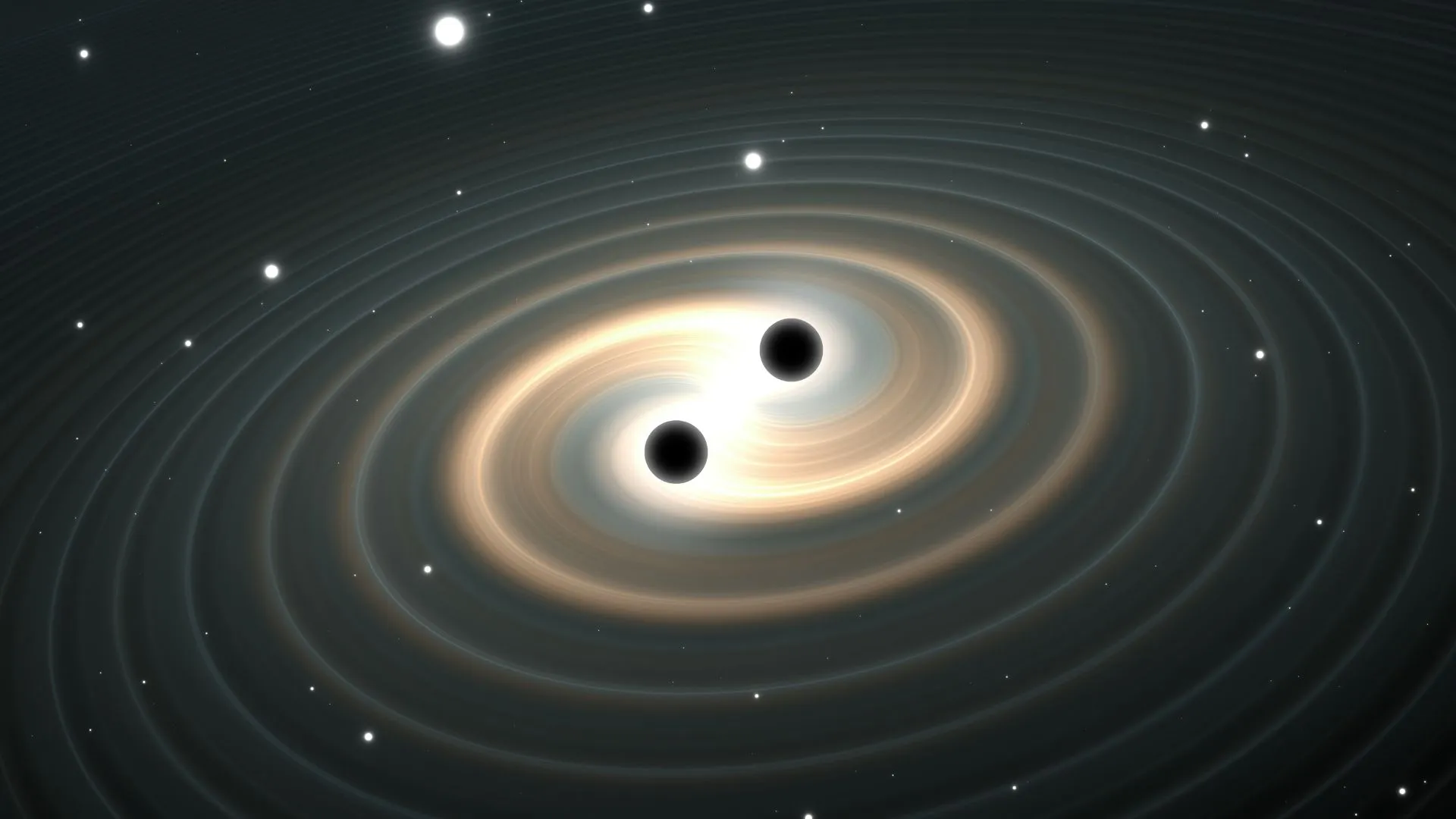
New Gravitational Wave Maps Unveil Hidden Universe Mysteries

Researchers using the MeerKAT telescope in South Africa have created the most detailed map of gravitational waves, revealing strong signals from merging supermassive black holes. This map, developed through three studies, highlights a gravitational wave hotspot and suggests a more dynamic universe than previously thought. The study utilized pulsar timing arrays to detect low-frequency gravitational waves, offering new insights into the origins and mergers of supermassive black holes.
science1 year ago

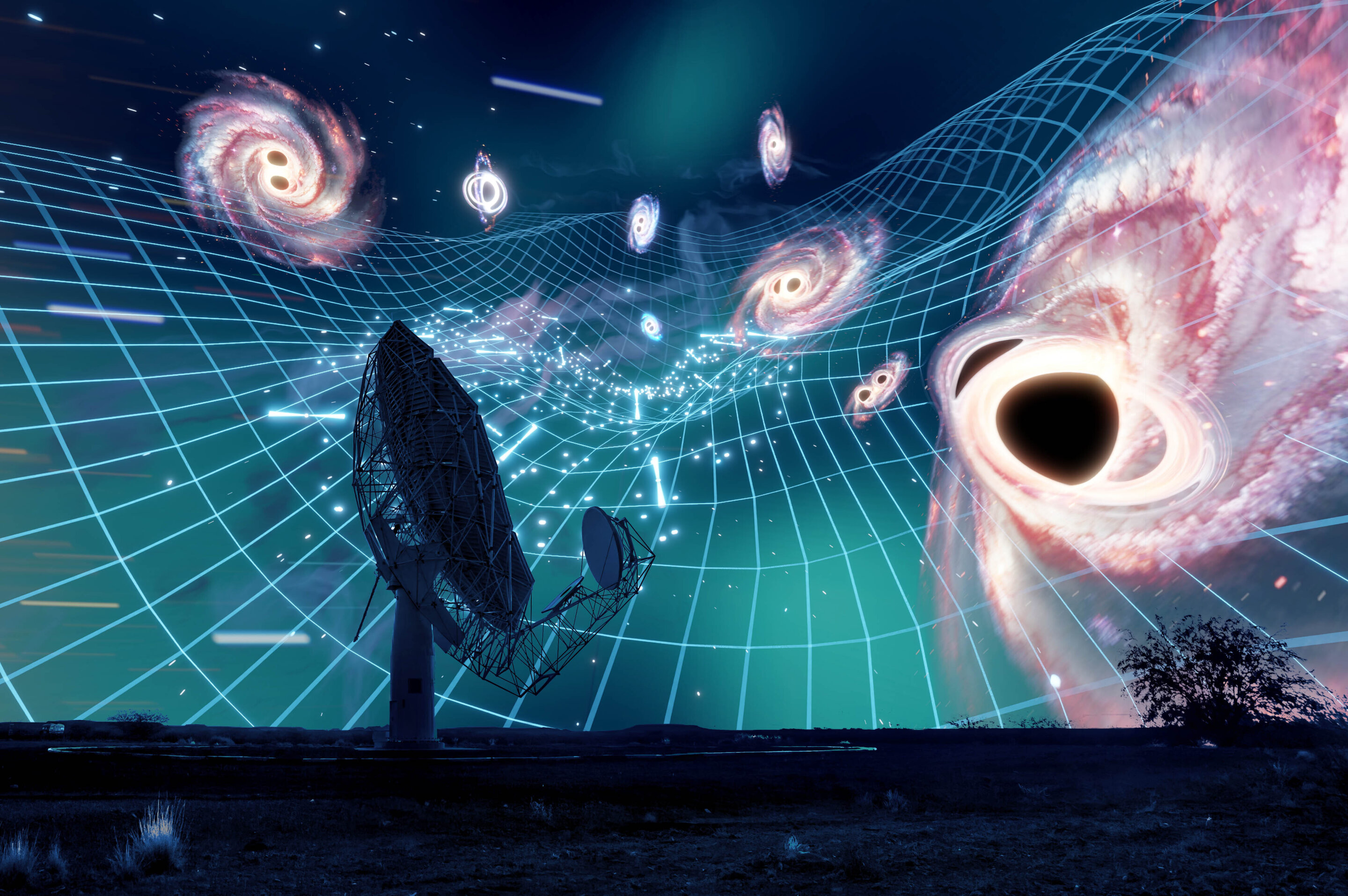
Gravitational Waves Unveil Hidden Cosmic Structures and Black Holes

Astronomers from Swinburne University have created the most detailed maps of gravitational waves, revealing hidden black holes and cosmic structures. Using the MeerKAT Pulsar Timing Array, they detected a strong gravitational wave signal from merging supermassive black holes, uncovering unexpected hotspots that suggest directional biases. This research offers new insights into the universe's evolution and the formation of massive black holes, challenging previous assumptions about the gravitational wave background's distribution.

science-and-technology2 years ago

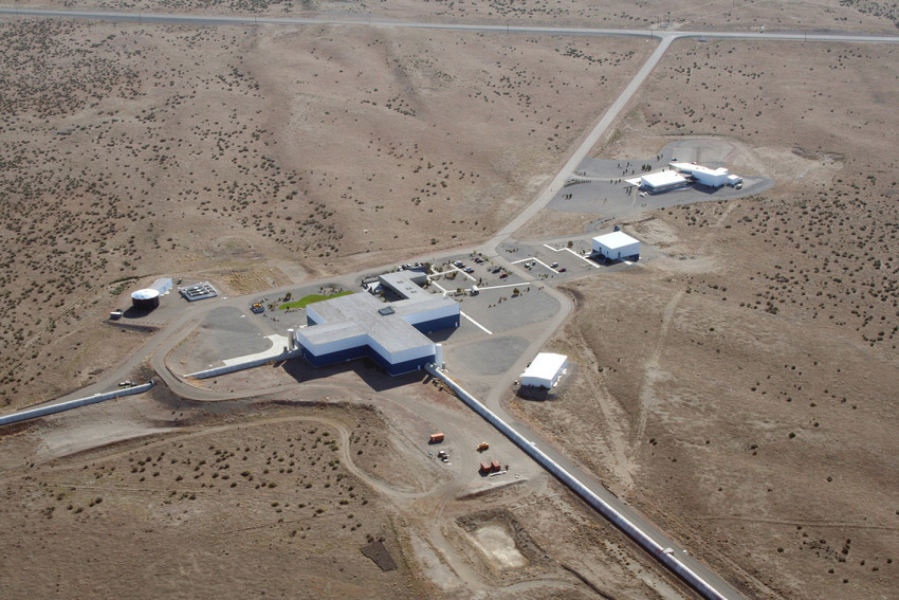
"Quantum Breakthrough: Eastern WA Gravitational Wave Observatory's Milestone"

The LIGO Hanford Observatory in Eastern Washington has achieved a significant breakthrough by surpassing the quantum limit, enhancing its ability to detect gravitational waves by 60%. This was made possible through the implementation of advanced quantum squeezing technology, which reduces quantum noise and allows for more precise measurements of cosmic events such as neutron star collisions and black hole mergers. This advancement not only boosts our understanding of the universe but also has potential applications in quantum computing and other areas requiring ultra-accurate measurements.

science-and-astronomy2 years ago

"Mysterious Spacetime Ripples Could Herald Universe's Dawn, Baffling Astronomers"

Astronomers from the NANOGrav collaboration are investigating the origins of faint gravitational waves detected in the Milky Way, which may be from merging supermassive black hole binaries or exotic cosmological processes from the early universe, such as cosmic strings, phase transitions, or domain walls. These findings could provide insights into the universe's infancy and the ongoing search for dark matter and dark energy. The complexity of the signals and the limitations of current detectors like LIGO pose challenges, but upcoming missions like LISA and AEDGE are expected to enhance gravitational wave detection capabilities. The research has been accepted for publication in the journal Physical Review D.

science-and-technology2 years ago

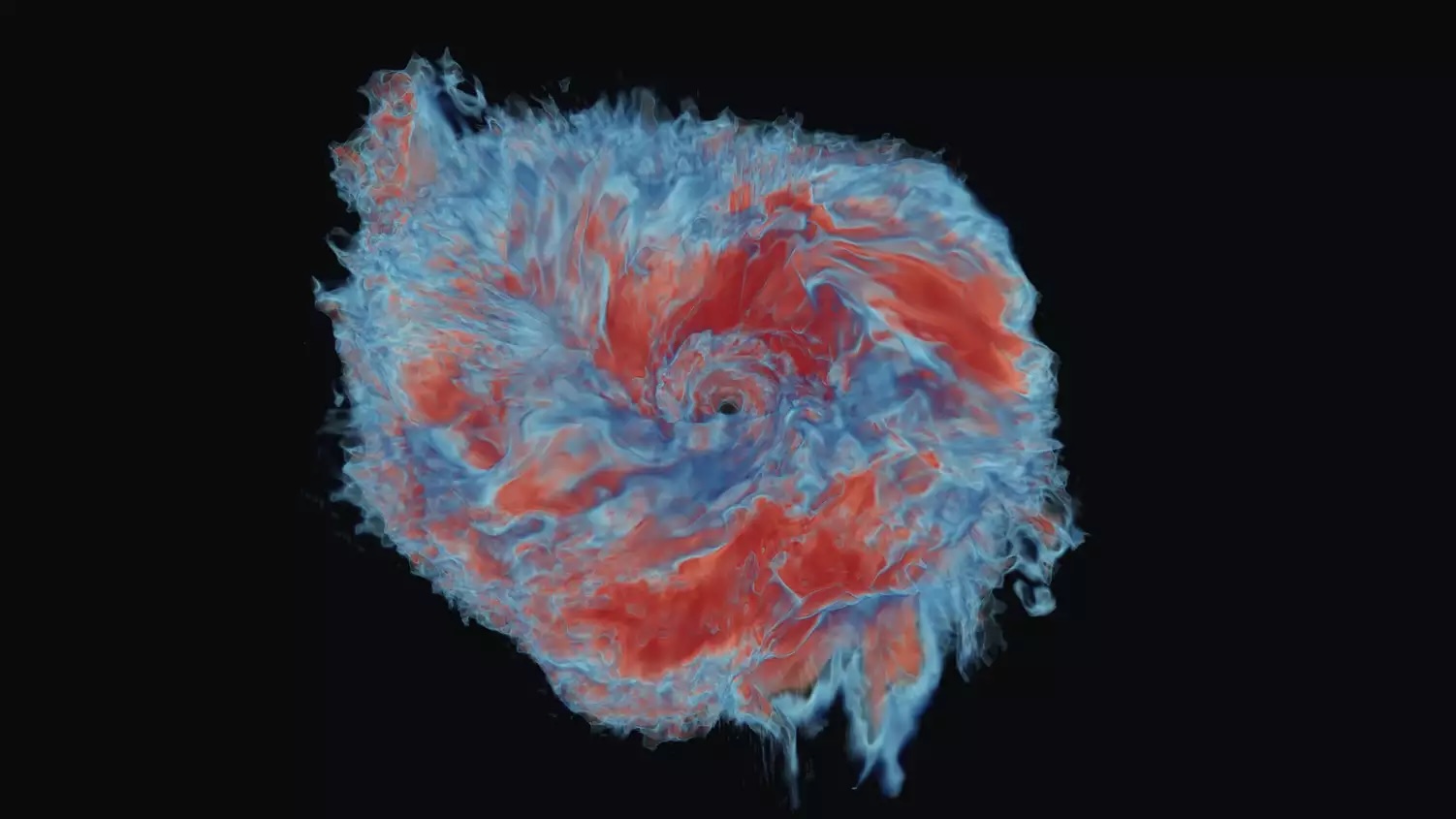
"Deciphering the Golden Kilonova: How Neutron Star Collisions Forge Cosmic Riches"

Astronomers have developed a new simulation tool that accurately predicts the outcomes of neutron star collisions, matching observations from the 2017 event detected by LIGO/Virgo. Neutron stars, incredibly dense remnants of supernovae, often exist in binary systems and eventually collide, emitting gravitational waves. The international research team, including the Max Planck Institute for Gravitational Physics and the University of Potsdam, combined various data sources, including X-ray and radio signals, to refine their model. The successful simulation offers insights into the formation of heavy elements under extreme conditions and will be used to analyze future neutron star mergers.

science-and-technology2 years ago

"2023: The Year Space Exploration Surpassed Science Fiction"

In 2023, significant space exploration milestones included the detection of gravitational waves by NANOGrav, groundbreaking observations by the James Webb Space Telescope, the return of asteroid samples by OSIRIS-REx, the 25th anniversary of the International Space Station, and a record-breaking number of U.S. rocket launches, primarily by SpaceX. These achievements are contributing to a deeper understanding of the universe, from the study of supermassive black holes and dark matter to the potential origins of life and advancements in space technology.