Tag

Globular Cluster

All articles tagged with #globular cluster

"NASA's Hubble Telescope Discovers Dazzling Star Cluster in Nearby Galaxy"

Originally Published 1 year ago — by Ars Technica

Featured image for "NASA's Hubble Telescope Discovers Dazzling Star Cluster in Nearby Galaxy"
Source: Ars Technica

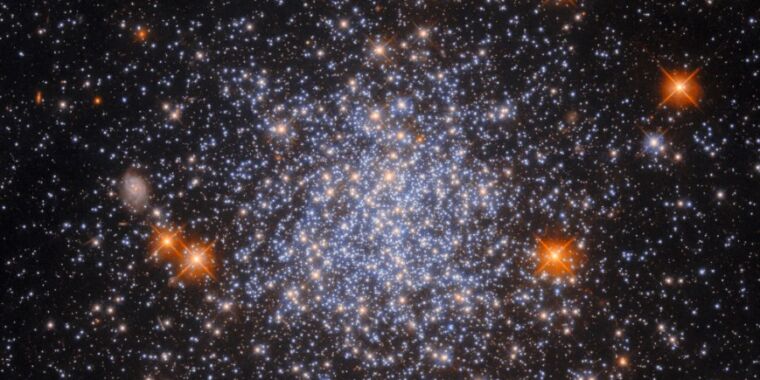
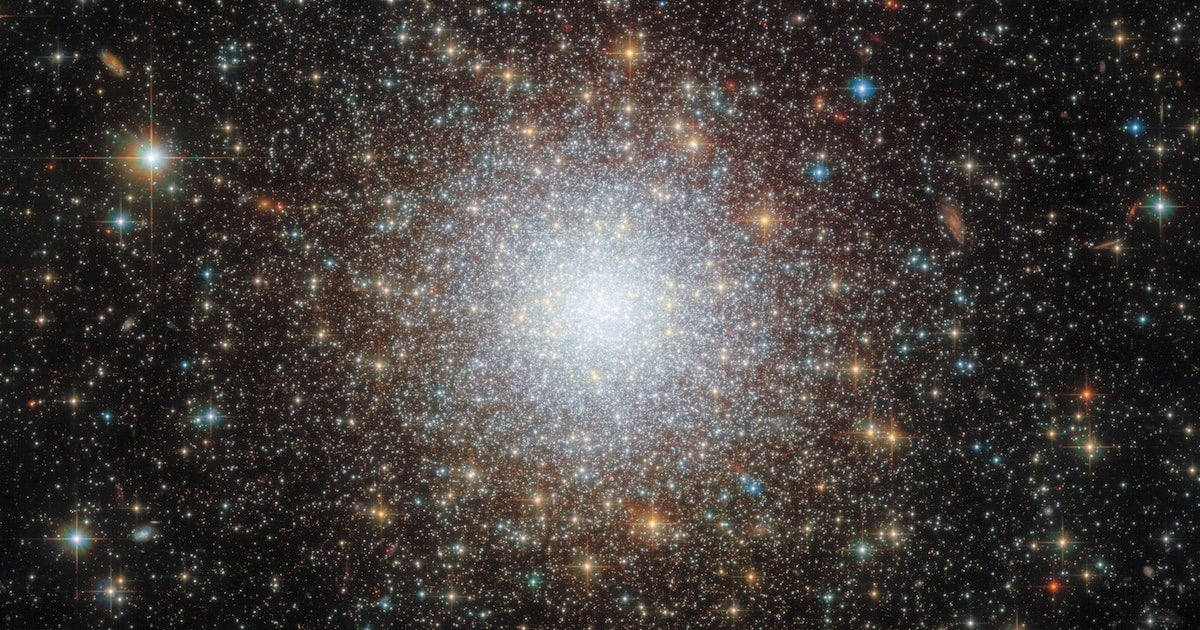
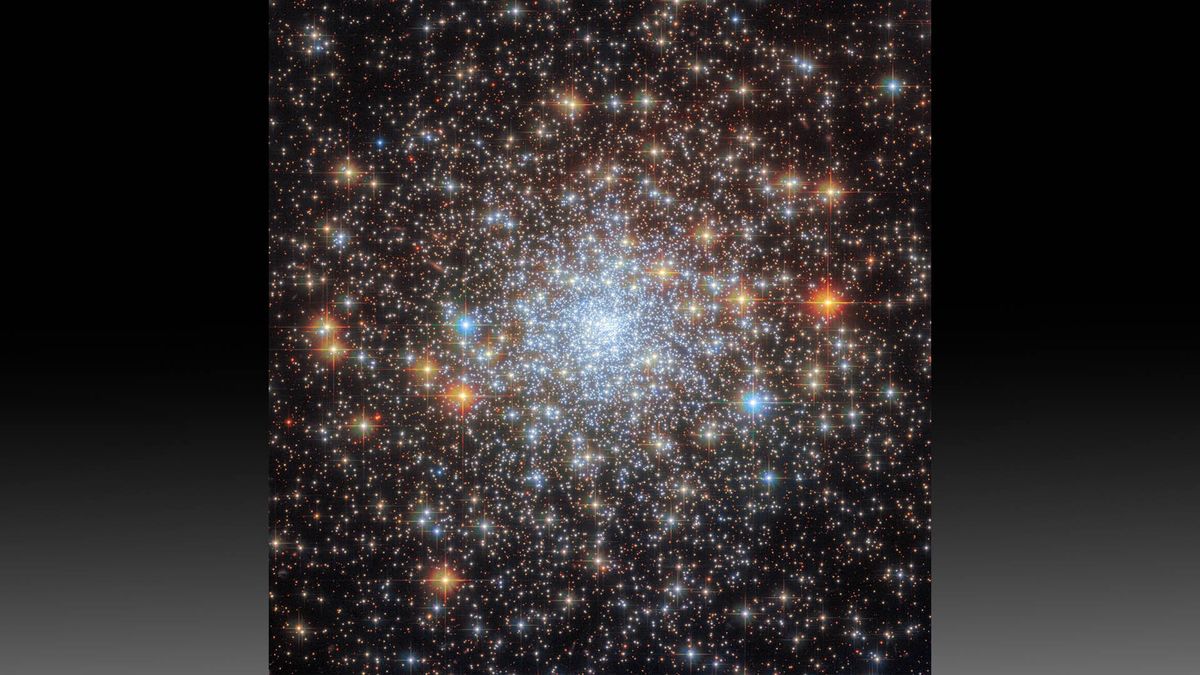
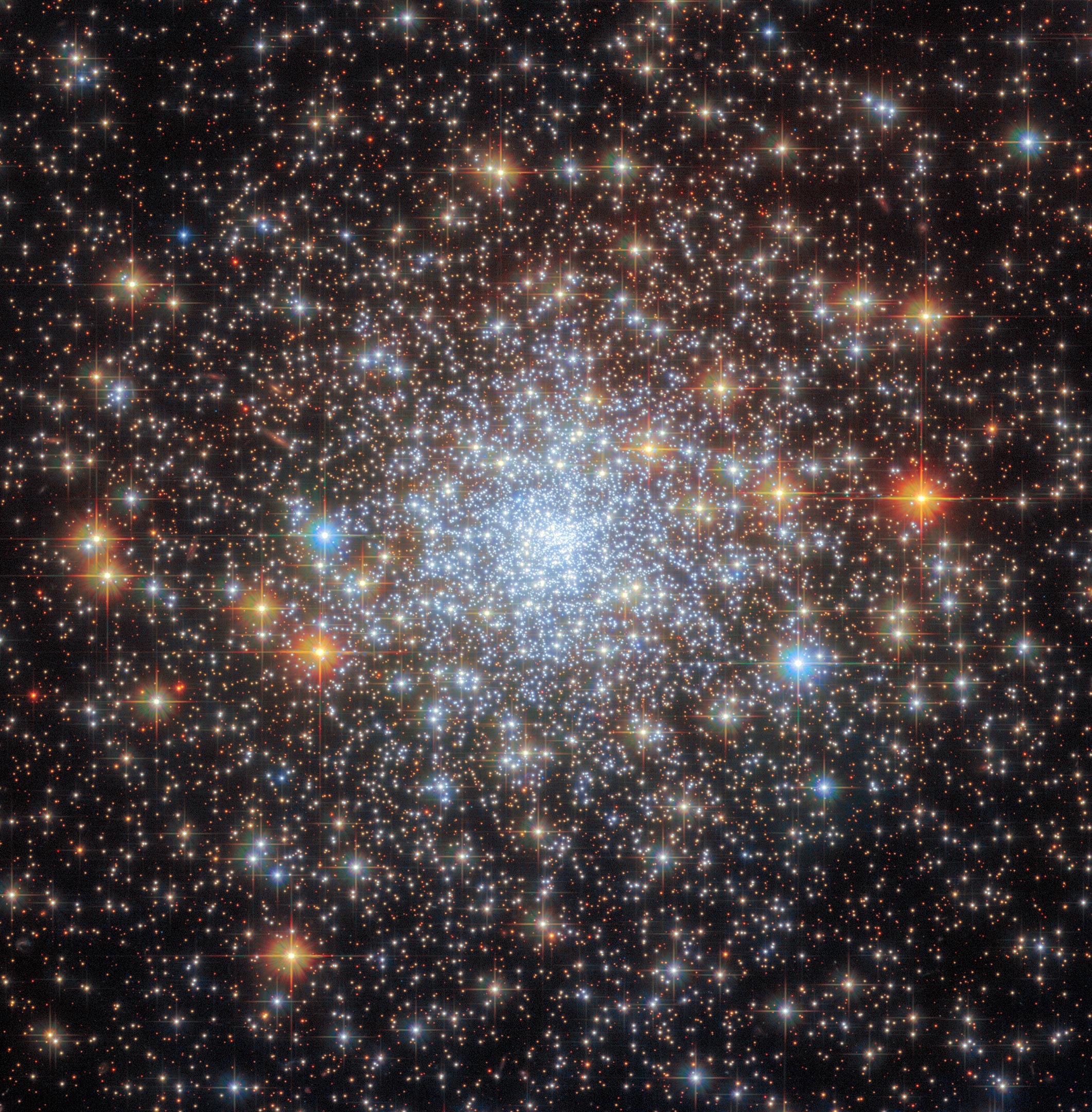
The Hubble Space Telescope has captured an image of the globular cluster NGC 1651 in the Large Magellanic Cloud, showcasing a cluster of stars about 2 billion years old and approximately 120 light-years across. The cluster is generally spherical, with a higher concentration of stars near its center, and the image also features a spiral galaxy amidst the bright stars.

"Faint Radio Signal Suggests Rare 'Missing Link' Black Hole in Ancient Star Cluster"

Originally Published 2 years ago — by Livescience.com

Featured image for "Faint Radio Signal Suggests Rare 'Missing Link' Black Hole in Ancient Star Cluster"
Source: Livescience.com

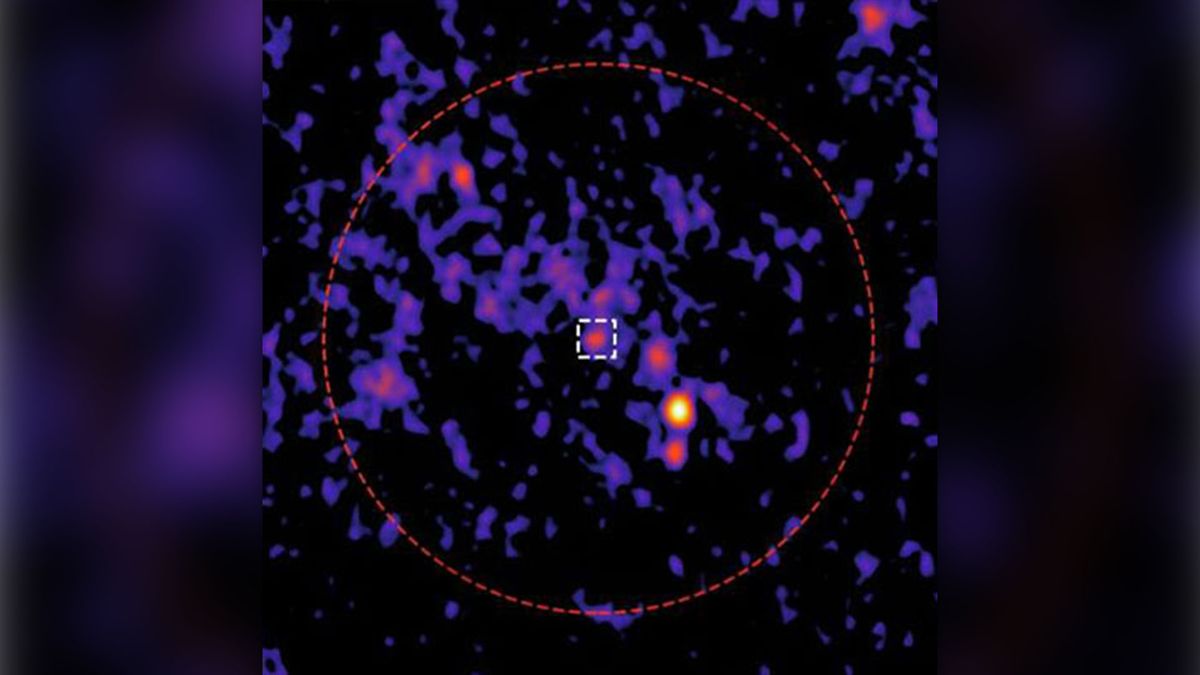
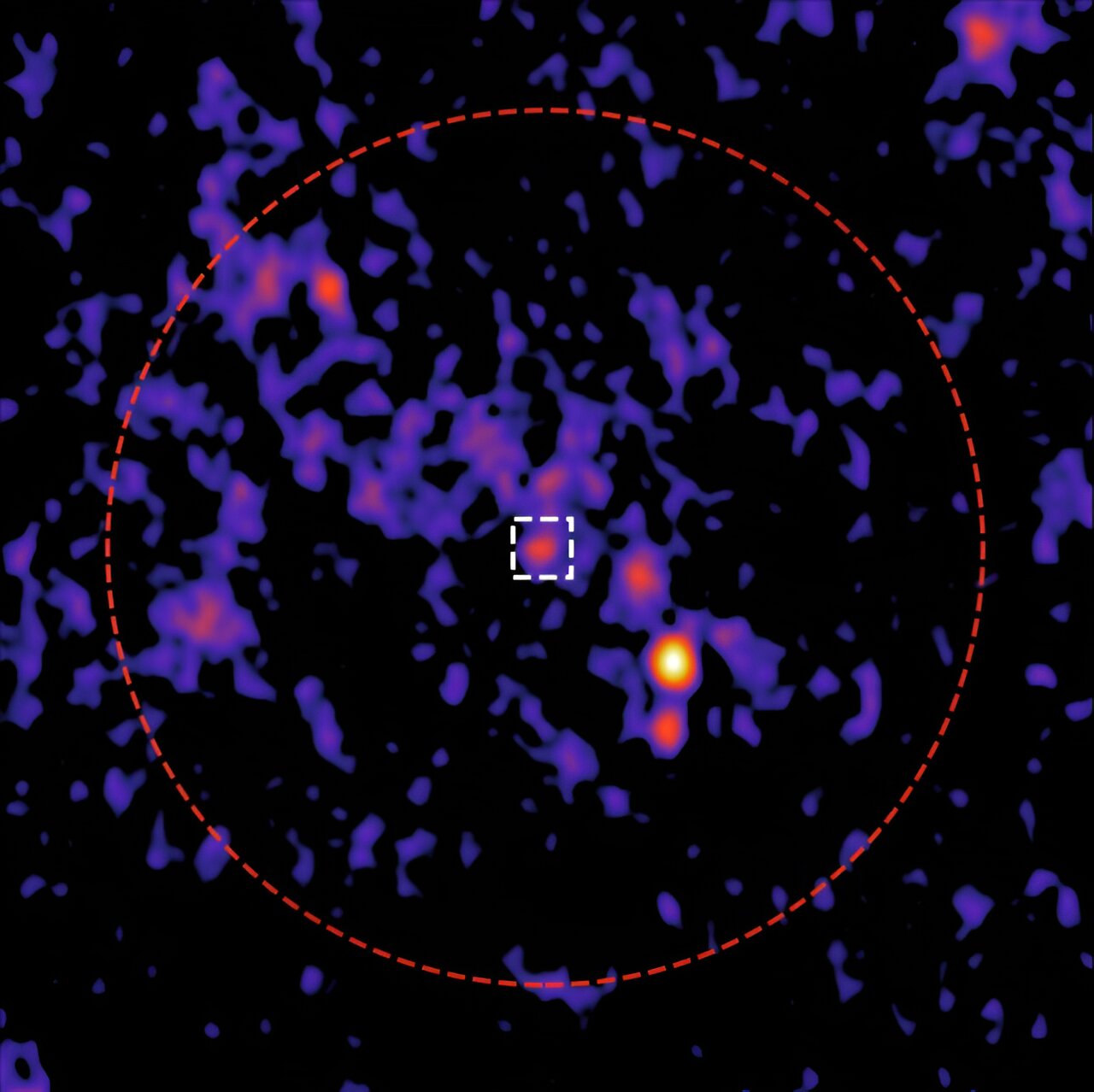
Astronomers have detected a faint radio signal at the center of an ancient globular cluster, possibly originating from a long-hidden black hole or a pulsar. The discovery, made using the Australia Telescope Compact Array, provides a highly sensitive image of the cluster 47 Tucanae, offering potential insights into the existence of intermediate-mass black holes and pulsars. This finding could pave the way for future discoveries using next-generation radio telescopes.

"Astronomers Uncover Enigmatic Cosmic Object Straddling Extreme Boundaries"

Originally Published 2 years ago — by IFLScience

Featured image for "Astronomers Uncover Enigmatic Cosmic Object Straddling Extreme Boundaries"
Source: IFLScience

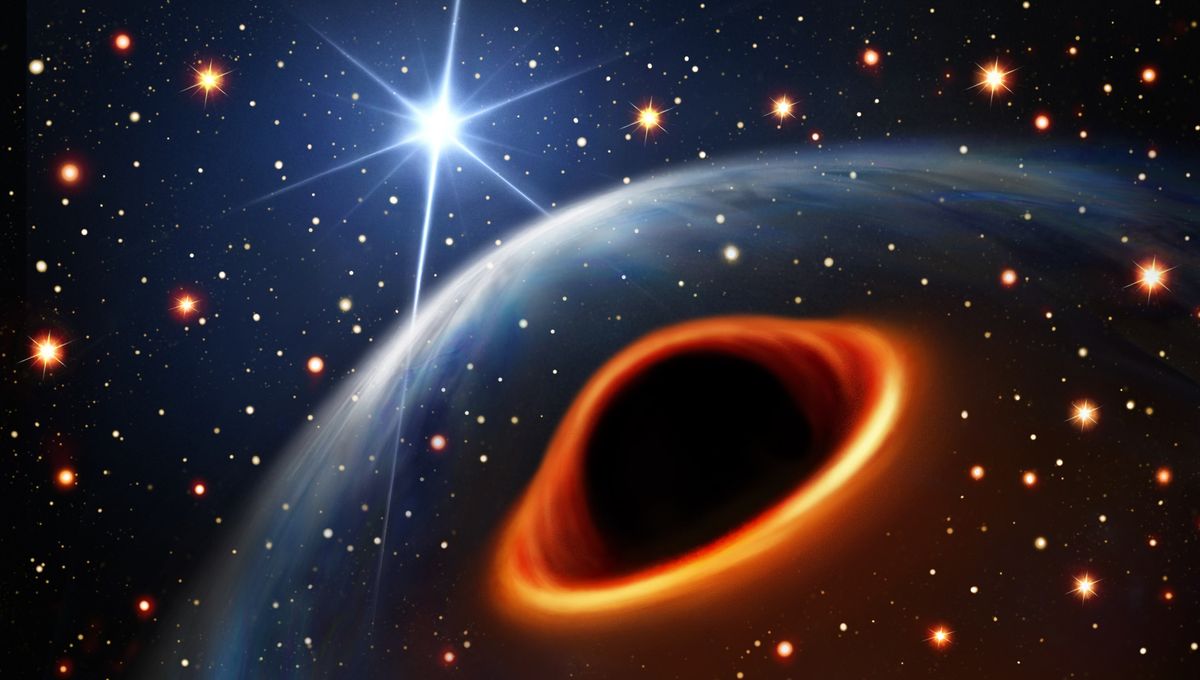
Astronomers have discovered a dense object orbiting a pulsar in a globular cluster 40,000 light-years away, which could be either the heaviest neutron star or the lightest black hole ever observed, challenging the known mass gap. The object's mass falls between the expected ranges for neutron stars and black holes, leading to two extreme possibilities. The researchers believe it may have formed from the merger of two neutron stars and are eager to uncover its true nature, as it could provide valuable insights into neutron stars, black holes, and the physics of extreme densities.

"Rare Black Hole Radio Signal Detected in Ancient Star Cluster"

Originally Published 2 years ago — by Space.com

Featured image for "Rare Black Hole Radio Signal Detected in Ancient Star Cluster"
Source: Space.com

Scientists have detected mysterious radio waves emanating from the heart of the 47 Tucanae globular cluster in the Milky Way, possibly originating from a medium-sized black hole, marking a potential breakthrough discovery. The signal was discovered through 450 hours of observations by the Australia Telescope Compact Array, revealing the most detailed radio image of the cluster to date. If confirmed, this would be the first-ever radio detection of a black hole within a cluster, shedding light on the existence of intermediate-mass black holes and the process of black hole growth.

"Uncovering a Mysterious Radio Signal from an Ancient Star Cluster"

Originally Published 2 years ago — by Phys.org

Featured image for "Uncovering a Mysterious Radio Signal from an Ancient Star Cluster"
Source: Phys.org

Astronomers have produced the most sensitive radio image ever of the ancient star cluster 47 Tucanae, revealing a previously undiscovered radio signal at its center. The image, created by a global team led by the Curtin University node of the International Centre for Radio Astronomy Research, was compiled from over 450 hours of observations using CSIRO's Australia Telescope Compact Array. The signal could potentially indicate the presence of an intermediate-mass black hole or a pulsar, and the research demonstrates the capabilities of current radio telescopes while hinting at the potential of future telescopes like the SKA.

Hubble's Stunning Discovery: Ancient Star-Stuffed Cluster Revealed

Originally Published 2 years ago — by Inverse

Featured image for Hubble's Stunning Discovery: Ancient Star-Stuffed Cluster Revealed
Source: Inverse

The Hubble Space Telescope has captured a stunning image of an ancient globular cluster located in the Large Magellanic Cloud, about 157,000 light-years from Earth. These clusters, packed with thousands or even millions of stars, provide clues about the early universe. The cluster, called NGC 2210, is estimated to be around 11.6 billion years old, making it just a few billion years younger than the universe itself. Other clusters in the Large Magellanic Cloud may be even older, with some exceeding 13 billion years in age.

Euclid's Telescope Unveils Cosmic Origins and Ancient Cluster

Originally Published 2 years ago — by SciTechDaily

Featured image for Euclid's Telescope Unveils Cosmic Origins and Ancient Cluster
Source: SciTechDaily

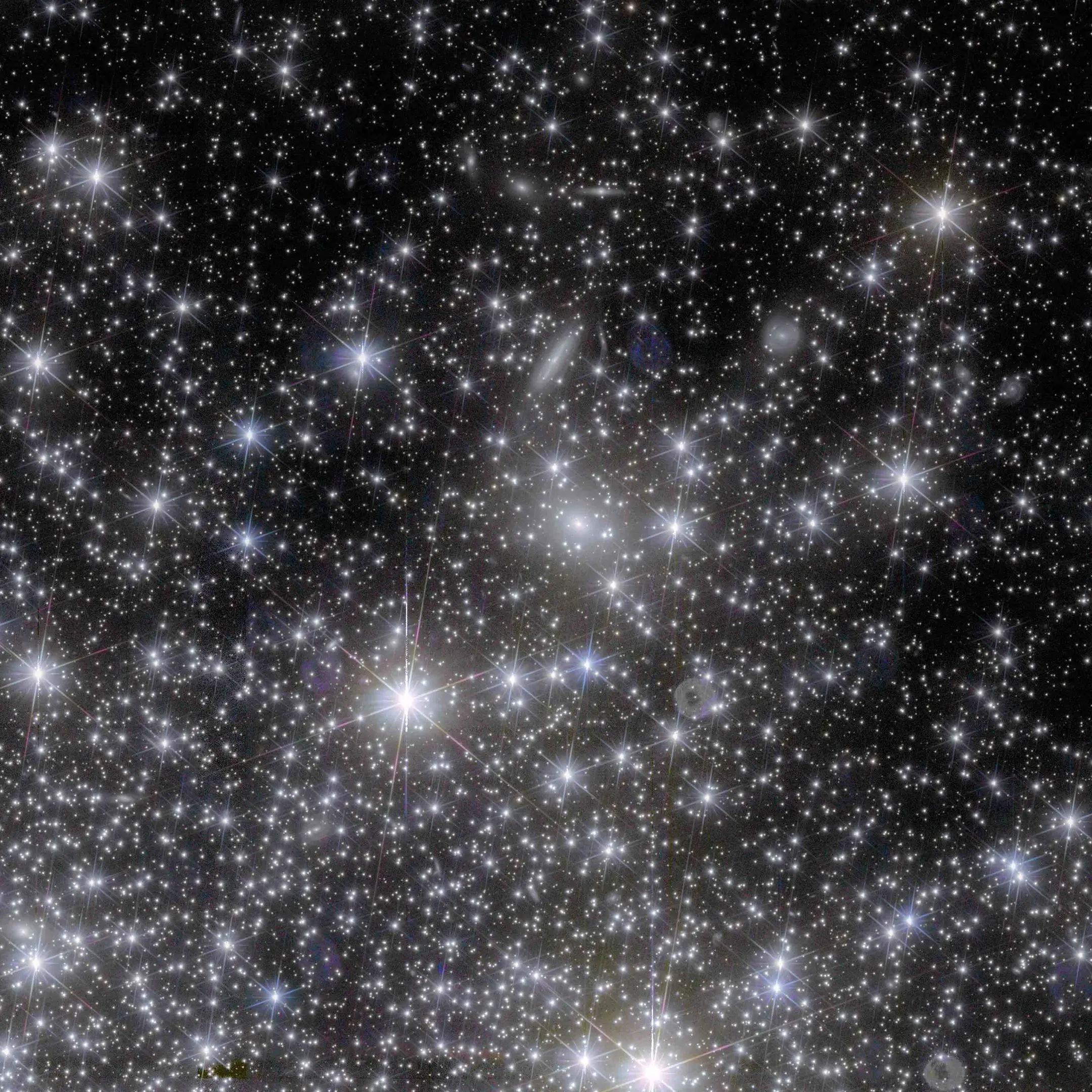
The Euclid telescope has captured a detailed image of the NGC 6397 globular cluster, located in the Milky Way's disc, revealing insights into the galaxy's history. By distinguishing faint stars in the cluster's outer regions, Euclid's capabilities enable the search for tidal tails, which can indicate past interactions and help map dark matter within the Milky Way. This comprehensive imaging may provide new insights into the role of dark matter in the galaxy and the evolution of one of its oldest stellar structures.

"Discovery of Two Pulsars in NGC 6522 Sheds Light on Stellar Evolution"

Originally Published 2 years ago — by Phys.org

Featured image for "Discovery of Two Pulsars in NGC 6522 Sheds Light on Stellar Evolution"
Source: Phys.org

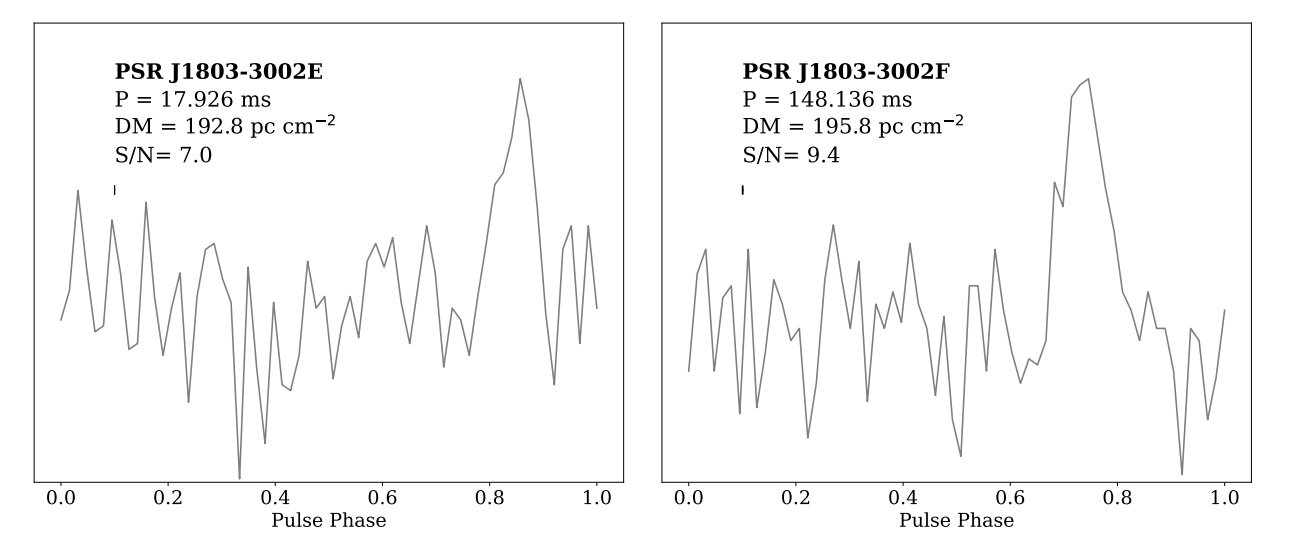
Astronomers using the MeerKAT radio telescope have discovered two new isolated pulsars in the globular cluster NGC 6522. The pulsars, designated as PSR J1803−3002E and PSR J1803−3002F, bring the total number of known pulsars in NGC 6522 to six. PSR J1803−3002E is a mildly recycled millisecond pulsar found near the center of the cluster, while PSR J1803−3002F is a slow pulsar located at a distance from the cluster's center. The discovery suggests a possible link between the formation of these pulsars and the evolutionary stage of the cluster.

"Hubble telescope captures breathtaking image of dazzling globular cluster"

Originally Published 2 years ago — by Space.com

Featured image for "Hubble telescope captures breathtaking image of dazzling globular cluster"
Source: Space.com

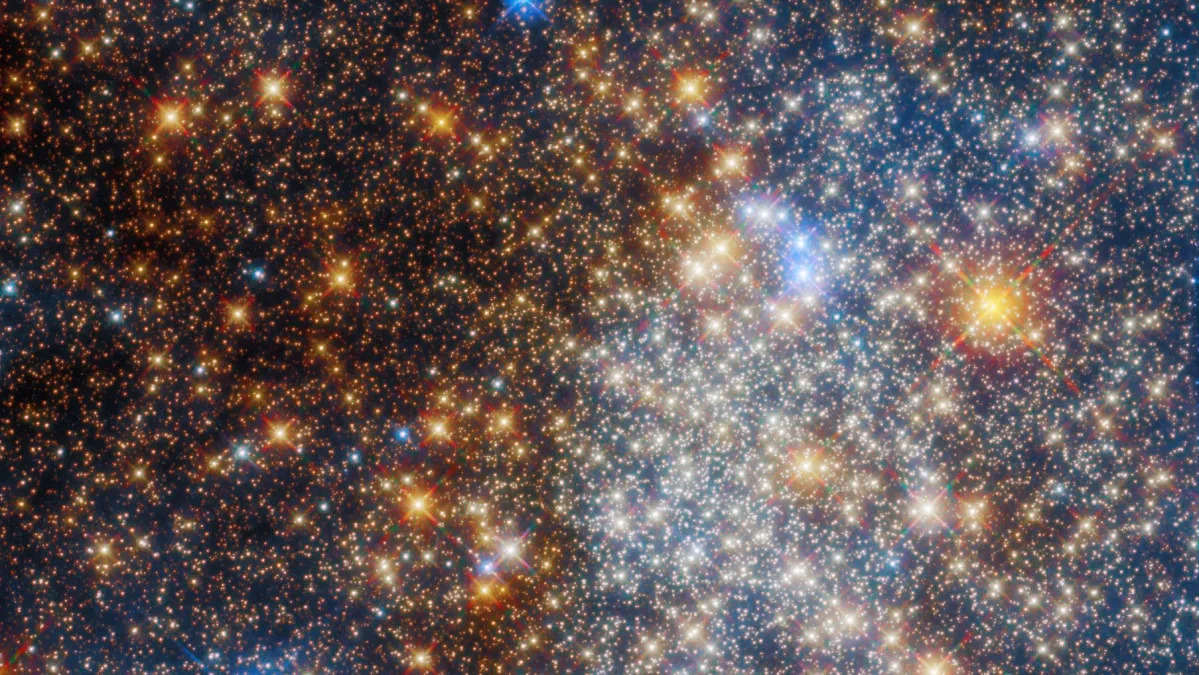
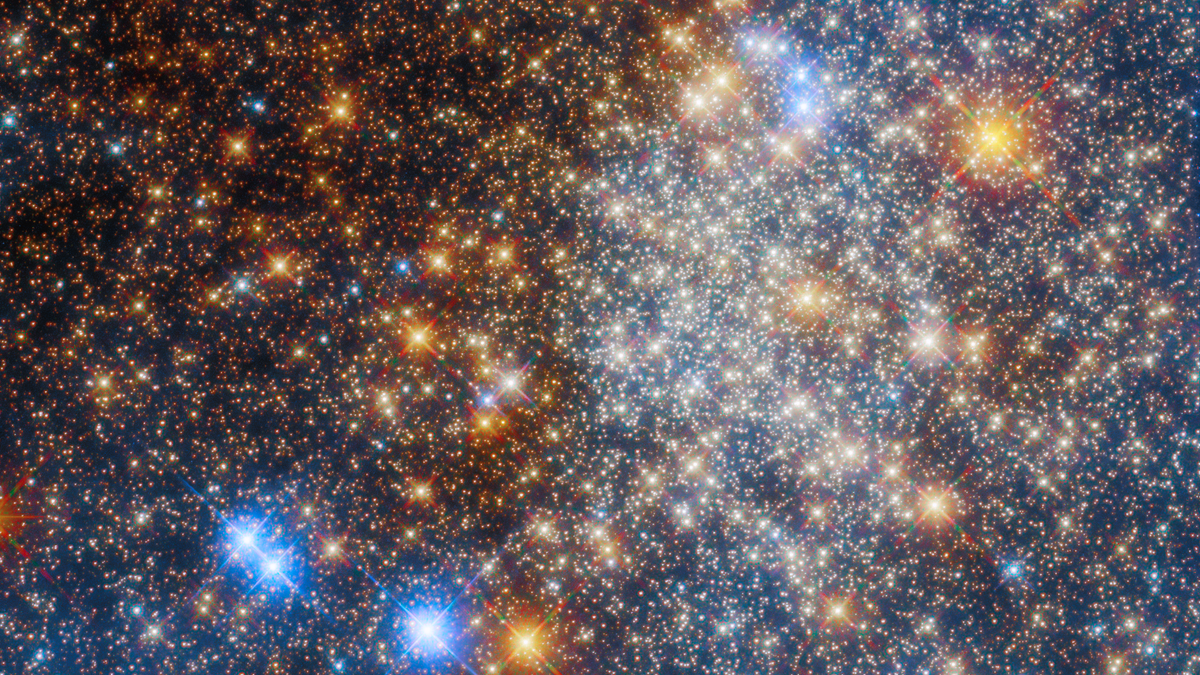
The Hubble Space Telescope has captured a stunning new photo of the globular cluster Terzan 12, located 15,000 light-years from Earth in the constellation of Sagittarius. The cluster appears bright red due to interstellar dust and gas that obscure our view. The photo reveals a higher concentration of stars near the center of Terzan 12, shining extra bright. The image was taken as part of an initiative to study the relationship between age and composition of globular clusters in the innermost region of the Milky Way.

"Hubble telescope captures breathtaking image of dazzling globular cluster"

Originally Published 2 years ago — by Yahoo! Voices

Featured image for "Hubble telescope captures breathtaking image of dazzling globular cluster"
Source: Yahoo! Voices

The Hubble Space Telescope has captured a stunning new photo of Terzan 12, a globular cluster located 15,000 light-years away in the constellation of Sagittarius. Globular clusters are densely packed groups of hundreds of thousands to millions of stars bound together by gravity. The photo reveals the cluster shrouded in gas and dust, with a higher concentration of stars near its center. The interstellar dust particles scatter blue light, allowing only the redder wavelengths from the cluster to be seen. This image is part of an initiative to study the relationship between age and composition of globular clusters in the innermost region of the Milky Way galaxy.

Stunning Hubble Images Reveal Glittering Stars and Cosmic Whirlpools

Originally Published 2 years ago — by Gizmodo

Featured image for Stunning Hubble Images Reveal Glittering Stars and Cosmic Whirlpools
Source: Gizmodo

The Hubble Space Telescope has captured a stunning image of the globular cluster Terzan 12, located 15,000 light-years away in the constellation Sagittarius. The image showcases a multitude of stars shining through interstellar gas and dust, providing insights into the structure and ages of globular clusters. These ancient clusters help astronomers understand the life cycles of stars and the presence of stellar-mass black holes. Terzan 12, the 11th globular cluster discovered by Agop Terzan, offers a breathtaking view of celestial bodies in space.

"Hubble's Stunning Image Reveals Ancient Marvel in Our Galaxy"

Originally Published 2 years ago — by Livescience.com

Featured image for "Hubble's Stunning Image Reveals Ancient Marvel in Our Galaxy"
Source: Livescience.com

The Hubble Space Telescope has captured a stunning image of NGC 6652, a globular cluster located 30,000 light-years away in the constellation Sagittarius. This cluster contains some of the oldest stars in our galaxy, estimated to be 13.6 billion years old. Globular clusters like NGC 6652 provide valuable insights into the early stages of the Milky Way and the universe. The image showcases countless pale blue stars tightly packed in a spherical core due to intense gravitational attraction. The data from this image will contribute to research on the age and composition of globular clusters.

"Hubble's Stunning Capture: Glittering Globular Cluster Shines in Sagittarius"

Originally Published 2 years ago — by SciTechDaily

Featured image for "Hubble's Stunning Capture: Glittering Globular Cluster Shines in Sagittarius"
Source: SciTechDaily

The Hubble Space Telescope has captured a stunning image of the globular cluster NGC 6652 within the Milky Way galaxy. Combining data from two of Hubble's instruments, astronomers are using this image to survey globular clusters and analyze their chemical makeup. Globular clusters are tightly gravitationally bound clusters containing thousands to millions of stars. The image reveals the pale blue light of countless stars in the cluster's core, as well as bright foreground stars adorned with diffraction spikes. NGC 6652 is located in the constellation Sagittarius, about 30,000 light-years from Earth and 6,500 light-years from the Galactic center.

Oddball Milky Way's neighboring star cluster may be almost as ancient as the universe.

Originally Published 2 years ago — by IFLScience

Featured image for Oddball Milky Way's neighboring star cluster may be almost as ancient as the universe.
Source: IFLScience

The age of the globular star cluster M92 has been estimated at 13.8 billion years, plus or minus 0.75 billion years, using a new technique that generated model star clusters and compared them with observations of 18,000 of M92's stars. This almost exactly matches the estimated age of the universe, which may force us to rethink our estimates of the universe's age. M92 is a favorite object for amateur astronomers and a candidate for the oldest globular cluster in our near vicinity. The paper is published in the Astrophysical Journal, and a preprint is available on ArXiv.org.

Rare 'Missing Link' Black Hole Possibly Found in Our Celestial Backyard

Originally Published 2 years ago — by ScienceAlert

Featured image for Rare 'Missing Link' Black Hole Possibly Found in Our Celestial Backyard
Source: ScienceAlert

Astronomers have detected a possible intermediate-mass black hole in Messier 4, a globular cluster located 6,000 light-years away from Earth. The black hole is estimated to be around 800 times the mass of the Sun, falling into a mass range that is rarely seen. The discovery could help solve the mystery of the dearth of intermediate-mass black holes, which would provide clues about the formation of supermassive black holes. Further observations using space telescopes are needed to confirm the existence of the black hole.