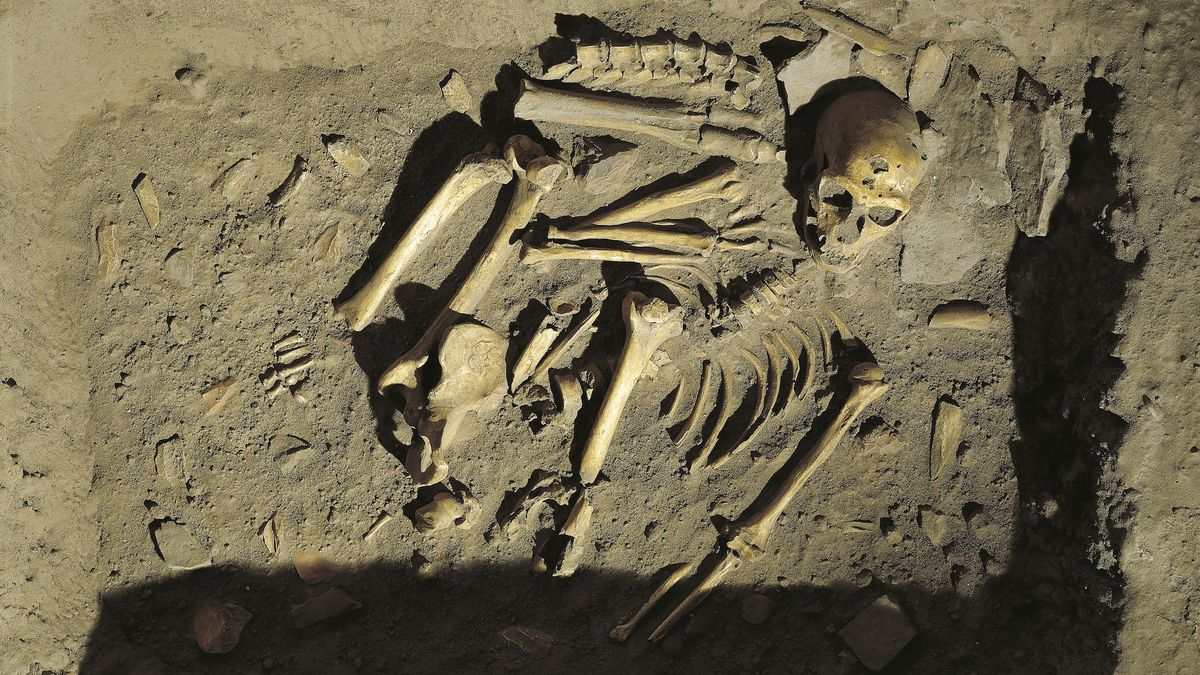
A study comparing Neanderthal and early Homo sapiens burial practices reveals both similarities and differences, such as Neanderthals burying their dead in caves and early H. sapiens often using fetal positions. The research suggests both groups began burying their dead around the same time in the Levant region, possibly due to cultural exchanges or territorial claims. However, the limited number of sites studied means more research is needed to confirm these findings.
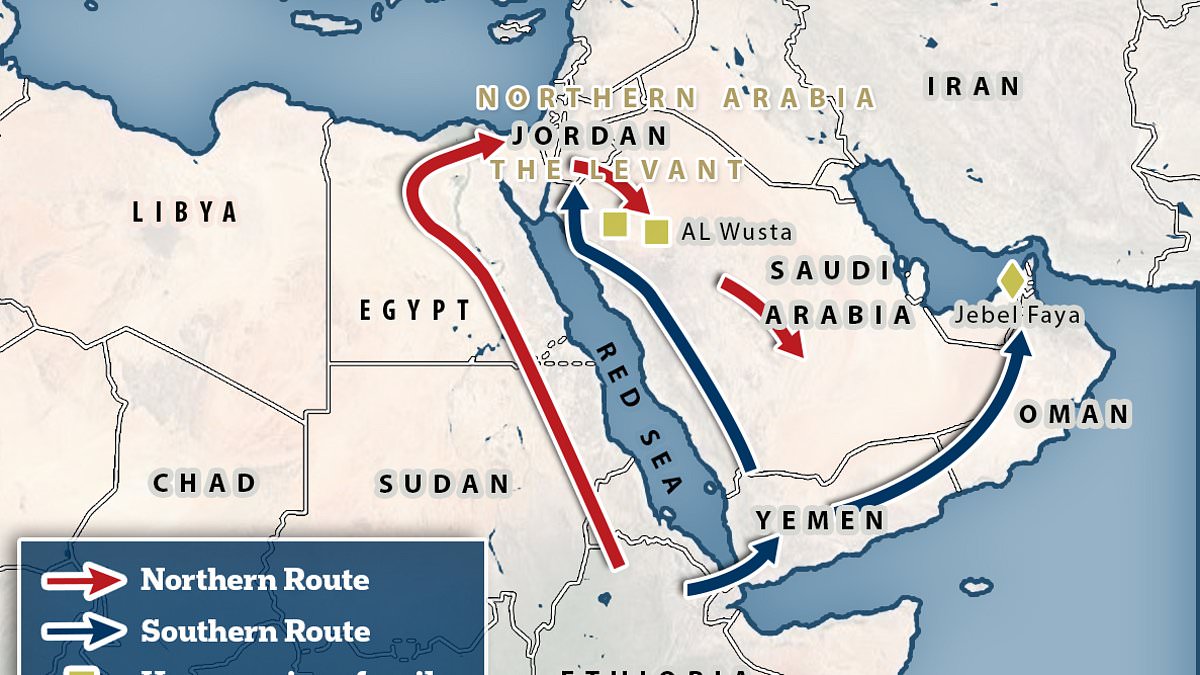
A new study reveals a newly-discovered route that early humans took when they left Africa for Eurasia 80,000 years ago. In addition to the southern crossing via the Red Sea, researchers have found evidence of a northern passage through a well-watered corridor of rivers across the Sinai peninsula and through The Levant towards western Asia and northern Arabia via Jordan. The discovery of abandoned hand tools along this route supports the theory that hunter-gatherers used this land-route to migrate out of Africa.
A new study suggests that the advent of agriculture in the Levant region, which includes present-day Syria, Jordan, Lebanon, Palestine, Israel, and parts of Turkey, was triggered by a cosmic airburst that occurred 12,800 years ago. The impact caused environmental changes, forcing hunter-gatherers in the prehistoric settlement of Abu Hureyra to adopt agricultural practices for survival. The evidence includes a carbon-rich layer with high concentrations of platinum, nanodiamonds, and melted minerals, indicating extreme temperatures. The study also links shock fractures in quartz grains from the impact to those observed in nuclear bomb explosions, suggesting similarities in the effects of low-altitude, lower-pressure cosmic airbursts and atomic detonations.
A new study by French archaeologist Lubovic Slimak identifies a third wave of human settlers who completed the epic trek from Africa to Europe approximately 45,000 years ago. The study shows that this first Sapiens migration would actually be the last of three major migratory waves to the continent, profoundly rewriting what was thought to be known about the origin of Sapiens in Europe. The Levant was a major entryway for the first humans who left Africa to explore far-off lands, meaning that people who settled in the Levant tens of thousands of years ago may have been directly related to other human migrants who kept moving until they arrived in Europe.
A new study suggests that modern humans migrated into Europe in three waves between 54,000 and 42,000 years ago, with evidence of the earliest migration found in southern France's Rhône Valley. The study argues that a second wave of modern humans may have entered Europe between the 42,000-year-old Protoaurignacians and the 54,000-year-old Neronians, and that the Levant was a key gateway for modern humans migrating out of Africa. The new model of modern human settlement of Europe is "ambitious and provocative," according to experts.