Tag

Burial Practices

All articles tagged with #burial practices

science7 months ago

Scientists Discover Why This Ancient Child Was Not Fully Human

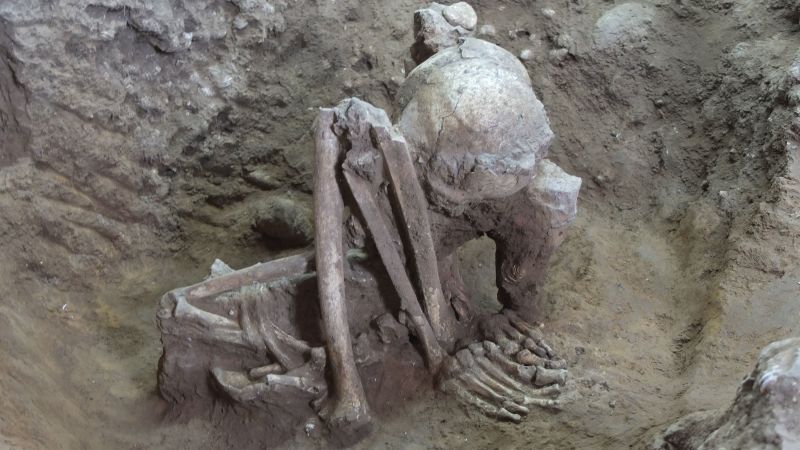
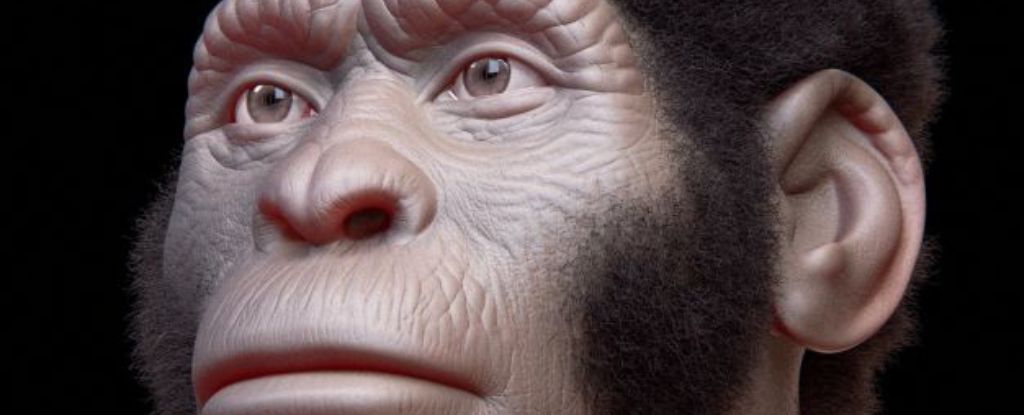
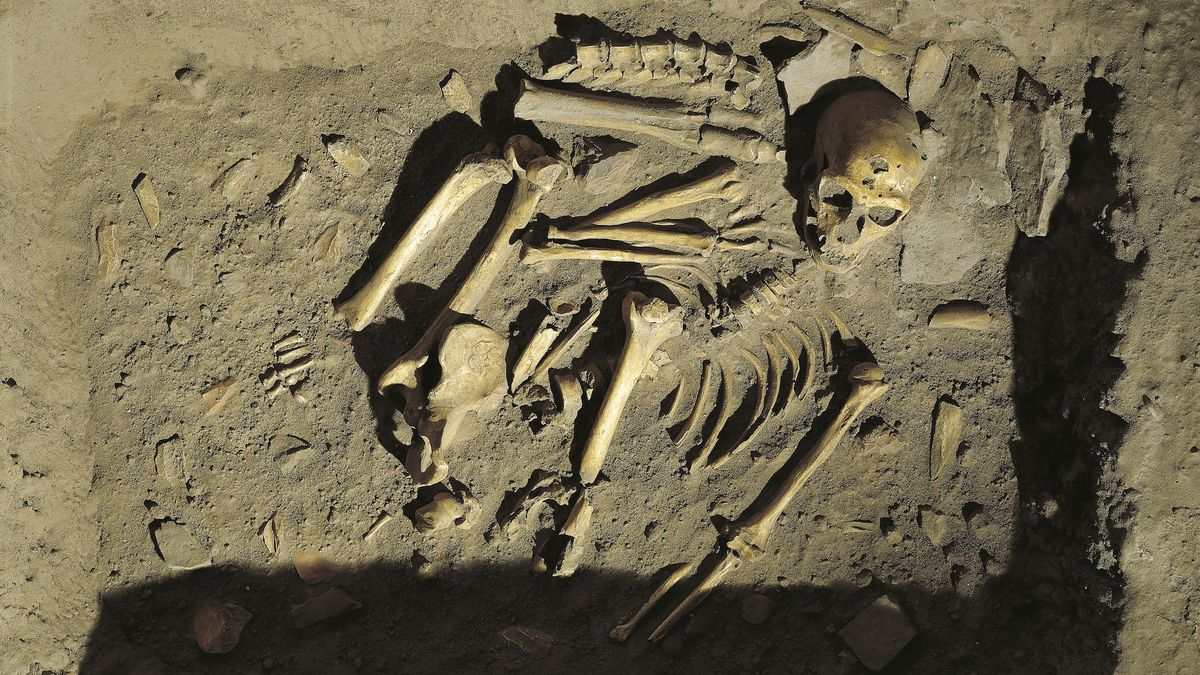
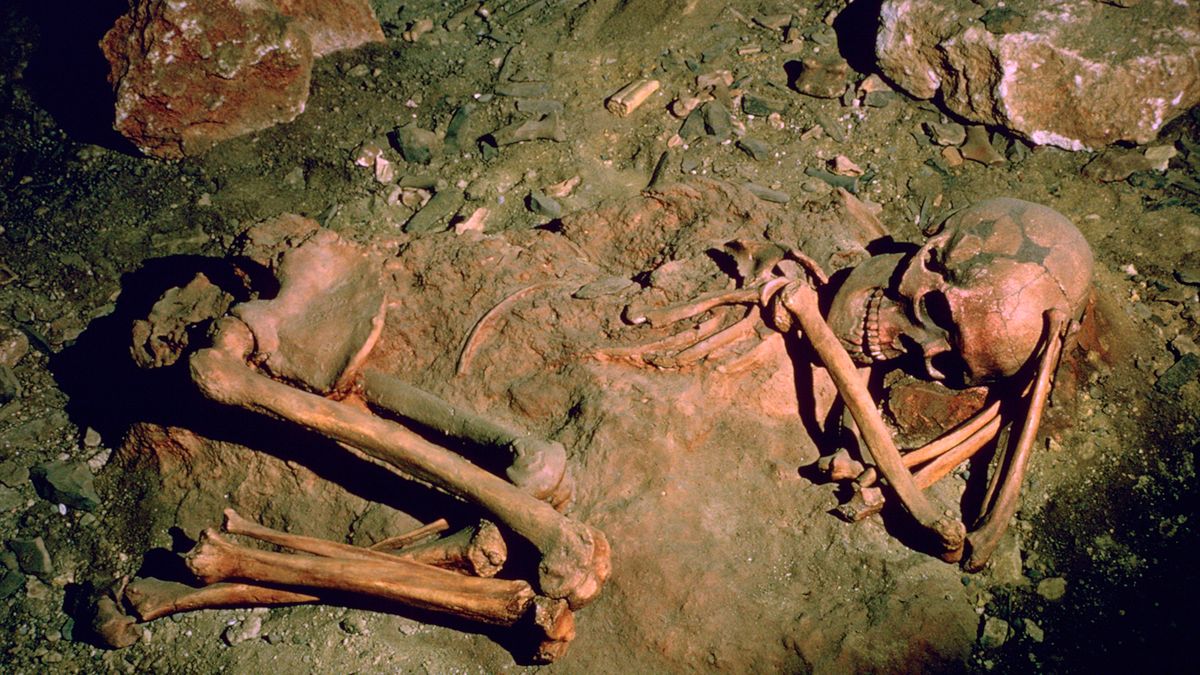
Scientists confirmed that a 28,000-year-old child buried in Portugal had both modern human and Neanderthal ancestry, using advanced DNA dating techniques that overcame previous contamination issues. The child's physical traits and burial site suggest cultural practices and interbreeding between early human groups, providing new insights into human evolution and shared traditions. Future research aims to further explore ancient human interactions.

science1 year ago

Study Reveals Distinct Burial Practices of Neanderthals and Early Humans

A study comparing Neanderthal and early Homo sapiens burial practices reveals both similarities and differences, such as Neanderthals burying their dead in caves and early H. sapiens often using fetal positions. The research suggests both groups began burying their dead around the same time in the Levant region, possibly due to cultural exchanges or territorial claims. However, the limited number of sites studied means more research is needed to confirm these findings.

archaeology1 year ago

2,000-Year-Old Horse Remains Unearthed in France

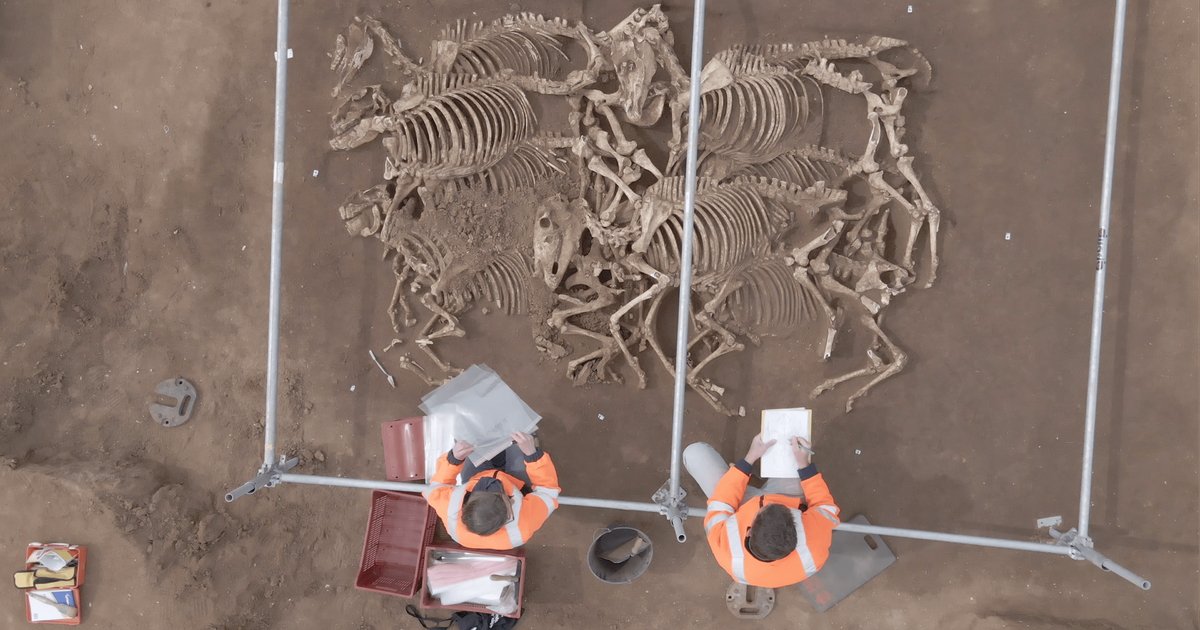
An archaeological dig in Villedieu-sur-Indre, France, uncovered the remains of 28 horses buried in a uniform manner, dating back to 100 BC to 100 AD. Researchers are investigating whether the horses were killed in battle or sacrificed, as similar discoveries have been made at other Gallic battle sites. The precise and organized burial has left experts puzzled about the exact reasons behind the deaths and the significance of the site.

anthropologyarchaeology1 year ago

"Challenging Homo Naledi Burial Claims: Rethinking Human Ancestry"

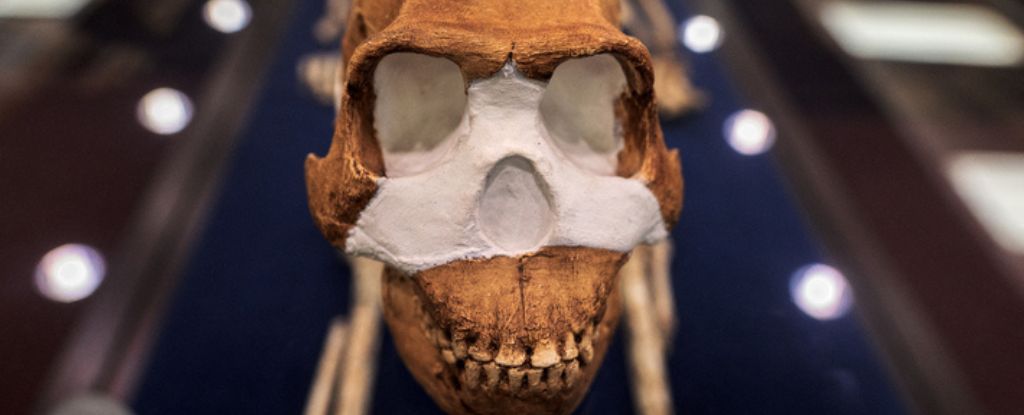
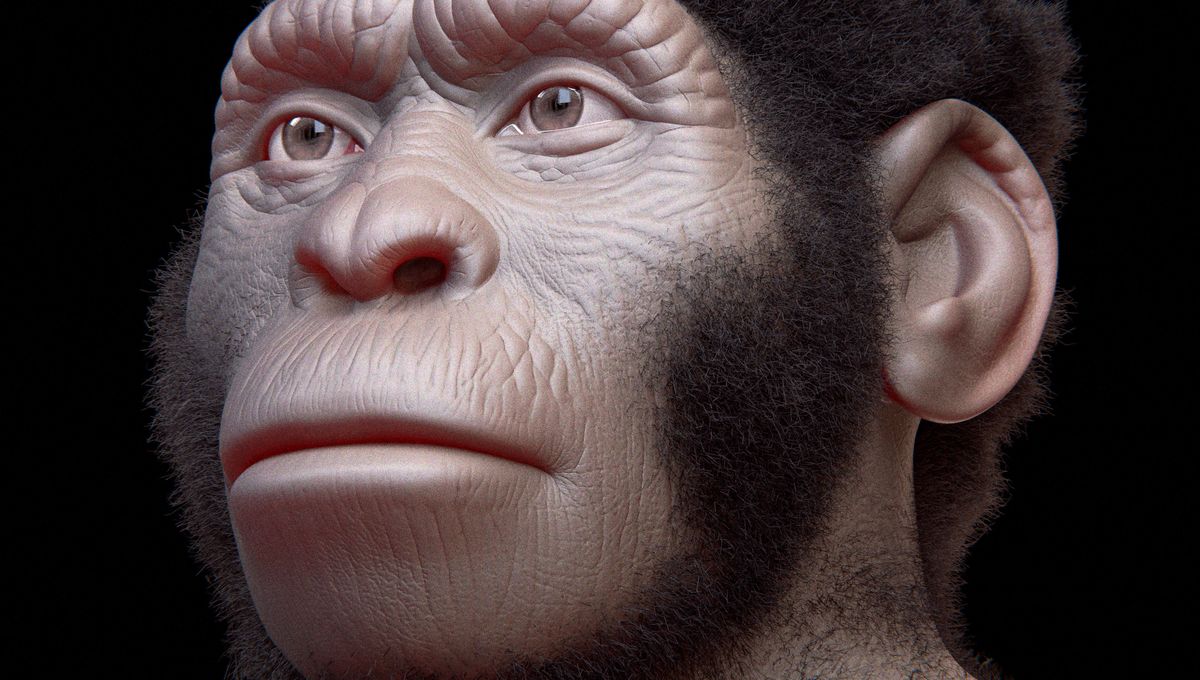
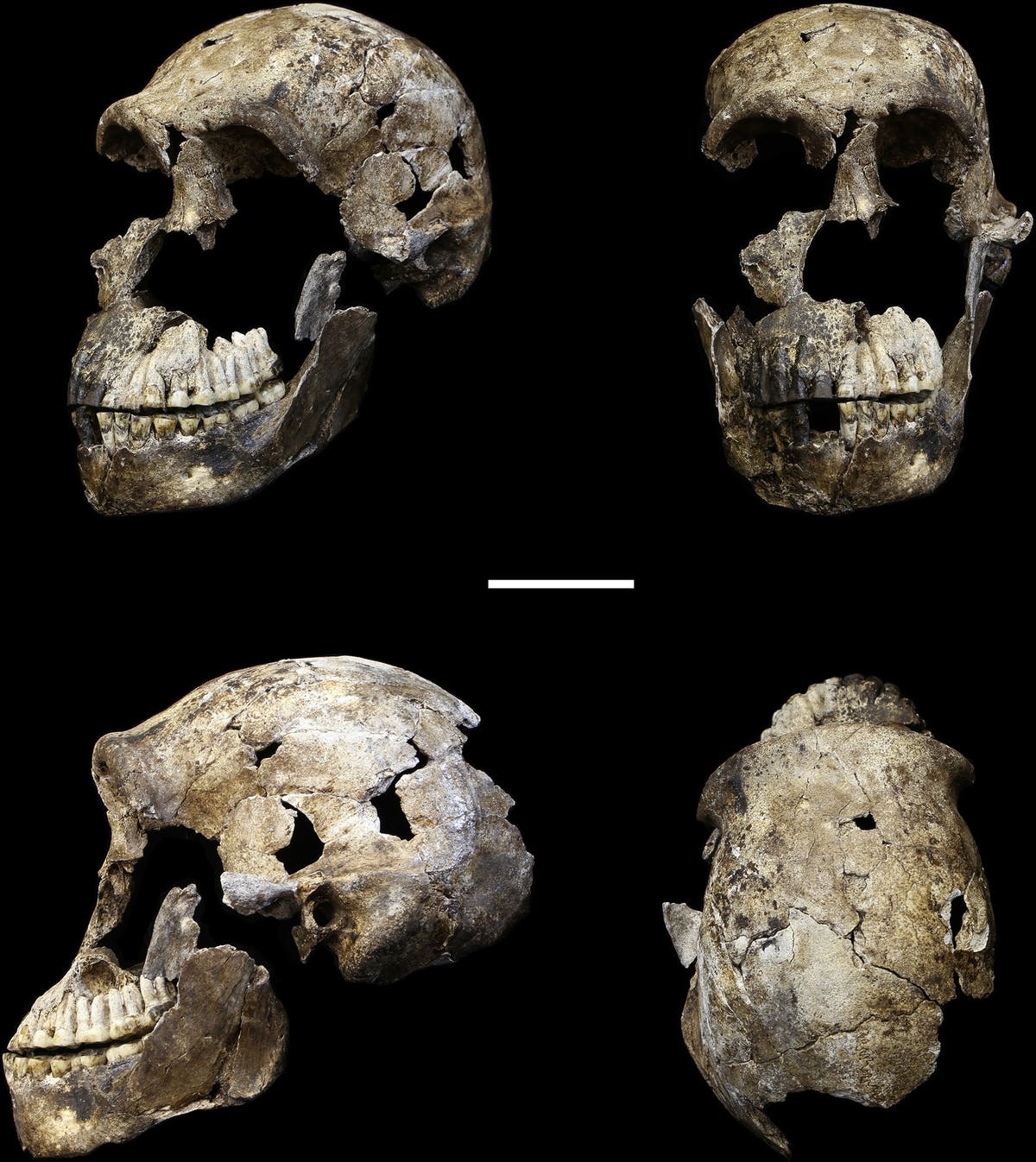
A recent study challenges previous claims that Homo naledi deliberately buried their dead and created rock art in Rising Star Cave, South Africa, with experts calling for more rigorous scientific analysis and documentation. The evidence presented so far was deemed not compelling enough to support the deliberate burial of the dead by Homo naledi, nor that they made the purported engravings, leading to a reevaluation of the findings. The critique emphasizes the need for additional documentation and scientific analyses before ruling out natural agents and post-depositional processes as responsible for the accumulation of bodies and to prove intentional excavation and filling of pits by Homo naledi.

science2 years ago

Experts Debunk Overhyped Claims on Small-Brained Human Ancestor

Experts have criticized the claims made by paleoanthropologist Lee Berger and his team regarding the small-brained human ancestor Homo naledi. The team suggested that H. naledi engaged in ritualistic behaviors such as burying their dead and creating art. However, critics argue that the evidence presented is not compelling enough to support these claims. They point out that the bones were scattered and not arranged in a burial form, and the purported burial pits may be natural hollows or sinkholes. The age of the charcoal and the nature of the markings have also not been sufficiently determined. Further investigations are needed to clarify the behaviors and significance of H. naledi.

anthropologyarchaeology2 years ago

Reevaluating Homo Naledi: Debunking Claims of Advanced Behavior

A new study challenges the claims made by researchers earlier this year that Homo naledi, an ancient hominid species, deliberately buried its dead and created rock art. The study highlights flaws in the evidence presented, including the scattered nature of the bones and the lack of scientific techniques used to date the alleged engravings. The authors argue that there is no convincing scientific evidence to support the claims of burial practices and rock art production by Homo naledi in the Rising Star Cave system.

anthropologyarchaeology2 years ago

Unearthing the Origins of Human Burial Practices

The earliest evidence of deliberate human burials dates back to the Middle Paleolithic period, around 120,000 years ago. These early burials were found in caves and involved placing the bodies in death postures, accompanied by human objects. While the origins of burial practices are not fully understood, it is believed that ancient humans sought to dispose of corpses to avoid the unpleasant process of decay and its associated risks. Burial practices varied over time and by region, with cremation burials appearing much later in human history.

archaeology2 years ago

Ancient Europeans Preferred Eating Over Burying Their Dead, Study Finds

A study published in the journal Quaternary Science Reviews reveals that cannibalism was common in Europe 15,000 years ago during the Magdalenian period. The research found evidence of human remains with chewing and cut marks at 15 Magdalenian sites, suggesting that people would eat their dead relatives as part of their culture and tradition. The study also establishes a connection between burial practices and genetic heritage, showing that individuals from the Magdalenian culture practiced funerary cannibalism, while those from the Epigravettian culture preferred burying their deceased without such practices.

science-and-archaeology2 years ago

"Groundbreaking Scientific Discovery Challenges Human Evolution Theories"

Scientists are investigating the possibility that a species of "ape-men" called Homo naledi, which lived in southern Africa around 300,000 years ago, had a complex human-like culture that included practices and beliefs associated with modern humanity. Despite having brains only a third the size of modern humans, Homo naledi may have been able to envision an afterlife, bury their dead, give grave goods, carry out rituals, create art, and plan a complex lighting system. The discovery challenges current understanding of human evolution and raises questions about the importance of brain size in cognitive abilities. Further investigations are planned to confirm these findings and shed light on the origins of human thought and belief systems.

archaeology2 years ago

17th-century 'Vampire Child' Unearthed in Poland's Graveyard

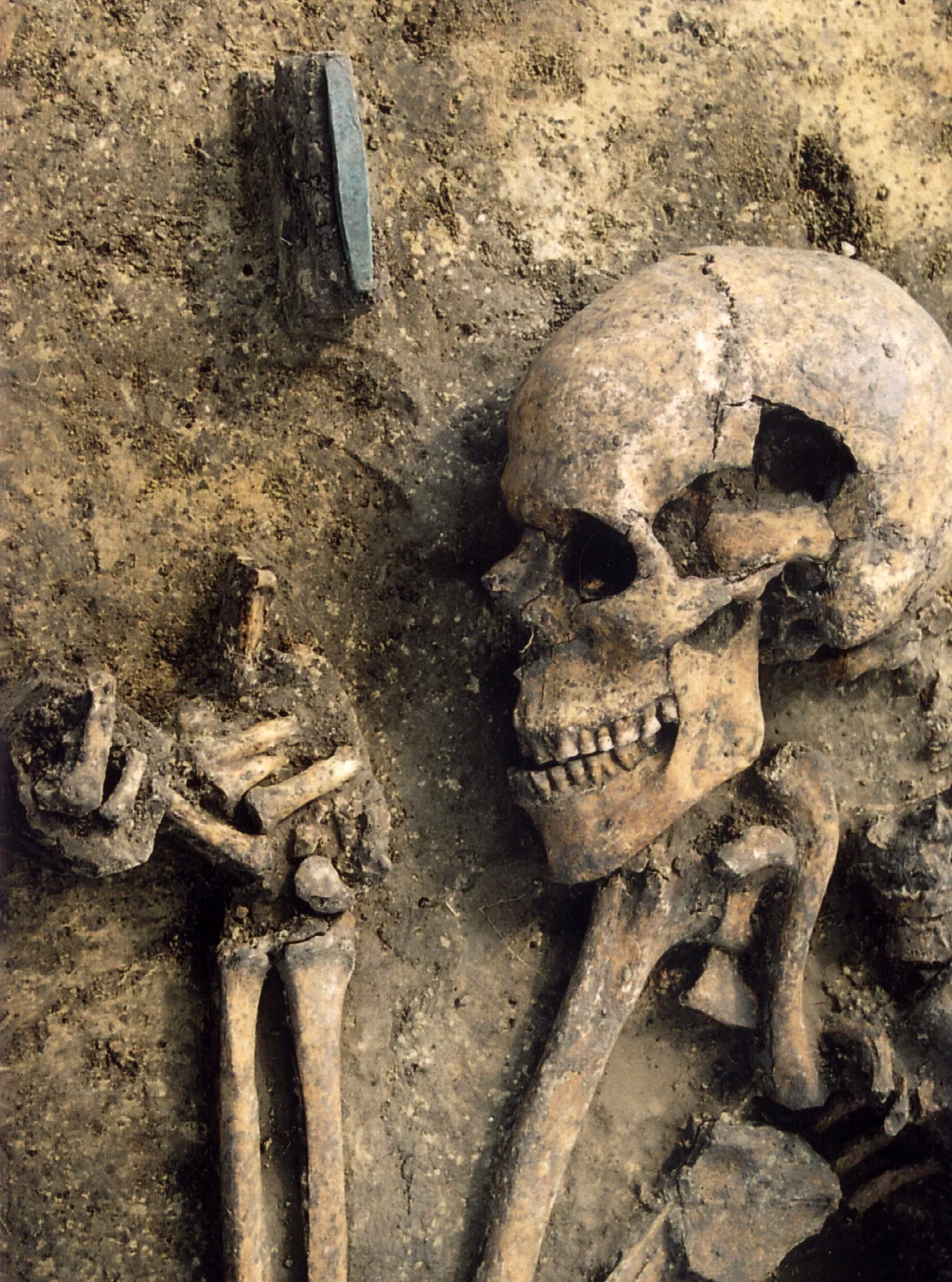
Archaeologists in Poland have discovered the remains of a child buried in the 17th century with an "anti-vampire" device. The child's body was found facedown and restrained, indicating a fear of potential reanimation. The burial aligns with superstitious beliefs surrounding vampires in Slavic folklore, which helped explain unexplained diseases and deaths. The discovery sheds light on the burial practices and superstitions of the time. Further research, including DNA analysis, is being conducted on the remains.

archaeology2 years ago

Unearthing an 'Anti-vampire' Device in a 17th Century Child's Grave

Archaeologists in Poland have discovered the remains of a child buried in the 17th century with an "anti-vampire" device. The child's body was found facedown and restrained, indicating a fear of potential reanimation. The burial aligns with superstitious beliefs surrounding vampires in Slavic folklore, which helped explain unexplained diseases and deaths. The discovery sheds light on the burial practices and superstitions of the time. Further research, including DNA analysis, is being conducted on the remains.

archaeology2 years ago

Unveiling the World's Oldest Family Tree: Neolithic DNA Analysis

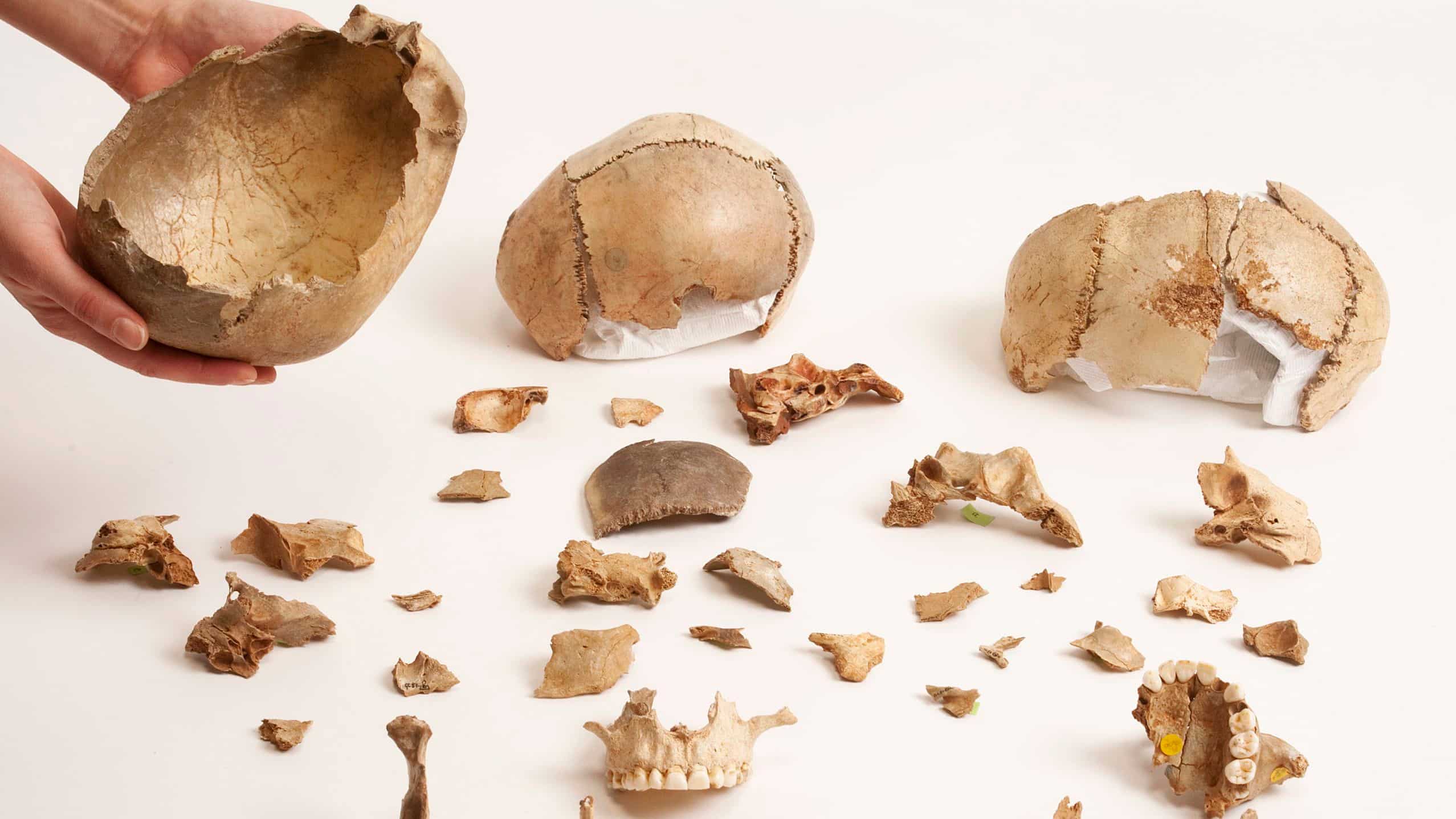
A 5,700-year-old tomb in Britain has been found to contain five generations of one family, providing unprecedented insight into kinship networks and burial practices during the Neolithic period. The tomb, known as the Hazleton Long Barrow, contains the bones and teeth of many individuals, with 35 preserved well enough for DNA sequencing. The findings reveal that 27 of these individuals were closely related, descending from a single patriarch who had children with at least four women. The tomb's architectural layout suggests how kinship operated at the time, with each half of the tomb used to place the remains of the dead from one of two branches of the same family. This discovery represents the oldest reconstructed family tree ever found and sheds light on the social structure of ancient societies.