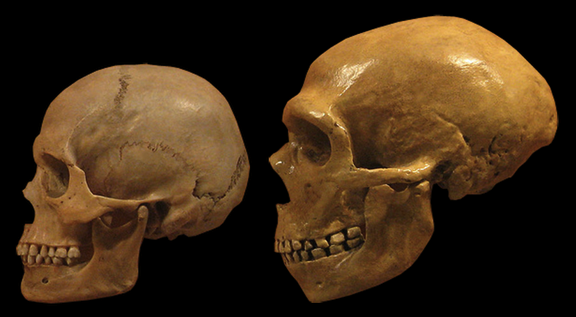
A new study using a mathematical model suggests that the disappearance of Neanderthals could be explained solely by genetic dilution resulting from repeated small-scale interbreeding with modern humans over thousands of years, without the need for catastrophic events.
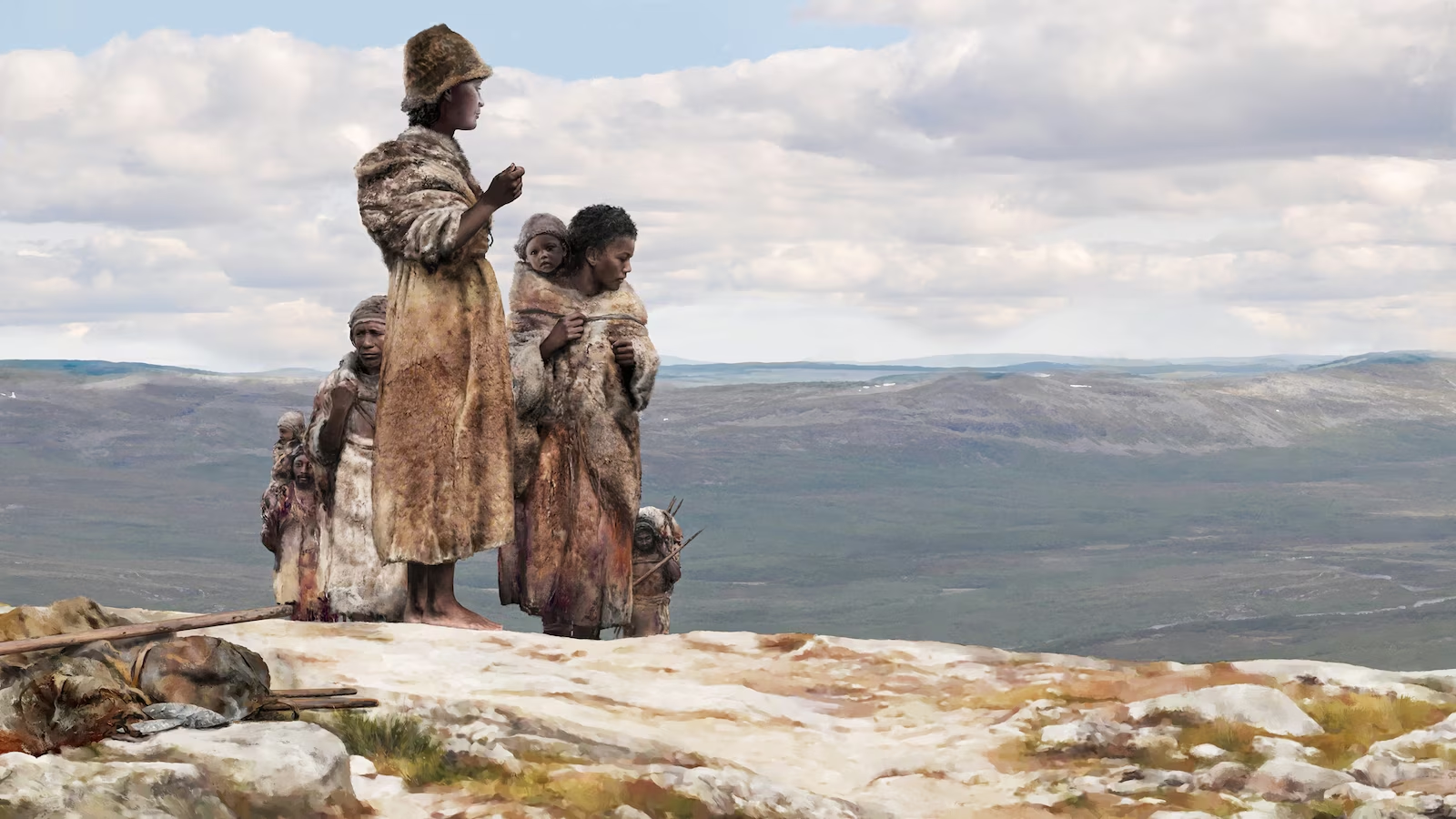
A new study published in Nature reveals that modern humans began mixing with Neanderthals in Europe between 45,000 and 49,000 years ago, more recently than previously thought. This conclusion is based on DNA analysis of early European inhabitants, including a group from Ranis, Germany, with 2.9% Neanderthal ancestry. The research suggests that all non-African early humans shared a common population during this period, despite the harsh Ice Age climate. The findings provide a clearer timeline for human-Neanderthal interactions and early human migrations out of Africa.
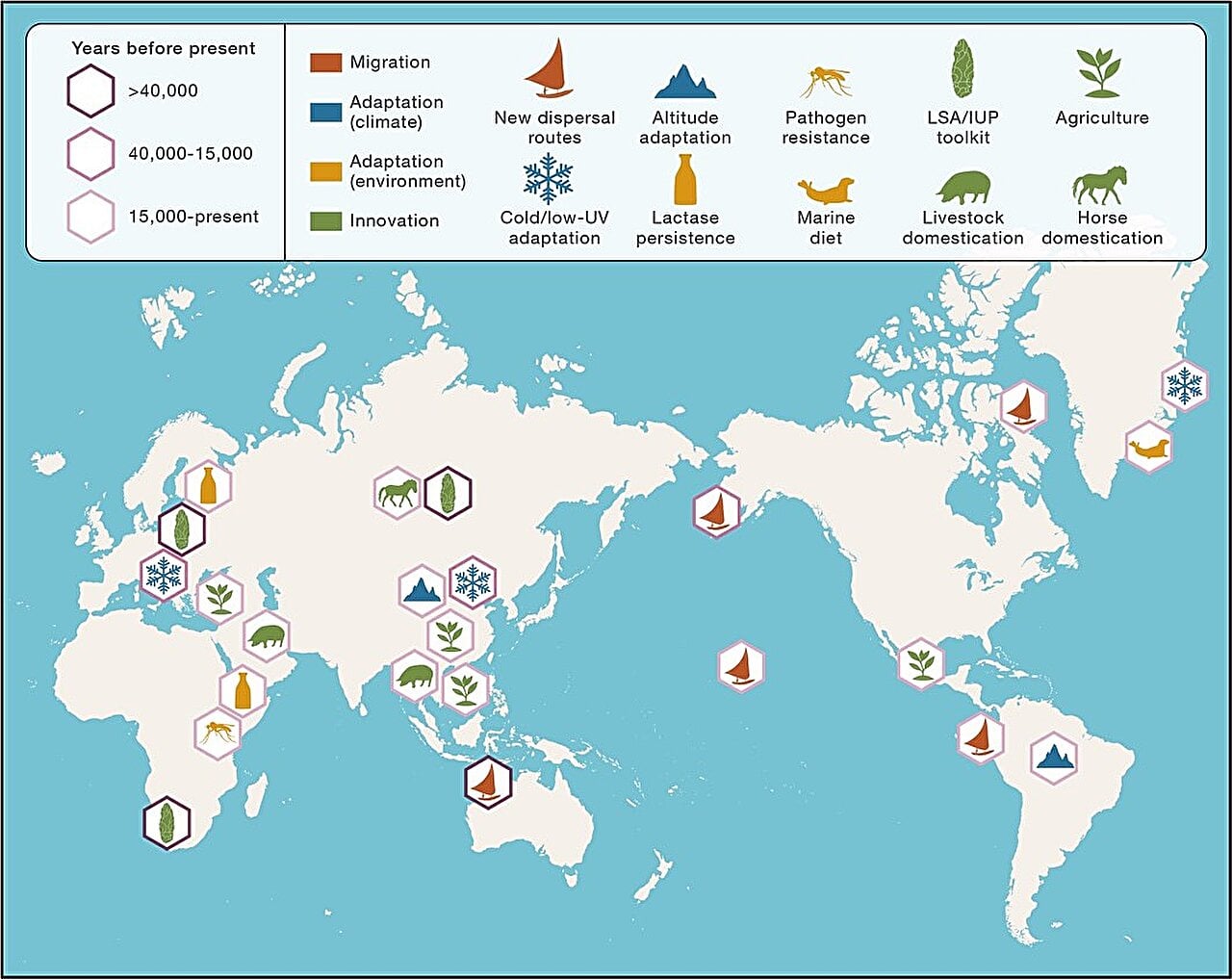
In a commentary for the 50th anniversary issue of Cell, researchers Fu Qiaomei and E. Andrew Bennett from the Institute of Vertebrate Paleontology and Paleoanthropology discussed the contribution of paleogenomics to understanding the evolution of modern humans. They highlighted the direct and indirect approaches of studying ancient DNA to identify genetic changes and reconstruct the life history of archaic and early modern human populations. The authors reviewed studies that revealed differences between early modern humans and archaic populations, suggesting that population-level advantages and adaptations to local environments may have contributed to the success and expansion of modern human populations. The commentary integrates the latest findings from ancient DNA with those from paleoanthropology and archaeology, expanding and updating the discussion of human origins.
An archaeological analysis of skeletal remains from Ilsenhöhle in Germany reveals that modern humans arrived in northwestern Europe at least 45,000 years ago, overlapping with Neanderthals for thousands of years before their extinction. The discovery challenges previous knowledge and sheds light on the coexistence of the two hominid ancestors. The findings also raise questions about stone tool technology and genetic relationships, providing growing evidence of a longer overlap between Neanderthals and modern humans than previously thought.
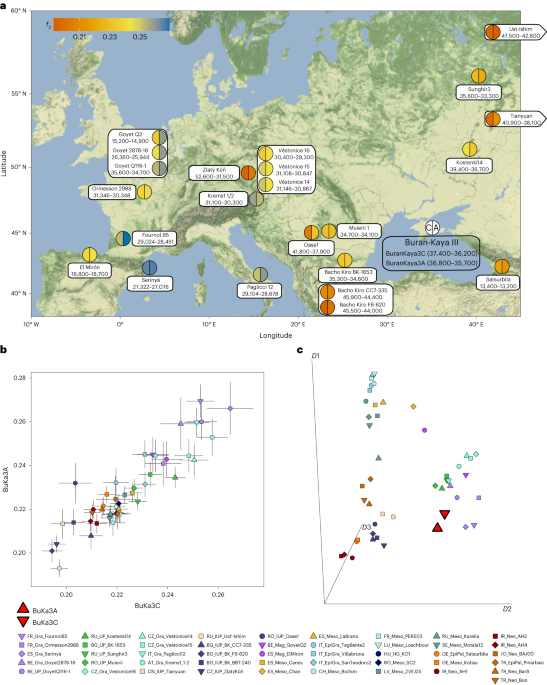
Researchers have sequenced the genomes of ancient modern humans from the Buran-Kaya III site in Crimea, dating back 36,000 to 37,000 years. The study reveals that these individuals had recent Neanderthal ancestry, suggesting interbreeding between modern humans and Neanderthals in Europe during the Upper Paleolithic period. The findings contribute to our understanding of the genetic history and interactions between different human populations during this time.
The discovery of a modern human baby's hip bone among Neanderthal remains in a French cave suggests the existence of an unknown lineage of early modern humans. The finding raises questions about the origins of the Châtelperronian techno-cultural complex found in the cave, with some proposing a collaboration between Neanderthals and modern humans. The hip bone closely resembles that of anatomically modern humans but also displays variations not seen in modern human infants. This suggests the presence of ancient modern humans coexisting with Neanderthals during the transition from the Middle to the Upper Paleolithic, potentially leading to a cultural exchange or blending of populations.
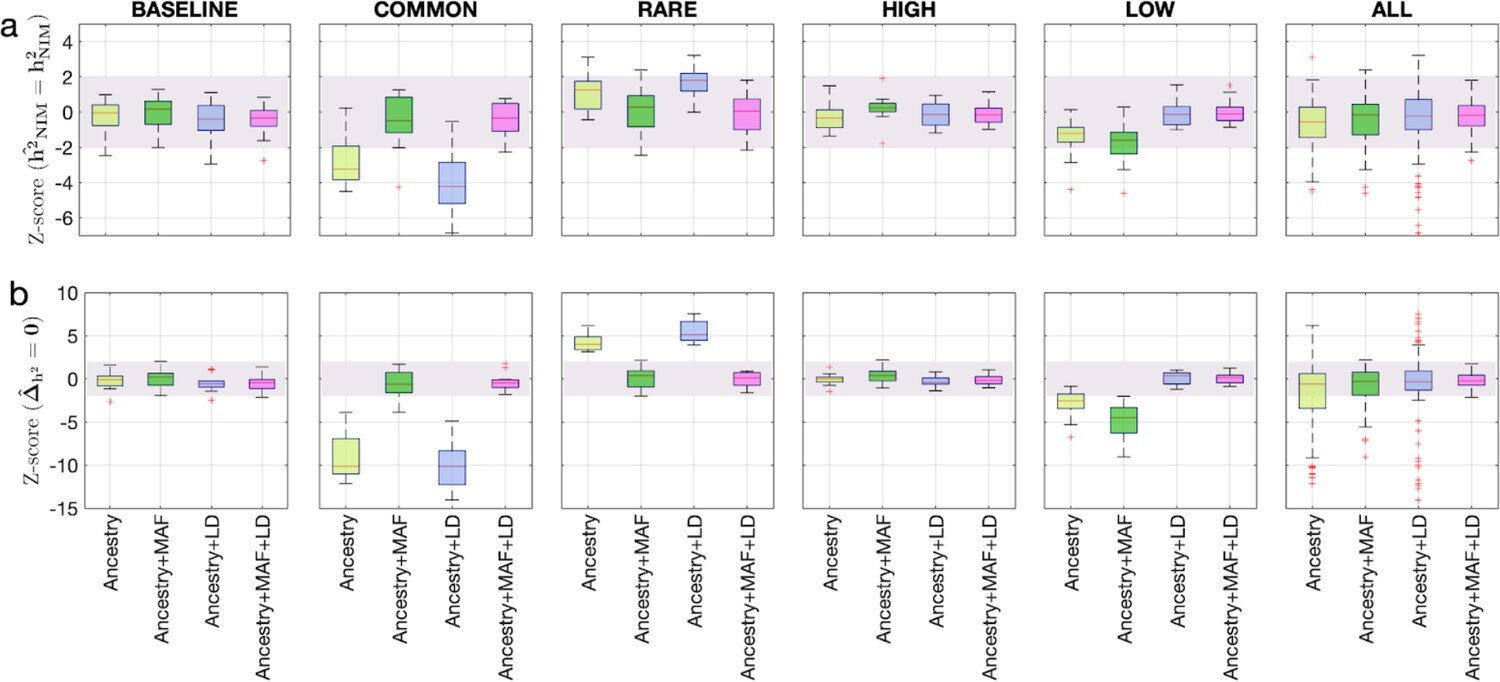
A team of researchers led by Cornell University has developed computational genetic tools to clarify the genetic traces of interbreeding between humans of non-African ancestry and Neanderthals that occurred about 50,000 years ago. Although some Neanderthal genes are responsible for certain traits in modern humans, modern human genes seem to be winning out over successive generations. The groundbreaking computational models developed could be used to gain evolutionary insights from other large and more diverse databases to better understand archaic humans’ genetic influences on present-day humans.
A new study published in eLife has developed a suite of computational genetic tools to address the genetic effects of interbreeding between humans of non-African ancestry and Neanderthals that took place some 50,000 years ago. The researchers reported that some Neanderthal genes are responsible for certain traits in modern humans, including several with a significant influence on the immune system. However, the study shows that modern human genes are winning out over successive generations. The new computational methods developed by the team could offer a path forward in gleaning evolutionary insights from other large databases to delve deeper into archaic humans' genetic influences on modern humans.
A new study suggests that modern humans migrated into Europe in three waves between 54,000 and 42,000 years ago, with evidence of the earliest migration found in southern France's Rhône Valley. The study argues that a second wave of modern humans may have entered Europe between the 42,000-year-old Protoaurignacians and the 54,000-year-old Neronians, and that the Levant was a key gateway for modern humans migrating out of Africa. The new model of modern human settlement of Europe is "ambitious and provocative," according to experts.