Tag

Chrysalis

All articles tagged with #chrysalis

Ancient Moon Collision Reframes Titan and Saturn’s Rings
science3 days ago

Ancient Moon Collision Reframes Titan and Saturn’s Rings

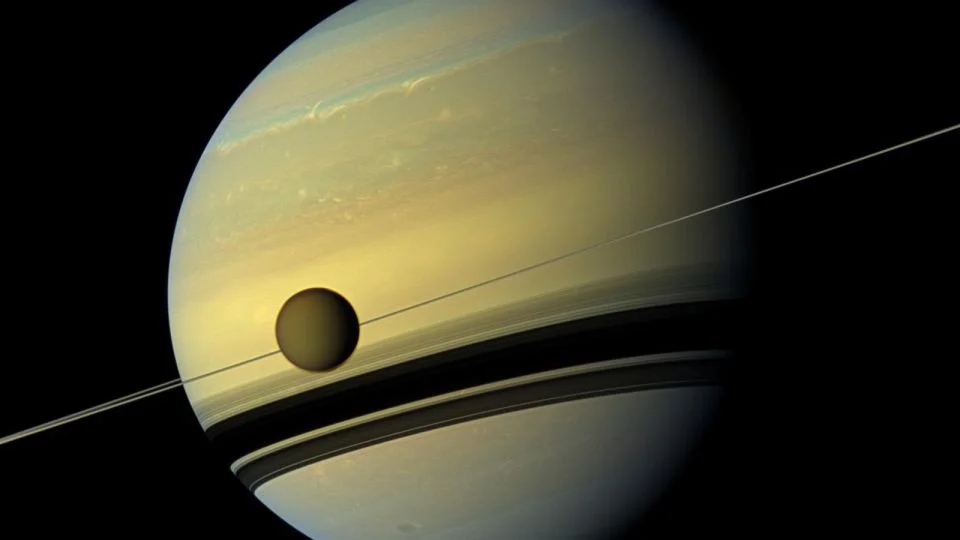
A new study combining Cassini observations, arXiv simulations and planetary modeling suggests Titan formed after an ancient collision with a lost moon (proto-Hyperion, possibly Chrysalis) about 0.5 billion years ago. The merger could explain Titan’s drifting orbit, Saturn’s axial tilt, and the creation of Hyperion and Saturn’s rings, with Dragonfly’s upcoming Titan exploration offering a potential test of the theory.

Chrysalis: A 58-Kilometer, Multi-Generational Starship for a Centuries-Long Voyage
space8 days ago

Chrysalis: A 58-Kilometer, Multi-Generational Starship for a Centuries-Long Voyage

Chrysalis is a concept for a 58-kilometer rotating habitat designed to carry around a thousand to two thousand humans on a 400-year interstellar voyage, using a direct fusion drive and fully closed life support, with generation-spanning governance, education, and knowledge preservation. The project provides a detailed, integration-focused study of how such a ship could be assembled, powered, shielded, and kept socially stable, while honestly outlining remaining unknowns and the enormous technical and ethical challenges involved.

Titan Collision May Have Scuplted Saturn’s Rings and Tilt
astronomy10 days ago

Titan Collision May Have Scuplted Saturn’s Rings and Tilt

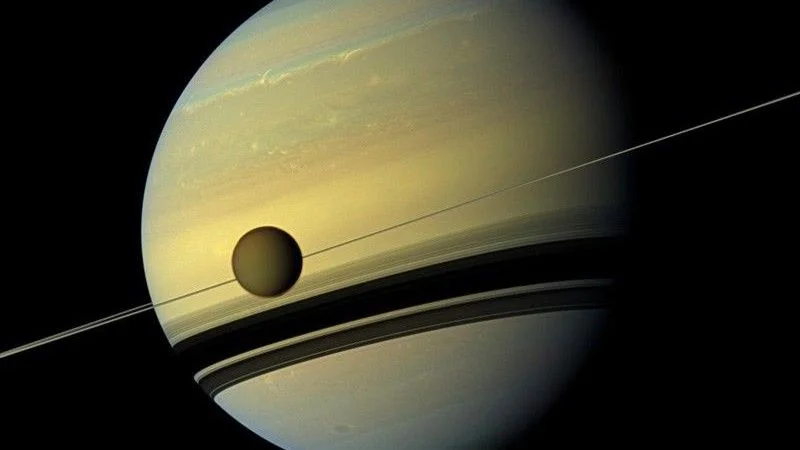
Space.com reports Matija Ćuk and colleagues propose Saturn’s Titan may have formed from a collision/merger with a now-missing moon called Chrysalis about 100–200 million years ago. This upheaval could have widened Titan’s orbit, triggered further moon collisions, redistributed Saturn’s mass to alter its precession, and helped form Saturn’s rings. Hyperion might be a debris remnant from the event. Cassini data revised Saturn’s internal mass distribution, moving it slightly out of Neptune’s orbital resonance. There’s no direct evidence yet, but the scenario is being explored in Planetary Science Journal with an arXiv preprint, and future Dragonfly observations could test it.