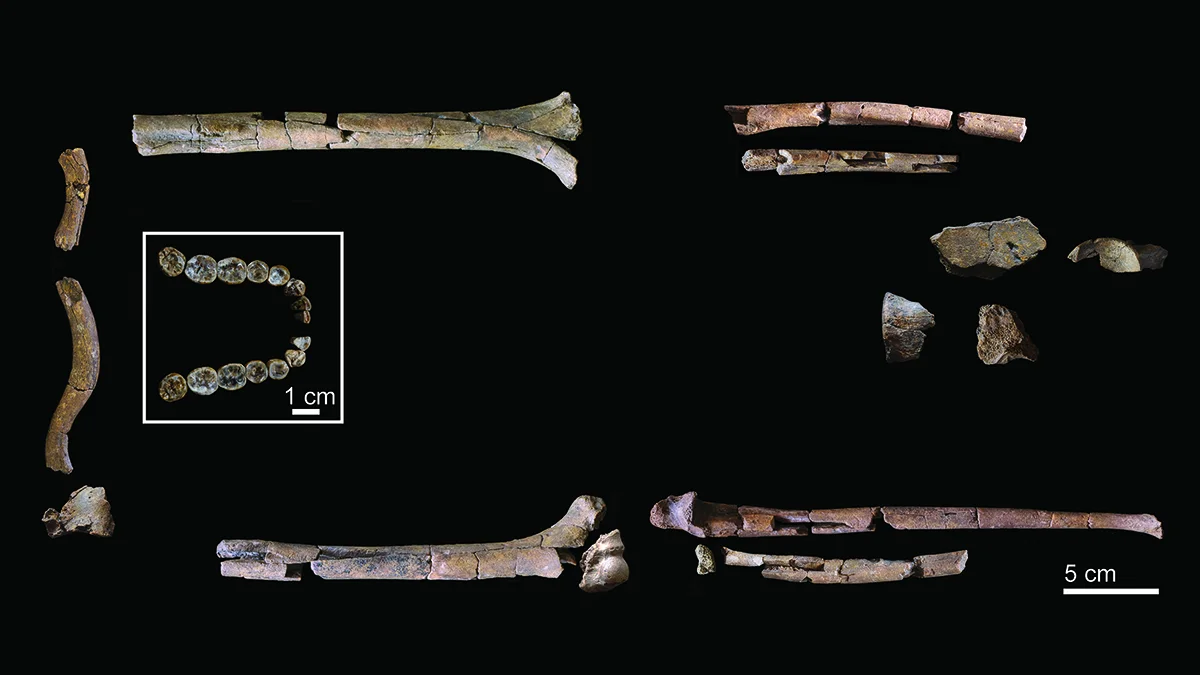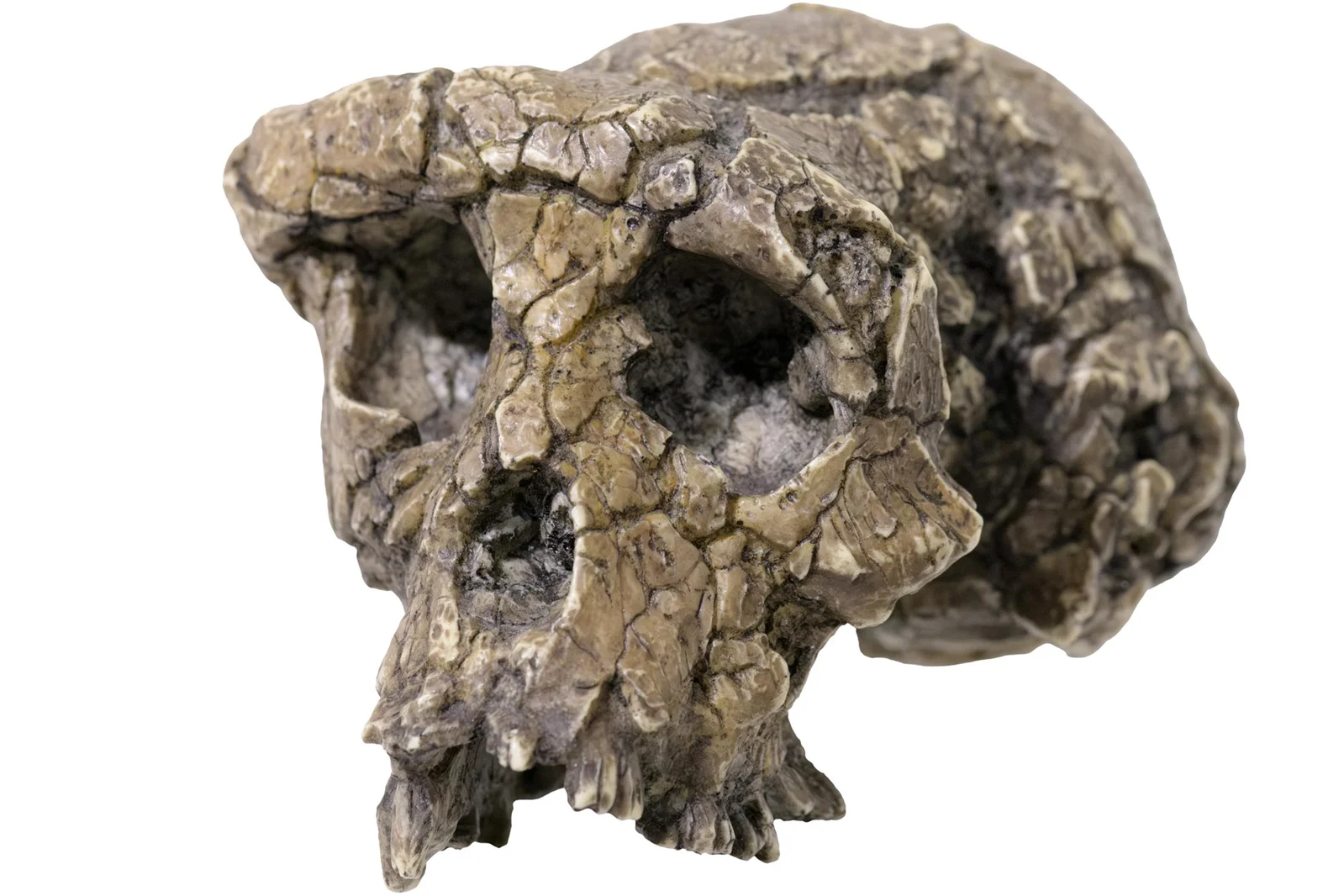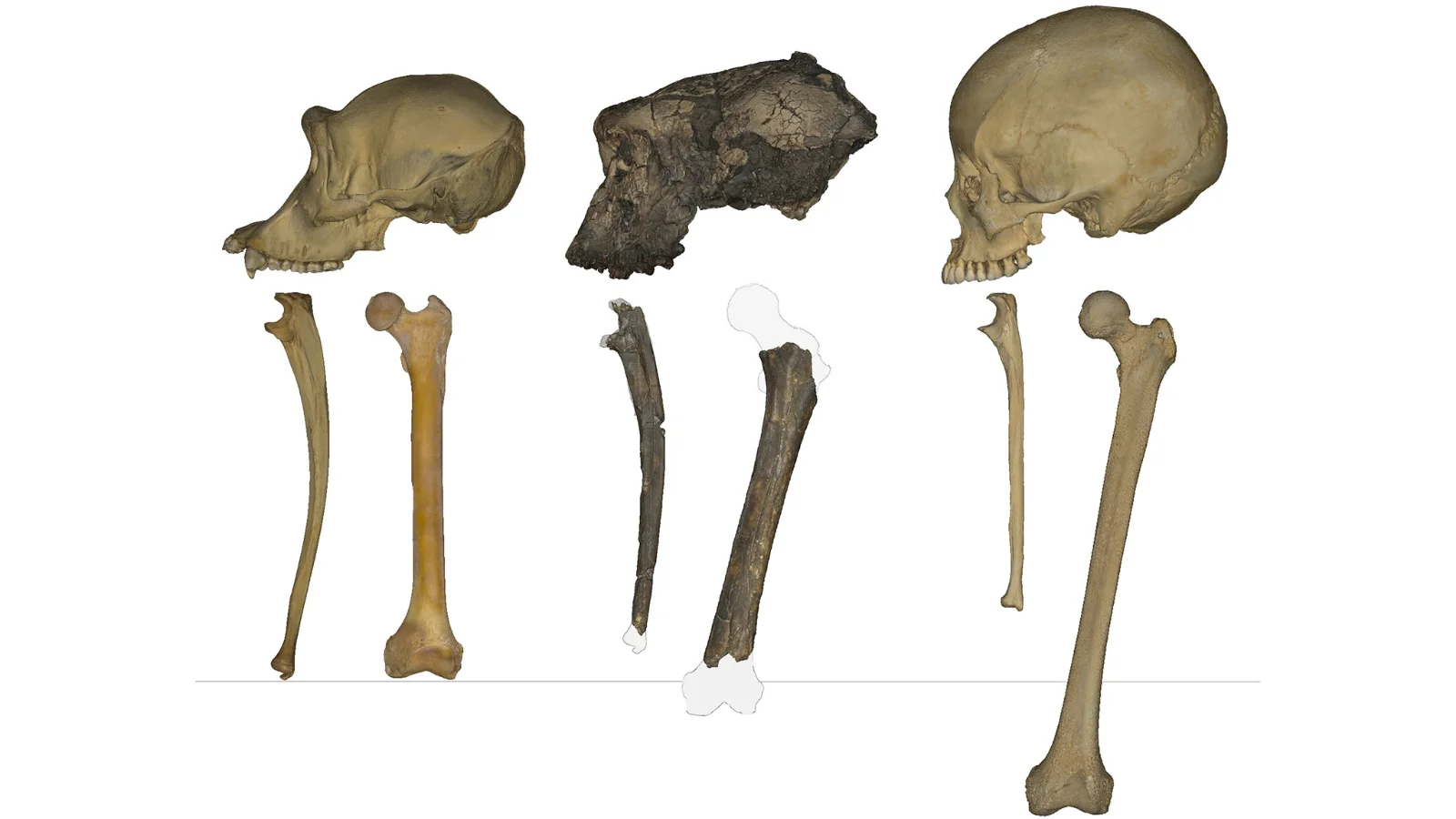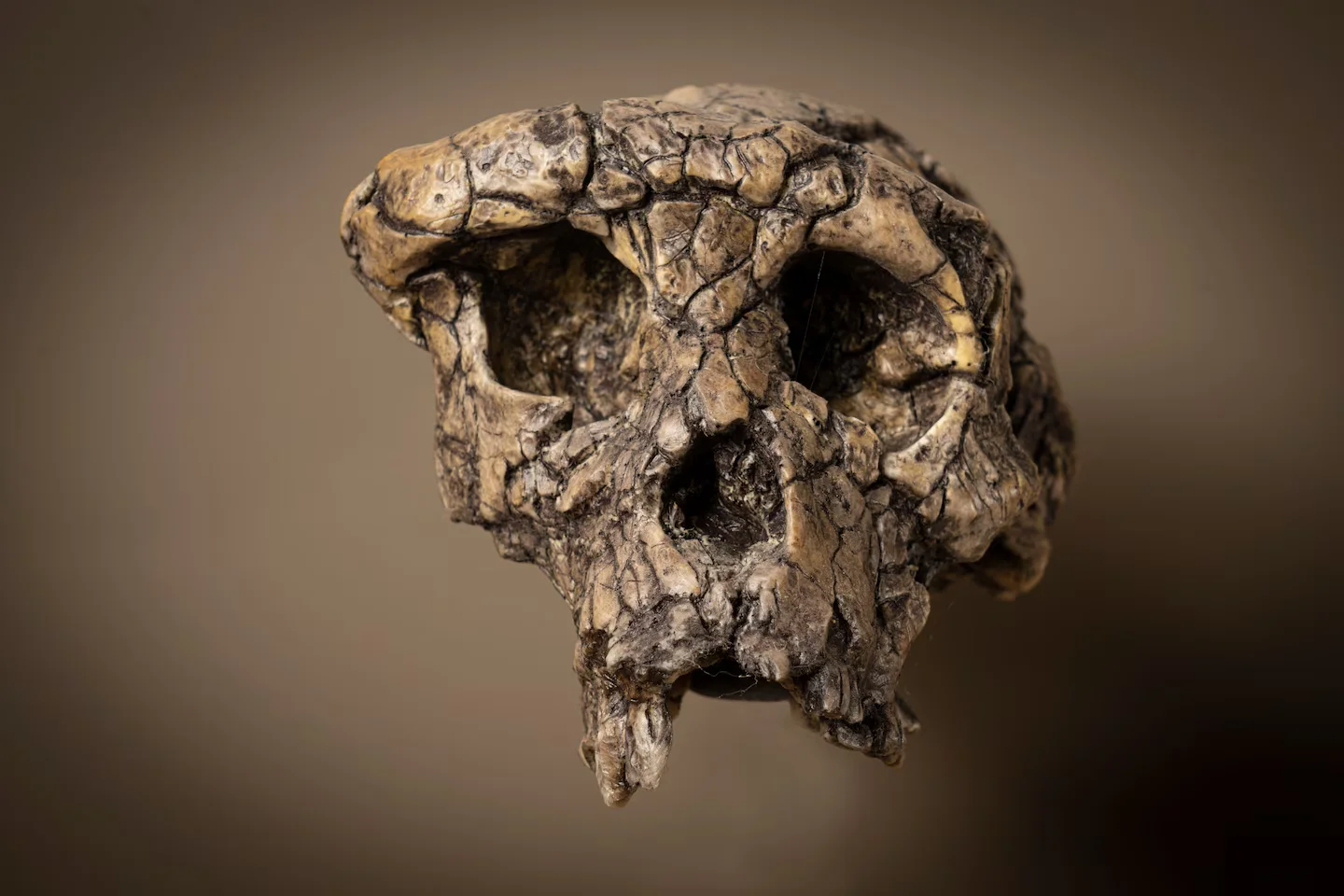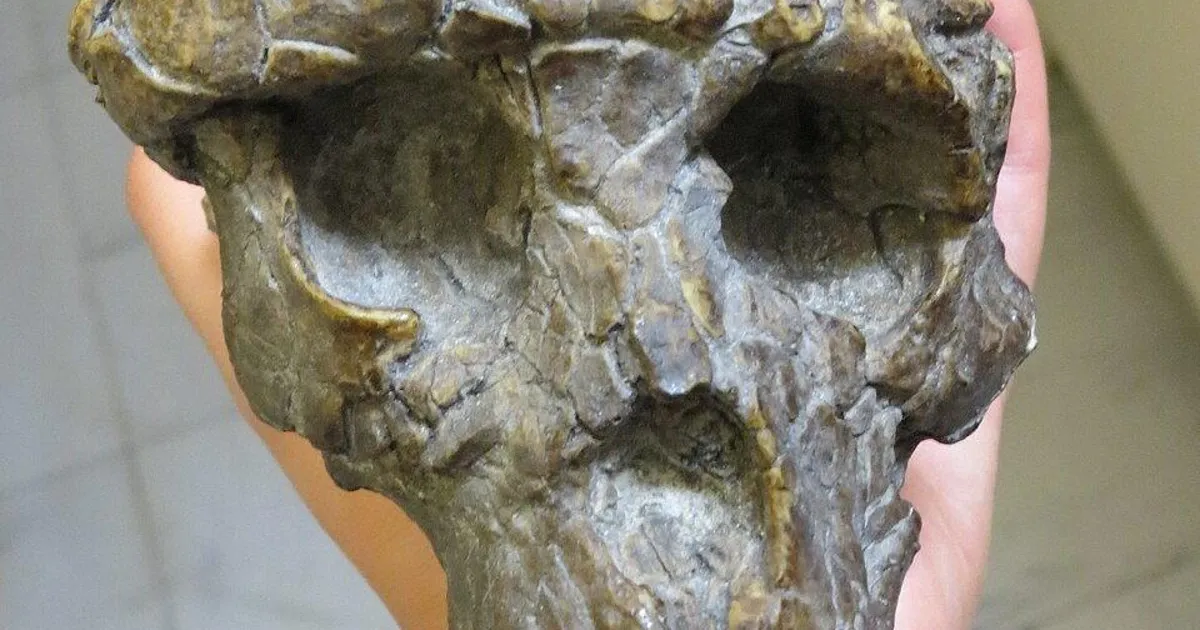
A 7-million-year-old fossil of Sahelanthropus tchadensis provides strong evidence that early human ancestors could walk upright, suggesting that bipedalism evolved much earlier than previously thought. The discovery was made through detailed analysis of skeletal features, including a femoral tubercle and limb proportions, indicating that this species was adapted for upright walking despite its small brain and tree-dwelling habits.
Fossils of an early human ancestor dating back 700,000 years were discovered in Morocco, potentially representing a major missing link in human evolution and supporting the theory of a deep African origin for Homo sapiens.
A 7 million-year-old fossil of Sahelanthropus tchadensis shows evidence of walking upright, suggesting it may be an early human ancestor, based on a newly identified femoral bump and other human-like features.
New archaeological evidence from South Africa shows that humans used poisoned arrows 60,000 years ago, making it the oldest direct evidence of poison use in hunting globally, and highlighting advanced cognitive skills and knowledge of toxic plants among ancient hunter-gatherers.
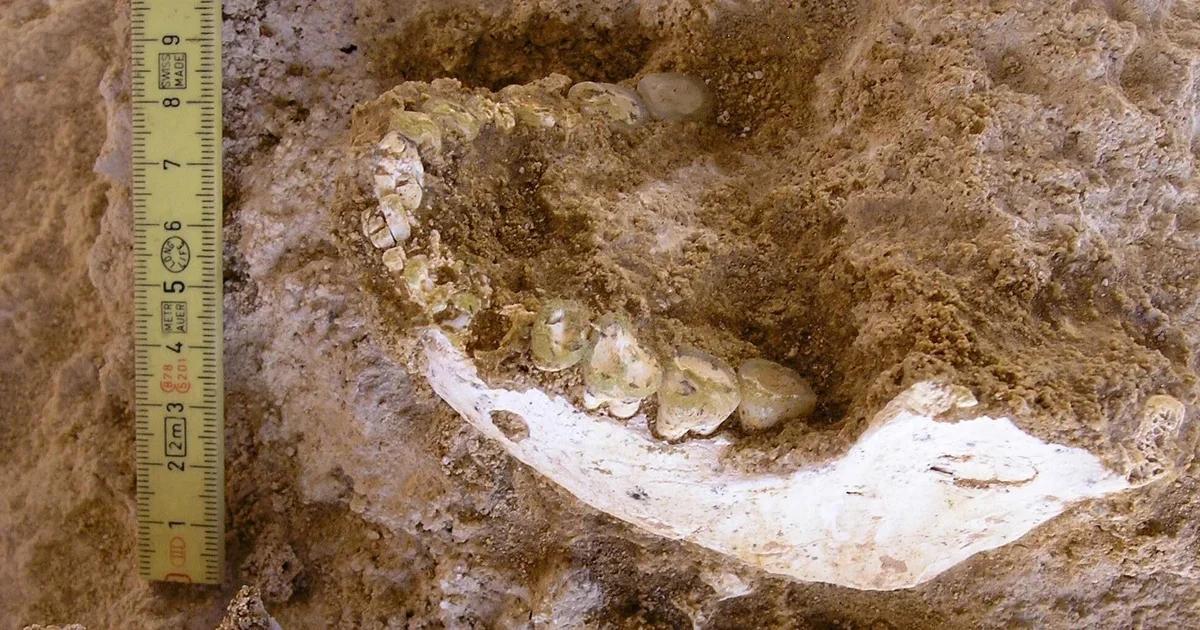
Fossils discovered in Morocco, dating back over 773,000 years, support the theory that Homo sapiens originated in Africa. The fossils, found in a cave and linked to Earth's magnetic field reversal, fill a crucial gap in the fossil record and suggest that our species' divergence from ancestors like Homo erectus may have occurred earlier than previously thought.
Scientists have analyzed fossils from Central Africa, including a skull and limb bones, which suggest that a human ancestor walked upright approximately 7 million years ago, shedding light on the origins of humanity.
A new analysis of 7-million-year-old fossils suggests Sahelanthropus tchadensis was likely a bipedal hominin, supported by a newly identified femoral feature indicating upright walking, making it a strong candidate for the earliest human ancestor.
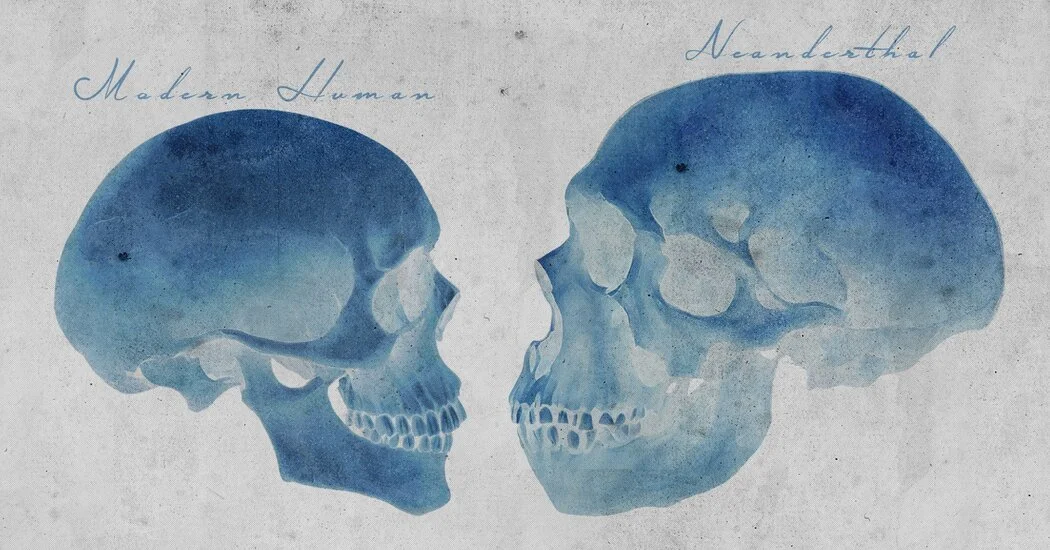
Neanderthal DNA, inherited through ancient interbreeding with modern humans, influences various aspects of our health and physical traits today, including skin color, immune response, and susceptibility to certain diseases, while also offering insights into human evolution.
Scientists discovered well-preserved 7,000-year-old mummies in Libya that belong to a previously unknown human lineage with minimal Neanderthal DNA, indicating limited contact with outside groups and suggesting local cultural diffusion during the African Humid Period.
The article traces the history of Australopithecus prometheus, a controversial early hominin species initially identified from fossils in South Africa, including the famous 'Little Foot' skeleton, highlighting its discovery, misinterpretations, and ongoing debates about its classification and significance in human evolution.
In 2025, significant discoveries about Neanderthals revealed they were the first to make fire, engaged in cannibalism, created symbolic art, used ocher as 'crayons,' and had genetic traits affecting their energy, susceptibility to lead poisoning, and possible reasons for their extinction, highlighting their intelligence and complex behavior.
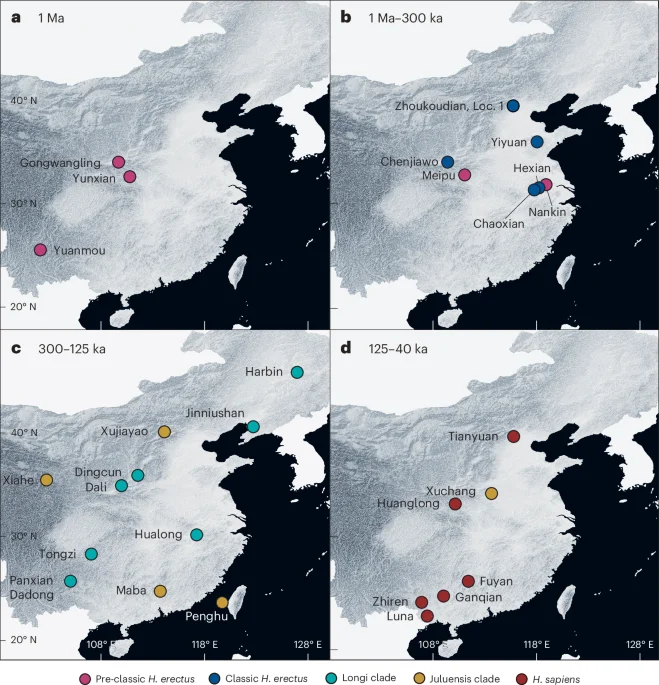
Scientists have identified a new human ancestor, 'Dragon Man,' linking it to the Denisovan group through advanced protein analysis of a 146,000-year-old skull from Harbin, China, providing new insights into human evolution and ancient migrations.
Scientists have confirmed the identity of the 'Dragon Man' skull as Denisovan through advanced DNA and protein analysis, providing the first physical evidence of what Denisovans looked like and shedding light on their physical traits, environment, and genetic legacy in modern humans.
In 2025, significant progress was made in understanding human evolution, particularly through the genetic analysis of fossils like the Dragon Man skull, which has been linked to Denisovans, revealing new insights into ancient human species and their interbreeding with modern humans. Additional discoveries, including a high-coverage Denisovan genome from a 200,000-year-old tooth, are expected to further unravel the complex history of human ancestry in the coming years.
Scientists have identified a nearly 146,000-year-old skull from Harbin, China, as belonging to a Denisovan, using protein analysis and DNA evidence, providing the first clear link between a Denisovan fossil and its physical appearance, and revealing insights into their size, diet, and contribution to modern human genetics.