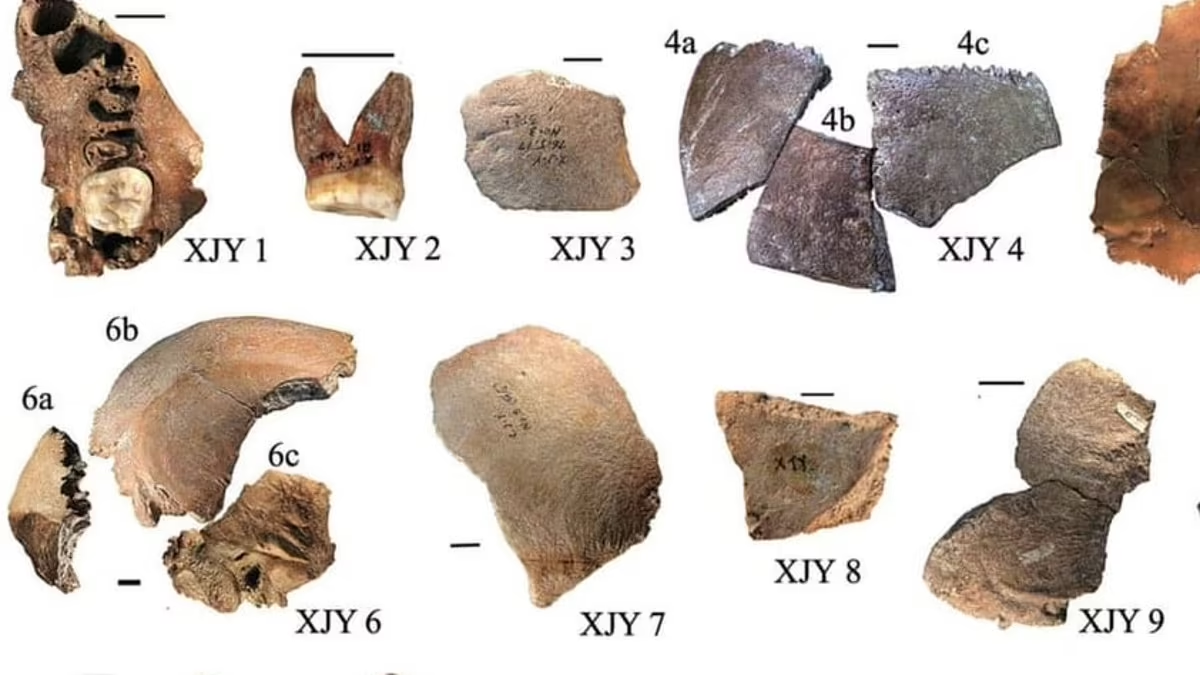
Scientists have identified a new human species called Homo juluensis based on fossil evidence from Asia, which challenges existing views on human evolution, suggests a possible link to Denisovans, and may explain the long-standing Xujiayao fossils.
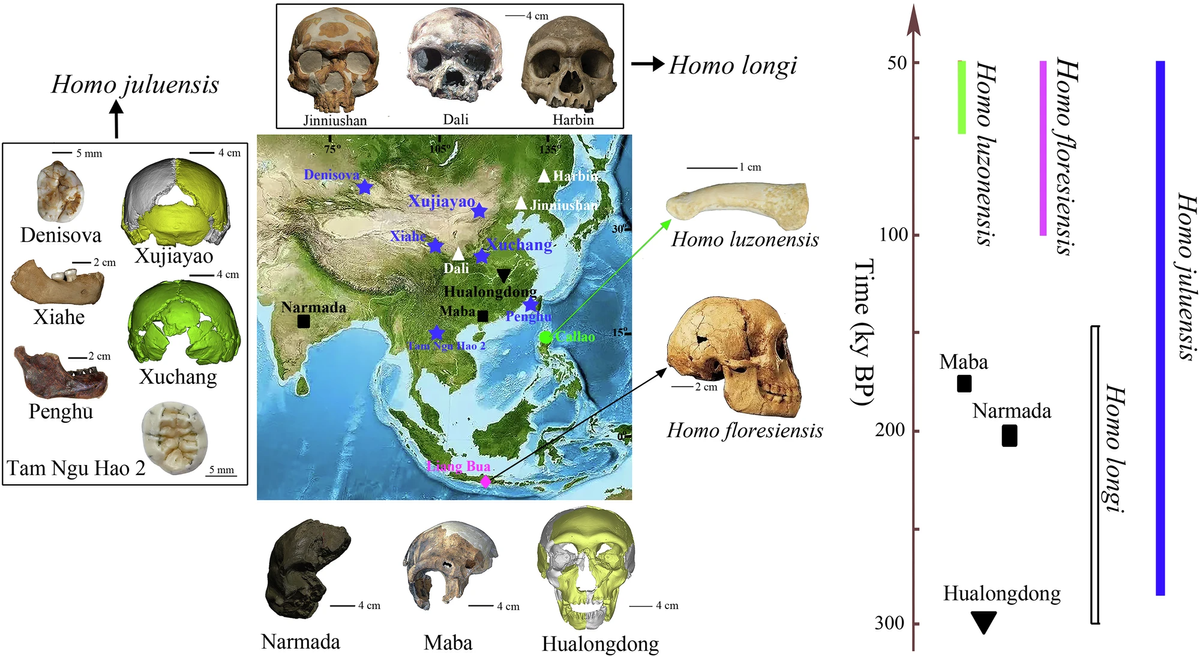
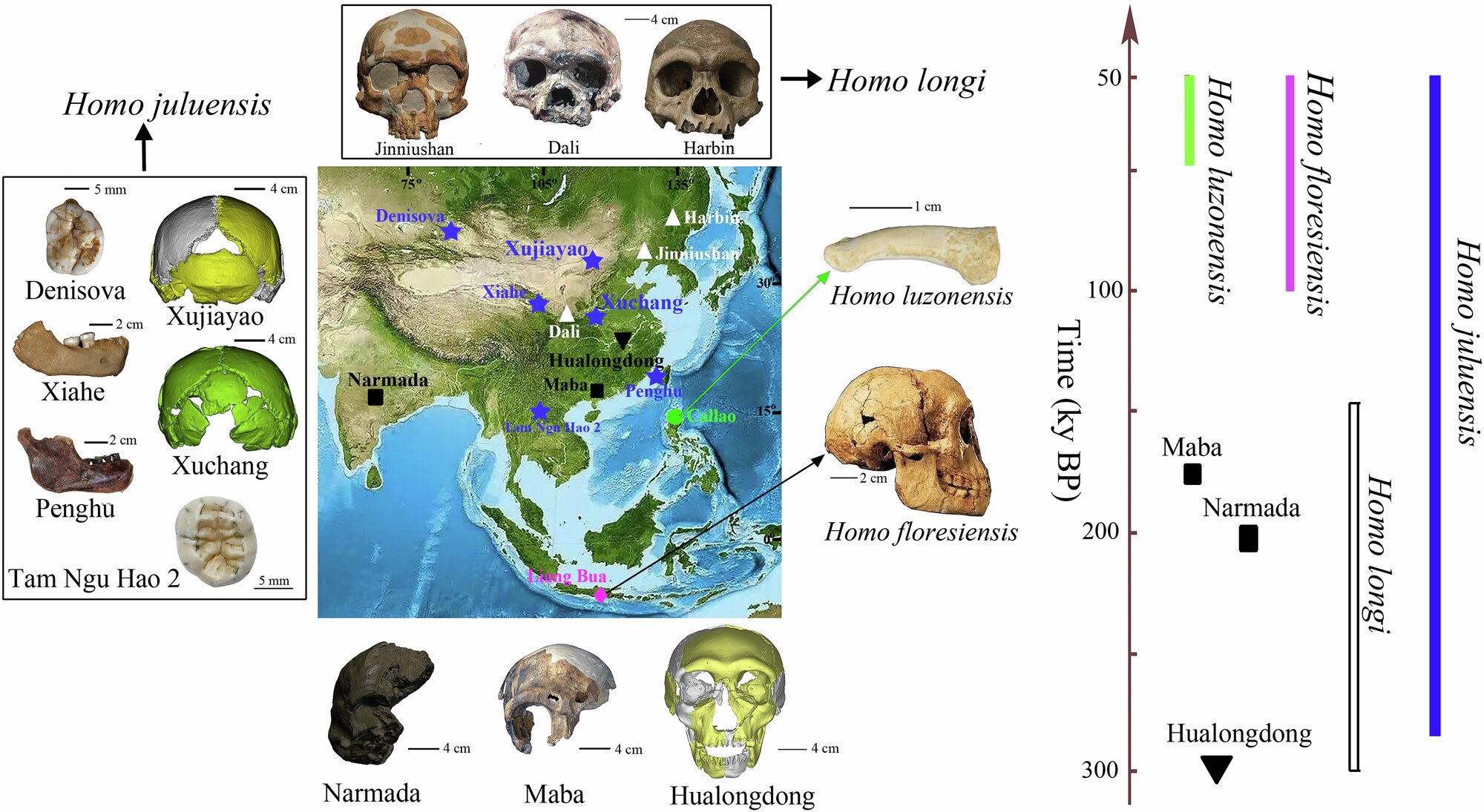
Scientists from China and Hawai'i have identified a potential new human species, Homo juluensis, based on fossil similarities, which may include Denisovans, and could help clarify the complex history of human evolution in Asia. The species thrived from 300,000 to 50,000 years ago and shows unique cranial and dental features, although further research is needed for confirmation.
Scientists have identified a new hominin species, Homo juluensis, which lived in eastern Asia between 300,000 and 50,000 years ago. This discovery, led by researchers from the University of Hawai‘i and the Chinese Academy of Sciences, adds complexity to the understanding of human evolution during the Late Quaternary period. Homo juluensis is characterized by features similar to Neanderthals, modern humans, and Denisovans, and its identification helps clarify the classification of Middle Pleistocene hominin fossils, challenging traditional evolutionary models.
Scientists have identified a potential new human species, Homo juluensis, which lived in eastern Asia from about 300,000 to 50,000 years ago. This discovery, led by Professor Christopher J. Bae, suggests that Homo juluensis may include the Denisovans, known primarily through DNA evidence. The research highlights the unexpected diversity of hominin fossils in Asia and contributes to a clearer understanding of human evolution. The findings, published in Nature Communications, open new avenues for studying ancient human populations and their interactions.
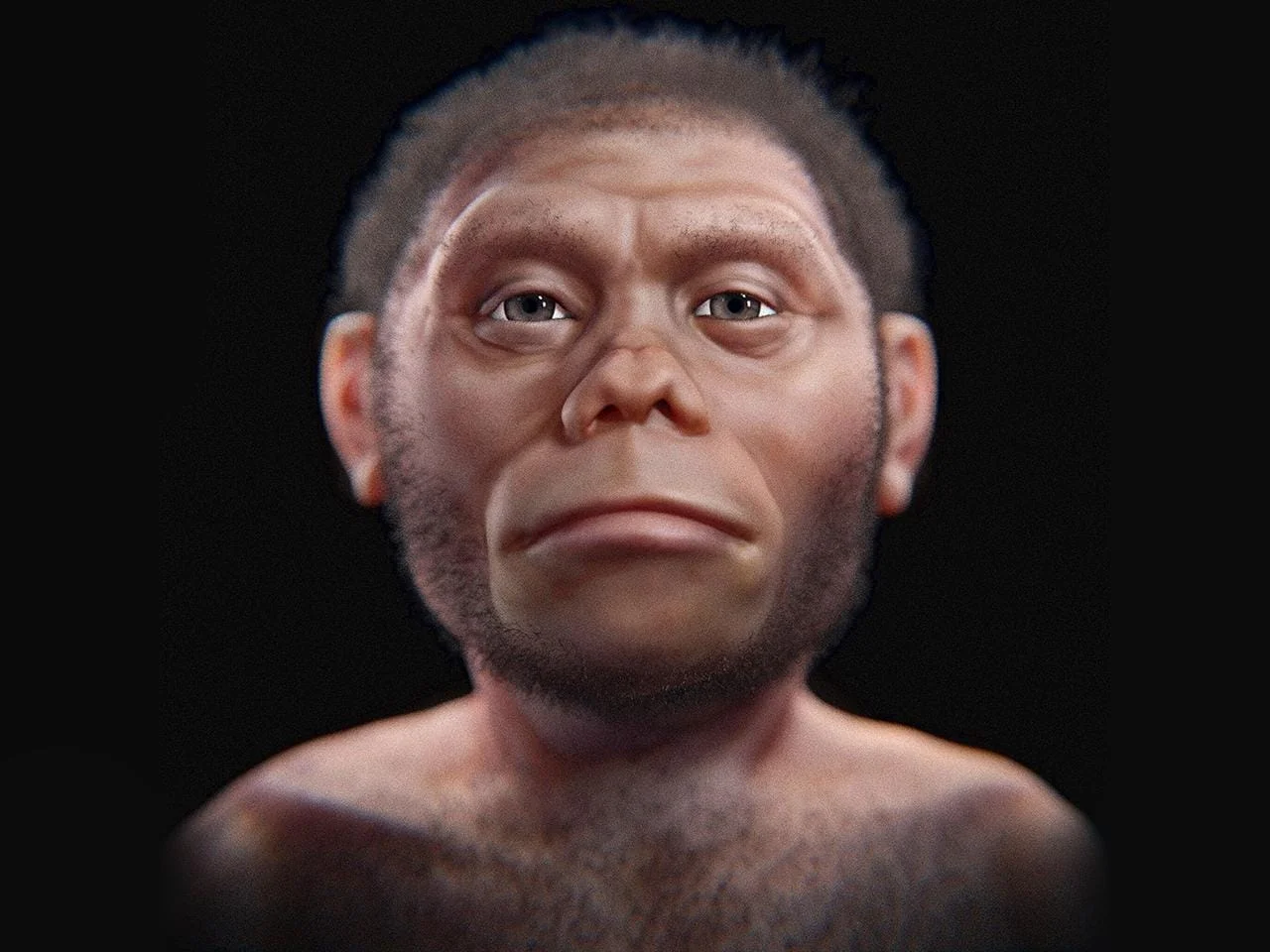
A new study published in Nature Communications by Xiujie Wu and Christopher Bae suggests the existence of a previously unknown group of large-headed humans, termed Homo Juluensis, who lived in eastern Asia over 100,000 years ago. These humans had larger brains than any known human species of their time. The researchers propose that these fossils, previously attributed to Denisovans, represent a distinct group with mixed ancestry from various ancient Asian populations. This discovery adds complexity to the human ancestry tree, highlighting the diversity of hominin fossils in eastern Eurasia.
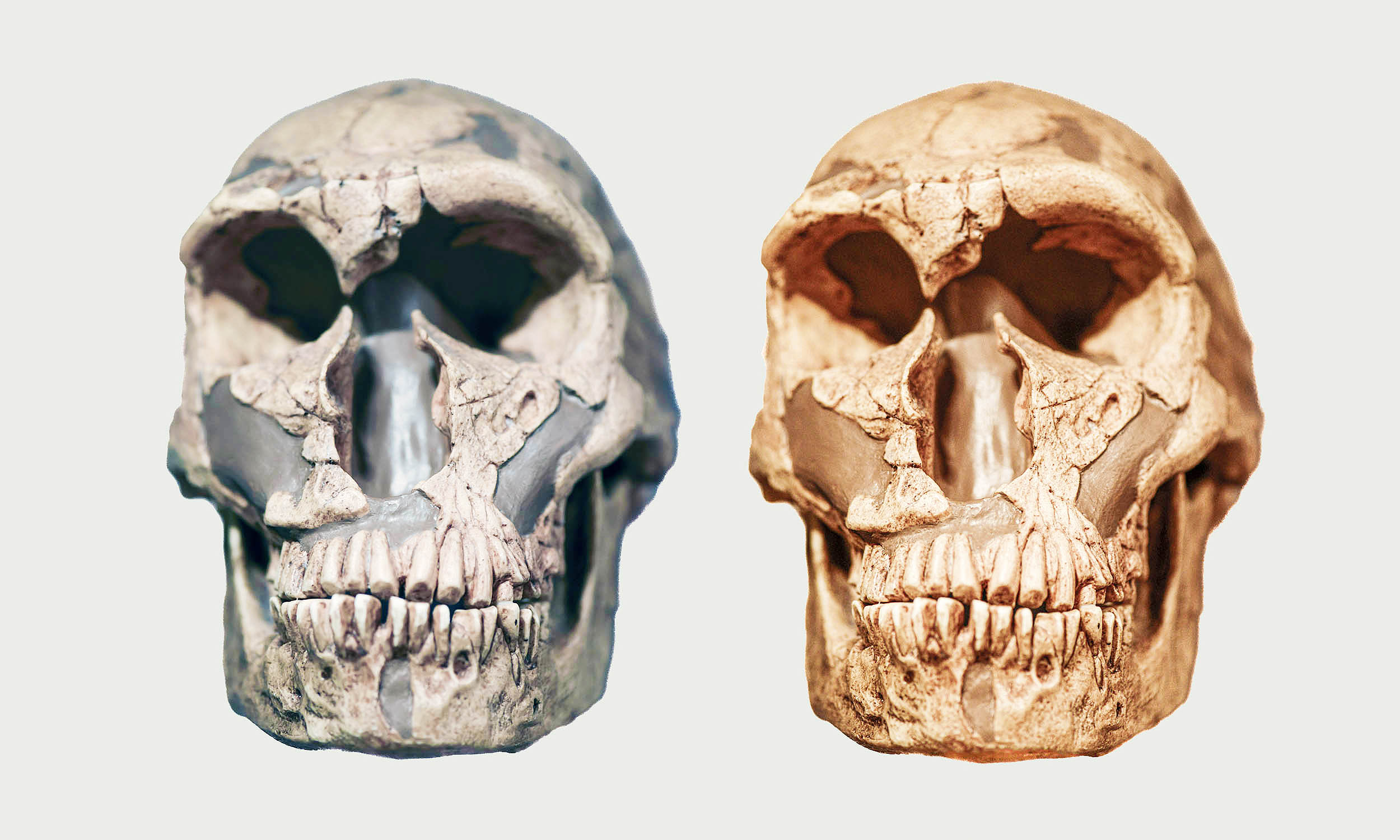
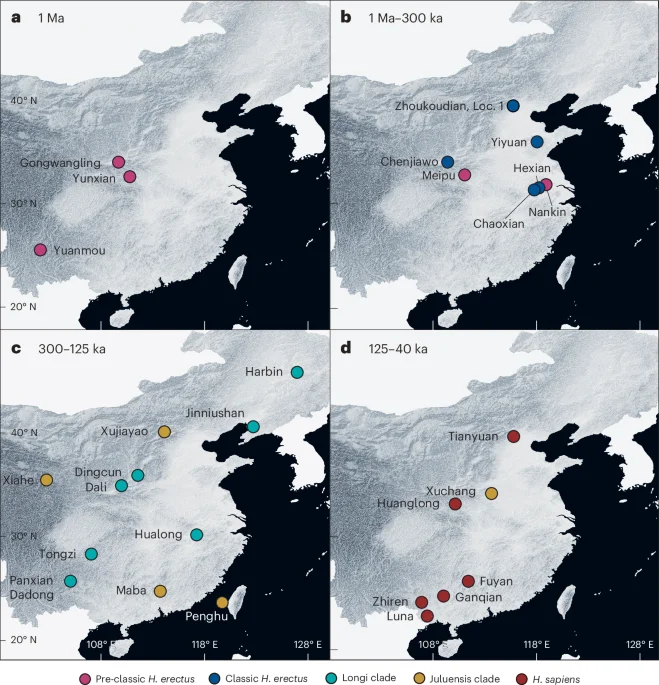
Researchers have identified a new species of ancient humans, Homo juluensis, based on large skull fossils found in China. This discovery, dating from 220,000 to 100,000 years ago, adds to the understanding of hominin variation during the Middle Pleistocene epoch. The fossils exhibit a mix of Neanderthal, modern human, and Denisovan traits, suggesting hybridization played a role in human evolution in eastern Asia. The classification of H. juluensis is debated, with some experts suggesting it may align more closely with H. longi.
A new study reveals the existence of a previously unknown human species, Homo juluensis, in eastern Asia, challenging traditional models of human evolution. This research, published in Nature Communications, suggests that multiple human species, including the Julurens, coexisted and interacted in the region between 300,000 and 50,000 years ago. The findings highlight a complex evolutionary history, moving away from the simplistic "out of Africa" narrative, and emphasize the diversity of ancient human populations in Asia.
Scientists have discovered a new human species, Homo juluensis, in northeastern China, dating back 300,000 years. This species is characterized by larger skulls and teeth compared to Neanderthals and Homo sapiens, with brain volumes reaching up to 1,800 cubic centimeters. Despite their large brains, it's unclear if they were more intelligent. The discovery highlights the complexity of human evolution in East Asia, with potential links to Denisovans. Homo juluensis used stone tools, hunted in groups, and may have declined due to climatic changes and integration with modern humans.
Researchers, led by Professor Christopher J. Bae from the University of Hawaiʻi, have potentially identified a new ancient human species, Homo juluensis, which lived in eastern Asia around 300,000 to 50,000 years ago. This discovery, published in Nature Communications, suggests that Homo juluensis may include the enigmatic Denisovans, known primarily through DNA evidence. The breakthrough was achieved by reorganizing fossil evidence, helping to clarify the complex human evolutionary history in Asia.
Scientists have identified a new extinct human species, Homo juluensis, from fossilized remains found in China, dating back 200,000 years. The species, characterized by large heads, wide skulls, and immense teeth, lived in small groups and were hunters who used animal hides for clothing. Their extinction is believed to be linked to climate shifts and the migration of modern humans. The discovery highlights the complexity of human evolution, particularly in eastern Asia, and suggests that Denisovans may be part of this new species.