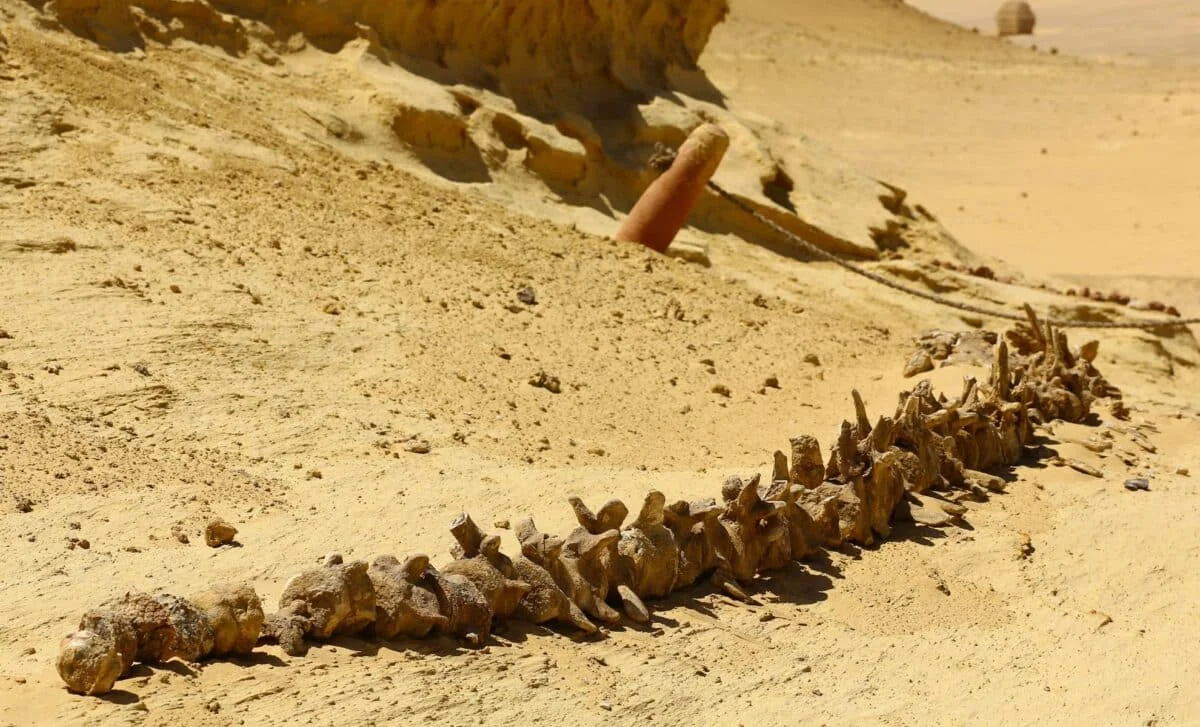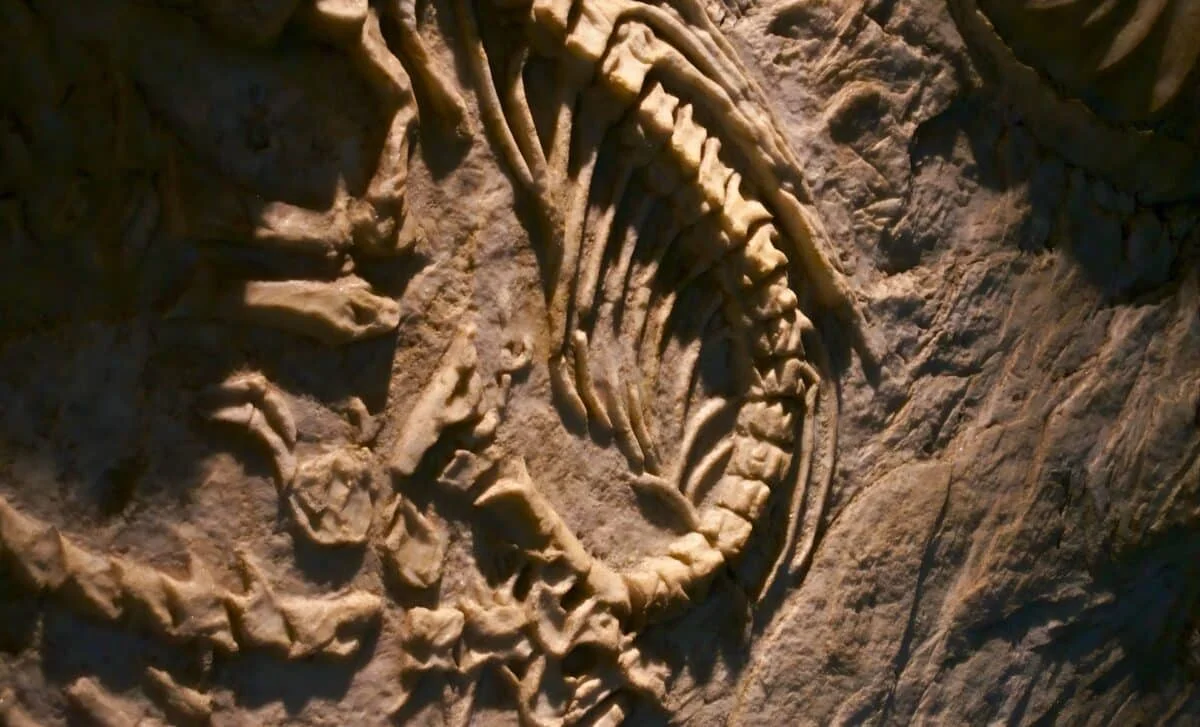
Fossilized bones in an Alaskan museum thought to be the last mammoth turned out to be whale bones, dating from 2,000 to 3,000 years ago, challenging previous assumptions about their age and origin, and highlighting the importance of DNA analysis in accurate species identification.
Recent analysis of fossils housed in Alaska's University of Alaska Museum revealed that what were thought to be mammoth bones from the Ice Age are actually from two ancient whales, a discovery confirmed through isotope and DNA analysis, challenging previous assumptions about the fossils' origins and highlighting the importance of modern scientific techniques.
Marine fossils found at the summit of Mount Everest are explained by plate tectonics, which caused oceanic crust containing these fossils to be uplifted during the collision of the Indian and Eurasian plates, forming the Himalayas over millions of years.
Fossils discovered in Morocco, dating back over 773,000 years, support the theory that Homo sapiens originated in Africa. The fossils, found in a cave and linked to Earth's magnetic field reversal, fill a crucial gap in the fossil record and suggest that our species' divergence from ancestors like Homo erectus may have occurred earlier than previously thought.
Scientists have analyzed fossils from Central Africa, including a skull and limb bones, which suggest that a human ancestor walked upright approximately 7 million years ago, shedding light on the origins of humanity.
Scientists at the American Museum of Natural History discovered over 70 new species this year, including dinosaurs, mammals, insects, and minerals, highlighting Earth's rich biodiversity and the value of natural history collections for ongoing scientific insights.
A new study reexamines over 50 fossils from the Late Triassic period in Britain, revealing they are ancient coelacanths, related to modern species, and correcting past mislabeling. These findings shed light on the diversity and ecology of coelacanths just before the end-Triassic extinction, emphasizing the importance of museum collections in scientific discovery.
Scientists have discovered a new early human species, Australopithecus deyiremeda, in Ethiopia's Afar Rift, living around the same time as Lucy, which suggests that human evolution was more complex and involved multiple species coexisting rather than a linear progression.
Scientists have discovered a new early human species, Australopithecus deyiremeda, in Ethiopia's Afar Rift, living around the same time as Lucy, challenging the idea of a single dominant ancestor and suggesting a more complex, branching evolution of early humans.
New research confirms that tiny fossils of Liaoningosaurus paradoxus are of baby ankylosaurs, not miniature adults, providing rare insights into early armor development and growth in armored dinosaurs, including the discovery of the first hatchling ankylosaur.
Fossils initially thought to be the youngest mammoth remains in Alaska were later identified through DNA testing as whale bones, revealing a case of mistaken identity and raising questions about how whale bones ended up far inland.
A new study suggests that the fossil known as Little Foot may represent a previously unidentified human relative, challenging existing classifications and indicating a more complex picture of early human diversity in southern Africa.
Scientists discovered fossils of giant anacondas in Venezuela, revealing they reached about 5.2 meters in length around 12.4 million years ago, and surprisingly, their size has remained unchanged since then, despite climate changes and other reptiles evolving differently. The findings shed light on the evolution and persistence of these massive snakes in South America.
Scientists discovered Australia's oldest crocodile eggshells from 55 million years ago, belonging to a bizarre, tree-hunting crocodile species called Wakkaoolithus godthelpi, which exhibited unique terrestrial and semi-arboreal behaviors, providing insights into prehistoric ecosystems and crocodile evolution.
Titanoboa cerrejonensis, the largest snake ever discovered, lived over 58 million years ago during the Paleocene epoch, reaching lengths of up to 46 feet and weighing over a ton. Its discovery has provided valuable insights into prehistoric ecosystems and climate conditions, indicating that Earth's temperatures were significantly higher during that period, which supported such massive reptiles. The snake was an aquatic constrictor that preyed mainly on fish, and its existence helps scientists understand how life rebounded after the dinosaurs' extinction and how climate influences species evolution.