Venezuela, despite having the world's largest oil reserves, has seen a significant decline in production and gold reserves due to mismanagement, sanctions, and economic crisis. Recent US military actions and political changes aim to reopen access for foreign oil companies, potentially impacting global energy markets and regional stability.
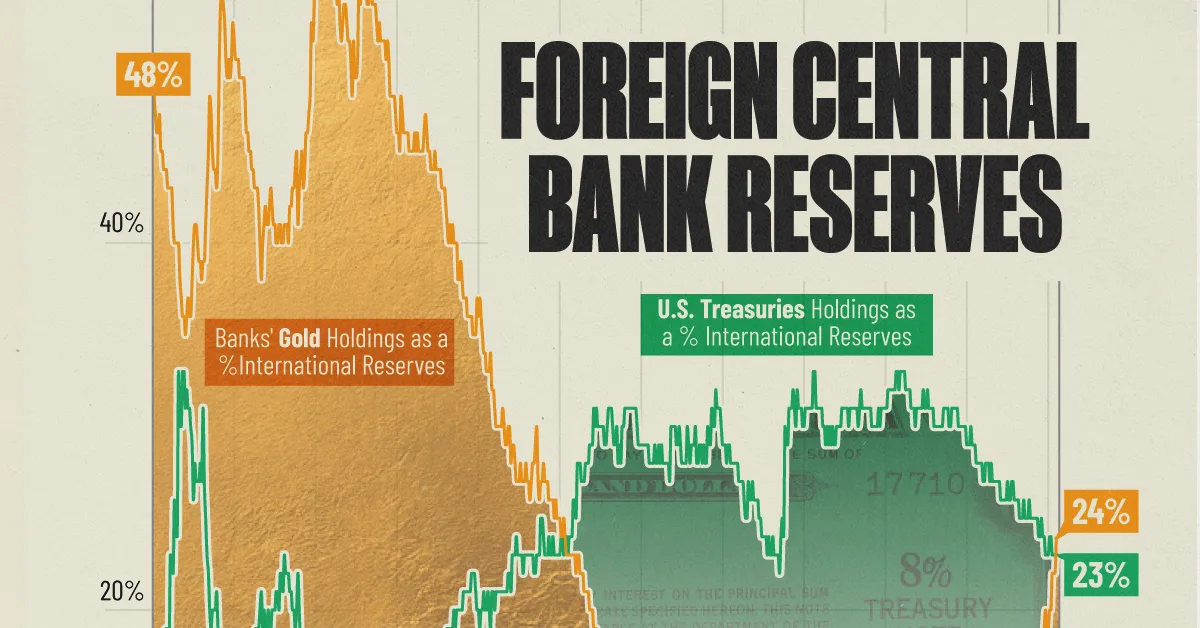
For the first time since 1996, central banks hold more gold than U.S. Treasuries, reflecting a shift towards hard assets amid geopolitical risks and a move away from dollar-denominated securities, with gold's share of reserves rising to about 18% in 2024.
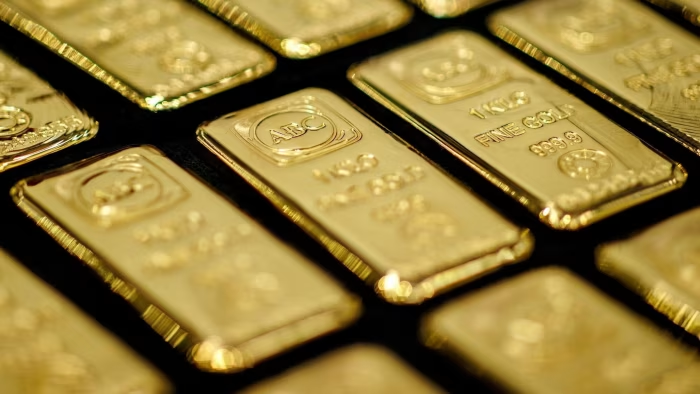
China’s central bank has increased its gold holdings for the 10th consecutive month as part of a strategy to diversify its reserves away from US dollars, with gold prices reaching new highs influenced by US rate cut bets and geopolitical risks.
China's central bank has increased its gold holdings for the 10th consecutive month as part of a strategy to diversify reserves away from US dollars, with gold prices reaching new highs driven by US rate cut bets and geopolitical tensions.
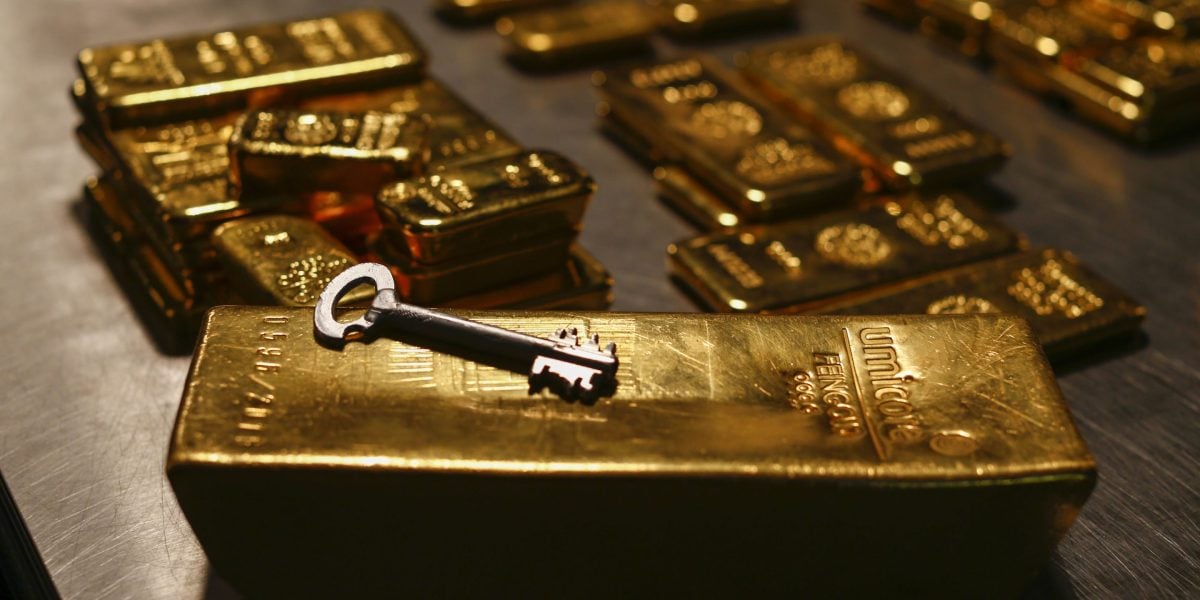
The U.S. holds $11 billion worth of gold at Fort Knox, but at current market prices, its value could be over $750 billion. A recent Federal Reserve report suggests revaluing gold reserves as a potential way to raise funds, which could be used to pay down debt or fund new initiatives like a bitcoin reserve. While politically sensitive and historically controversial, this idea is gaining renewed attention as a possible financial strategy.
Humans have mined approximately 206,000 to 238,000 tons of gold, with significant reserves still available in Earth's crust, but most of the planet's gold is in the core, making the total amount much larger and largely inaccessible.
Gold has surpassed the euro to become the world's second-largest reserve asset after the US dollar, driven by record central bank purchases, soaring prices, and geopolitical concerns, with global gold reserves nearing postwar highs and countries diversifying away from the US dollar.
Germany, which holds 1,200 tons of gold worth about $130 billion at the U.S. Federal Reserve, is facing calls to repatriate its gold amid geopolitical tensions and concerns over U.S. policies under President Trump, prompting debates about the security and control of national reserves.
Senator Cynthia Lummis has proposed converting U.S. gold reserves into Bitcoin to establish a national Bitcoin reserve, aligning with pro-crypto policies under President Trump. This strategy aims to combat inflation and national debt while positioning the U.S. as a leader in digital asset adoption. The proposal suggests acquiring 5% of Bitcoin's total supply, potentially accelerating regulatory clarity and global adoption of cryptocurrencies.
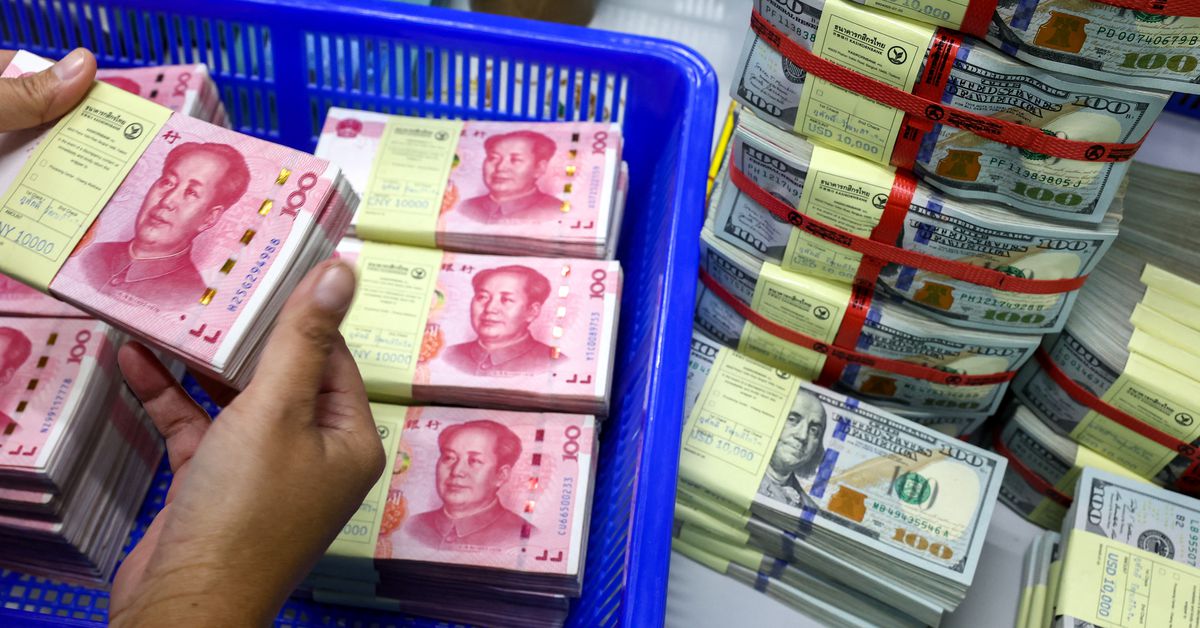
China's foreign exchange reserves, the world's largest, dropped by $45 billion to $3.115 trillion in September, falling more than expected as the US dollar strengthened against other major currencies. The yuan depreciated by 0.5% against the dollar, while the dollar gained 0.2% against a basket of other major currencies. China's gold reserves increased slightly to 70.46 million fine troy ounces.
An Invesco survey reveals that an increasing number of countries are repatriating their gold reserves as a safeguard against potential sanctions, following the freezing of almost half of Russia's gold and forex reserves by the West in response to the invasion of Ukraine. Over 85% of sovereign wealth funds and central banks surveyed believe that inflation will be higher in the coming decade, leading them to consider gold and emerging market bonds as attractive investments. Geopolitical tensions and the desire to diversify away from the dollar are also driving central banks to keep reserves at home and explore alternative currencies. Infrastructure projects, particularly those involving renewable energy, are seen as the most attractive asset class, while concerns over China make India an attractive investment destination.
A survey conducted by Invesco reveals that an increasing number of countries are repatriating their gold reserves as a safeguard against potential sanctions, following the freezing of Russia's gold and forex reserves by the West in response to the invasion of Ukraine. The study also shows that central banks are concerned about the precedent set by the sanctions and are finding gold more attractive as a result. Additionally, geopolitical tensions and the expectation of higher inflation are leading central banks to diversify away from the US dollar and invest in emerging markets. Infrastructure, particularly renewable energy projects, is seen as the most attractive asset class, while concerns over China make India an attractive investment destination.
China has increased its gold reserves for the sixth consecutive month, adding about 8.09 tons in April, as central banks worldwide expand their holdings of bullion amid rising geopolitical and economic risks. China's total gold stockpiles now stand at about 2,076 tons, after increasing reserves by about 120 tons in the five months through March.
Texas lawmakers have introduced bills to create a state-issued, gold-backed digital currency that is fully redeemable in cash or gold. The comptroller would establish a mechanism to allow the new gold-backed digital currency to be used by citizens for their daily transactions. All gold reserves backing the digital currency would be held in a trust with the Texas Bullion Depository that is controlled by the comptroller or another entity appointed by the comptroller. There will be no limit on the amount of gold-backed digital currency that Texans can purchase. The value of each unit of the digital currency will be determined at the time of a transaction and must be equal to the value of the appropriate fraction of a troy ounce of gold at the time of that transaction.