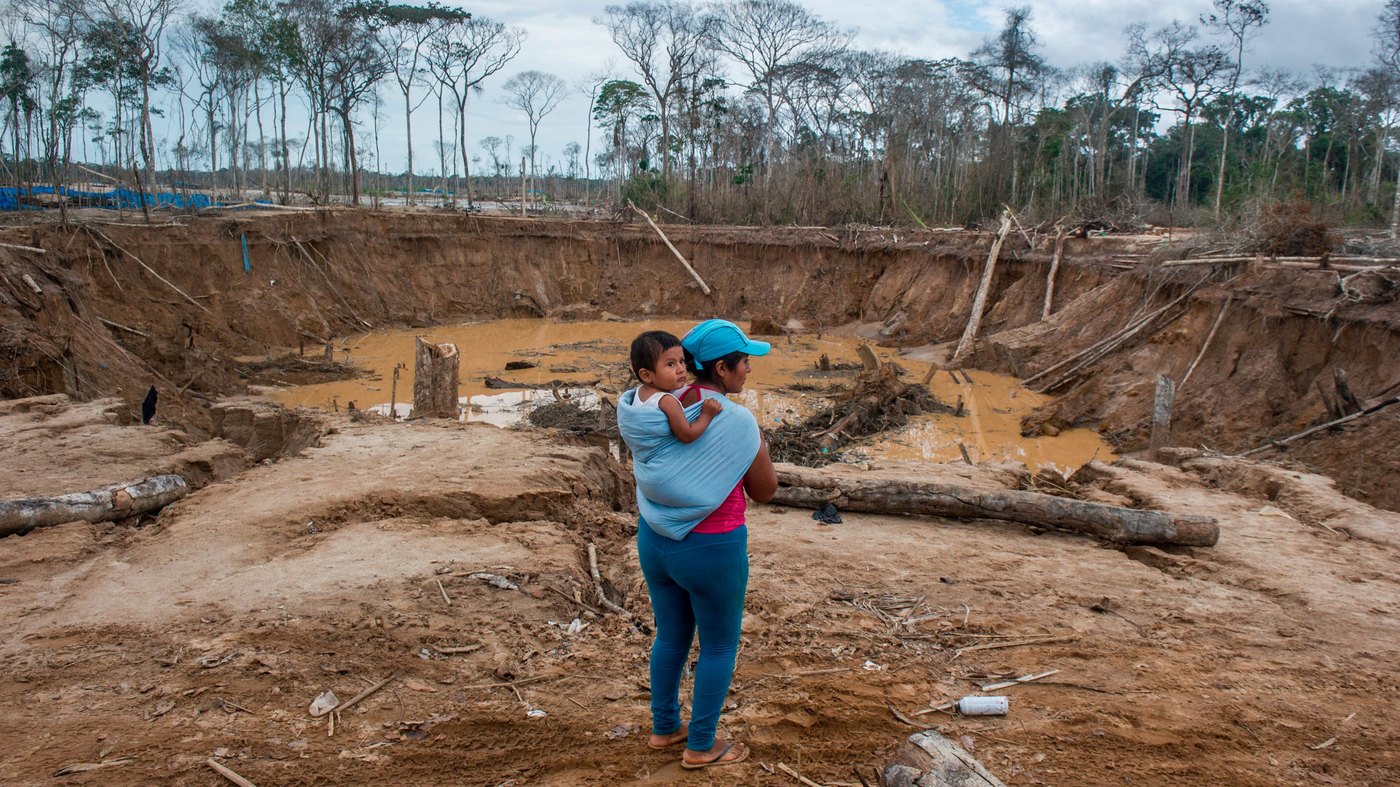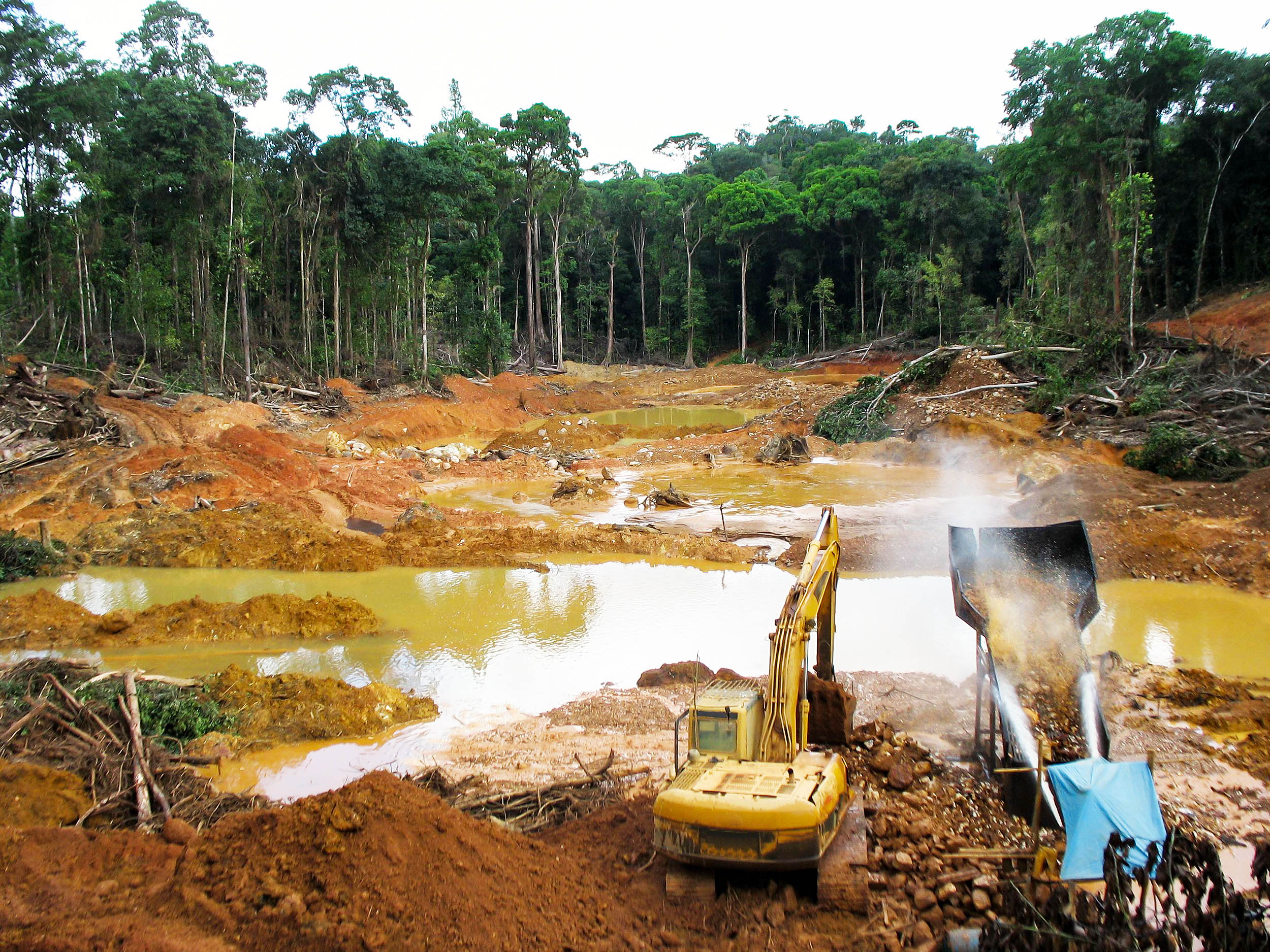
Gold mining in Peru's Amazon is rapidly destroying peatlands, which are crucial carbon sinks, leading to significant releases of stored carbon and threatening biodiversity, with potential emissions reaching millions of tons if current trends continue.
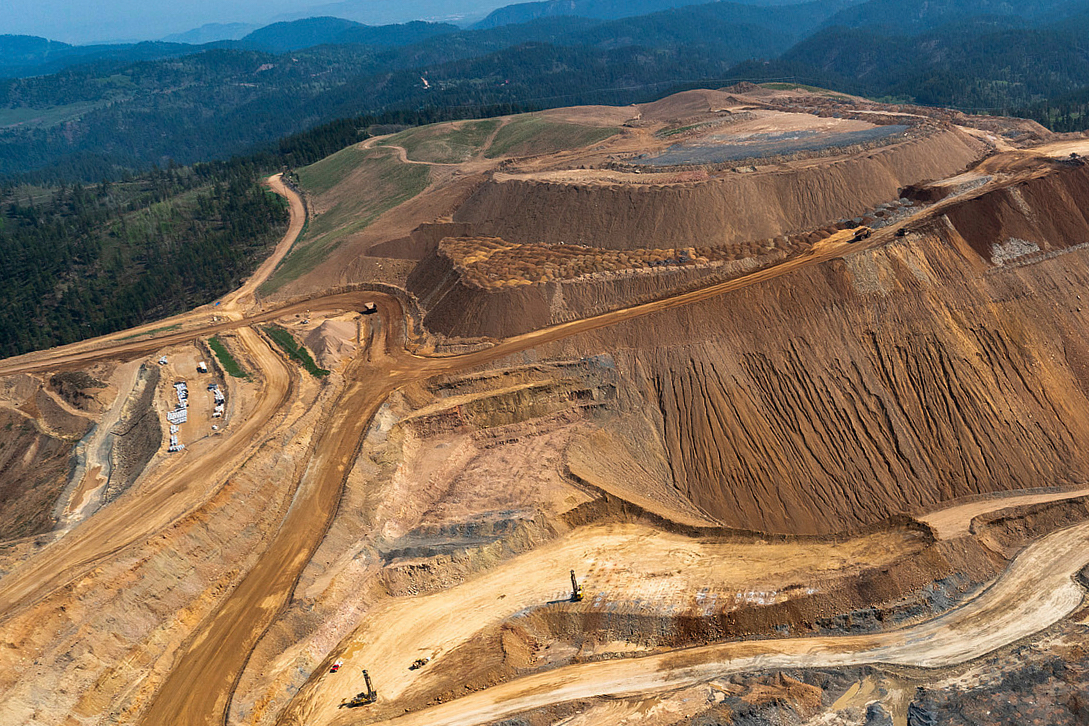
The potential reopening and expansion of gold mining in South Dakota's Black Hills, driven by rising gold prices, could bring economic benefits but poses significant environmental and cultural risks, including landscape alteration, water contamination, and opposition from Native tribes who consider the land sacred.
A new wave of gold mining interest in South Dakota's Black Hills, driven by high gold prices and recent policy changes, threatens to alter the region's landscape and sacred sites, sparking opposition from Native tribes and environmentalists concerned about ecological damage and cultural preservation.
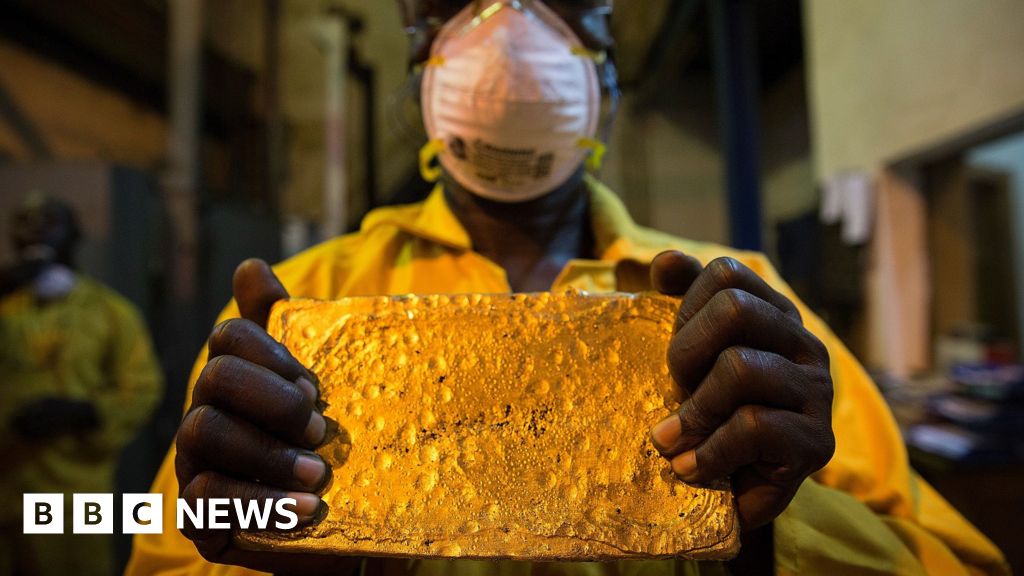
Humans have mined approximately 206,000 to 238,000 tons of gold, with significant reserves still available in Earth's crust, but most of the planet's gold is in the core, making the total amount much larger and largely inaccessible.
El Salvador is reconsidering its 2017 ban on metal mining as President Nayib Bukele claims the country has gold reserves worth $3 trillion, potentially transforming its economy. This shift comes amid economic challenges, with Bukele arguing that mining could significantly boost GDP. However, the proposal faces opposition from environmentalists and local communities due to potential ecological damage. The debate highlights the tension between economic opportunity and environmental protection, as El Salvador weighs the benefits of exploiting its mineral wealth against the risks.
A new book, 'Ricardo’s Dream,' reveals that Sir Isaac Newton, renowned for his scientific contributions, had significant financial ties to the transatlantic slave trade during his tenure as master of the mint at the Bank of England. The book claims Newton benefited from gold mined by enslaved Africans in Brazil, which was turned into currency at the bank, significantly contributing to his wealth. This connection highlights the broader involvement of early 18th-century British finance with slavery, though it does not diminish Newton's scientific legacy.
MicroStrategy Inc.'s stock rose by 3.36% in pre-market trading as Bitcoin's price surged past $93,000, boosting the company's market value to $96.732 billion, surpassing the combined worth of Newmont Corporation and Barrick Gold. This increase follows MicroStrategy's recent acquisition of 51,780 Bitcoin. The company's strategy, led by Michael Saylor, focuses on Bitcoin as an inflation hedge.
Australian mining company Resolute Mining has agreed to pay Mali's military government $160 million to settle a tax dispute after the company's British CEO and two other staff were detained. The payment will be made in installments, with $80 million paid immediately. The detentions are part of Mali's broader efforts to increase its share of income from foreign mining operations, following a coup in 2021 and a new mining code that allows greater state and local investment.
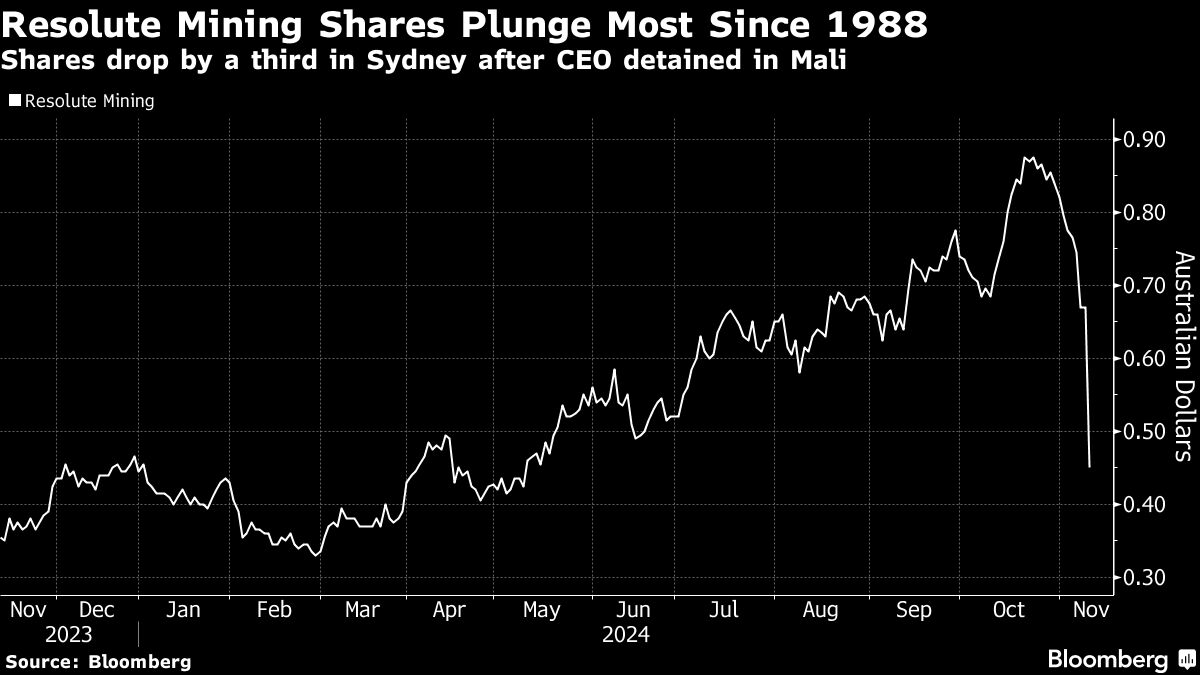
Resolute Mining's shares plummeted by 33% after its CEO was detained in Mali amid the military government's push for a larger share of resource revenues. The detention occurred during discussions about the Syama gold mine, as Mali seeks to renegotiate mining contracts following a 2020 coup. This move is part of a broader trend in West Africa, where countries are asserting more control over mineral production. Resolute is working towards a settlement to ensure the safety of its employees and the future of its operations.
Shares of Resolute Mining fell over 30% after its CEO and two employees were detained in Mali amid disputes over tax claims exceeding $100 million. The Malian government is pressuring mining companies to renegotiate contracts, following a 2022 audit and new mining code aimed at increasing state revenue. This incident highlights the growing tensions between mining firms and the military-led government in Mali, which has been taking a tougher stance on foreign mining operations.
In the Madre de Dios region of Peru, a nonprofit group called Pure Earth is working with miners to restore the Amazon rainforest that was devastated by illegal gold mining. By planting saplings and using techniques to regenerate the soil, they are successfully reviving the once-denuded landscape. This effort not only aims to restore the forest but also mitigate the impact of mercury contamination caused by the mining. Pure Earth is also teaching miners responsible gold extraction methods to reduce environmental harm, offering hope for a sustainable future in the region.
Authorities in Russia have declared 13 workers trapped in a collapsed gold mine dead after calling off the rescue effort due to the mine remaining flooded and the risk of further collapse. The miners had been trapped since March 18, and the mine operator has pledged compensation to the victims' families. This tragedy follows recent mining accidents in Venezuela and Mali, highlighting the dangers of the industry.
Newmont Corporation's CEO Tom Palmer believes that NEM stock is a "once-in-a-generation buy" due to several compelling reasons, including a strong balance sheet, projected synergies, an impressive gold mining portfolio, operational and free cash flow improvements, and a bullish outlook for gold and copper prices. Despite some risks and past underperformance, the company's undervalued stock and aggressive stock buyback plan make it an attractive investment opportunity with potential for substantial total return outperformance in the future.
A collapse at an open pit mine in central Venezuela has reportedly left dozens of workers trapped under mud, with conflicting reports on the number of casualties. While local officials suggested at least 30 people were killed and around 100 more buried, national authorities have not confirmed this toll. The mine, located in the town of La Paragua, is said to have collapsed, leaving workers and others racing to help those injured or trapped. The incident has raised concerns about the safety of unsanctioned mining operations in the region, with human rights groups previously highlighting the issue of child labor in Venezuela's open gold mines.
Polymetal International has agreed to sell its Russian assets to Siberian gold miner Mangazeya Plus for $3.69 billion, including the Russian operation's net debt of $2.21 billion, as part of efforts to comply with U.S. sanctions imposed in response to Russia's military actions in Ukraine. The deal involves cash payments and dividends, with Polymetal intending to use $1.15 billion of the dividends to repay debt. The transaction, which requires shareholder approval, will allow Polymetal to retain $300 million in post-tax proceeds, some of which will be used to develop a project in Kazakhstan.