Tag

Gaia Spacecraft

All articles tagged with #gaia spacecraft

science1 year ago

Exploring the Risks and Safety of Habitable Zones in Space

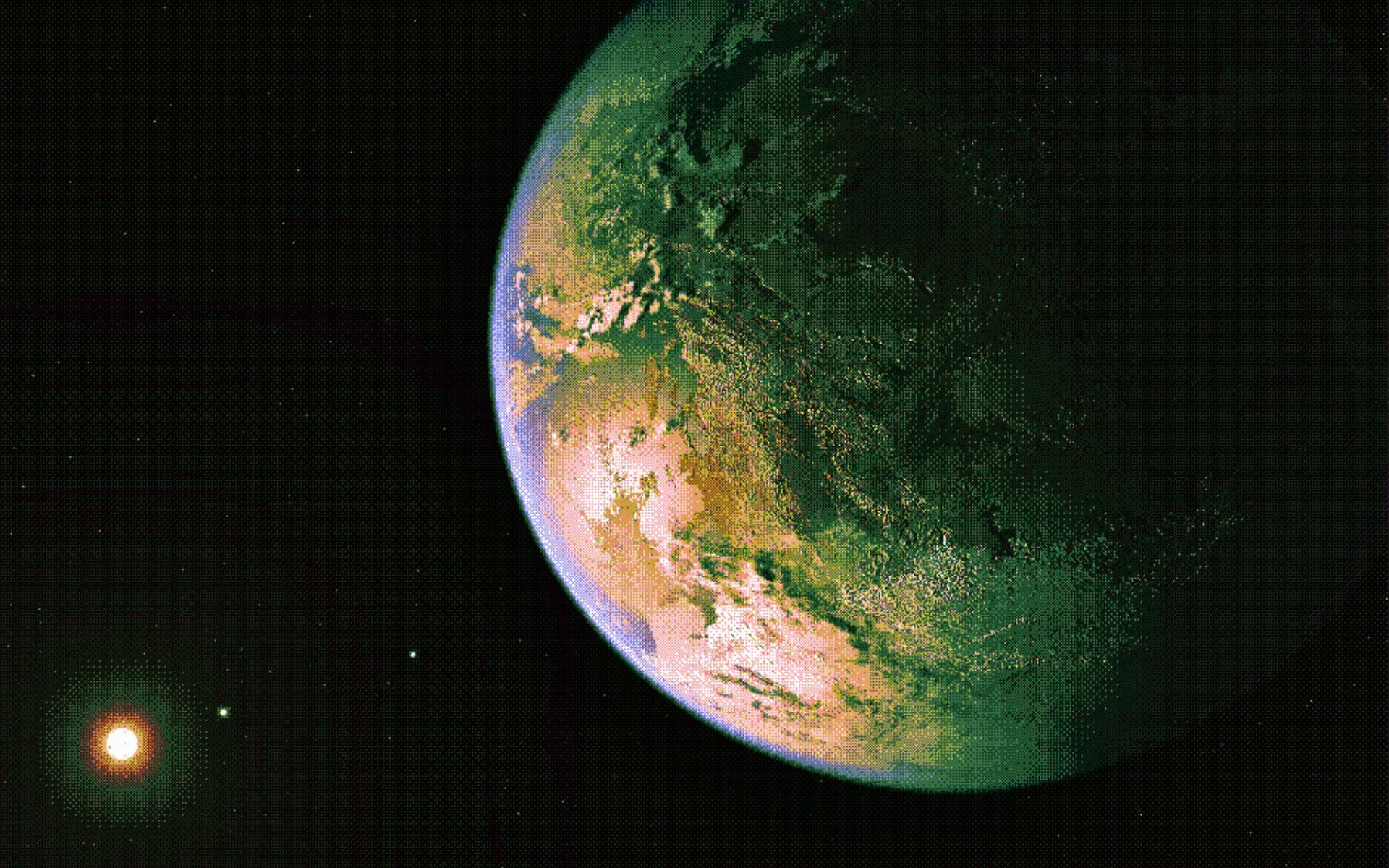
New research highlights that exoplanets in the habitable zone face significant threats from their stellar environments, such as supernovae and stellar flybys, which can strip atmospheres or eject planets from their orbits. The study, using data from the Gaia spacecraft, suggests that the stability required for life may be more precarious than previously thought, raising questions about the rarity of Earth's stable environment in the galaxy.
astronomy1 year ago

"Discovery: Slowly Slithering Wave-Like Structure Found in Our Galaxy"

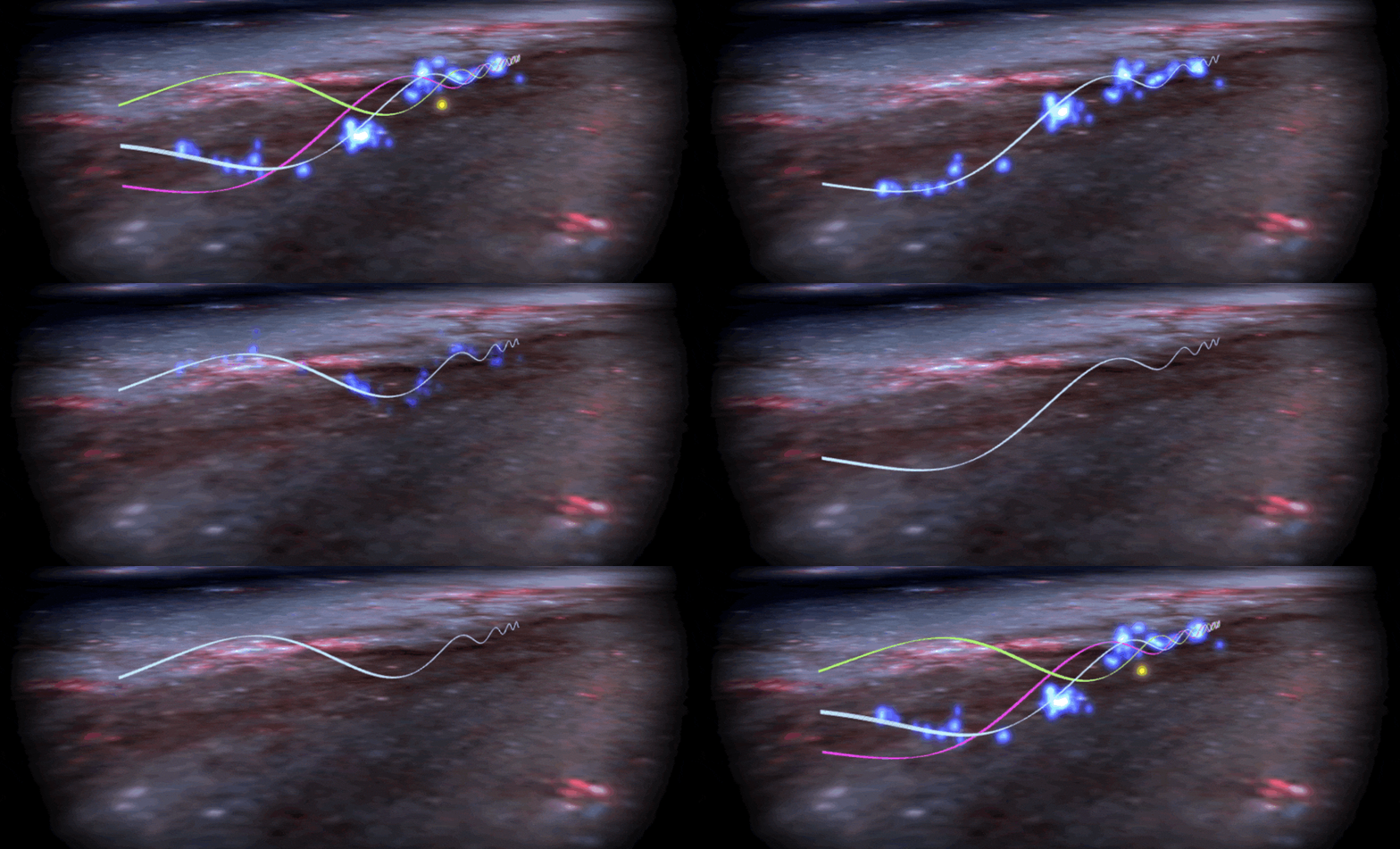
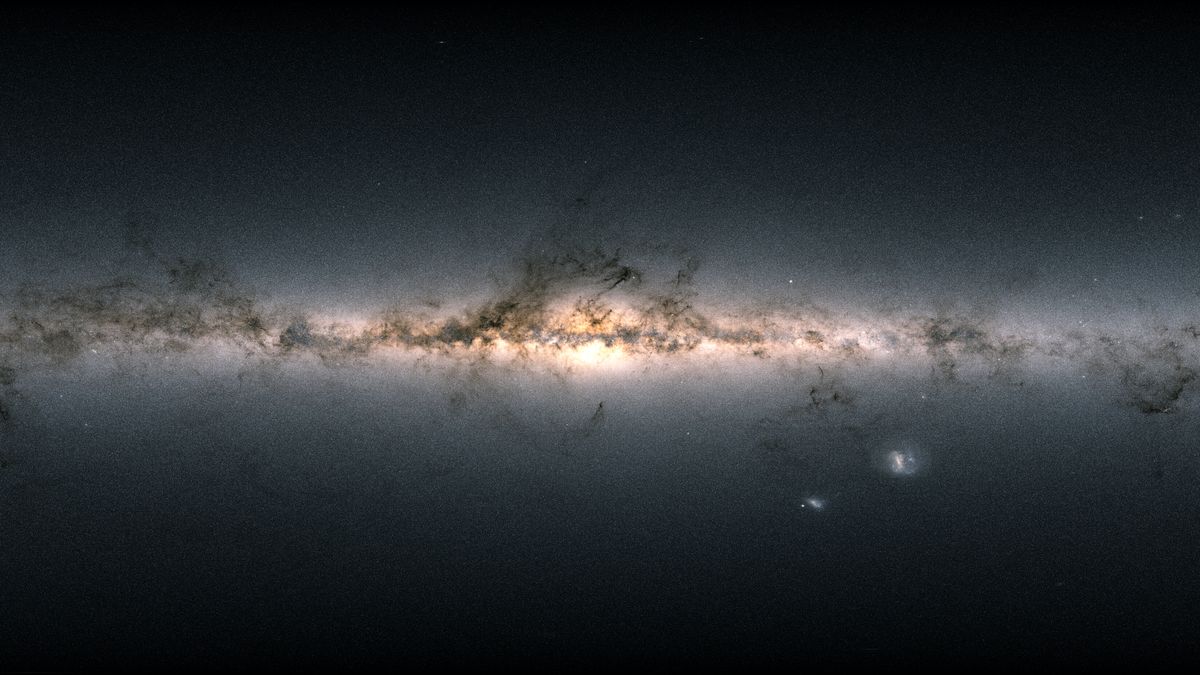
Scientists have discovered that the Radcliffe Wave, a massive wave-shaped structure in the Milky Way, is not static but is actually oscillating like a traveling wave. Using data from the Gaia spacecraft, researchers have found that the wave is slowly undulating through the galaxy, influenced by the gravity of normal matter. This discovery raises questions about the origins and prevalence of such wave-like structures in galaxies, with theories ranging from supernova explosions to gravitational interactions with other galaxies. The findings provide new insights into the dynamics of the Milky Way and could lead to the discovery of more wave-like structures in the future.

astronomy1 year ago

"Unraveling the Mystery of the Milky Way's Dark Matter Halo and Star Movements"

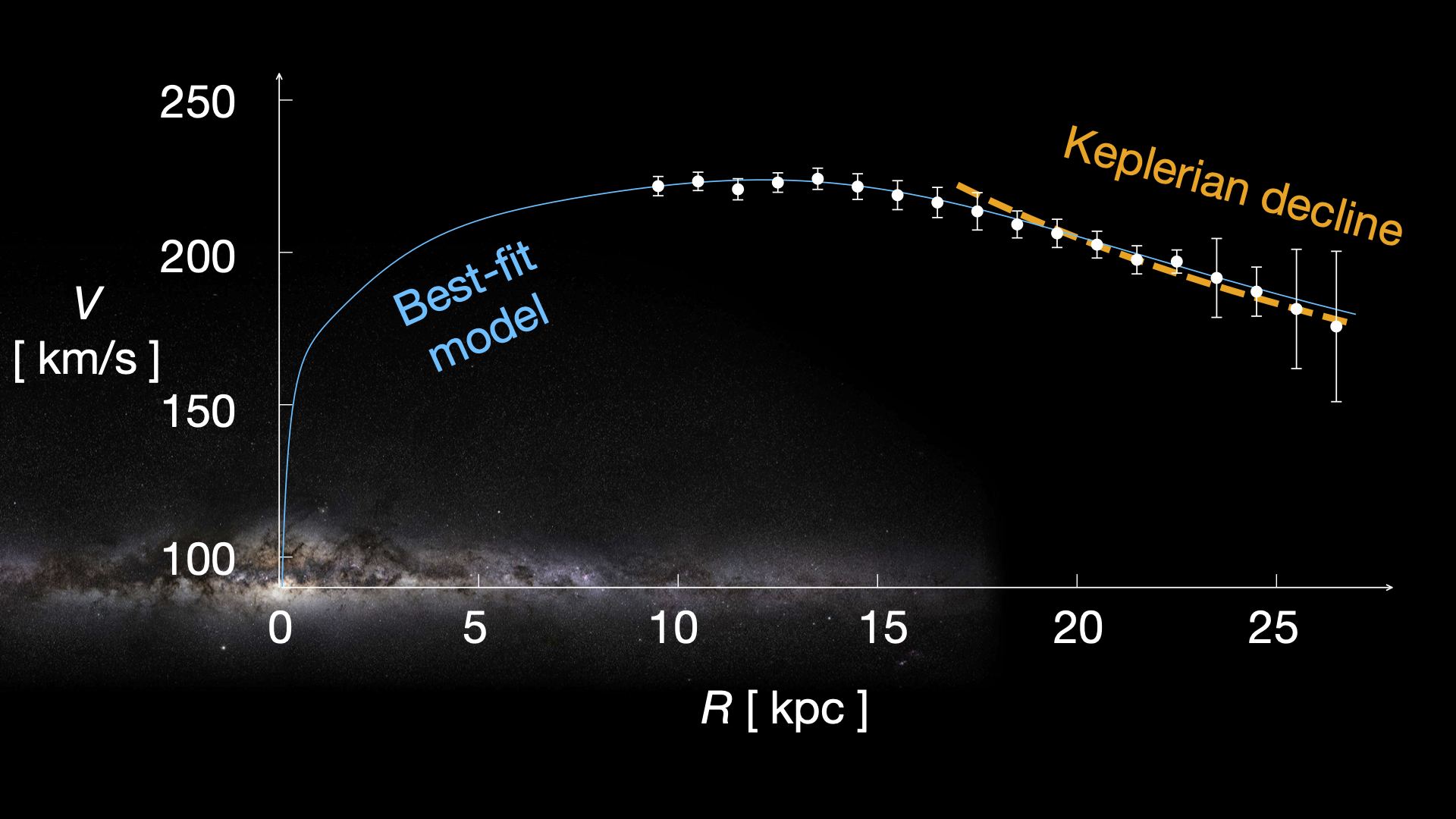
Scientists have observed stars moving more slowly than expected at the outskirts of the Milky Way, suggesting a potential discrepancy in the galaxy's dark matter distribution. Recent measurements combining data from the Gaia spacecraft and ground-based telescopes indicate a decline in orbital velocity for stars at distances of about 100,000 light years, implying less dark matter in the galaxy's center than previously thought. This challenges existing models of galaxy formation and calls for further research and simulations to understand the Milky Way's unique dark matter distribution.

astronomy2 years ago

"Uncovering Dormant Stellar Mass Black Holes"

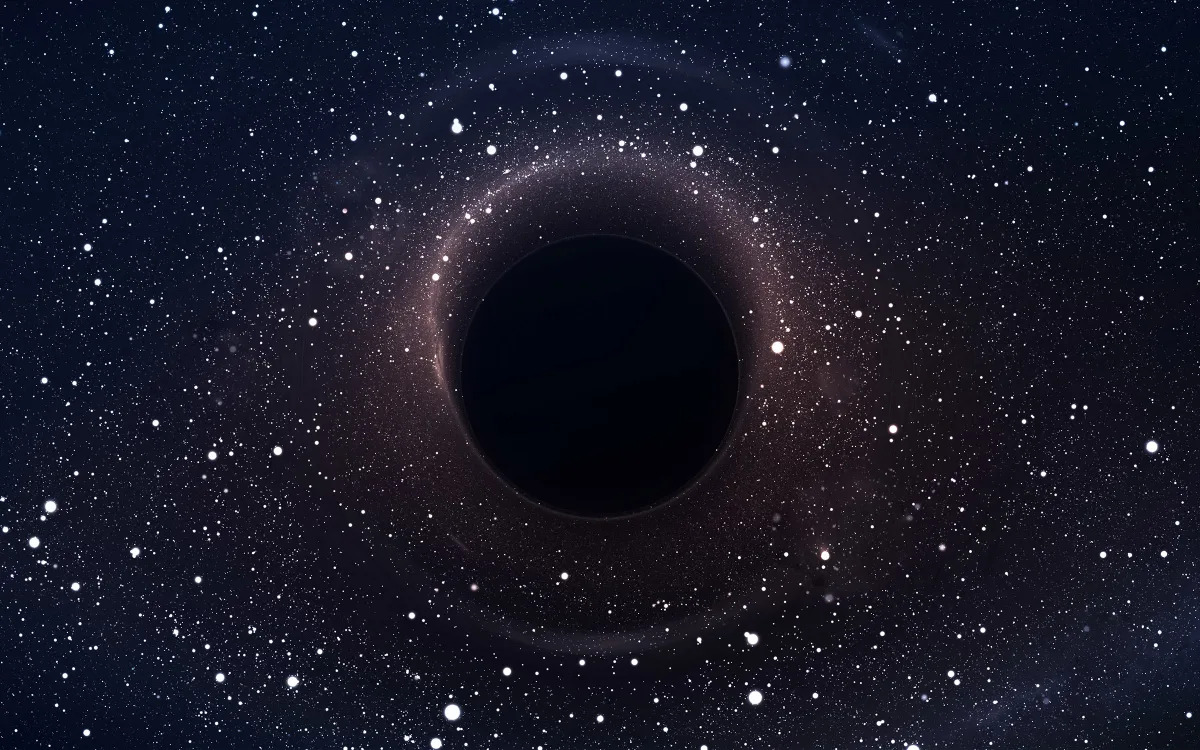
Astrophysicists are on the hunt for dormant stellar mass black holes, which are crucial for understanding stellar evolution, exoplanets, and the potential for life in the cosmos. Detecting these elusive black holes is challenging, but recent discoveries using different techniques have provided promising candidates. The search for dormant black holes continues to be important for verifying stellar evolution models and understanding the composition of future stars and planets.

astronomy2 years ago

Mass Exodus: Massive Stars Abandon Milky Way Galaxy

Dozens of enormous stars are defying the cosmic synchrony of the Milky Way galaxy and hurtling into intergalactic space, according to a study utilizing data from the Gaia spacecraft. The research identified 106 O-type and 69 Be-type runaway stars, with an estimated total of ten million stars fleeing the galaxy. The two prevailing theories for their escape are the dynamical ejection scenario (DES) and the binary supernova scenario (BSS), with the study leaning towards DES. Understanding the mechanisms behind these runaway stars provides insights into star formation, the evolution of stars, and the architecture of the Milky Way.

astronomy2 years ago

Revised Estimate: Milky Way's Mass Half of Previous Beliefs

A new study using data from the Gaia spacecraft has calculated a more accurate mass of the Milky Way, revealing that it is only about half as heavy as previously estimated. By analyzing the rotation curve of the galaxy, the researchers found that the Milky Way has a mass of approximately 200 billion solar masses, significantly lower than the previous estimate of a trillion solar masses. This suggests that the galaxy contains less dark matter than previously thought.

astronomy2 years ago

Revised Estimate: Milky Way's Mass Lower Than Expected

A new study using data from the Gaia spacecraft has calculated a more accurate mass for the Milky Way, revealing that it is smaller than previously estimated. By analyzing the rotation curve of the galaxy, the researchers found that the Milky Way has a mass of about 200 billion solar masses, which is a fifth of previous estimates. This suggests that the galaxy has significantly less dark matter than previously thought.

astronomy2 years ago

Black Holes Lurking in Nearby Star Cluster Pose Closest Threat to Earth

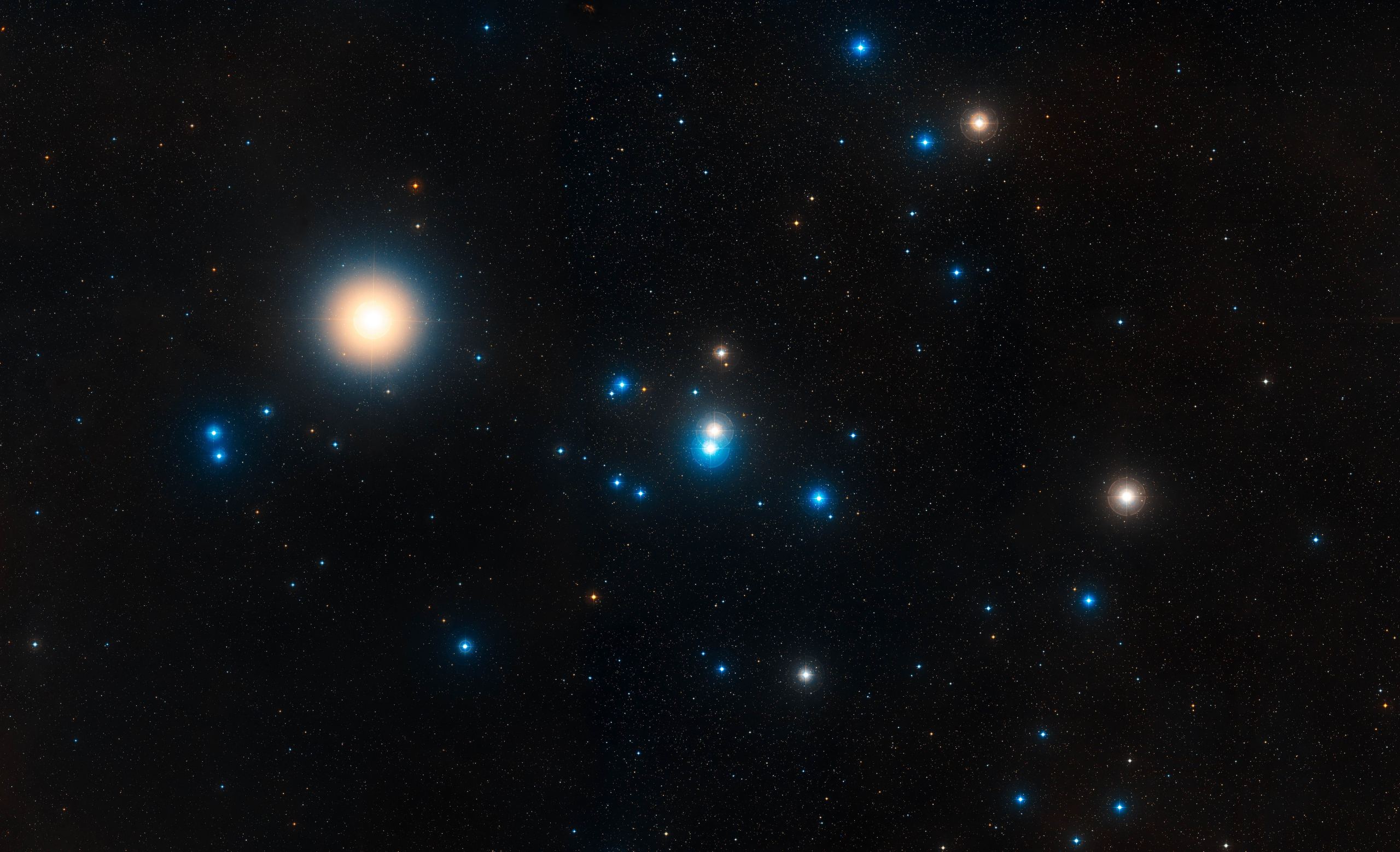
The Hyades star cluster in the constellation Taurus, located 150 light-years away, may be hiding a stellar-mass black hole. Astronomers compared observations of the cluster with N-body simulations and found that the best model predicts the presence of 2 or 3 black holes. However, the results are not conclusive, and further observations are needed to confirm the existence of a black hole in the cluster.

science2 years ago

"Unveiling the Hidden Universe: A Million Images Create Stunning Star Atlas"

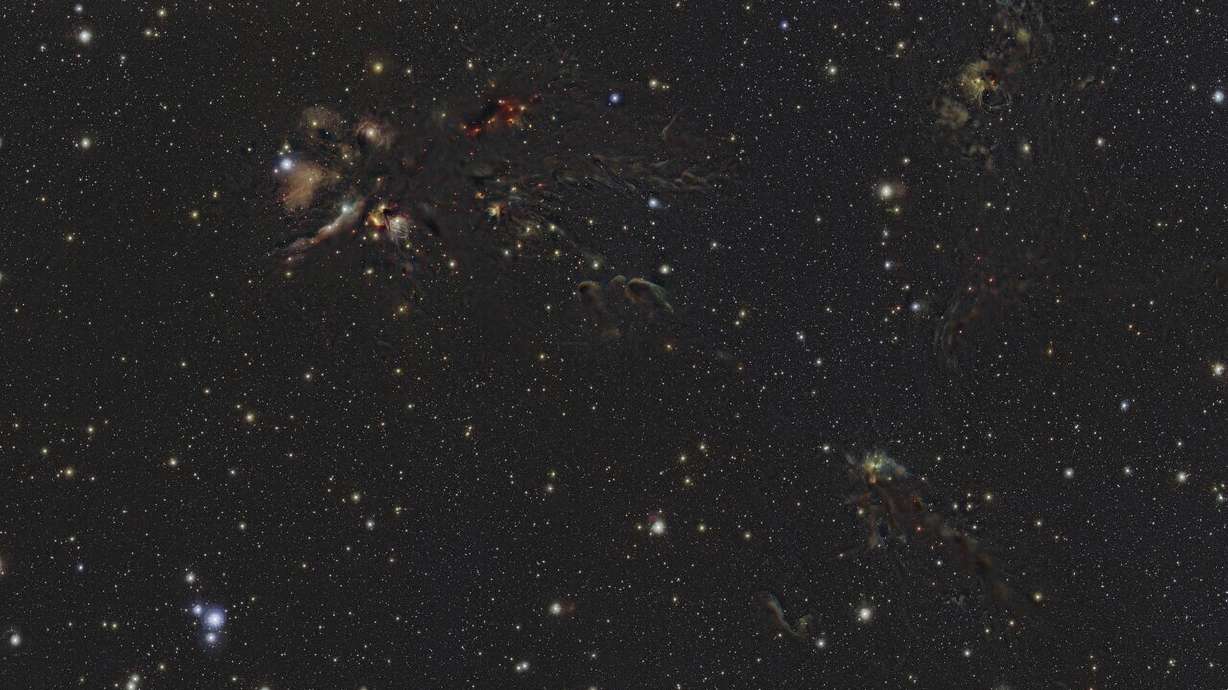
Astronomers have created a stunning mosaic of five vast stellar nurseries less than 1,500 light-years away, revealing objects that no one has ever seen before. To come up with their atlas, scientists pieced together more than 1 million images taken over five years by the European Southern Observatory in Chile. The observations, conducted from 2017 to 2022, will help researchers better understand how stars evolve from dust.

science-and-exploration2 years ago

New exoplanet discovered using precision astrometry.

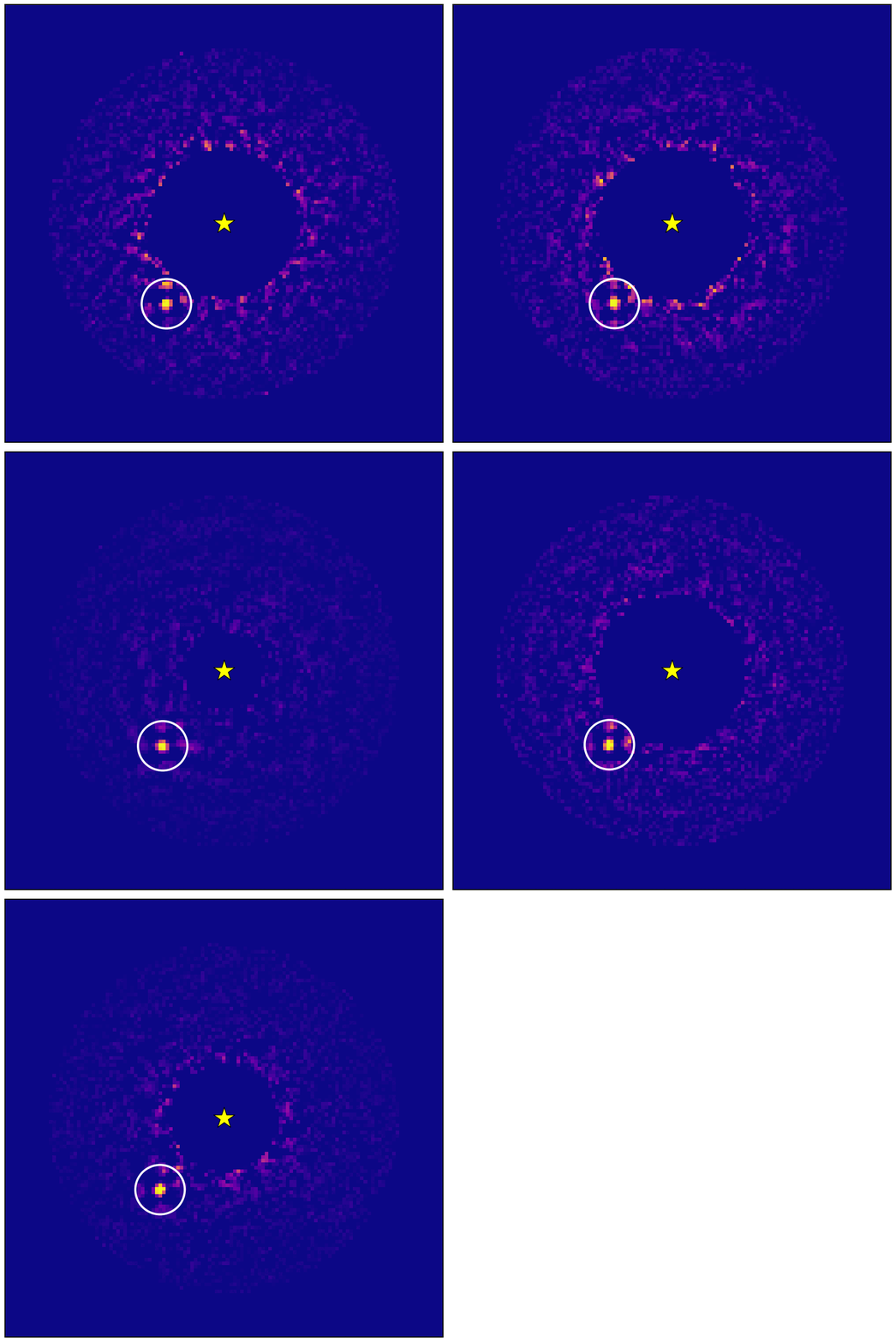
Data from ESA's Gaia spacecraft has allowed astronomers to image a massive exoplanet using Japan's Subaru Telescope, marking the first confirmed exoplanet found by Gaia's ability to sense the gravitational tug or 'wobble' a planet induces on its star. This technique points the way to the future of direct exoplanet imaging, and the success of finding this planet provides a new path forward to discovering more exoplanets and characterizing them in a more holistic way than before.

science2 years ago

The Physics Problem with the 'Cosmic Ladder' Measurement.

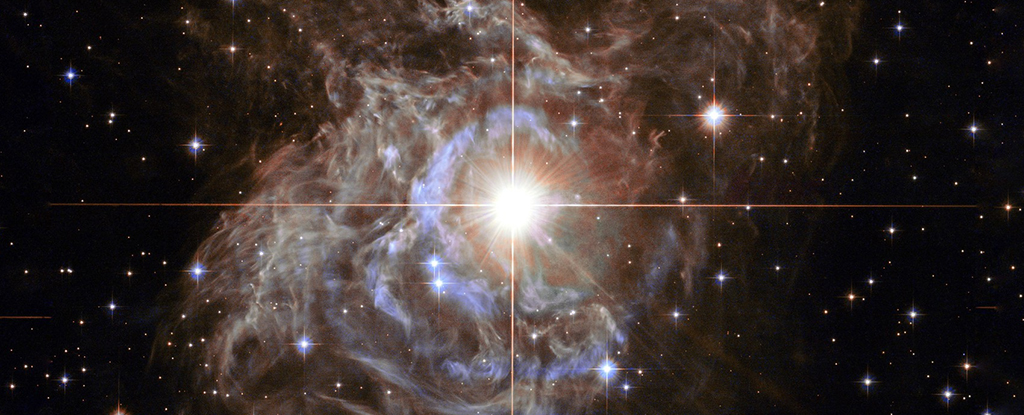
A new study using data from the Gaia spacecraft to recalibrate the brightness of pulsating stars known as Cepheids has confirmed a Hubble constant or expansion rate of 73.0 ± 1.0 km/s/Mpc, bringing it no closer to meeting the alternative measure of 67.4 ± 0.5 km/s/Mpc. This gap (the 'Hubble tension') of 5.6 km/s/Mpc remains a significant problem, indicating that something is wrong with our understanding of the Universe. The new readings were taken through the discovery of new Cepheid clusters and observations from multiple angles, plus cross-referencing with other clusters, which can be used in many other calculations of light and distance in space.

science2 years ago

Unprecedented discovery: Two unique black holes found near Earth

Astronomers have discovered two black holes close to Earth that are much further from their stars than expected, presenting questions about their formation and detection. Unlike regular binary black holes, these "dark" black holes are not eating away at their stars, making them harder to track and discover. The discovery was fueled by data captured by the European Space Agency's Gaia spacecraft, and researchers hope to uncover more "dark" black holes within that data.

astronomy2 years ago

Unprecedented Discovery: Closest and Unique Black Holes Found Near Earth

Astronomers have discovered two black holes, Gaia BH1 and Gaia BH2, that are the closest to Earth known and are orbited by stars at much greater distances than previously observed in other black hole-companion star pairings. These black holes are completely dark and were detected via the gravitational effect they have on their companion stars. The discovery of these two black holes challenges current theories about the evolution of binary star systems and implies that black holes in wide orbits are more common in space than binaries where the black hole and star are closer.