Tag

Formaldehyde

All articles tagged with #formaldehyde

health1 year ago

Top U.S. ZIP Codes at Risk for Formaldehyde-Linked Cancer

A ProPublica analysis reveals that residents in three Knox County zip codes near the University of Tennessee, Whittle Springs, and Lonsdale face a one in 46,000 chance of developing cancer due to formaldehyde exposure. This chemical, prevalent in various industries, poses significant health risks, including respiratory and reproductive issues. While Knox County's cancer risk from formaldehyde is higher than average, it remains within the EPA's acceptable range. The analysis highlights formaldehyde's widespread use and its impact on air quality and public health.

health1 year ago

Study Reveals Top U.S. Cities with Highest Formaldehyde Cancer Risk

A ProPublica analysis reveals that formaldehyde, a chemical linked to cancer and other health issues like asthma and reproductive problems, poses a significant risk in St. Louis, Missouri. The city has 21 of the 23 most at-risk ZIP codes for formaldehyde-related cancer in the state. Despite its widespread use in industries such as furniture making and food sterilization, the American Chemistry Council argues that existing regulations are sufficient to mitigate health risks. However, the report suggests that public health risks from formaldehyde are more severe than commonly understood.

science-and-space1 year ago

"Uncovering Mars' Ancient Life Triggers: The Role of Formaldehyde and Organic Materials"

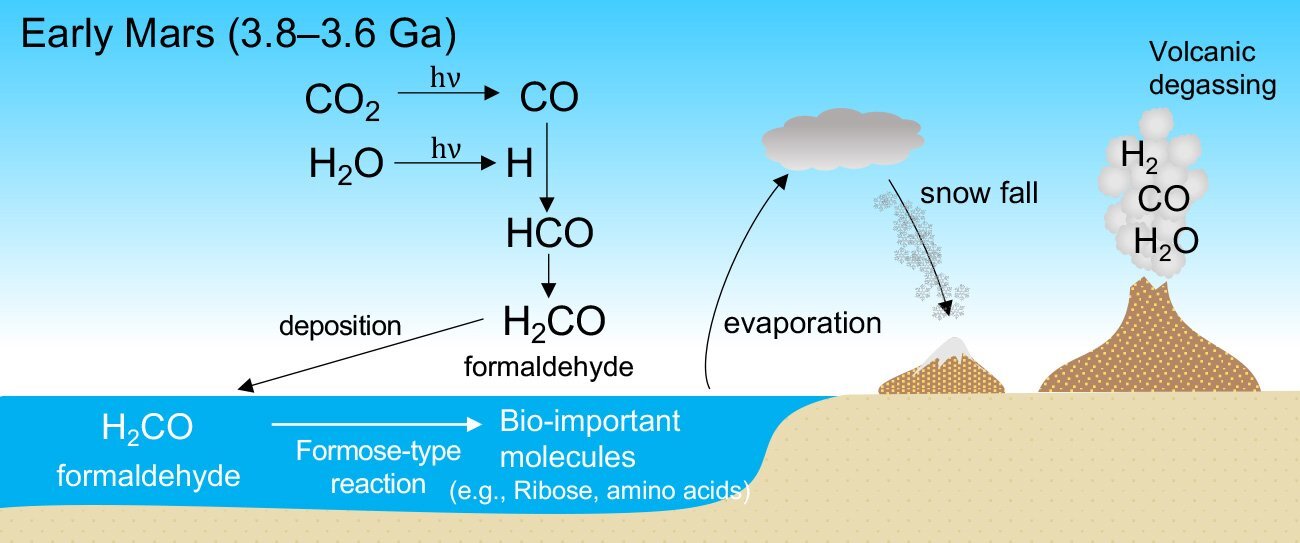
Researchers from Tohoku University propose that organic materials on Mars might have originated from atmospheric formaldehyde, suggesting the planet’s early atmosphere could support the formation of life-essential biomolecules. New findings indicate Mars’ ancient atmosphere, rich in formaldehyde, could have supported the creation of organic materials essential for life, shedding light on the planet’s potential for past habitability. Scientists simulated the potential atmospheric composition of early Mars and found that it could have provided a continuous supply of formaldehyde, potentially leading to the creation of various organic compounds, broadening our understanding of the planet’s ancient capacity to sustain life.

space-science1 year ago

"Formaldehyde's Role in Ancient Martian Life Unveiled"

Scientists have discovered that formaldehyde on Mars may have played a crucial role in the creation of organic material necessary for life, potentially indicating that life once thrived on the planet during its early aqueous period. Research suggests that Mars, with its warm atmosphere and presence of certain gases, could have been conducive to the formation of biomolecules. The study also indicates the possibility of a steady source of crucial sugars on early Mars, particularly during certain historic periods, pointing to the potential existence and flourishing of life on the Red Planet.

space-science1 year ago

"Formaldehyde's Role in Ancient Martian Life Uncovered"

Researchers propose that formaldehyde, which could have formed in the ancient Martian atmosphere, may have played a crucial role in the creation of molecules essential for life in the planet's oceans. This suggests a plausible pathway for life's ingredients on Mars during its wet period, although there is currently no evidence to confirm this. The study provides valuable insights into the chemical processes that may have occurred on ancient Mars, offering clues to the possibility of past life on the planet, and researchers plan to search for isotopic ratios of carbon in surviving organic molecules to determine if this pathway was indeed responsible for the formation of essential molecules.

science1 year ago

"Martian Biomolecules: Tracing Origins to Atmospheric Formaldehyde"

New research suggests that organic materials discovered on Mars may have originated from atmospheric formaldehyde, offering insights into the possibility of past life on the red planet. Scientists from Tohoku University simulated the early Martian atmosphere and found that it could have provided a continuous supply of formaldehyde, potentially leading to the creation of various organic compounds. This study broadens our understanding of Mars' ancient capacity to sustain life and paves the way for further analysis of organic materials present early in the planet's history.

health1 year ago

"FDA Considers Ban on Formaldehyde in Hair Products: Addressing Hidden Health Risks"

The FDA is tentatively scheduled to propose banning formaldehyde in hair straightening products, a move that comes after years of rising concern over the health effects of these products, particularly among Black women. However, advocates and scientists argue that the proposed regulation is too little, too late, as it fails to address the broader array of hazardous chemicals in hair products targeted at African Americans. Studies have linked these products to hormone-driven cancers, prompting calls for further FDA investigation and regulation. While the FDA's response is seen as a step in the right direction, critics argue that it does not go far enough to protect public health.

health-and-beauty2 years ago

FDA Considers Banning Hair Relaxers and Keratin Treatments Due to Cancer Risk

The FDA is proposing a ban on chemical relaxers with formaldehyde, a product popular in the Black community for straightening hair. The ban is supported by some local salon owners and Congresswomen who are concerned about the health risks associated with these products, including the potential for cancer. However, there are differing opinions among stylists, with some supporting the ban and others arguing that relaxers can be used safely with proper care. The FDA will make a decision after public comment, and if the proposal becomes a rule, it will take effect in April 2024.

health2 years ago

"Unveiling the Epigenetic Impact of a Dangerous Environmental Hazard"

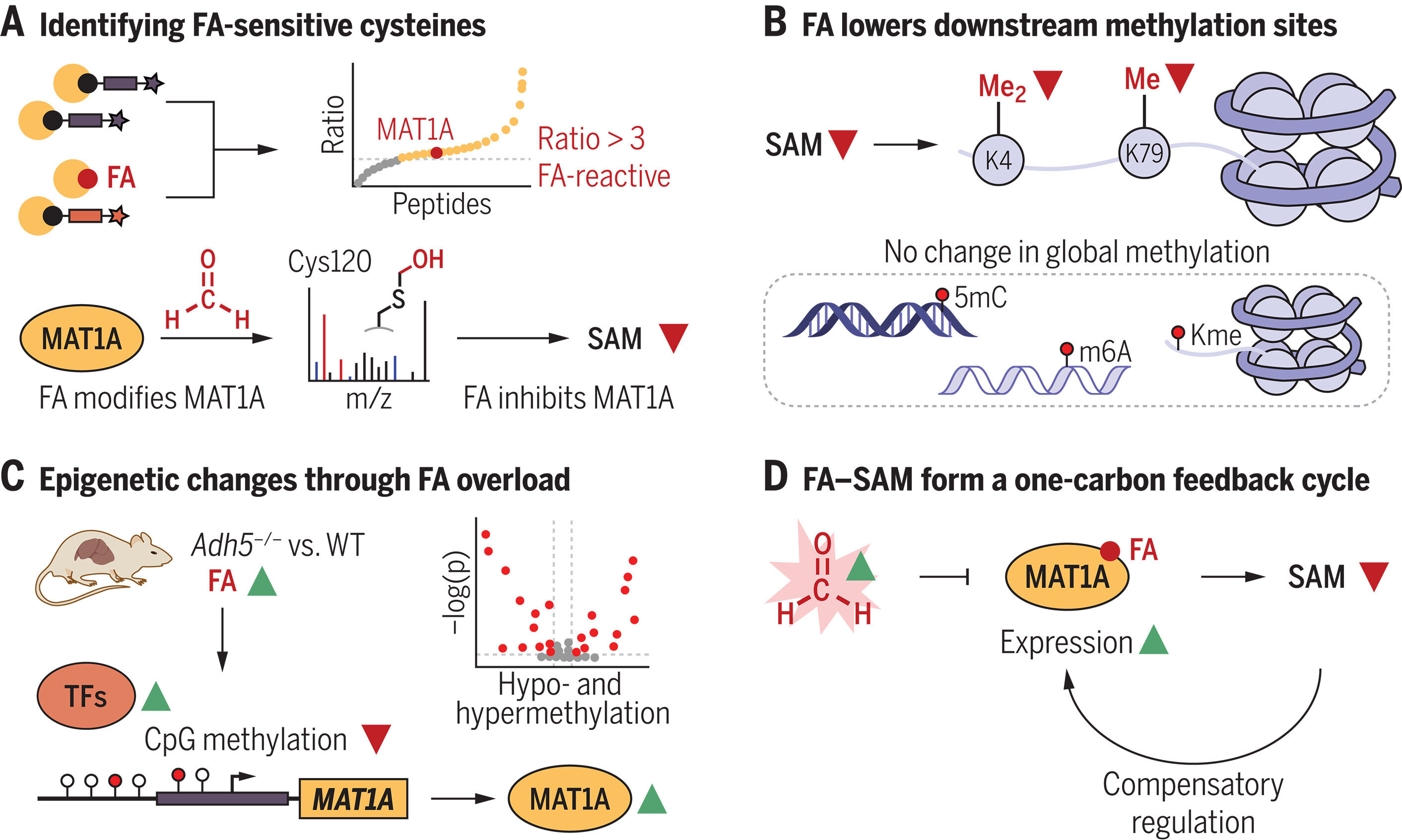
A recent study published in Science reveals that formaldehyde, a common environmental hazard found in household products, polluted air, and construction materials, can modify the epigenetic patterns of cells. The research shows that formaldehyde inhibits the production of S-Adenosyl-L-Methionine (SAM), a molecule that regulates epigenetic activity. This leads to a loss of methylation of histones, which control the function of thousands of genes. The study highlights the carcinogenic properties of formaldehyde and emphasizes the need for policies to reduce exposure to this toxic substance.

health-and-safety2 years ago

F.D.A. to Prohibit Formaldehyde in Hair Straighteners

The Food and Drug Administration (FDA) is planning to ban hair-straightening products that contain or emit formaldehyde, a chemical linked to an increased risk of uterine cancer. Studies have also linked these products to breast and ovarian cancer. The proposed ban would target hair-straightening and hair-smoothing products marketed in the United States and is expected to take effect in April 2024. The products are often marketed to Black women, and the increase in uterine cancer rates has been steepest among women of color. The FDA's expanded oversight authority now requires manufacturers to register their sites and disclose ingredients, but new products will not typically undergo agency review before being marketed. The agency encourages consumers to read labels, avoid products with formaldehyde, and report adverse reactions.

health2 years ago

Unlocking the Fountain of Youth: Decoding the Key to Eternal Youth

Scientists have identified high levels of formaldehyde, a toxic chemical naturally produced by cells, as a potential cause of ageing. Researchers from Cornell, Oxford, Cambridge, and Cancer Research UK are investigating the mechanisms behind formaldehyde production and exploring the development of drugs to lower its levels. A recent study found that formaldehyde damages DNA, leading to accelerated ageing in blood stem cells. The team is also examining if other chemicals contribute to ageing and how to prevent their accumulation. While formaldehyde alone may not be the sole cause of ageing, this research highlights the body's production of measurable chemicals that can lead to significant health problems.

science-and-technology2 years ago

"Revolutionary Catalyst Converts Methane into Valuable Chemicals Using Sunlight"

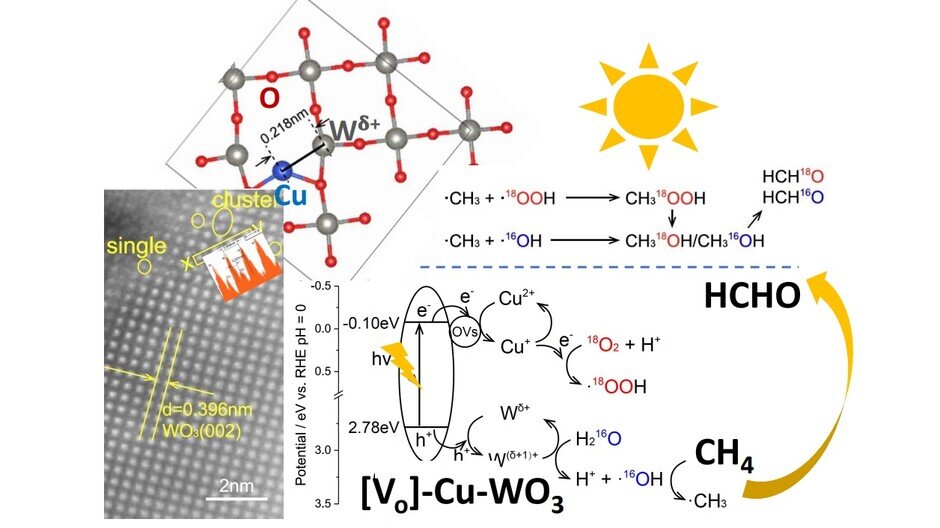
Researchers from the University of Hong Kong and Tsinghua University have developed a tungsten trioxide (WO3) catalyst that can convert methane into formaldehyde with nearly 100% selectivity under visible light. The catalyst features a dual active site comprising copper and tungsten atomic species that work in tandem to ensure an effective and selective conversion process. Formaldehyde is a high-volume commodity chemical with a market value of USD 8 billion, expanding at a compound annual growth rate (CAGR) of 5.7%.

health2 years ago

The Health Risks of 'New Car Smell'

The "new car smell" that many people love could increase the risk of cancer, according to a study by scientists at Harvard University and the Beijing Institute of Technology. The study found that the air in new cars parked outside for 12 days contained chemical levels that exceeded China's national safety standard for air quality in cars. Formaldehyde, a known cancer-causing compound, surpassed standards by 35%, and another dangerous carcinogen, acetaldehyde, was 61% higher than the standard. Spending just 30 minutes daily in a car can expose a person to enough of these carcinogens to put them at risk of exceeding safety standards.

health2 years ago

The Health Risks of New Car Smell

The smell of a brand new car comes at a cost to those who spend enough time in a freshly minted vehicle, as levels of cancer-causing chemicals exceed safe limits inside a new car parked outside for 12 days. Formaldehyde, acetaldehyde, and benzene were detected at levels that exceeded safe limits, with the Incremental Lifetime Cancer Risk (ILCR) from multiple volatile organic compounds detected inside the one new car used in the study being high enough to imply a "high health risk for drivers". Exposure to new-car chemicals can be limited with a few common-sense measures, or alternatively, opt for a second-hand car or use alternative transport.