Tag

Alien Life

All articles tagged with #alien life

science1 year ago

New Research Confirms Venus Never Hosted Oceans or Life

A new study by the University of Cambridge suggests that Venus has never had liquid water, dashing hopes of finding Earth-like life on the planet. Researchers found that Venusian volcanic eruptions contain only six percent water by volume, indicating a dry history. This challenges the idea of Venus being within the sun's habitable zone. However, the possibility of unconventional life forms existing in Venus's acidic clouds remains open. Future missions by NASA and China aim to further explore Venus's atmospheric composition to resolve these questions.

science-and-technology1 year ago

NASA's Miniature Robots Dive into Europa's Oceans for Life Hunt

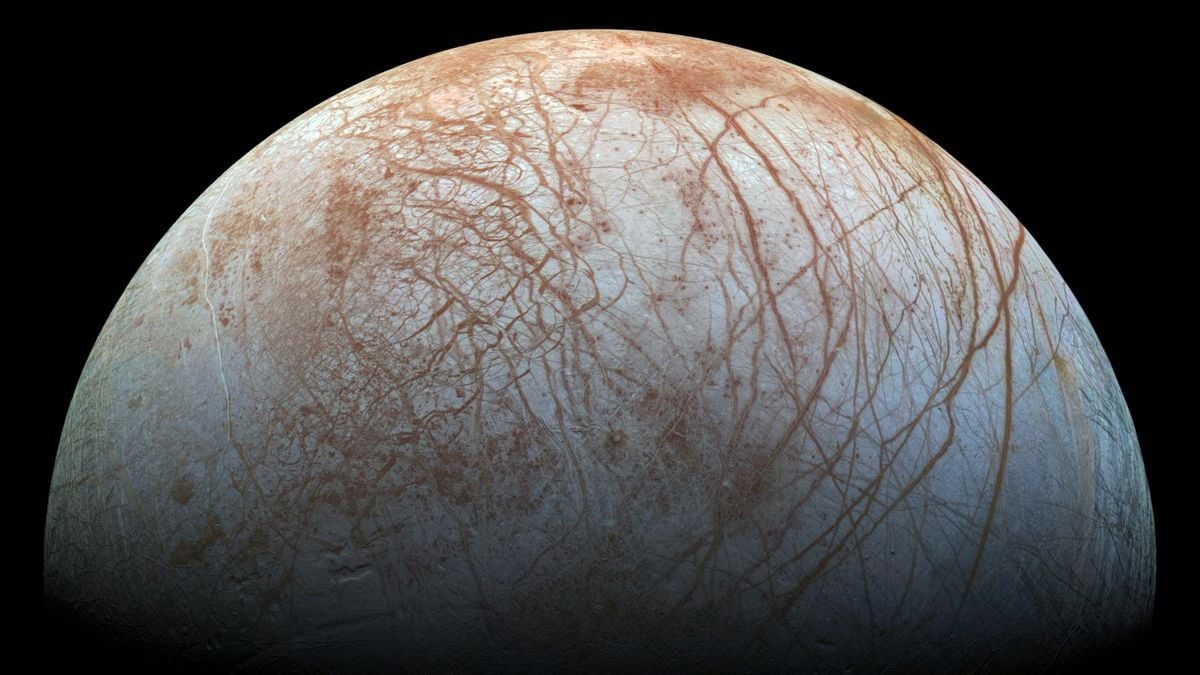
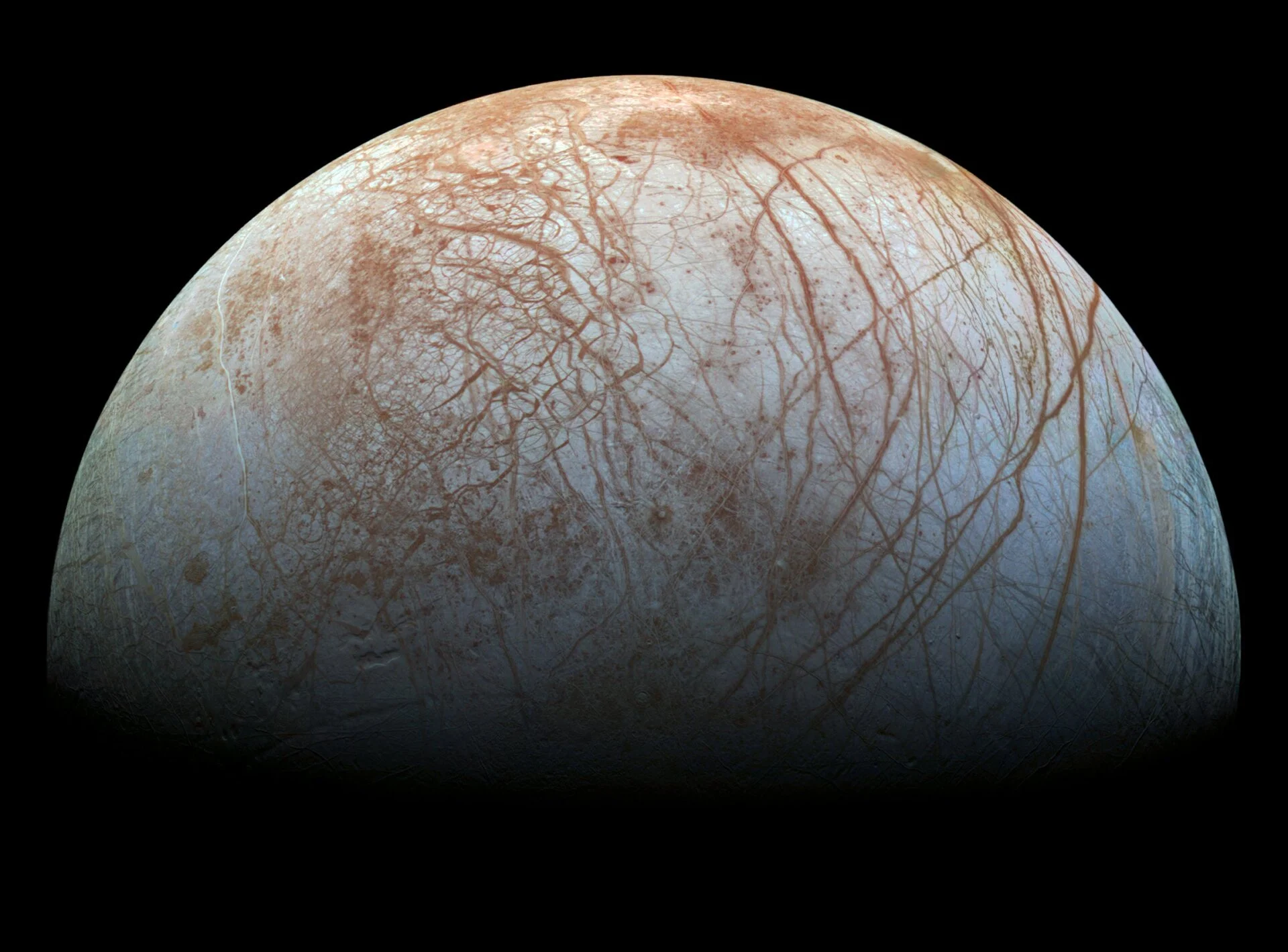
NASA is testing cellphone-sized underwater robots, known as SWIM (Sensing With Independent Microswimmers), for future missions to search for life in the oceans beneath the icy surface of Jupiter's moon Europa. These robots, tested in a swimming pool at Caltech, are designed to autonomously explore and detect chemical and temperature signals that might indicate alien life. The prototypes are equipped with multi-sensor chips and wireless communication systems, and engineers are optimizing their design through simulations. Europa is considered a promising location for finding extraterrestrial life due to its vast subsurface ocean.

science-and-space1 year ago

"New Study Suggests Intelligent Life Rare in the Universe"

A new analysis suggests that intelligent life is likely extremely rare in our galaxy, potentially explaining the Fermi Paradox. The study posits that life either emerges almost always or almost never under Earth-like conditions, and the lack of evidence for advanced civilizations supports the idea that we might be alone. However, the possibility of rare but rapidly spreading intelligent life, termed "grabby aliens," remains.

science-and-technology1 year ago

"Revolutionary Tech and AI Boost Search for Alien Life"

Breakthrough Listen, the largest scientific program dedicated to finding alien civilizations, is set to revolutionize the search for extraterrestrial life with new technologies like the Square Kilometre Array and the Vera Rubin Observatory. These advancements, combined with AI, will allow scientists to detect unintentional transmissions from alien civilizations, such as radar or TV signals, marking a significant shift from previous methods that focused on deliberate signals. The new tools and techniques are expected to provide unprecedented sensitivity and data, potentially leading to the first evidence of intelligent life beyond Earth.

science1 year ago

New Insights Suggest We Might Be Alone in the Galaxy

A new study using the Drake Equation suggests that intelligent, communicative alien civilizations (ACCs) may be extremely rare due to the necessity of specific conditions like plate tectonics and sufficient oxygen. The researchers estimate the number of such civilizations in our galaxy to be between less than 0.0004 and less than 20,000, emphasizing the lower end due to potential extinction events and societal collapses. Despite this, the possibility of primitive life remains high, and future discoveries of Earth-like planets could alter these estimates.

science1 year ago

"Purple Aliens: Rethinking Extraterrestrial Life"

Astronomers are expanding the search for alien life to include purple bacteria, which may have dominated Earth early in its history and could thrive on distant planets orbiting dim red stars. These microbes use a purple-pigmented molecule called retinal for photosynthesis, and their unique chemical makeup could be detectable by upcoming telescopes. The current search for alien life is biased towards green pigments, but this study aims to create a database for signs of life that includes organisms of different colors, providing astronomers with a new data set to inform next-generation telescopes.

science1 year ago

"Imagining Extraterrestrial Worlds: Pink Planets and Alien Dinosaurs"

Lisa Kaltenegger, director of the Carl Sagan Institute at Cornell University, discusses her new book "Alien Earths: The New Science of Planet Hunting in the Cosmos," which chronicles her insights and adventures in the search for signs of extraterrestrial life. She emphasizes the excitement and inspiration surrounding the hunt for alien life, especially with the James Webb Space Telescope's ability to observe potentially Earth-like planets.

space-science1 year ago

"Prospects for Detecting Life on Jupiter's Moon Europa"

NASA's Europa Clipper spacecraft, set to launch in October 2024, may have the capability to detect alien life on Jupiter's moon Europa. The spacecraft's instruments are designed to detect the key ingredients for life, such as energy, liquid water, and the right chemicals, and could provide evidence of Europa's potential to support life. The Suda instrument, part of the Europa Clipper, has shown promise in detecting organic compounds, raising the possibility of detecting alien life on Europa. If successful, this would be a landmark scientific discovery and could provide insights into the origins of life on Earth.

space1 year ago

"Detecting Alien Life with a Single Ice Grain: NASA's Europa Mission"

A new experiment suggests that NASA's Europa Clipper spacecraft may only need to capture a single grain of ice from Jupiter's moon Europa to detect evidence of alien life. The spacecraft, scheduled to launch in 2024, is equipped with the Surface Dust Analyzer (SUDA) to study particles of Europa's surface ice and dust, and a recent study simulated the potential detection of life using this instrument. The findings indicate that even a tiny fraction of cellular material could be identified by a mass spectrometer on board the spacecraft, providing more confidence in the potential to detect lifeforms similar to those on Earth in Europa's ocean.

space-science1 year ago

"NASA's Mission: Detecting Alien Life with a Single Ice Grain"

Lab experiments show that spacecraft instruments can detect signs of alien life in ice grains spewed by moons like Enceladus and Europa. By flying through ice plumes and analyzing the particles, scientists can identify bacterial cells and organic molecules that may indicate the presence of life-friendly molecules in subsurface oceans. Instruments on upcoming missions like Europa Clipper could potentially detect traces of life in icy moons, making it easier than previously thought to find signs of life in our solar system.

space-exploration1 year ago

"Europa's Oxygen Production: Potential for Supporting 1M Humans"

New findings from the Juno mission to Jupiter's moon Europa reveal that the moon's icy surface produces less oxygen than previously thought, potentially dashing hopes for finding microbial life there. Despite evidence of an ocean below the surface and the presence of essential chemical elements, the rate of oxygen loss from the moon's atmosphere may limit its habitability. Other potential candidates for alien life in our solar system include Mars, Saturn's moon Enceladus, and Titan. Future missions, such as NASA's Europa Clipper and the Juice mission, are expected to provide more information on Europa's habitability.

astronomyspace-science1 year ago

"Trapped Intelligent Civilizations: A Cosmic Conundrum"

A new article in the Journal of the British Interplanetary Society introduces the concept of the Exoplanet Escape Factor and Fishbowl Worlds, which explore the ability of civilizations on other planets to explore their solar systems. The research suggests that civilizations on high-mass planets may be physically unable to escape their worlds, leading to the idea of inescapable "Fishbowl Worlds" where space travel is impractical. This raises questions about whether entire civilizations could rise and fall without ever knowing the Universe beyond their planet.