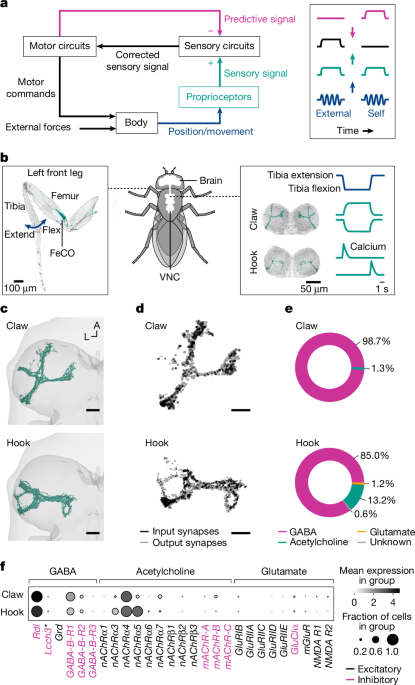
This study investigates how selective presynaptic inhibition modulates leg proprioception in behaving Drosophila, utilizing calcium imaging, connectomics, and computational modeling to understand neural mechanisms underlying sensorimotor control.
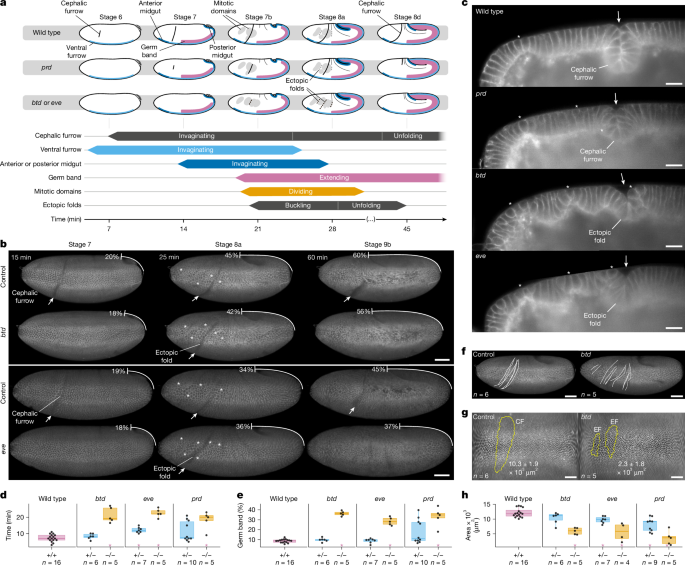
The study reveals that the cephalic furrow (CF) in fly gastrulation is an evolutionary innovation in Cyclorrhapha that functions as a mechanical sink to prevent tissue collision and buckling during head and trunk expansion. In non-cyclorrhaphan flies, alternative strategies like out-of-plane cell division mitigate mechanical stress, highlighting divergent evolutionary adaptations to ensure robust morphogenesis. Loss of CF leads to tissue buckling and developmental defects, emphasizing its mechanical and developmental importance.
The study reveals that the patterned invagination of the cephalic furrow in Drosophila prevents mechanical instability during gastrulation by absorbing compressive stresses caused by mitotic domains and germ band extension, with its formation regulated by specific gene expression patterns, and suggests that mechanical challenges have driven the evolution of this morphogenetic feature in dipteran flies.
A study by the University of Bonn and LMU Munich reveals that gene enhancers, previously thought to be modular and isolated, can share extensive DNA regions, influencing multiple gene switches. This discovery, particularly in the regulation of the yellow gene in Drosophila, suggests a more complex genomic architecture than previously understood, with significant implications for evolutionary biology. The findings indicate that mutations in enhancers could have broader effects, potentially facilitating evolutionary changes by altering gene activity in specific tissues without affecting the gene itself.
New research demonstrates the anti-aging effects of vitamin D and its receptor in Drosophila, shedding light on their role in stem cell health and longevity. The study reveals that vitamin D treatment reduces age- and oxidative stress-induced increases in stem cell proliferation and centrosome amplification, providing direct evidence of the anti-aging role of the vitamin D/vitamin D receptor pathway. This research offers valuable insights into the molecular mechanisms underlying healthy aging in Drosophila and suggests potential benefits for human health.
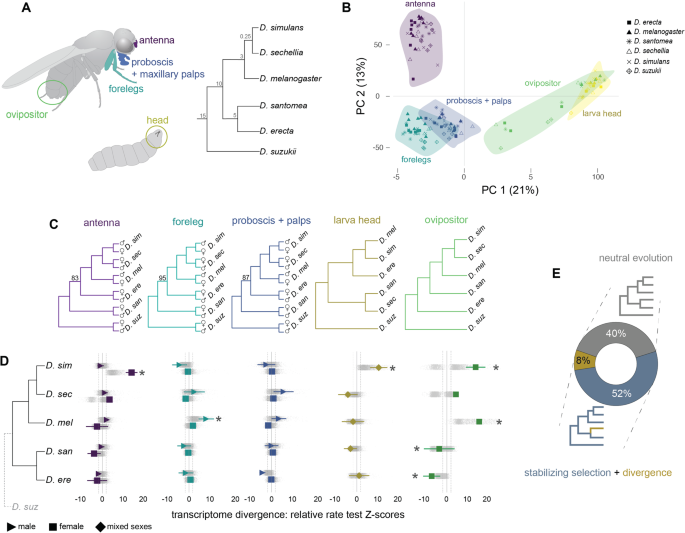
A study on six ecologically diverse species of Drosophila explores the evolution of chemosensory tissues and cells. The research reveals that while most genes have changed in expression across multiple tissues, these changes occurred at different times in the past, suggesting independent evolutionary changes in gene regulation and cellular abundances. The study also highlights the low rates of divergence in sensory transcriptomes, with a few exceptions, and the cell-type specificity of gene expression changes across species. These findings provide valuable insights into the molecular basis of chemosensory evolution and its implications for understanding how nervous systems adapt to varying ecologies.
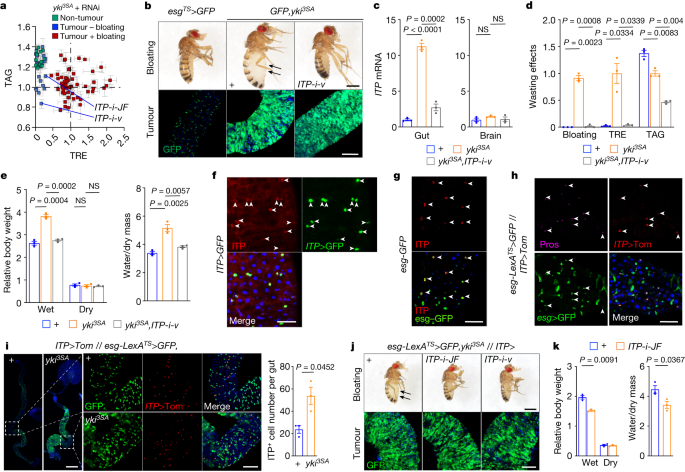
Researchers have discovered a novel antidiuretic hormone that regulates tumor-induced renal dysfunction. Using Drosophila as a model, the study found that tumors release a hormone called Ion Transport Peptide (ITP), which inhibits fluid secretion in the Malpighian tubules, leading to impaired kidney function. The researchers also identified the receptor for ITP and demonstrated its role in regulating water homeostasis. This study provides insights into the mechanisms underlying tumor-induced renal dysfunction and may lead to the development of new therapeutic strategies.
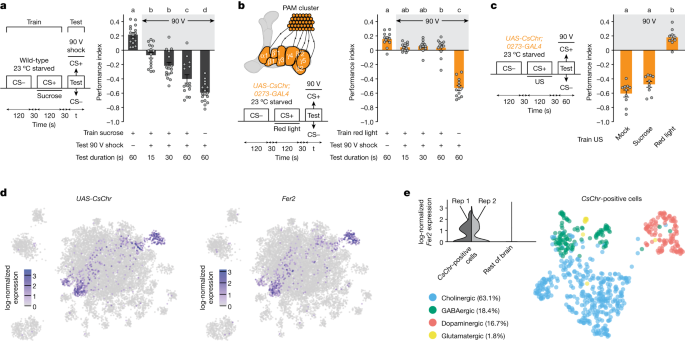
Researchers have discovered that specific dopaminergic neurons in the brains of fruit flies play a crucial role in driving reward-seeking behavior, even in the face of adverse consequences. The study found that activation of these neurons, known as β′2 and γ4 DANs, led the flies to persistently seek rewards, such as sucrose, despite being subjected to electric shocks. The findings shed light on the neural mechanisms underlying reward-seeking behavior and could have implications for understanding substance use disorders in humans.
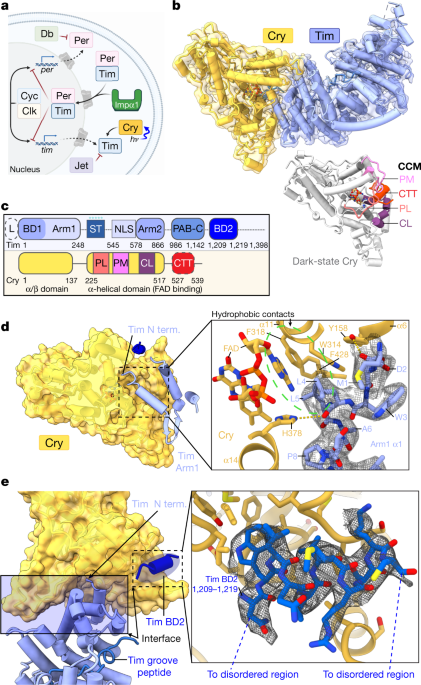
Researchers have revealed the structure of cryptochrome-timeless, a protein complex that plays a key role in the circadian clock. The study sheds light on the mechanisms behind the timing of the body's internal clock and could lead to new treatments for sleep disorders. The researchers used a combination of X-ray crystallography and cryo-electron microscopy to determine the structure of the complex, which is found in both humans and fruit flies.
The Kynurenine pathway, responsible for eye pigment formation, also plays a crucial role in maintaining retinal health under stress conditions, according to a study by researchers from the Max Planck Institute of Molecular Cell Biology and Genetics. The study used Drosophila melanogaster as a model system to unravel the role of individual metabolites in retinal health and found that the balance between toxic and protective metabolites, such as 3-hydroxykynurenine and Kynurenic Acid, respectively, influences the degree of retinal degeneration. The researchers suggest that therapeutic strategies for neurodegenerative conditions should take into account the ratio and location of Kynurenine pathway metabolites.