Aalto University researchers analyzed 300 rural dam-relocation projects across 35 countries from 1975–2010 and found rural populations are undercounted by 53%–84% in several global datasets, suggesting that Earth's population may be higher than the commonly cited ~8.2 billion; the finding could affect how countries allocate resources, though some experts remain skeptical and say decades of population data would need overhaul, and more evidence is required.
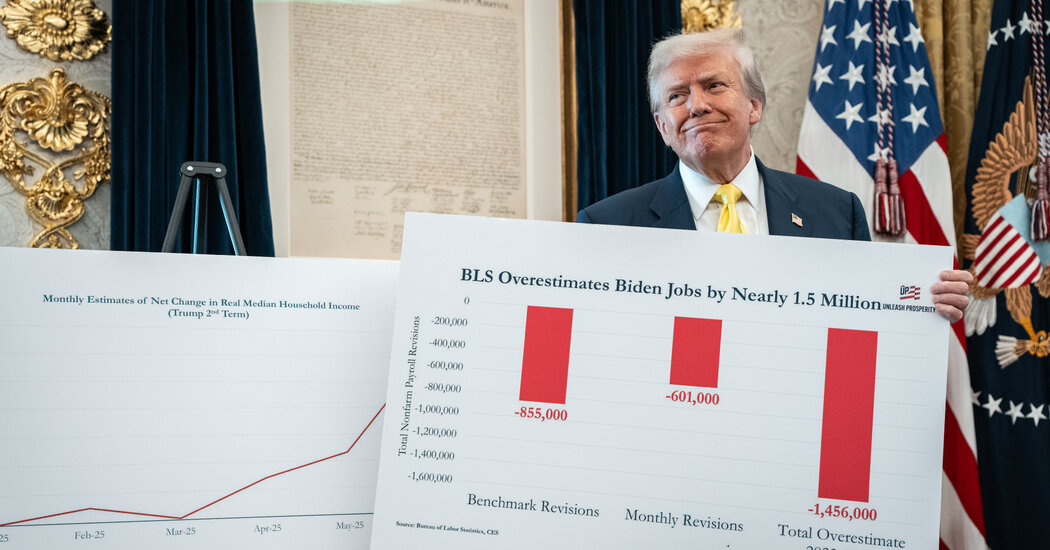
President Trump promoted favorable economic data from a Heritage Foundation economist after firing the head of the Bureau of Labor Statistics, claiming the official job reports were rigged and presenting alternative charts showing economic improvement during his term.
A Texas House redistricting committee chair admits he hasn't reviewed recent census data amid partisan efforts to redraw districts, raising concerns about racial gerrymandering and the impact on minority voters, with opposition from Democrats and community leaders.
U.S. population growth is primarily driven by immigration, which offsets the aging of the baby boomer generation, leading to a rising median age and more older adults than children in many areas, especially in sparsely populated regions, according to recent census data.
A Business Insider analysis of 2022 US Census Bureau data reveals the income thresholds required to be considered upper class in each state. Washington, DC, has the highest cutoff at $202,000, while Mississippi has the lowest at $105,400. The percentage of residents considered upper class varies significantly, with over 21% in DC and just 14.4% in Alaska. The analysis highlights disparities in income distribution and the varying financial realities across states.
Florida is home to four of the five fastest-growing metropolitan areas in the U.S., with The Villages leading the list at 4.7% population growth, followed by Lakeland-Winter Haven at 3.8%, Ocala at 3.4%, and Port St. Lucie at 3.1%. The only non-Florida area in the top five is Myrtle Beach, S.C., at 3.7%. The U.S. Census Bureau attributes this trend to continued growth in the southern region.
Census Bureau data shows that Oklahoma and Montana have the highest rates of long COVID symptoms, with about 34% of adults reporting symptoms lasting longer than three months. Mississippi, Louisiana, and Alabama, which have low rates of booster vaccines, also have a significant number of adults reporting long COVID symptoms. Experts emphasize the importance of booster shots in reducing the severity of illness and the risk for long COVID, as well as identifying distinctive symptoms of long COVID such as fatigue, brain fog, and heart palpitations.
Census Bureau's Household Pulse Survey reveals that the average American household spends over $1,000 per month on groceries, with families with kids spending 41% more than those without. California and Nevada top the list for most expensive places to buy groceries, while Midwest states like Iowa and Nebraska have lower-than-average grocery bills. Miami and three California cities are among the top 10 most expensive cities for groceries. The data, collected from the U.S. Census Household Pulse Survey, reflects the impact of inflation, supply-chain disruptions, and increased demand on food prices.
Red states in the U.S. are experiencing population growth in 2023, as Americans are leaving blue states, according to new census data. Texas had the largest numeric population growth, followed by Florida. Other states in the top 10 for population growth include North Carolina, Georgia, South Carolina, Tennessee, Arizona, Virginia, Colorado, and Utah. California saw the highest population decrease, while Puerto Rico continued to experience a decline in population.
The percentage of US households with someone working remotely has dropped to a pandemic-era low of 26%, down from a peak of 37% in early 2021, according to Census Bureau data. This decline reflects the efforts of employers to bring employees back to the office, as remote work has been blamed for reduced profits and economic costs. The drop in remote work rates varies across states and is influenced by factors such as migration, socio-economic conditions, gender, race, and even politics. While some states have seen a significant decline in remote work rates due to their reliance on in-person industries, others have experienced a decrease despite initially embracing remote work. The demand for remote jobs exceeds the number of companies offering them, with job applications for remote or hybrid roles outpacing job postings. However, some areas are capitalizing on the scarcity of remote work opportunities by offering incentives to attract remote workers. Despite the decline in remote work, major cities like Washington, DC, Seattle, Boston, and San Francisco still have high remote work rates, while average office attendance in ten major US cities remains at around 50% of pre-pandemic levels.
The Indigenous population in Brazil has nearly doubled since 2010, reaching 1.7 million people, according to the country's national statistics institute. This increase is attributed to a greater willingness among people to recognize their Indigenous roots and improved survey methods that have allowed access to previously unreachable villages. The growth is particularly significant within Indigenous territories, which saw a 20% increase. The announcement was made by Minister of Indigenous People Sonia Guajajara during the Amazon Summit, where representatives from eight countries discussed challenges facing the region. Indigenous groups, riverine communities, fishermen, and Afro-descendants participated in discussions on issues such as deforestation, illegal mining, and canceling new oil projects. The summit provided a platform for dialogue between civil society and the government after years of silencing under the previous administration.
Minnesota's population is aging, with the typical Minnesotan being 38.4 years old in 2020 and 16.6% of residents being seniors. The number of centenarians in the state has increased by over 25% since 2010. Urban populations are typically younger than rural areas, with the Twin Cities metro having a median age of 37.5. The state's aging population will create challenges for the workforce and social services funded by fewer people.
Houston is the second fastest-growing major metro in the US, adding 125,000 residents to its population between July 2021 and July 2022, according to census data. The increase signals a recovery from the pandemic-induced growth slowdown, with two-thirds of the gains resulting from new residents moving to the area. Houston's steady influx of foreign-born residents remains crucial for the region's growth, with international migration contributing to more than one-third of the overall population rise. The strong population upswing could help explain Houston’s surge in jobs, housing demand, and traffic.
Census data released on Thursday shows that San Francisco and the Bay Area continue to shrink from their pre-Covid populations, with the nine-county region losing a quarter million residents between 2020 and 2022, or a 3.2% decline. San Francisco leads all large U.S. counties in terms of its rate of population decline during the pandemic, with a 7.5% loss of population. Immigration is an important driver of San Francisco's population levels, and domestic outmigration dropped dramatically during 2021-2022.
Cook County, Illinois, lost 68,000 residents between July 2021 and July 2022, the second-greatest decline among all US counties during that period, according to the US Census Bureau. The county retained its status as the second-most populous after Los Angeles County, but the 1.3% decline in population was a sharper blow than the 0.9% drop in Los Angeles. The decline is not as sharp as last year's, thanks largely to international migration, which offset an estimated 94,000 residents lost via domestic migration.