
demographics14.335 min read
U.S. Population Growth Slows as Net Migration Dives
1 month ago•Source: Census.gov

The latest demographics stories, summarized by AI
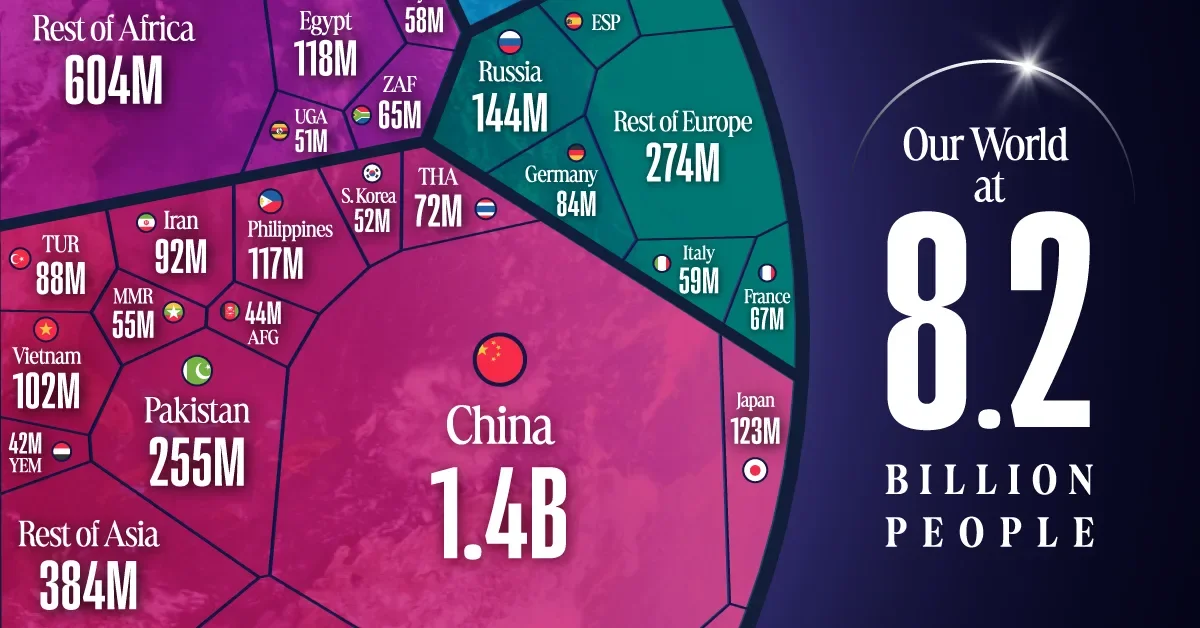
Global population surpassed 8.2 billion in 2025, with India contributing roughly a quarter of that growth and nearing 1.46–1.5 billion while China declines; the United States is around 347 million, and Nigeria is projected to overtake the U.S. by 2050. The Visual Capitalist graphic visualizes 204 countries’ populations using UN data, highlighting aging trends in Europe (Italy and Greece shrinking) and broader demographic shifts.
Birth rates in wealthy nations have halved, reaching a record low, raising concerns about demographic and economic impacts.

Japan's birth rate hit a record low for the eighth consecutive year in 2023, with only 727,277 babies born, a 5.6% drop from the previous year. The number of marriages also fell by 6%, contributing to the declining birth rate. The government is implementing financial support measures to encourage childrearing, but experts argue that these efforts may not be enough to reverse the trend, citing economic instability, traditional gender roles, and a reluctance among young people to marry or have children. Japan's population is projected to fall by 30% by 2070.

Nagasaki, Japan, has been identified as the fastest-declining metro area in the world, with a population decrease of 3.43% from 2020 to 2024. This decline is attributed to factors such as industrial decline, low fertility rates, and an aging population. The global population trends indicate that while some regions are experiencing growth, others, particularly in Asia and Europe, are seeing declines due to various socio-economic factors.
Japan's native population is declining at a record rate as births plunge, exacerbating the country's demographic crisis. The number of births in 2021 fell to the lowest level since records began in 1899, while deaths reached a postwar high, leading to a natural population decline of almost 900,000. This trend highlights the challenges posed by Japan's rapidly aging population and low birth rate, which have significant implications for the country's economy and social welfare system.

Japan's population has fallen for the 13th consecutive year, dropping to 124.35 million, with the number of Japanese nationals decreasing by 837,000, the largest drop since 1950. Single-person households are projected to make up 44.3% of all households by 2050, with nearly half of them comprising individuals aged 65 or older. The average household size is expected to decrease, and the number of elderly people living alone is set to increase, necessitating enhanced support for the elderly. Additionally, the population of those aged 75 or above has surpassed 20 million for the first time, while the number of young people has hit a record low. However, the foreign national population has risen, with only Tokyo experiencing a population increase for the second consecutive year.

A new report from the U.S. Census Bureau reveals that more than half of the foreign-born population in the United States resides in California, Texas, Florida, and New York, with half of them hailing from Latin America. The foreign-born population has grown older and more educated over the past twelve years, with most states experiencing double-digit percentage increases. The report comes amid heightened focus on immigration as a key issue in the 2024 presidential race, with the Biden administration facing challenges in managing an influx of migrants at the Southwest border.

A study by the Institute For Health Metrics and Evaluation predicts a global shift towards declining populations by 2050, with three-quarters of all countries expected to experience a decrease. By 2100, 97 percent of countries and territories analyzed will see their populations shrink, posing challenges and opportunities for societies worldwide. The study highlights a major demographic shift, with developing nations experiencing baby booms while more affluent countries face declining birth rates, necessitating new policies to adapt to these changes.

Texas leads the U.S. in population growth, with six out of the 10 fastest-growing counties and eight out of the top 10 counties adding the most residents. The state's major counties, including Harris, Collin, and Montgomery, saw significant population increases, contributing to Texas' overall growth of nearly half a million people in 2023. Additionally, Texas' four most populous metro areas experienced substantial population increases, with the greater Dallas area leading the pack. The Midland metro area, driven by job growth in the energy sector, also saw rapid population growth, reflecting the overall trend of faster growth in the southern U.S.

South Korea's fertility rate, already the world's lowest, dropped to a record low of 0.72 in 2023, with concerns about career advancement and the financial cost of raising children leading women to delay childbirth or opt not to have babies. The country's population decline poses a significant risk to economic growth and the social welfare system, with efforts to reverse the trend, such as increased public housing and easier loans, being a focus in upcoming elections. South Korea's demographic crisis mirrors similar challenges in neighboring Japan and China, where fertility rates have also hit record lows, prompting unprecedented steps to address the declining birthrate.

Japan's birthrate has fallen for the eighth consecutive year, reaching a record low in 2023, with the number of births dropping by 5.1% and marriages falling below 500,000 for the first time in 90 years. The government is considering unprecedented measures to address the declining birthrate, such as expanding childcare and promoting wage hikes for younger workers, as Prime Minister Fumio Kishida has called the situation the "gravest crisis" the country faces. Japan's population is projected to decline by about 30% to 87 million by 2070, with a significant portion of the population being aged 65 or older.