Tag

Demographics

All articles tagged with #demographics

Echo-boomer Wave Lifts South Korea’s Births for a Second Year
world2 days ago

Echo-boomer Wave Lifts South Korea’s Births for a Second Year

South Korea recorded 254,500 births in 2025, the largest annual rise in 15 years, pushing the fertility rate to 0.80 as the echo-boomer cohort (born 1991–1995) reaches peak childbearing age and marriage rates rebound post-Covid; however, the population still shrinks because deaths exceed births, and long-standing barriers like housing costs and childcare persist despite pro-natal policies. Figures are finalized in August.

South Korea Births Jump 6.8%, Lifting Fertility to 0.80
society2 days ago

South Korea Births Jump 6.8%, Lifting Fertility to 0.80

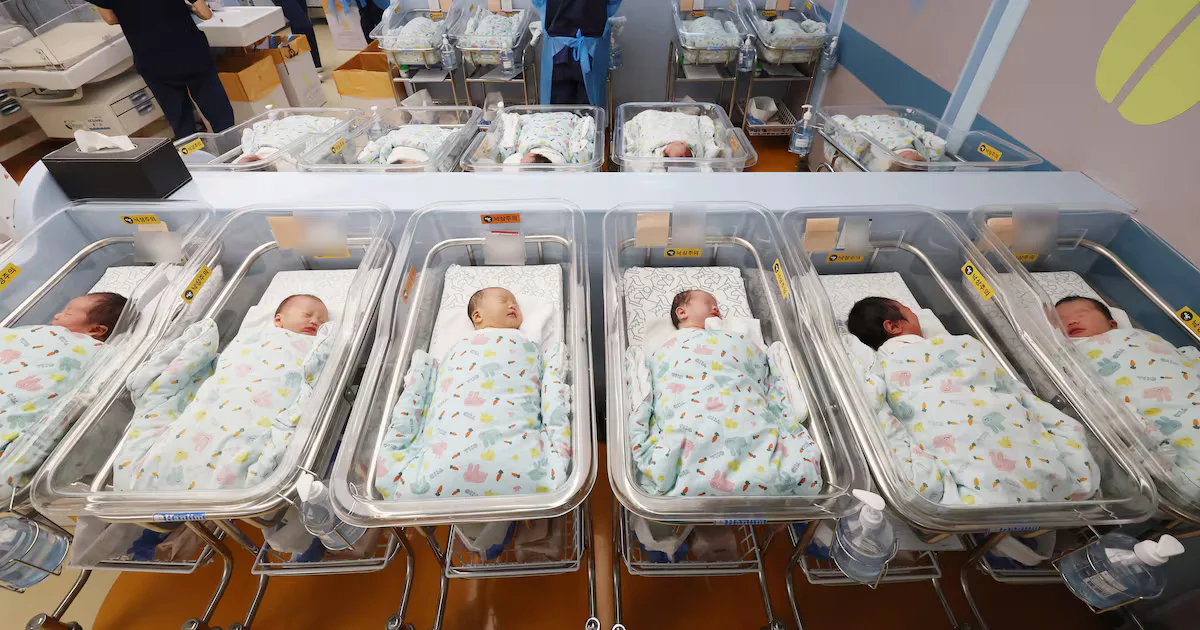
South Korea’s births rose 6.8% in 2025 to 254,500—the largest yearly increase in 18 years—lifting the total fertility rate to 0.80. The rebound, helped by the early- to mid-1990s cohort entering peak childbearing age (the so-called second echo-boom) and continued government incentives for marriage and childbirth, follows two years of gains and comes as firstborns rose 8.6% and the average maternal age reached 33.8. While the trend signals a demographic upswing, the fertility rate remains the OECD’s lowest.

Surge in Premature Heart Attacks in Americans Under 55
health2 days ago

Surge in Premature Heart Attacks in Americans Under 55

A study reported by The Wall Street Journal finds deaths from severe first heart attacks among adults aged 18–54 rose 57% from 2011 to 2022. About 60% of patients had high blood pressure, over half had high cholesterol or smoked, and roughly a third had diabetes; many were low income, suggesting limited access to preventive care. Notably, young women died at higher rates than men.

War drains birthrates in Ukraine and Russia, signaling long-term economic strain
world4 days ago

War drains birthrates in Ukraine and Russia, signaling long-term economic strain

Four years of Russia's invasion have driven Ukraine’s fertility rate to about 1.00 births per woman in 2025, with some estimates as low as 0.8–0.9. Russia’s fertility rate has fallen to around 1.37 in 2025 despite incentives to boost births, and the combined demographic squeeze—due to war, displacement and insecurity—could depress future labor supply and growth for both countries, even after peace, with migration likely to continue.

Births Amid Bombs: Ukrainians Choose Hope in Wartime
world5 days ago

Births Amid Bombs: Ukrainians Choose Hope in Wartime

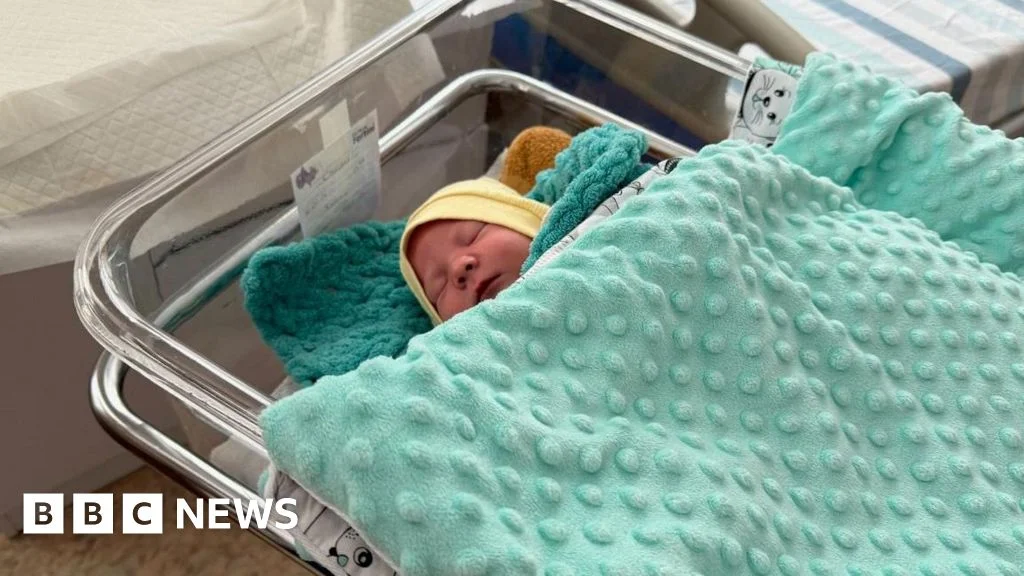
Four years into the war, Leleka maternity hospital near Kyiv continues delivering babies, a symbol of resilience as Russian advances and bombardment persist. Parents describe childbirth in wartime as a patriotic act, while Ukraine’s birthrate has plunged (2,300 deliveries in 2020; 868 in 2022; 952 in 2023), contributing to a looming demographic crisis that could shrink the population from about 41 million to 30–32 million. The government has boosted incentives for new mothers, some who fled abroad have returned, and a new generation is being born despite insecurity, reflecting Ukraine’s resolve and the broader implications for Europe.

Ukraine's demographic cliff: war, fertility collapse, and the rise of widows and orphans
world6 days ago

Ukraine's demographic cliff: war, fertility collapse, and the rise of widows and orphans

Years of war have driven Ukraine to one of the world’s worst demographic crises: birth rates have collapsed, millions have fled or been killed, and about 10 million people have been lost since 2014, with 59,000 children living without biological parents. Fertility experts report poorer egg and sperm quality and more chromosomal abnormalities linked to stress, while six million people remain abroad as refugees, signaling a looming brain drain. Amid the tragedy, widows are forming support networks and contributing to rebuilding, and clinics warn the war is affecting pregnancy outcomes. Personal stories—like Olena Bilozerska, who froze an embryo and later welcomed son Pavlo—offer a glimmer of hope amid the devastation.

Frontline Sperm Banking: Ukraine's Bid to Preserve Its Future
world12 days ago

Frontline Sperm Banking: Ukraine's Bid to Preserve Its Future

Ukraine, facing a worsening demographic crisis and heavy troop losses from Russia’s invasion, is funding free sperm (and egg) freezing for soldiers through a state-regulated program, with laws that now preserve samples after death for potential use by partners; the effort, supported by MPs and clinics, aims to safeguard future families amid war, stress on frontline troops, and large refugee outflows.

Affluence and Tech Are Redrawing Global Family Plans
world19 days ago

Affluence and Tech Are Redrawing Global Family Plans

Wealthier countries tend to have fewer children over time, with data showing that crossing GDP-per-capita thresholds (5k, 10k, 20k) correlates with about one fewer birth per woman, and fertility falls even when GDP growth is held constant. The piece argues technology and consumer surplus, plus broader cultural shifts toward anti-family norms, help drive anti-natalist trends alongside income. East Asian experiences and examples like Brazil illustrate the complexity, while Georgia’s social-pressure Baptisms suggest policy can influence births in some contexts. The author suggests pro-natalist policies might help, but overall culture appears to be the dominant factor shaping global fertility trends.

Rebuilding as leverage: Gaza’s slow-motion strategy for demographic change
world19 days ago

Rebuilding as leverage: Gaza’s slow-motion strategy for demographic change

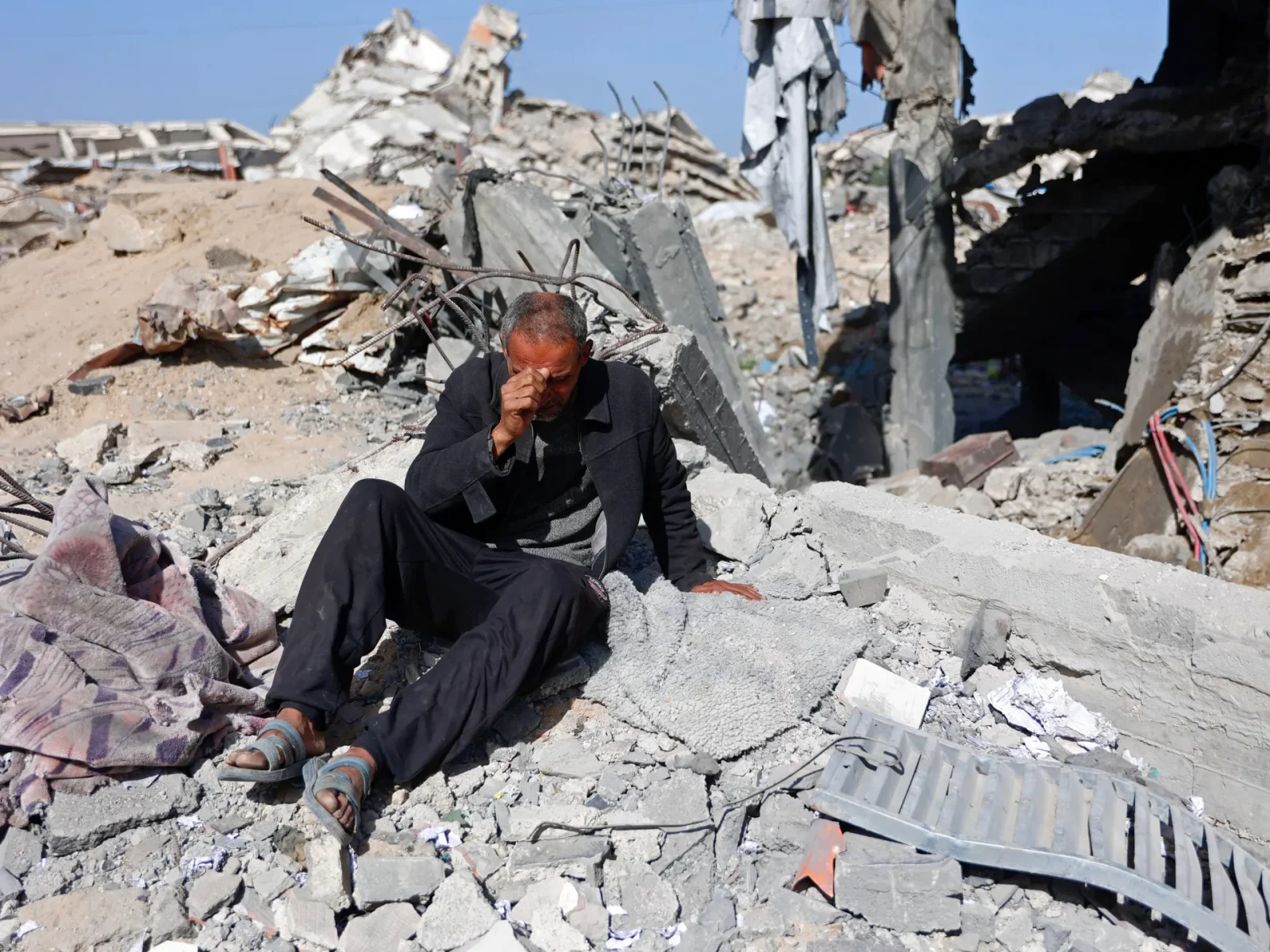
From Davos to Gaza, reconstruction is framed as humanitarian aid, but Israel’s blockade of cement and other materials turns rebuilding into political leverage; analysts warn the process could reshape Gaza’s demographics through delays and privatized profits, a strategy dubbed 'silent demographic engineering' with debris clearance years and full reconstruction potentially decades.

Left-leaning gun groups report membership surge amid political tensions
politics27 days ago

Left-leaning gun groups report membership surge amid political tensions

After the Minneapolis shooting of Alex Pretti by federal agents, left-leaning gun groups report a surge in members and training enrollments, with more women, people of color, and LGBTQ individuals taking up arms. Examples include LA Progressive Shooters’ weekend classes selling out through March and Pink Pistols Twin Cities increasing permit-to-carry courses from about five to 25 per class. Organizers say fear and shifts in the political climate are driving interest, while analysts note a broader diversification of gun ownership amid immigration enforcement debates and evolving gun politics.

Narcissism Shows Global Consistency Across 53 Countries
psychology29 days ago

Narcissism Shows Global Consistency Across 53 Countries

A cross-national study of 45,800 participants across 53 countries finds that younger adults, men, and people who perceive themselves as higher in social status consistently report more narcissistic traits. While average narcissism levels vary by country and can rise with GDP per capita, the core demographic patterns (age, gender, and status) are broadly universal, with aging linked to lower narcissism and culture not strongly moderating these differences. Notably, some collectivistic contexts showed higher agentic narcissism, challenging the notion that narcissism is mainly a Western, individualistic trait.

U.S. Population Growth Slows as Net Migration Dives
demographics1 month ago

U.S. Population Growth Slows as Net Migration Dives

U.S. population grew 1.8 million (0.5%) from July 2024 to July 2025, the slowest pace since the pandemic, driven mainly by a historic drop in net international migration (2.7 million to 1.3 million); births and deaths were relatively stable. Growth slowed across regions and states, with the Midwest the only region where all states gained population and South Carolina the fastest-growing state, while Puerto Rico declined. Net international migration is projected to fall further, to about 321,000 by July 2026.

8.2 Billion and Counting: A Country-by-Country Population Visualization
demographics1 month ago

8.2 Billion and Counting: A Country-by-Country Population Visualization

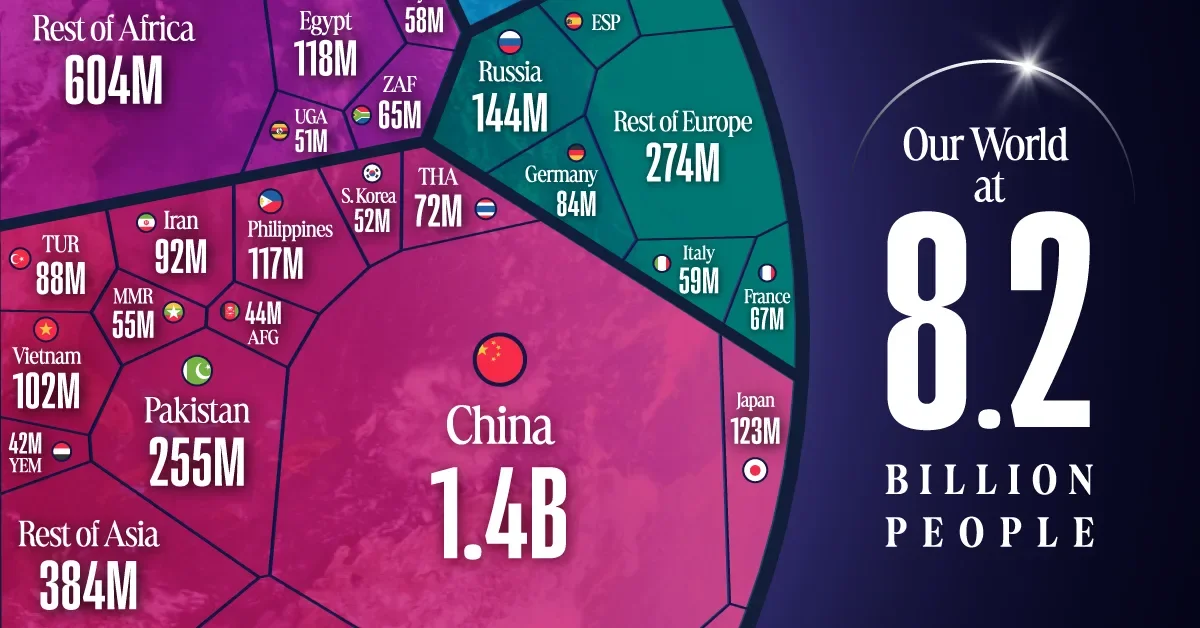
Global population surpassed 8.2 billion in 2025, with India contributing roughly a quarter of that growth and nearing 1.46–1.5 billion while China declines; the United States is around 347 million, and Nigeria is projected to overtake the U.S. by 2050. The Visual Capitalist graphic visualizes 204 countries’ populations using UN data, highlighting aging trends in Europe (Italy and Greece shrinking) and broader demographic shifts.

Social Security Faces a 2033 Crunch Driven by Demographics and Trump Tax Policy
economy1 month ago

Social Security Faces a 2033 Crunch Driven by Demographics and Trump Tax Policy

The 2025 Social Security Trustees Report warns that the program’s old-age and survivors insurance (OASI) trust fund runs out of reserves by 2033, with a potential ~23% benefit cut needed to keep payments through 2099. President Trump’s 2024 tax law accelerates costs for the program (roughly $168.6 billion 2025–2034), pushing the depletion closer to 2032, but the bigger strain comes from demographics—slower birth rates, aging baby boomers, and reduced net immigration—along with a payroll-tax base erosion as earnings pass the tax cap. There are no easy fixes, and reform remains politically challenging.