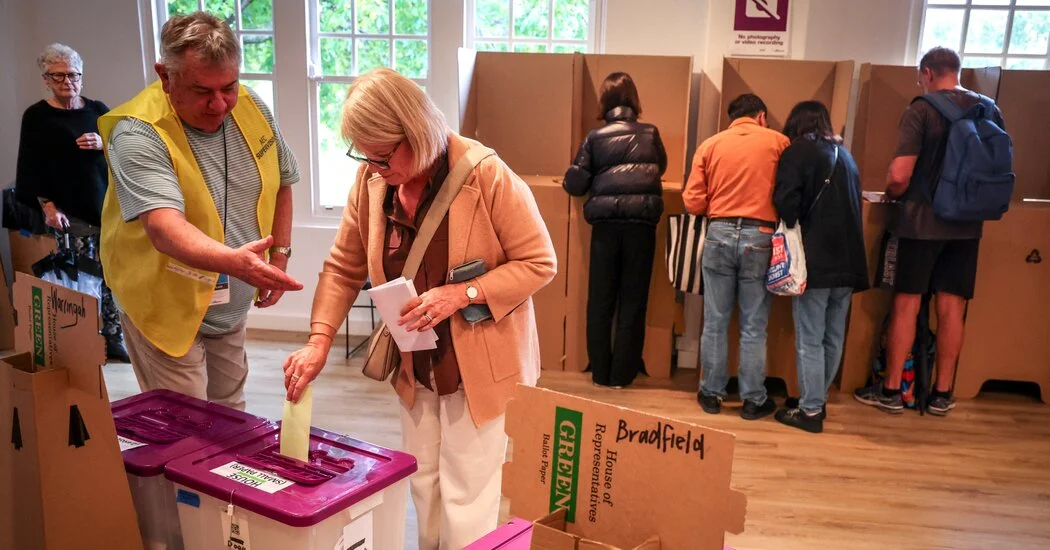
Missouri Secretary of State Denny Hoskins admitted to writing a flawed and potentially prejudicial ballot summary for a referendum on redistricting, leading to a court case that may result in revisions. The controversy centers on the language used to describe the state's gerrymandered congressional map, with objections from a political action committee, People Not Politicians, who argue the summary is misleading and unfair. The case is ongoing, with a new hearing scheduled for February 9, amid broader legal disputes related to the redistricting process.
In 2025, the Trump White House orchestrated a nationwide effort to strategically redraw congressional districts through mid-decade gerrymandering, targeting red states like Texas and Indiana to insulate Republican majorities ahead of the 2026 midterms, despite internal and external opposition, revealing a bold and controversial approach to electoral manipulation.
A lawsuit in Ohio alleges corruption in the allocation of $600 million in unclaimed funds for Browns stadium, accusing lawmakers of favoritism towards Browns owners Jimmy and Dee Haslam, who are also involved in political donations and a controversial anti-gerrymandering campaign. A judge has temporarily halted the transfer of funds amid legal challenges claiming the process violates property rights and due process.
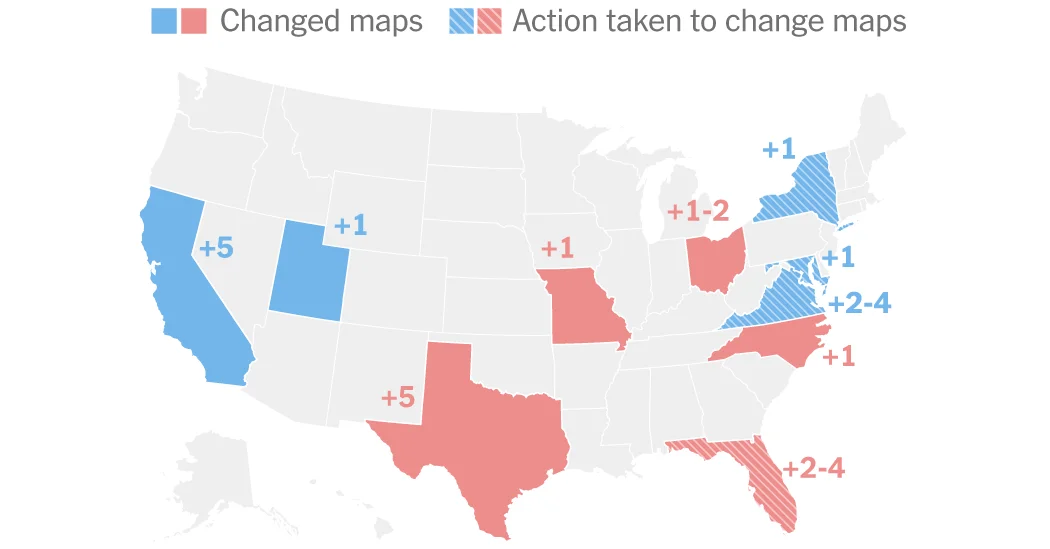
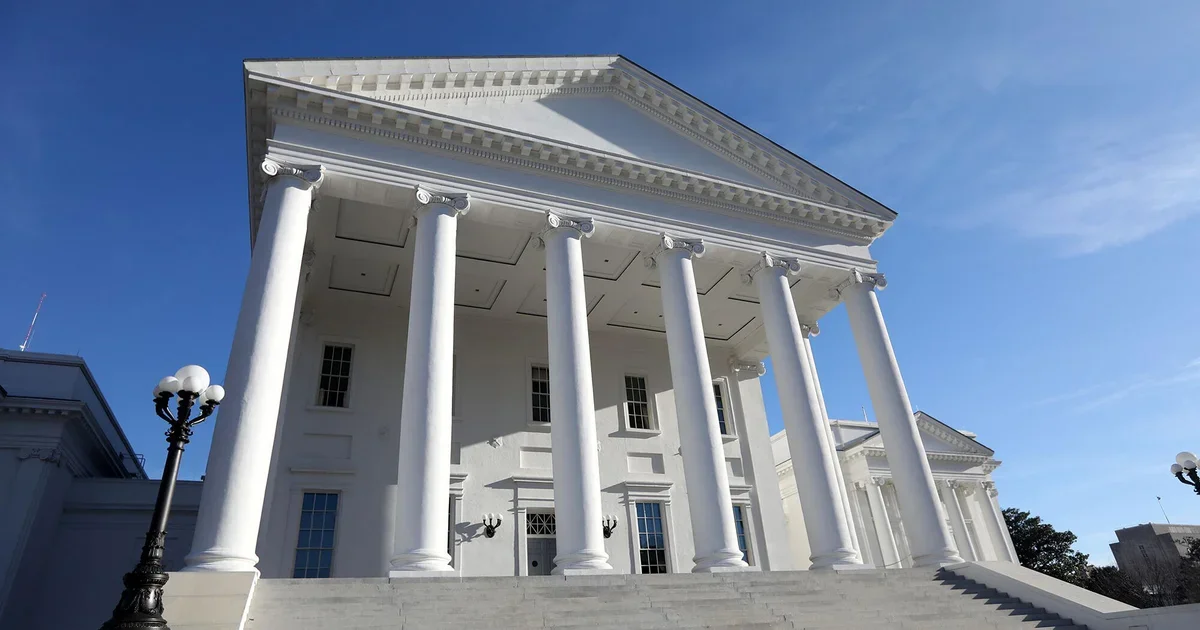
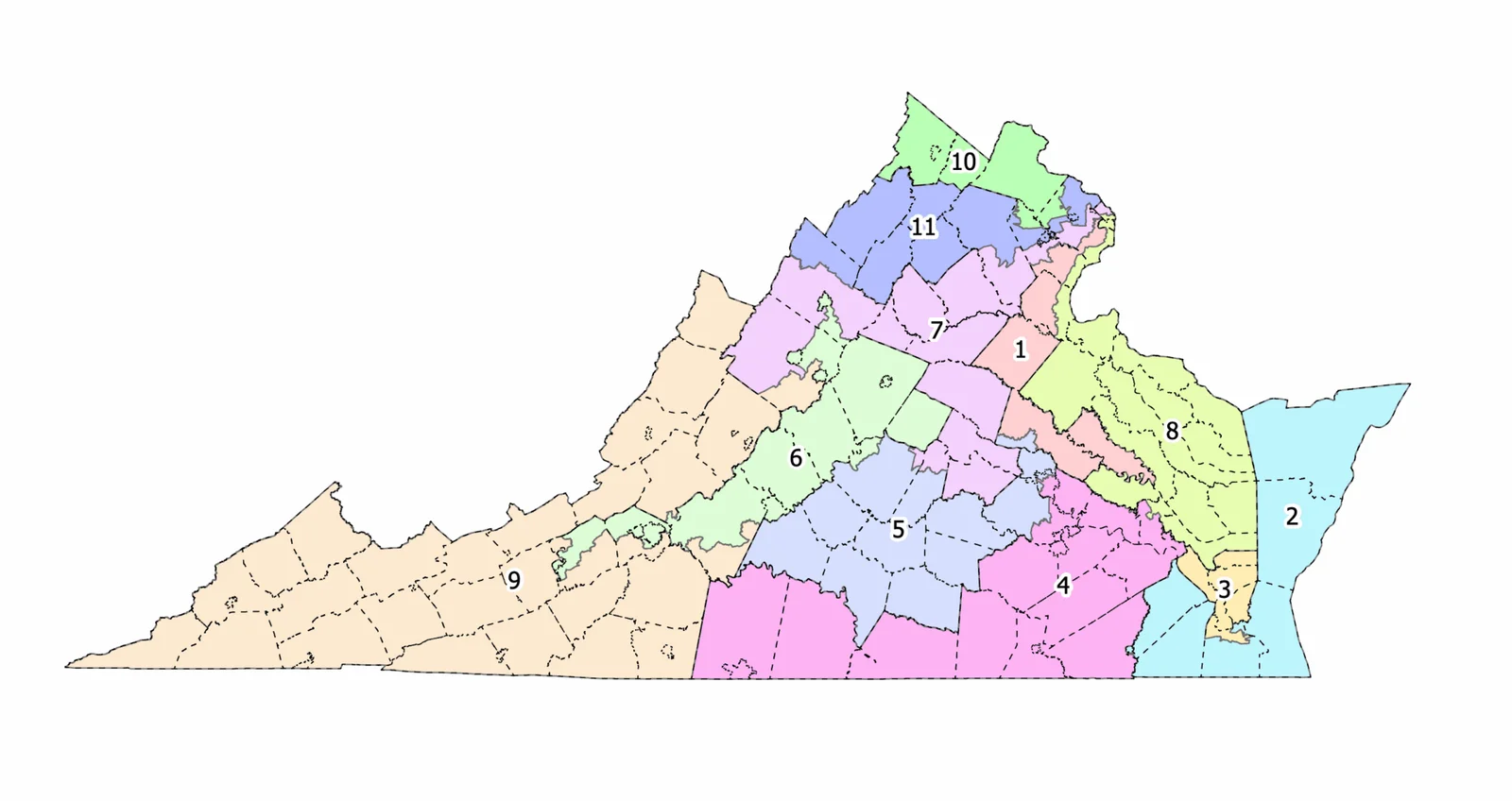
The article discusses the ongoing and upcoming redistricting efforts in several states ahead of the 2026 midterm elections, highlighting the political strategies, legal battles, and potential impacts on party control of the House, with key focus on states like Virginia, Florida, Kansas, Maryland, Illinois, Missouri, and the influence of a possible Supreme Court ruling on voting rights.
A lawsuit filed by the ACLU of Missouri alleges that state officials are violating constitutional precedent by allowing a gerrymandered congressional map to take effect despite a referendum campaign with sufficient signatures to suspend it, potentially undermining voters' rights and the legal process established over the past century.
California's Republican Party and the Trump administration are challenging the state's new Prop. 50 congressional maps in federal court, alleging racial gerrymandering, but their chances are slim given recent Supreme Court rulings supporting race-conscious redistricting and potential future restrictions on race-based districting. The case highlights ongoing debates over the legality of using race in redistricting and the political implications for California Republicans, with the maps having been approved by voters and potentially affecting future elections.
The DOJ and California are headed to court over a new congressional map approved by California voters, which aims to favor Democrats and is challenged by Republicans and the Justice Department for alleged racial gerrymandering. The legal battle could impact the 2026 elections and the control of Congress, with the case focusing on whether race was improperly used in redistricting.
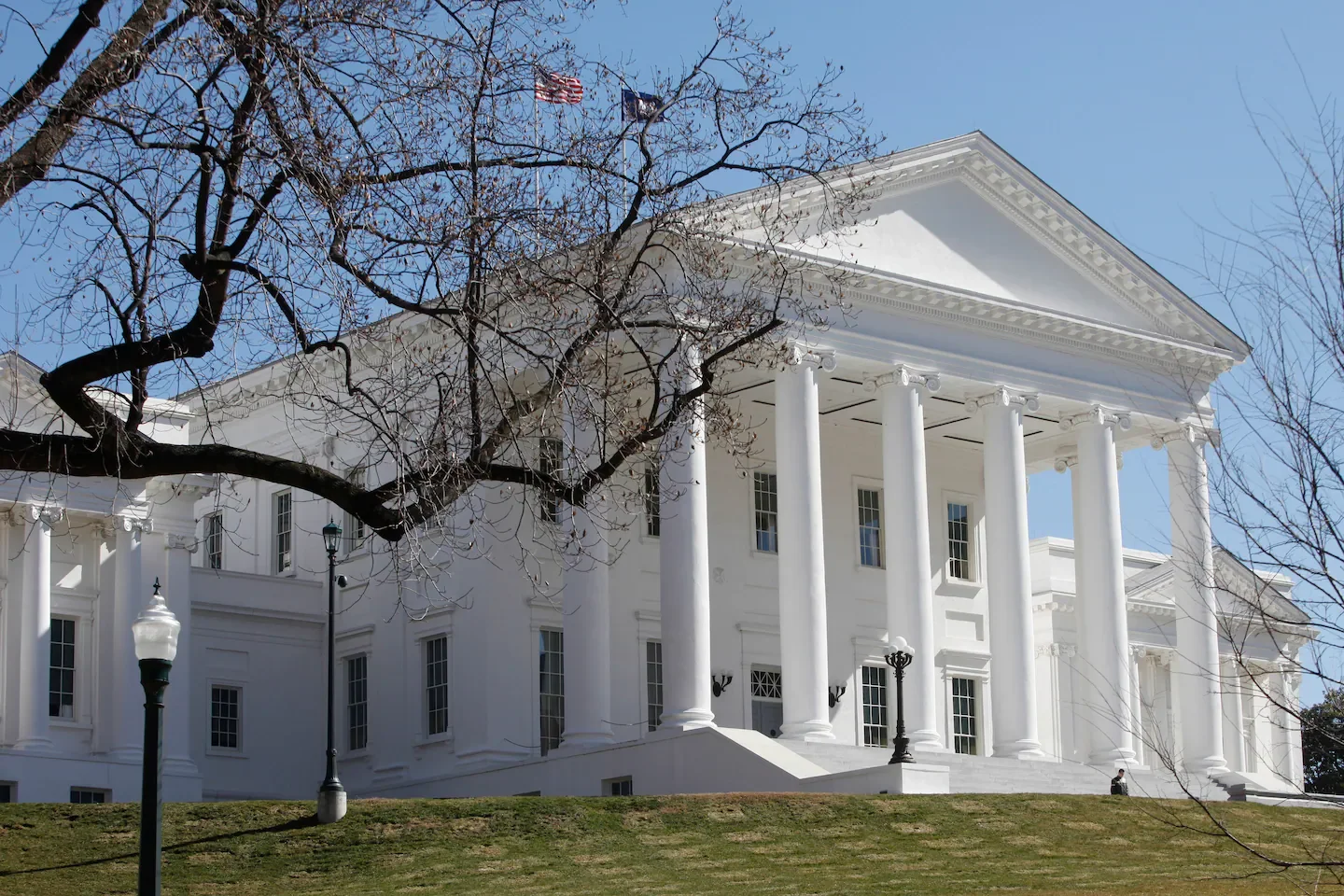
In 2013, Virginia Republicans attempted a mid-decade redistricting to favor their party, but the plan was halted by House Speaker Bill Howell, highlighting the intense partisan tactics involved in district boundary redrawings and foreshadowing similar strategies in 2026.
The article discusses the recent Tennessee special election, highlighting a significant loss for the MAGA movement and a shift towards economic populism among Democrats, while also covering various international and domestic political issues, including immigration, foreign policy, and social debates.
Indiana's new congressional maps, acknowledged by their creator as politically gerrymandered, are advancing through the House despite opposition and concerns about chaos in upcoming elections, with critics arguing they unfairly favor Republicans and split communities, especially in Indianapolis.
Some Kansas Republicans have resisted joining President Trump's push to redraw congressional districts, leading to the preservation of the state's only Democratic-leaning district and highlighting a growing skepticism among lawmakers about partisan redistricting efforts ahead of the midterm elections.
A Utah court approved a new congressional map that significantly favors Democrats in Salt Lake City, transforming the 1st District from Solid Republican to Solid Democrat, potentially making it easier for Democrats to win in the upcoming elections.
A Utah judge rejected the Republican-drawn congressional map, which aimed to protect GOP dominance, and approved a new map that includes a solid Democratic district in Salt Lake City, marking a significant legal and political victory for Democrats ahead of the 2026 midterm elections.
A Utah judge rejected a Republican-drawn congressional map, adopting an alternative that creates a Democratic-leaning district for the 2026 elections, challenging GOP expectations in the state and impacting national control of the House.
A Utah judge rejected the Republican-drawn congressional map, favoring a Democratic-leaning district instead, which could improve Democrats' chances in the 2026 midterm elections and challenge GOP control in the state.