Tag

Brain Tissue

All articles tagged with #brain tissue

Lithium Shows Promise in Reversing Alzheimer's Symptoms

Originally Published 5 months ago — by AOL.com

Featured image for Lithium Shows Promise in Reversing Alzheimer's Symptoms
Source: AOL.com

A Harvard study suggests that low lithium levels in the brain may be a 'missing link' in Alzheimer's disease development, with findings indicating that lithium deficiency correlates with increased amyloid plaques and cognitive decline. The research highlights the potential of lithium compounds, like lithium orotate, to restore memory and reverse brain damage in mice, but emphasizes the need for further human clinical trials to confirm these results.

Uncovering Molecular Clues to Suicidal Ideation in Brain Tissue

Originally Published 1 year ago — by Neuroscience News

Featured image for Uncovering Molecular Clues to Suicidal Ideation in Brain Tissue
Source: Neuroscience News

Researchers have identified molecular alterations in the blood and brain tissues of individuals who committed suicide, offering new insights into susceptibility factors and potential therapeutic targets. The study focused on genetic, protein, and metabolic changes, highlighting the role of the prefrontal cortex in behavioral control and pointing to potential targets for antidepressants and other treatments. By understanding the biological underpinnings of suicidal actions, the research aims to improve identification and prevention of suicide risk, emphasizing the need for timely intervention and combatting the stigma surrounding suicide.

"Advancements in 3D Printing Human Brain Tissue for Research"

Originally Published 1 year ago — by Hackaday

Featured image for "Advancements in 3D Printing Human Brain Tissue for Research"
Source: Hackaday

Researchers have developed a new 3D bioprinting process to create functional human neural tissues, addressing previous issues with integrating neurons and supportive cells. By using a fibrin hydrogel and printing layers horizontally, they successfully produced neural tissue resembling that of the human brain. While the approach has limitations, it offers significant advantages for studying brain function and pathologies, potentially advancing research in this field.

"Breakthrough: 3D-Printed Neural Tissue Functions Like Human Brain"

Originally Published 1 year ago — by IFLScience

Featured image for "Breakthrough: 3D-Printed Neural Tissue Functions Like Human Brain"
Source: IFLScience

Scientists at the University of Wisconsin-Madison have achieved a world-first breakthrough by successfully 3D-printing human brain tissue that can grow and function like real brain tissue. This innovation has the potential to revolutionize neuroscience research and aid in understanding and treating neurological and psychiatric disorders. The new 3D printing method involves growing brain cells from induced pluripotent stem cells and laying them out horizontally within a soft gel "bio-ink," allowing the neurons to form networks and communicate with each other. The study, published in Cell Stem Cell, opens up new possibilities for studying the brain's complex network of cells and connections.

"Breakthrough: 3D-Printed Brain Tissue Functions Like Human Brain"

Originally Published 1 year ago — by ScienceAlert

Featured image for "Breakthrough: 3D-Printed Brain Tissue Functions Like Human Brain"
Source: ScienceAlert

Researchers at the University of Wisconsin–Madison have successfully created the first functional 3D-printed brain tissue that mimics the development and connectivity of real human brain tissue. This breakthrough provides a new tool for studying brain cell communication and could lead to improved treatments for diseases like Alzheimer's and Parkinson's. The method is accessible to many labs and allows for easy maintenance and study using standard laboratory equipment. The 3D-printed tissue forms brain-like networks and can be used to study various neurological and psychiatric disorders, with potential applications in understanding brain development and neurodegenerative disorders.

"Breakthrough: 3D-Printed Brain Tissue Functions Like Human Brain"

Originally Published 1 year ago — by Slashdot

Featured image for "Breakthrough: 3D-Printed Brain Tissue Functions Like Human Brain"
Source: Slashdot

Researchers at the University of Wisconsin-Madison have developed a new 3D-printing approach for creating brain tissue cultures that mimic the functions of human brain tissue. By printing horizontally and using a bio-ink gel made with fibrinogen and thrombin, the team successfully created resilient yet malleable tissue that allowed neurons to grow and communicate with each other. The new structures formed connections across layers, produced neurotransmitters, and created support cell networks. This innovative technique could potentially be used to study various brain disorders and test new drugs, offering a deeper understanding of how healthy and affected parts of the brain interact.

"Breakthrough: 3D-Printed Brain Tissue Functions Like Human Brain"

Originally Published 1 year ago — by WION

Featured image for "Breakthrough: 3D-Printed Brain Tissue Functions Like Human Brain"
Source: WION

Scientists have developed the world’s first 3D-printed brain tissue that mimics natural brain behavior, offering a major advancement in understanding neurological and neurodevelopmental disorders. The innovative approach involves using a 3D printer to stack layers horizontally and placing brain cells in a softer "bio-ink" gel, allowing neurons to grow and communicate with each other. This breakthrough could revolutionize stem cell biology, neuroscience, and the study of neurological and psychiatric disorders, providing new opportunities for research and potential treatments.

"UW-Madison Researchers 3D Print Functional Human Brain Tissue"

Originally Published 1 year ago — by Channel3000.com - WISC-TV3

Featured image for "UW-Madison Researchers 3D Print Functional Human Brain Tissue"
Source: Channel3000.com - WISC-TV3

A research team at UW-Madison has successfully 3D printed the first-ever brain tissue that can grow and communicate with other brain cells. This breakthrough in neuroscience could lead to advancements in studying brain development, disease, and injury, as well as potential applications in drug testing and personalized medicine.

"Breakthrough: 3D-Printed Functional Human Brain Tissue Mimics Natural Function"

Originally Published 1 year ago — by Interesting Engineering

Featured image for "Breakthrough: 3D-Printed Functional Human Brain Tissue Mimics Natural Function"
Source: Interesting Engineering

Researchers at the University of Wisconsin-Madison have successfully developed the first functional 3D-printed human brain tissue, which can mimic the growth and function of typical brain tissue. This breakthrough could provide valuable insights into neurological disorders such as Alzheimer's and Parkinson's disease, offering a powerful model for understanding human brain cell communication.

"Cutting-Edge 3D-Printed Brain Tissue Mirrors Human Brain Activity"

Originally Published 1 year ago — by Neuroscience News

Featured image for "Cutting-Edge 3D-Printed Brain Tissue Mirrors Human Brain Activity"
Source: Neuroscience News

Researchers at the University of Wisconsin have developed the world's first 3D-printed brain tissue that mimics natural brain tissue, allowing neurons to interconnect and form networks similar to human brain structures. This breakthrough technique offers unparalleled opportunities to study brain functions and disorders, impacting the understanding and treatment of neurological conditions such as Alzheimer's and Parkinson's. The 3D-printed brain tissue can form networks and communicate through neurotransmitters, providing a powerful model for studying brain cells and communication in humans.

"Breakthrough: 3D-Printed Human Brain Tissue Mimics Function and Growth"

Originally Published 1 year ago — by University of Wisconsin-Madison

Featured image for "Breakthrough: 3D-Printed Human Brain Tissue Mimics Function and Growth"
Source: University of Wisconsin-Madison

Researchers at UW–Madison have developed a groundbreaking 3D-printing method to create functional human brain tissue, allowing for the study of neurological and neurodevelopmental disorders such as Alzheimer’s and Parkinson’s diseases. The new technique involves horizontally layering brain cells in a softer "bio-ink" gel, enabling the cells to grow and communicate with each other, forming networks comparable to human brains. This advancement offers precision and flexibility for studying brain development, neurodegenerative disorders, and more, and is accessible to many labs without requiring specialized equipment.

"Revolutionary Imaging Method Uncovers Hidden Brain Structures"

Originally Published 1 year ago — by MIT News

Featured image for "Revolutionary Imaging Method Uncovers Hidden Brain Structures"
Source: MIT News

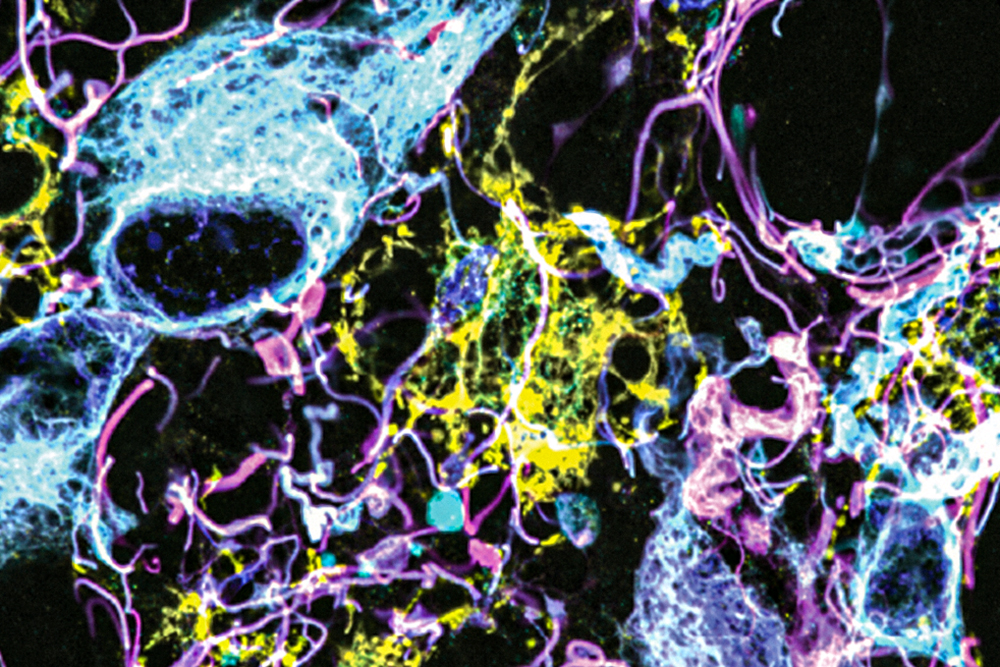
Researchers at MIT and Brigham and Women’s Hospital/Harvard Medical School have developed a novel microscopy technique that allows for high-resolution imaging of human brain tissue, revealing previously unseen cells and structures. The method, based on expansion microscopy, has potential applications in diagnosing tumors, providing more accurate prognoses, and guiding treatment choices. By labeling up to 16 different molecules per tissue sample, the researchers were able to analyze healthy brain tissue and samples from patients with gliomas, uncovering unexpected levels of aggressive tumor cells in low-grade gliomas. The technique could serve as a diagnostic tool for neuro-oncology and neuropathology, offering insights into neurological diseases at the nanoscale and potentially leading to improved patient outcomes.

"Revolutionizing Neuroscience: Mini-Brains Grown from Human Fetal Tissue"

Originally Published 2 years ago — by Livescience.com

Featured image for "Revolutionizing Neuroscience: Mini-Brains Grown from Human Fetal Tissue"
Source: Livescience.com

Scientists have successfully grown cerebral organoids, or "minibrains," from human fetal brain tissue for the first time, opening up new possibilities for studying brain health and disease. These minibrains, which mimic aspects of full-size human brains, were grown to the size of a grain of rice and contained various cell types that self-organized into complex 3D structures. The researchers also triggered the growth of brain tumors within the minibrains and tested the tumors' response to existing cancer drugs. This breakthrough could provide fresh insights into brain development and diseases, and the authors aim to create more complex versions of the minibrains from fetal tissues at different stages of development.

Iron Dysregulation Linked to Schizophrenia

Originally Published 2 years ago — by PsyPost

Featured image for Iron Dysregulation Linked to Schizophrenia
Source: PsyPost

A study of brain tissue from deceased individuals with schizophrenia revealed elevated iron levels and reduced ferritin levels, indicating disrupted iron regulation in the prefrontal cortex. This suggests a potential link between iron dysregulation and cognitive changes observed in schizophrenia. The findings highlight the importance of understanding iron biology in schizophrenia, but further research is needed to determine if similar changes occur in other brain regions.

"Biochip Merges Brain Tissue and Electronics for Advanced Voice Recognition and Machine Learning"

Originally Published 2 years ago — by Tech Xplore

Featured image for "Biochip Merges Brain Tissue and Electronics for Advanced Voice Recognition and Machine Learning"
Source: Tech Xplore

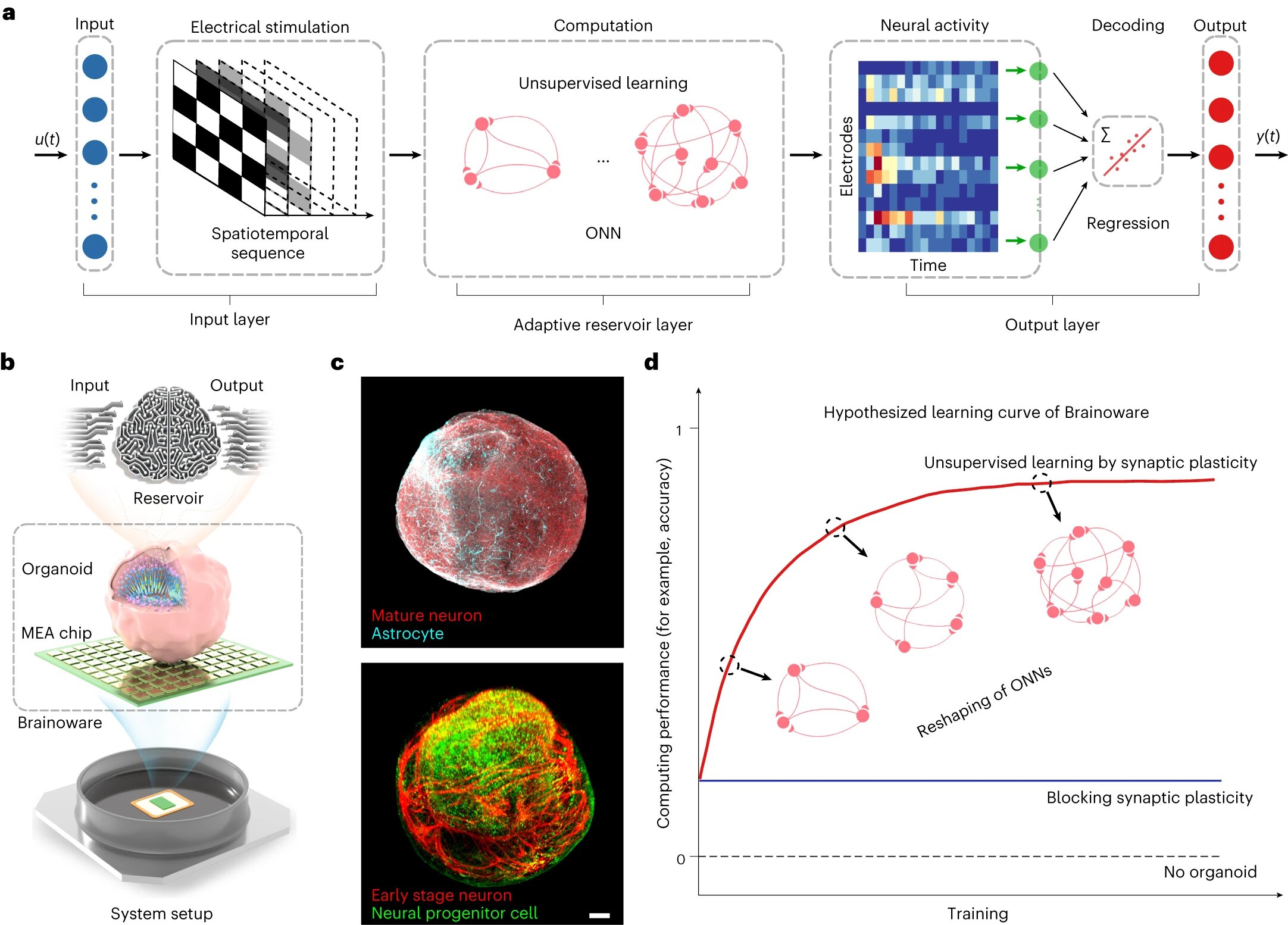
Researchers have connected clusters of lab-grown brain cells to a computer and achieved elementary speech recognition and math problem-solving. The brain cells, grown from specialized stem cells, formed a nanometer-wide organoid that was connected to a circuit board. After training, the system, called Brainoware, was able to distinguish between different voices and predict mathematical constructs with high accuracy. This breakthrough demonstrates the potential of using brain-inspired neural networks for advancing artificial intelligence capabilities. Biocomputing systems like Brainoware offer energy efficiency and could be used for studying neurological diseases and decoding brain wave activity. However, challenges remain in maintaining the health and nourishment of organoids and addressing neuroethical concerns.