Research from Touro University reveals that vigorous exercise increases extracellular vesicles in the blood that transport hormone precursors like POMC more efficiently across biological barriers, including the blood-brain barrier, potentially impacting stress, mood, metabolism, and drug delivery.
Research suggests that erythritol, a common sugar substitute found in many processed foods, may damage the blood-brain barrier and disrupt blood vessel function, potentially increasing the risk of stroke and cardiovascular disease, raising concerns about its safety despite regulatory approval.
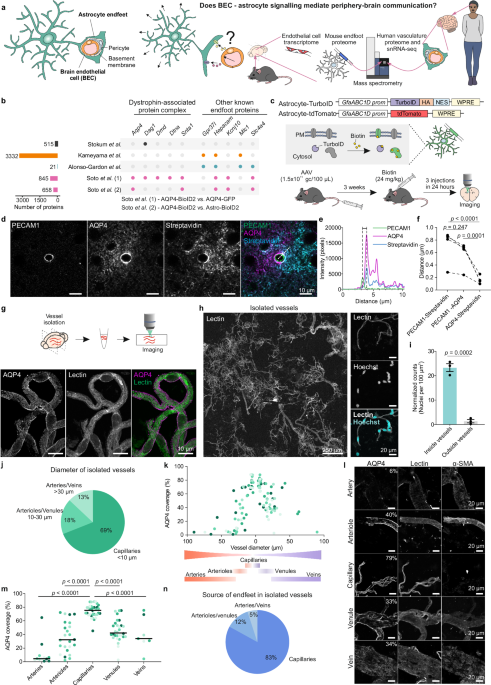
This study used molecular profiling and innovative proteomics techniques to explore how brain endothelial cells communicate with astrocyte endfeet in mice and humans, revealing dynamic ligand-receptor interactions that are modulated during peripheral inflammation and are conserved across species, with implications for understanding neuroinflammatory and neurodegenerative diseases.
Scientists have developed bioactive nanoparticles that reverse Alzheimer's in mice by repairing the blood-brain barrier and enhancing the clearance of toxic proteins like amyloid-β, showing promising therapeutic potential for future clinical applications.
Scientists developed a nanotechnology-based treatment that reverses Alzheimer's symptoms in mice by repairing the blood-brain barrier and enhancing clearance of toxic proteins like amyloid-β, leading to significant cognitive recovery.
Recent research uncovers a harmful interaction between amyloid beta and fibrinogen that forms resistant blood clots, contributing to early signs of Alzheimer's disease by damaging blood vessels and synapses, and suggests targeting this complex could offer new therapeutic avenues.
Recent advances in focused ultrasound technology, which uses high-frequency sound waves, are opening new possibilities for treating diseases like Alzheimer's, cancer, and rare neurological conditions by enabling targeted drug delivery, stimulating immune responses, and potentially stopping disease progression, with ongoing clinical trials demonstrating promising results.
Scientists have developed a novel nanoparticle-based approach that repairs the blood-brain barrier in mice, leading to rapid clearance of Alzheimer's-related plaques and improved cognitive function, suggesting a potential new direction for treatment research, though human applicability remains uncertain.
Scientists developed nanoparticle-based supramolecular drugs that successfully reversed Alzheimer's symptoms in mice by repairing the blood-brain barrier and promoting clearance of amyloid-beta, showing promising potential for future human treatments.
Scientists have reversed Alzheimer's in mice by using nanotechnology to restore the blood-brain barrier, which clears toxic proteins from the brain, showing potential for future human treatments.
Research shows that DMT, a natural psychoactive compound, can reduce stroke damage by restoring the blood-brain barrier and decreasing inflammation, offering a promising new approach to stroke treatment that is currently being tested in clinical trials.
The article discusses a novel nanomedicine approach using mid-affinity, multivalent polymersomes targeting LRP1 to restore blood-brain barrier function, enhance amyloid-β clearance, and improve cognitive outcomes in Alzheimer's disease models, highlighting a shift from transport to repair strategies.
A study from Texas Tech found that the blood-brain barrier remains largely intact in a common mouse model of Alzheimer's, challenging previous beliefs that the disease causes widespread BBB leakiness, which has implications for drug delivery strategies.
A natural compound called DMT, found in the human brain, shows potential in reducing stroke damage by protecting the blood-brain barrier and decreasing inflammation, with ongoing clinical trials exploring its therapeutic use.
Research indicates that DMT, a natural psychoactive compound, can protect the brain after stroke by restoring blood-brain barrier integrity and reducing inflammation, suggesting its potential as an adjuvant treatment to improve recovery outcomes.