
"Detecting Alien Life with a Single Ice Grain: NASA's Europa Mission"
TL;DR Summary
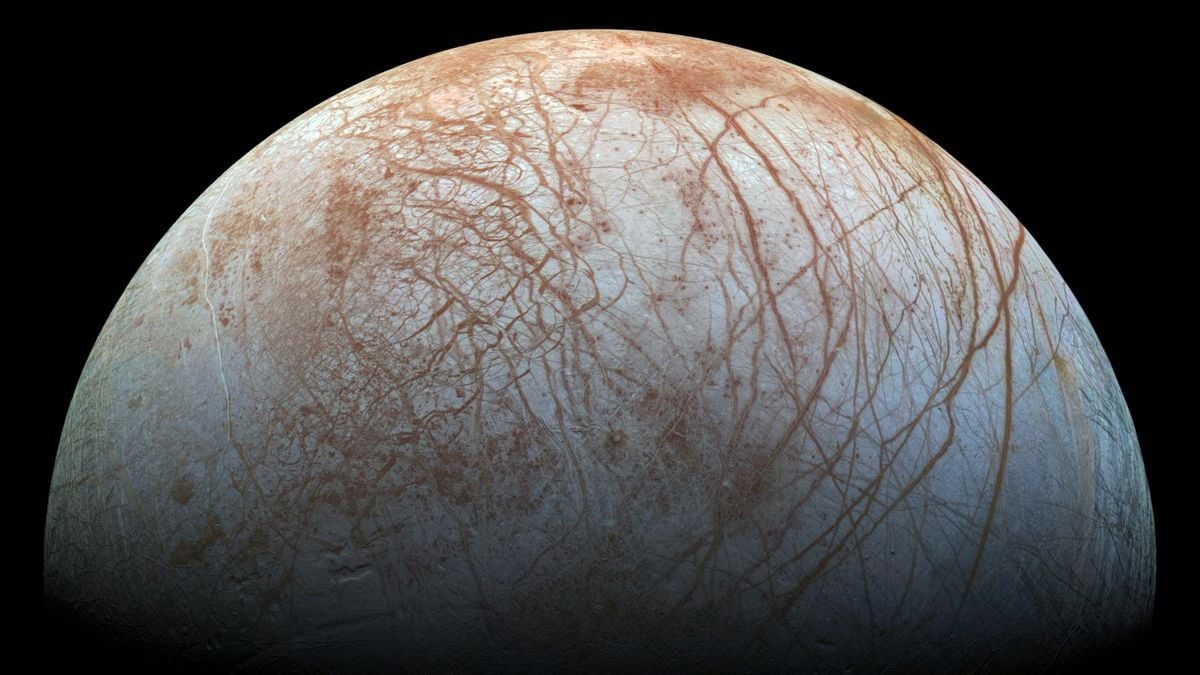
A new experiment suggests that NASA's Europa Clipper spacecraft may only need to capture a single grain of ice from Jupiter's moon Europa to detect evidence of alien life. The spacecraft, scheduled to launch in 2024, is equipped with the Surface Dust Analyzer (SUDA) to study particles of Europa's surface ice and dust, and a recent study simulated the potential detection of life using this instrument. The findings indicate that even a tiny fraction of cellular material could be identified by a mass spectrometer on board the spacecraft, providing more confidence in the potential to detect lifeforms similar to those on Earth in Europa's ocean.
- The Europa Clipper may only need 1 ice grain to detect life on Jupiter's ocean moon Space.com
- Signs of life detectable in single ice grain emitted from extraterrestrial moons, experimental setup shows Phys.org
- NASA's mission to Europa isn't meant to find alien life - but it could New Scientist
- NASA only needs a single grain of ice to detect alien life in our solar system, study shows Livescience.com
- Europa Might Not Be Able to Support Life in its Oceans Universe Today
Reading Insights
Total Reads
0
Unique Readers
1
Time Saved
4 min
vs 5 min read
Condensed
88%
893 → 105 words
Want the full story? Read the original article
Read on Space.com