Tag

Ocean Floor

All articles tagged with #ocean floor

science2 months ago

New Research Challenges Dinosaur Extinction Theories and Reveals Hidden Oceanic Asteroid Crater

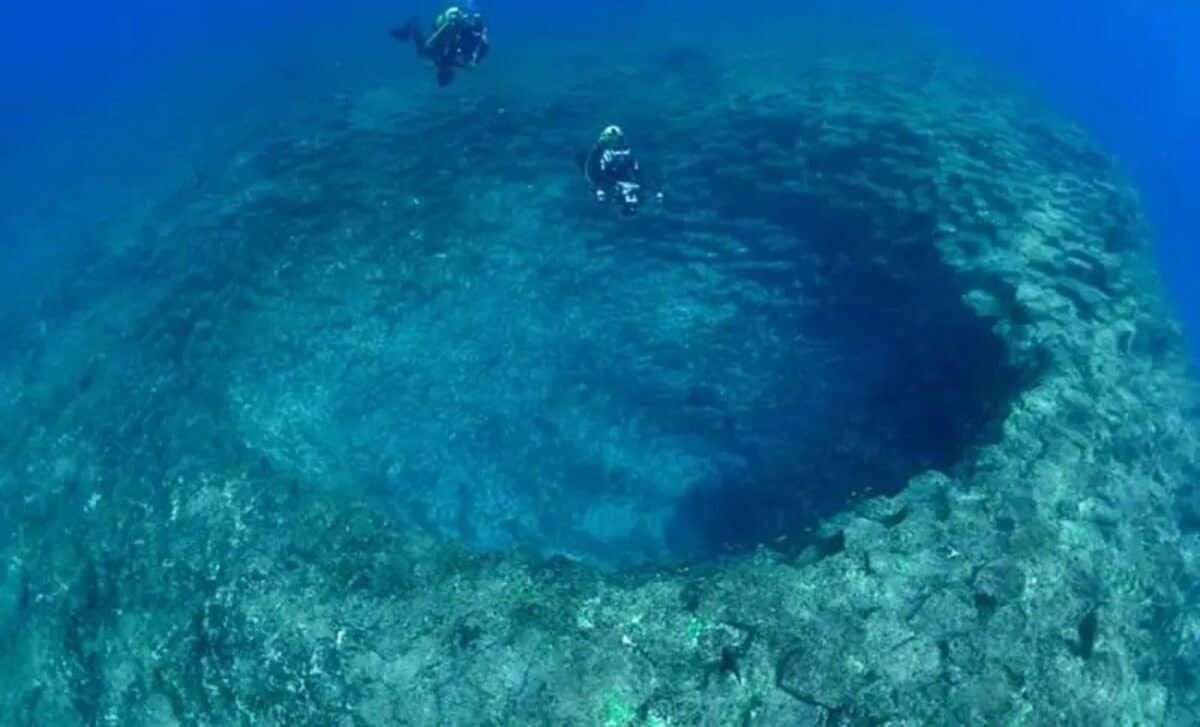
Scientists have confirmed the existence of the Nadir Crater, a 9 km wide impact crater beneath the Atlantic Ocean floor, formed 66 million years ago by an asteroid likely responsible for the extinction of the dinosaurs. Using advanced seismic imaging, they reconstructed the impact's aftermath, including tsunamis and liquefied sediments, and plan to drill cores to further study this well-preserved site, offering new insights into asteroid impacts and mass extinctions.

scienceenvironment1 year ago

"Ocean Floor Topography Crucial to Carbon Storage, Study Finds"

A new study reveals that the shape and depth of the ocean floor significantly influence carbon sequestration, accounting for up to 50% of changes in carbon storage depth over the past 80 million years. This finding highlights the critical role of seafloor topography in the long-term carbon cycle, which has implications for climate change mitigation and the search for habitable planets.

science1 year ago

"Unprecedented: 2000 Earthquakes in 1 Day Off Canada Coast Signal Ocean Floor Ripping Apart"

Nearly 2,000 earthquakes were recorded in a single day off the coast of Canada, indicating a potential deep sea magmatic rupture and the birth of new oceanic crust. The quakes, centered on the Endeavour site near Vancouver Island, are not a threat to people and are part of the ocean floor spreading apart. Scientists are closely monitoring the area to understand how the ocean floor pulls apart and new crust forms, as well as the impact on the hydrothermal vent system.

science1 year ago

"Discovery: Large Undersea Faults Pulling Apart Pacific Plate"

Geoscientists from the University of Toronto have discovered large undersea faults on the Pacific plate, challenging the traditional model of rigid ocean floor plates. These faults, some thousands of meters deep and hundreds of kilometers long, are pulling the plate apart due to enormous forces within it. The research sheds new light on plate tectonics and suggests that the Pacific plate is not as pristine as previously thought, with weaker sub-oceanic plateaus being more prone to tearing. This discovery could be linked to seismic activity and volcanism, overturning previous understanding of the Earth's dynamics.

science-and-technology2 years ago

"Robotic Resurrection: Prehistoric Creature Brought Back to Life"

Scientists have created a soft robot replica of the ancient echinoderm pleurocystitid to study its efficient movement across the ocean floor over 450 million years ago. By analyzing the creature's fossils, researchers discovered that its sweeping tail motion allowed it to move with power and efficiency. This development in paleobionics, the field of robotics inspired by extinct species, could lead to practical applications in modern robotics and exploration of hard-to-navigate environments like the deep-sea floor. The pleurocystitid robot could push the fields of soft robotics, biology, and paleontology to the next level with its research.

science2 years ago

"Scientists Uncover Long-Lost 3,000-Mile-Wide Continent on Ocean Floor"

Geologists have discovered the remains of a 155 million-year-old lost continent called Argoland at the bottom of the Indian Ocean and Southeast Asia. The continent, which was once as wide as the United States, broke off from Australia during the late Jurassic period and drifted towards Southeast Asia before disappearing. The discovery was made through the detection of tectonic "mega-units" scattered on the ocean floor and embedded within small islands. Understanding the life and death of continents is crucial for studying biodiversity, climate evolution, and plate tectonics.

technology2 years ago

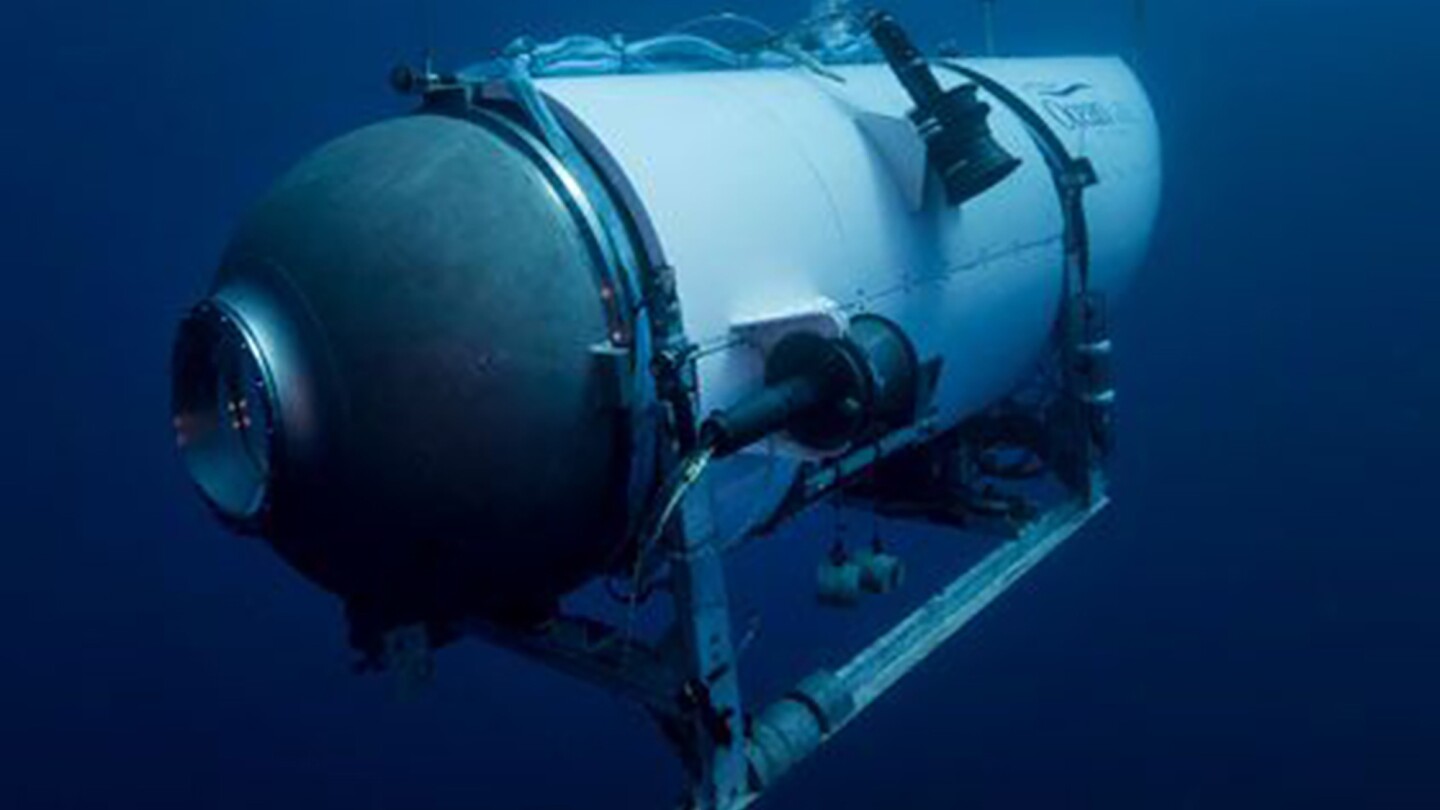
The Search Continues for Missing Game Controller in Titan Sub Implosion Investigation

An altered image claiming to show the video game controller used to steer the Titan submersible, which imploded earlier this month near the wreck of the Titanic, lying on the ocean floor is false. The original photo was taken in 2015 and shows the Pacific Ocean floor, not the Atlantic Ocean. The U.S. Coast Guard has also said no images of the Titan have been released by the international team of investigators looking into the cause of the disaster. Five pieces of the submersible have been located, but the investigation is ongoing.

tragedy2 years ago

Man on board the Titan describes being trapped in a sub at the bottom of the ocean in chilling interview.

An interview with Paul-Henri Nargeolet, one of the men aboard the lost Titan submersible, has emerged of him discussing being trapped underwater. Nargeolet, a veteran of deep-sea exploration, described a hypothetical scenario that he may now be experiencing for real on board the Titan. The search for Nargeolet and the other four passengers has been ongoing since Sunday, with experts outlining several possible scenarios, including the possibility that the submersible may be stuck on the ocean floor without power.

tragedy2 years ago

Titan Passenger's Chilling Premonition of Submarine Tragedy

An interview with Paul-Henri Nargeolet, one of the men aboard the lost Titan submersible, has emerged of him discussing being trapped underwater. Nargeolet, a veteran of deep-sea exploration, described a hypothetical scenario that he may now be experiencing for real on board the Titan. The search for Nargeolet and the other four passengers has been ongoing since Sunday, with experts outlining several possible scenarios, including the possibility that the submersible may be stuck on the ocean floor without power.

history2 years ago

The Enduring Fascination with the Titanic Wreck and Its Discovery

Recent reports of a missing submersible visiting the Titanic shipwreck have brought attention to the fact that the Titanic sank closer to Canada than many people realized. The ship sank four days into its Atlantic crossing, around 400 miles off Newfoundland, Canada. The wreck sits on the ocean floor around 12,500 feet deep, with the two major pieces 2,600 feet apart. The search for the missing submersible continues, with experts using sonar and passive techniques to locate it.

earth-science2 years ago

Uncovering Hidden Ancient Ocean Floor in Earth's Depths.

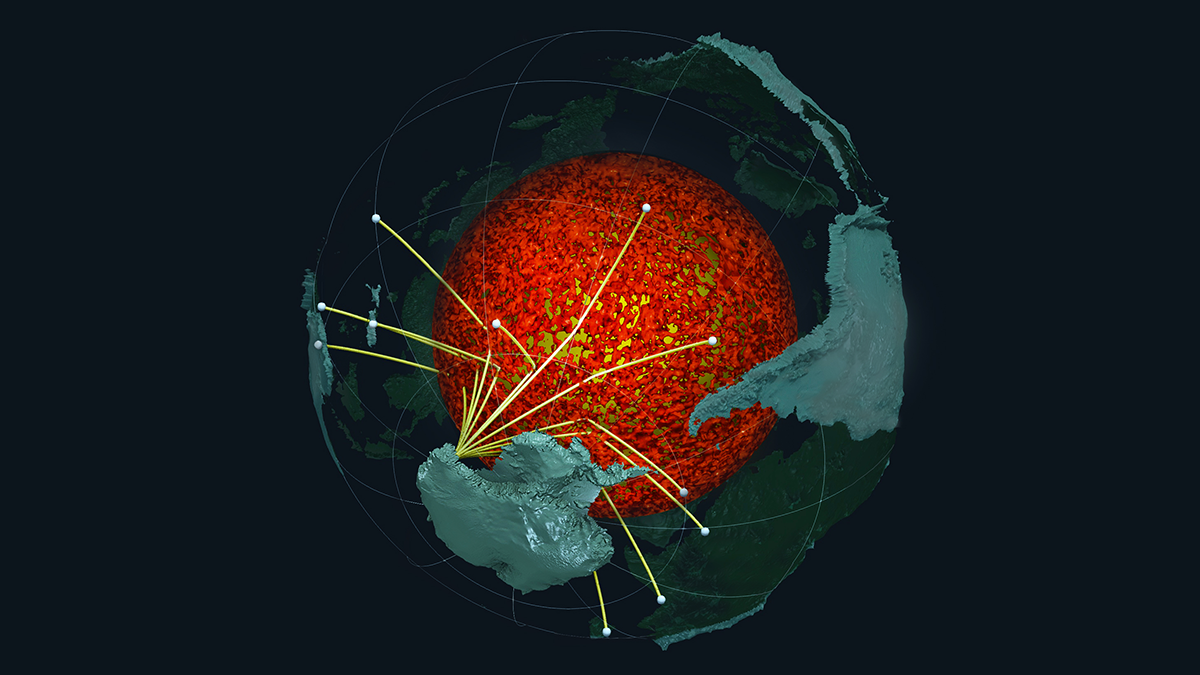
Scientists have discovered that ultralow-velocity zones (ULVZs) at the base of Earth's mantle, where seismic waves slow significantly, may be more widespread than previously thought and could be the remains of ancient ocean floor. ULVZs are poorly understood, and their origins are debated. The researchers analyzed seismic waves traveling through Earth's interior from earthquakes happening around the globe and found ULVZs at the core-mantle boundary all over the Southern Hemisphere. The results could shed light on how ULVZs affect the movement of heat within Earth and help scientists understand why hot spots form where they do.