Tag

Neutrino

All articles tagged with #neutrino

MicroBooNE and KATRIN Find No Evidence for Light Sterile Neutrinos

Originally Published 1 month ago — by Nature

Featured image for MicroBooNE and KATRIN Find No Evidence for Light Sterile Neutrinos
Source: Nature

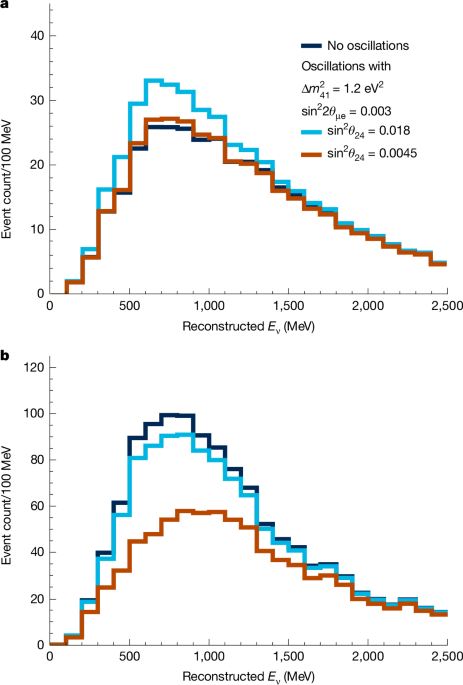
The MicroBooNE experiment searched for light sterile neutrinos using two neutrino beams and found no evidence supporting their existence, thereby strongly constraining the parameter space that could explain previous anomalies observed in short-baseline neutrino experiments.

Calorimetric Study Sets New Limit on Electron Neutrino Mass

Originally Published 2 months ago — by Phys.org

Featured image for Calorimetric Study Sets New Limit on Electron Neutrino Mass
Source: Phys.org

The HOLMES experiment has set the most stringent upper limit on the electron neutrino mass at less than 27 eV/c² using a scalable calorimetric approach with microcalorimeters measuring holmium-163 decay, validating long-term experimental techniques and paving the way for future sub-eV sensitivity in neutrino mass measurements.

Farthest Universe Particle Detected in Mediterranean Sea

Originally Published 2 months ago — by Evidence Network

Featured image for Farthest Universe Particle Detected in Mediterranean Sea
Source: Evidence Network

Scientists using the KM3NeT underwater telescope in the Mediterranean Sea detected the most energetic cosmic neutrino ever recorded at 120 PeV, challenging existing theories and opening new avenues for understanding extreme astrophysical phenomena and cosmic particle acceleration.

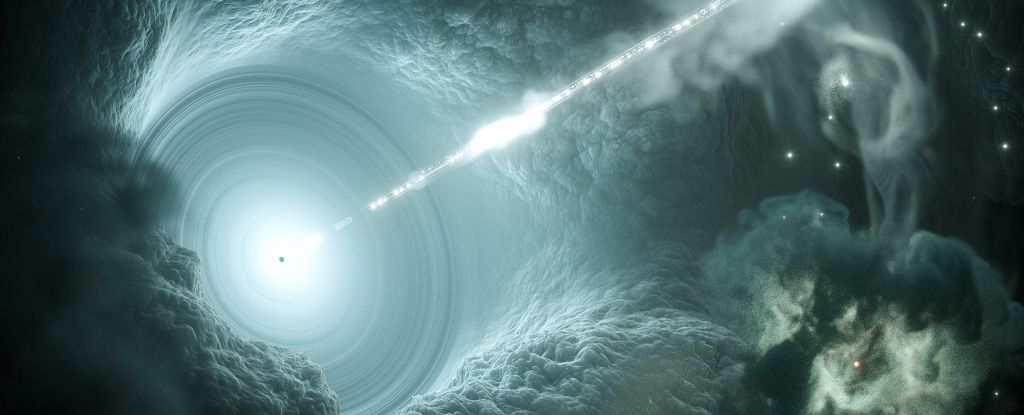
Ghost Particle Traverses Earth, Possibly Originating from Dark Matter

Originally Published 6 months ago — by Yahoo

Featured image for Ghost Particle Traverses Earth, Possibly Originating from Dark Matter
Source: Yahoo

A high-energy neutrino detected by the KM3NeT telescope in 2023 may have originated from dark matter decay, offering a new way to explore dark matter, though the most likely explanation remains a high-energy neutrino from a distant blazar. The event's unique detection, not seen by the IceCube Observatory, has sparked hypotheses about dark matter interactions, with further research expected as KM3NeT completes construction.

Scientists Detect Potential First Evidence of Dark Matter from Cosmic Particle

Originally Published 7 months ago — by ZME Science

Featured image for Scientists Detect Potential First Evidence of Dark Matter from Cosmic Particle
Source: ZME Science

In February 2023, the KM3NeT underwater telescope detected an extremely high-energy particle that may be the first direct evidence of dark matter, possibly originating from a blazar. This discovery challenges existing understanding of cosmic particles and could open new avenues for dark matter research, though further verification is needed. The event's uniqueness and potential implications make it a significant development in astrophysics.

Neutrino Mass Mystery Shrinks Further

Originally Published 7 months ago — by Big Think

Featured image for Neutrino Mass Mystery Shrinks Further
Source: Big Think

Recent experiments, particularly KATRIN, have set the tightest constraints yet on the mass of the electron neutrino, showing it can be no more than 0.45 eV/c², which has significant implications for understanding the universe's composition and the role of neutrinos in cosmic evolution. Despite these constraints, the exact mass of neutrinos remains unknown, and further research is needed to fully understand their properties and impact on cosmology.

Unveiling the Mysteries of the Neutrino Fog

Originally Published 1 year ago — by Physics

Featured image for Unveiling the Mysteries of the Neutrino Fog
Source: Physics

Two dark matter experiments, PandaX and XENON, have detected signals from solar neutrinos, known as the "neutrino fog," which could complicate future dark matter searches. These experiments, using liquid xenon detectors, observed coherent elastic neutrino-nucleus scattering (CEvNS) events, a process predicted to mimic dark matter signals. While the neutrino fog poses a potential challenge, it is not expected to significantly impact dark matter searches for at least a decade. The findings also open new avenues for neutrino research and standard-model testing.

"Advancements in Neutrino Mass Determination: Closer to Unraveling the Mystery"

Originally Published 1 year ago — by Phys.org

Featured image for "Advancements in Neutrino Mass Determination: Closer to Unraveling the Mystery"
Source: Phys.org

Researchers have made a significant contribution to determining the mass of neutrinos, a fundamental yet elusive aspect of particle physics, by using a Penning trap to measure the change in mass of a holmium-163 isotope with extreme precision. This method allows for the determination of the Q value 50 times more accurately than before, potentially revealing systematic errors in the determination of the neutrino mass. The findings offer a major step forward in understanding the mysterious neutrino masses and the potential existence of new physics beyond the standard model.

"Neutrino Detector Testing for Nonproliferation and Fundamental Physics Commences"

Originally Published 1 year ago — by Phys.org

Featured image for "Neutrino Detector Testing for Nonproliferation and Fundamental Physics Commences"
Source: Phys.org

Testing has commenced on a new neutrino detector called Eos, designed to enhance sensitivity and capabilities for detecting antineutrinos, which are difficult to detect but can help monitor nuclear activities and materials remotely. The detector, a hybrid of liquid scintillator and Cherenkov emission techniques, aims to improve precision and resolution for understanding energy deposition and direction of neutrinos. The prototype may aid in detecting clandestine production of bomb-grade material and could potentially be used in future neutrino physics projects.

"Project 8 Reveals Groundbreaking Discovery: Unmasking the Secrets of Ghost Particles and Neutrino Mass"

Originally Published 2 years ago — by SciTechDaily

Featured image for "Project 8 Reveals Groundbreaking Discovery: Unmasking the Secrets of Ghost Particles and Neutrino Mass"
Source: SciTechDaily

Project 8, an international collaboration, has made a breakthrough in measuring the mass of neutrinos, elusive elementary particles that play a significant role in the early universe. Using Cyclotron Radiation Emission Spectroscopy (CRES), the researchers observed electron behavior in tritium decay to set an upper limit for neutrino mass. This novel approach, which measures the energy of resulting electrons, shows promise in advancing our understanding of the universe's evolution. The next steps involve scaling up the experiment and creating a source for individual tritium atoms to surpass the sensitivity of previous experiments and provide a definitive value for neutrino mass.

"Silent Wires Uncover Elusive Physics Phenomena"

Originally Published 2 years ago — by Phys.org

Featured image for "Silent Wires Uncover Elusive Physics Phenomena"
Source: Phys.org

Research teams are developing ultra-quiet electronic cables with ultra-pure materials to reduce interference from radioactive contaminants in sensitive physics experiments. These cables, which have been produced by a team at the Department of Energy's Pacific Northwest National Laboratory, have applications in neutrino and dark matter experiments, as well as potential use in reducing the effects of ionizing radiation on future quantum computers. The cables are designed to eliminate interfering radioactivity and increase the sensitivity of experiments, bringing scientists closer to uncovering evidence of dark matter and neutrinoless double beta decay, which could help solve mysteries about the origin and nature of matter in the universe.

Cracking the Neutrino Code: Project 8 Nears the Truth

Originally Published 2 years ago — by SciTechDaily

Featured image for Cracking the Neutrino Code: Project 8 Nears the Truth
Source: SciTechDaily

Researchers from Project 8 are using Cyclotron Radiation Emission Spectroscopy (CRES) to track and record beta decay events in their quest to measure the elusive neutrino's mass. By measuring the energy of the electrons generated during beta decay, the researchers can determine the missing energy, which corresponds to the neutrino's mass. Project 8's innovative approach, which relies on scaling up the CRES technique, has the potential to provide valuable insights into the role of neutrinos in the early evolution of the universe.