Tag

Mass Measurement

All articles tagged with #mass measurement

Astronomers Discover Record-Low Mass Dark Object in Distant Universe

Originally Published 3 months ago — by Nature

Featured image for Astronomers Discover Record-Low Mass Dark Object in Distant Universe
Source: Nature

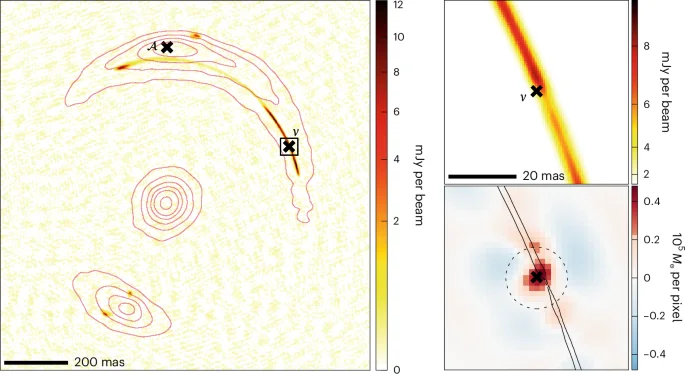
A detailed VLBI observation of the gravitational lens JVAS B1938+666 led to the detection of a compact, million-solar-mass object, likely a dark matter subhalo, using advanced gravitational imaging techniques and Bayesian inference, confirming the presence of small-scale structures in the lensing galaxy.


Scientists Investigate the Mysteries of Interstellar Object 3I/ATLAS

Originally Published 4 months ago — by Avi Loeb – Medium

Featured image for Scientists Investigate the Mysteries of Interstellar Object 3I/ATLAS
Source: Avi Loeb – Medium

The article discusses the challenges and potential methods for measuring the mass of the interstellar object 3I/ATLAS, focusing on its uncertain nucleus size, the use of the rocket equation, gravitational effects, and upcoming close approaches to planets like Mars and Jupiter to gather more data.

LHC Provides New Precise Measurement of Z Boson Mass

Originally Published 7 months ago — by Phys.org

Featured image for LHC Provides New Precise Measurement of Z Boson Mass
Source: Phys.org

The LHCb experiment at the LHC has achieved a highly precise measurement of the Z boson mass, finding it to be approximately 91.184 GeV with an uncertainty of 9.5 MeV, aligning with previous measurements and the Standard Model prediction, paving the way for future high-precision studies at the LHC and beyond.

"Advancements in Neutrino Mass Determination Bring New Insights to Physics"

Originally Published 1 year ago — by Livescience.com

Featured image for "Advancements in Neutrino Mass Determination Bring New Insights to Physics"
Source: Livescience.com

Physicists have made progress in measuring the mass of neutrinos, elusive particles that could challenge the Standard Model of particle physics. Neutrinos, which lack electrical charge and have almost no mass, are difficult to measure due to their elusive nature. The researchers used an experiment with unprecedented sensitivity to measure the upper limit of the neutrino's mass, providing a more precise estimate than previous experiments. This achievement could lead to new discoveries in physics and a deeper understanding of the universe.

"Quantifying the Ancient Quasar's Black Hole Mass Dynamics"

Originally Published 1 year ago — by Nature.com

Researchers from the European Southern Observatory and various other institutions have used the Very Large Telescope to measure the mass of a black hole in a quasar located 11 billion light-years away. This marks the furthest distance at which a black hole's mass has been directly measured. The study provides valuable insights into the early universe and the formation of massive black holes.

Unveiling the Universe's Parameters: The Higgs Boson's Mass Revealed

Originally Published 2 years ago — by IFLScience

Featured image for Unveiling the Universe's Parameters: The Higgs Boson's Mass Revealed
Source: IFLScience

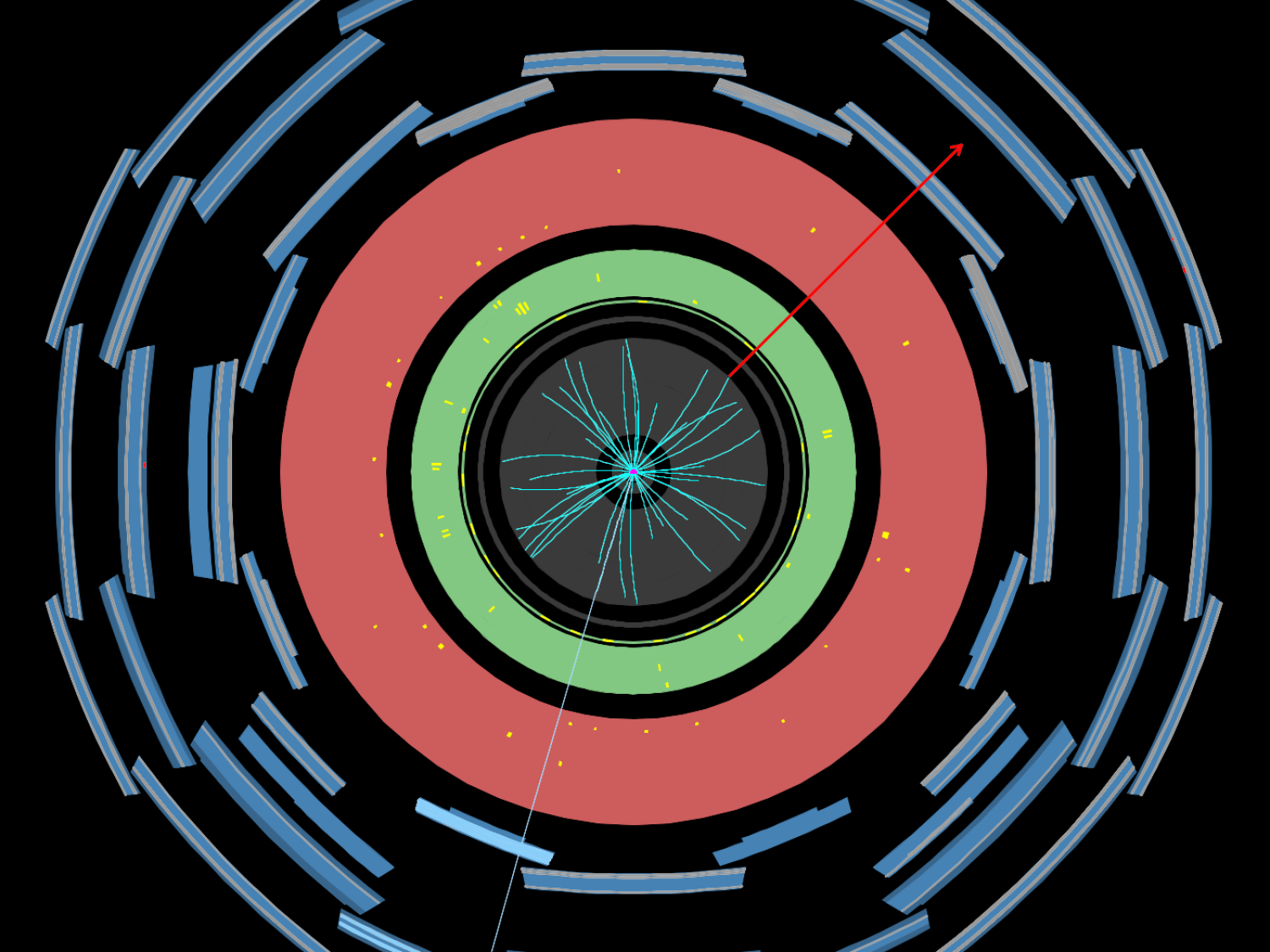
Physicists at CERN's ATLAS Collaboration have achieved the most precise measurement of the Higgs boson's mass to date, with an error of less than one part in one thousand. The Higgs boson's mass is a fundamental parameter that defines various aspects of the universe, and this precise measurement can enhance our understanding of particle interactions. The Higgs boson, discovered in 2012, was the last particle in the Standard Model to be found. The new measurement places its mass at 125.11 ± 0.11 GeV, near the middle of the previously estimated range. The Higgs boson's mass determines its interactions with other particles and plays a crucial role in shaping our understanding of physics.

Advancements in Higgs Boson Measurement: Unprecedented Precision and Rare Interactions Explored

Originally Published 2 years ago — by ScienceAlert

Featured image for Advancements in Higgs Boson Measurement: Unprecedented Precision and Rare Interactions Explored
Source: ScienceAlert

Physicists using the Large Hadron Collider have obtained the most precise measurement yet of the mass of the Higgs boson, the elusive particle that gives other fundamental particles their mass. The researchers combined several mass measurements based on the particle's decay with more precise calibrations, resulting in a Higgs boson mass of 125.11 gigaelectronvolts (GeV) with an uncertainty of 0.11 GeV. This measurement helps refine our understanding of the Higgs boson's properties and its interactions with other particles, while also providing an opportunity to test predictions of the Standard Model of Particle Physics and potentially detect deviations that could hint at new phenomena beyond our current understanding.

"Breakthrough Method Unveils Long-Sought Neutrino Measurement"

Originally Published 2 years ago — by ScienceAlert

Featured image for "Breakthrough Method Unveils Long-Sought Neutrino Measurement"
Source: ScienceAlert

Scientists have developed a new technique called Cyclotron Radiation Emission Spectroscopy (CRES) to measure the elusive mass of neutrinos. By analyzing tritium beta decays, the researchers hope to determine the weight of neutrinos by observing the effects of accompanying particles. Neutrino mass is crucial in various fields of physics, and this breakthrough could provide insights into the composition of the early Universe. While there are technical challenges to overcome, CRES has the potential to scale and revolutionize mass measurement in particle physics.

Cracking the Neutrino Code: Project 8 Nears the Truth

Originally Published 2 years ago — by SciTechDaily

Featured image for Cracking the Neutrino Code: Project 8 Nears the Truth
Source: SciTechDaily

Researchers from Project 8 are using Cyclotron Radiation Emission Spectroscopy (CRES) to track and record beta decay events in their quest to measure the elusive neutrino's mass. By measuring the energy of the electrons generated during beta decay, the researchers can determine the missing energy, which corresponds to the neutrino's mass. Project 8's innovative approach, which relies on scaling up the CRES technique, has the potential to provide valuable insights into the role of neutrinos in the early evolution of the universe.

ATLAS Achieves Unprecedented Precision in Measuring Higgs Boson's Mass

Originally Published 2 years ago — by CERN

Featured image for ATLAS Achieves Unprecedented Precision in Measuring Higgs Boson's Mass
Source: CERN

The ATLAS experiment at CERN has achieved a record precision in measuring the mass of the Higgs boson, reaching an unprecedented level of 0.09%. The Higgs boson's mass is a fundamental parameter that governs its interactions with other particles and is crucial for testing the predictions of the Standard Model. The new measurement combines data from the diphoton channel and the four-lepton channel, resulting in a mass of 125.11 GeV with a precision of 0.09%. The achievement is attributed to advanced calibration techniques and improvements in photon energy measurements.

Precision Mass Measurement of Quasar's Galaxy Using Gravitational Lensing

Originally Published 2 years ago — by Phys.org

Featured image for Precision Mass Measurement of Quasar's Galaxy Using Gravitational Lensing
Source: Phys.org

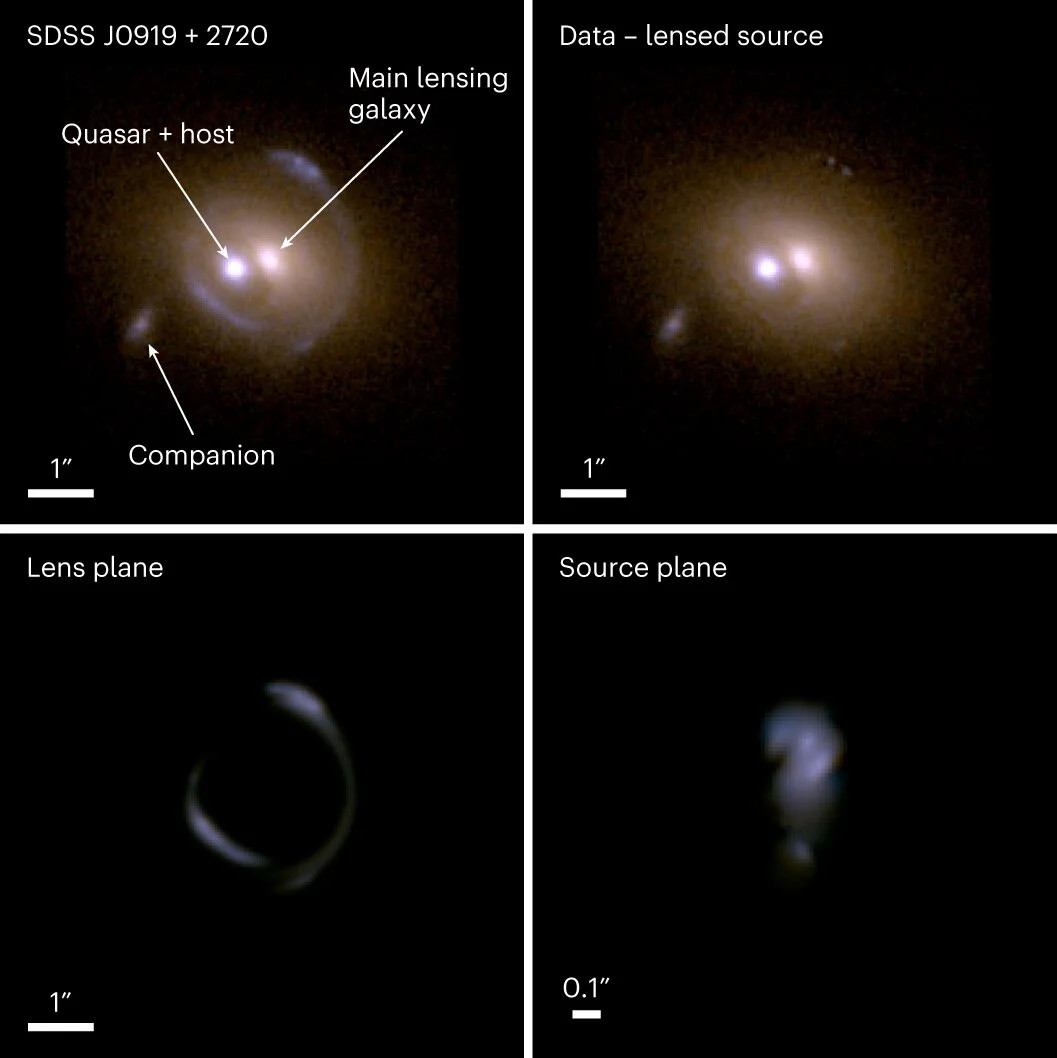
Researchers from EPFL have used gravitational lensing to determine the mass of a galaxy containing a quasar with unprecedented precision, providing insight into the evolution of galaxies in the early universe. Gravitational lensing allows us to compute the mass of the lensing object, and by combining it with quasars, researchers can measure the mass of a quasar's host galaxy. The Sloan Digital Sky Survey database was used to search for gravitational lensing quasars candidates, and the recent development of a wavelet-based lens modeling technique helped determine the mass of the objects.

ATLAS Study Provides Insight into W Boson Mass

Originally Published 2 years ago — by ATLAS Experiment at CERN

Featured image for ATLAS Study Provides Insight into W Boson Mass
Source: ATLAS Experiment at CERN

The ATLAS Collaboration at CERN has released a new preliminary result of its W-boson mass measurement, finding it to be 80360 MeV with an uncertainty of just 16 MeV, in agreement with the Standard Model. The measurement was made by fitting the kinematic distributions of the decay leptons in simulation to the data, with improved statistical methods and refinements in the treatment of the data reducing the uncertainty of the mass measurement by more than 15%. Future measurements of the W-boson mass are expected by other LHC experiments.