Tag

Expansion Of The Universe

All articles tagged with #expansion of the universe

"Applying Thermodynamics to Explain the Universe's Expansion"

Originally Published 1 year ago — by Phys.org

Featured image for "Applying Thermodynamics to Explain the Universe's Expansion"
Source: Phys.org

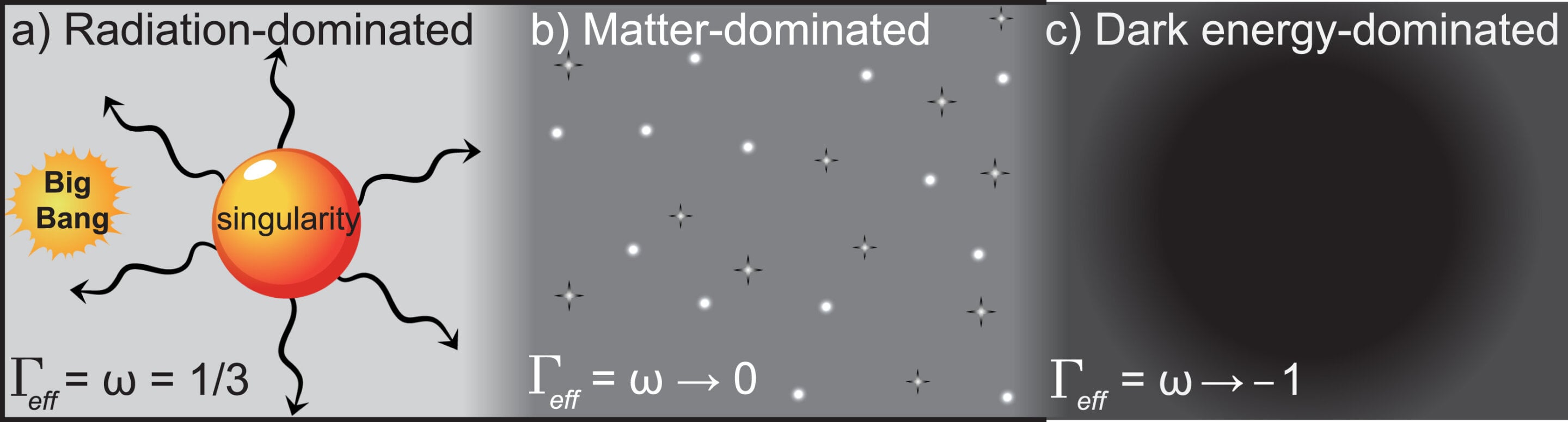
A study published in Results in Physics uses the Grüneisen parameter from thermodynamics to describe the expansion of the universe, suggesting that the accelerating expansion is adiabatic and anisotropic. The research proposes that the Grüneisen parameter is time-dependent in the dark energy-dominated era and could lead to a novel interpretation of the expansion of the universe in terms of thermodynamics and condensed matter physics. The study also explores the relationship between the expansion of the universe and fundamental concepts in thermodynamics, offering a new perspective on the dynamics associated with the universe's expansion.
Unseen Force Draws Our Galaxy Towards the Great Attractor

Originally Published 2 years ago — by IFLScience

Featured image for Unseen Force Draws Our Galaxy Towards the Great Attractor
Source: IFLScience

Astronomers have discovered that our galaxy, along with 400 other galaxies, is being pulled towards something called the Great Attractor, which is located beyond the "Zone of Avoidance" in the sky. This unseen force is believed to be a massive object that exerts gravitational influence on the galaxies in our local area of the universe. However, the expansion of the universe will eventually cause us to separate from the Great Attractor and other superclusters.

Is our galaxy trapped in an empty void?

Originally Published 2 years ago — by indy100

Featured image for Is our galaxy trapped in an empty void?
Source: indy100

Scientists from Germany, Scotland, and the Czech Republic propose that our galaxy may be situated in a region of space with relatively little matter, resembling an "air bubble in a cake." This hypothesis arises from discrepancies in the Hubble-Lemaitre constant, which measures the distance and speed at which galaxies move away from each other. The researchers suggest that a local "under-density" or void in the universe could explain these deviations, challenging the standard model of cosmology. They propose a modified theory of gravity called "modified Newtonian dynamics" (MOND) to account for the existence of such bubbles. If true, this theory would resolve the Hubble tension and potentially reshape our understanding of the universe's expansion.

"Perfectly Paired Black Holes: Unveiling the Expanding Universe's Astonishing Phenomenon"

Originally Published 2 years ago — by Phys.org

Featured image for "Perfectly Paired Black Holes: Unveiling the Expanding Universe's Astonishing Phenomenon"
Source: Phys.org

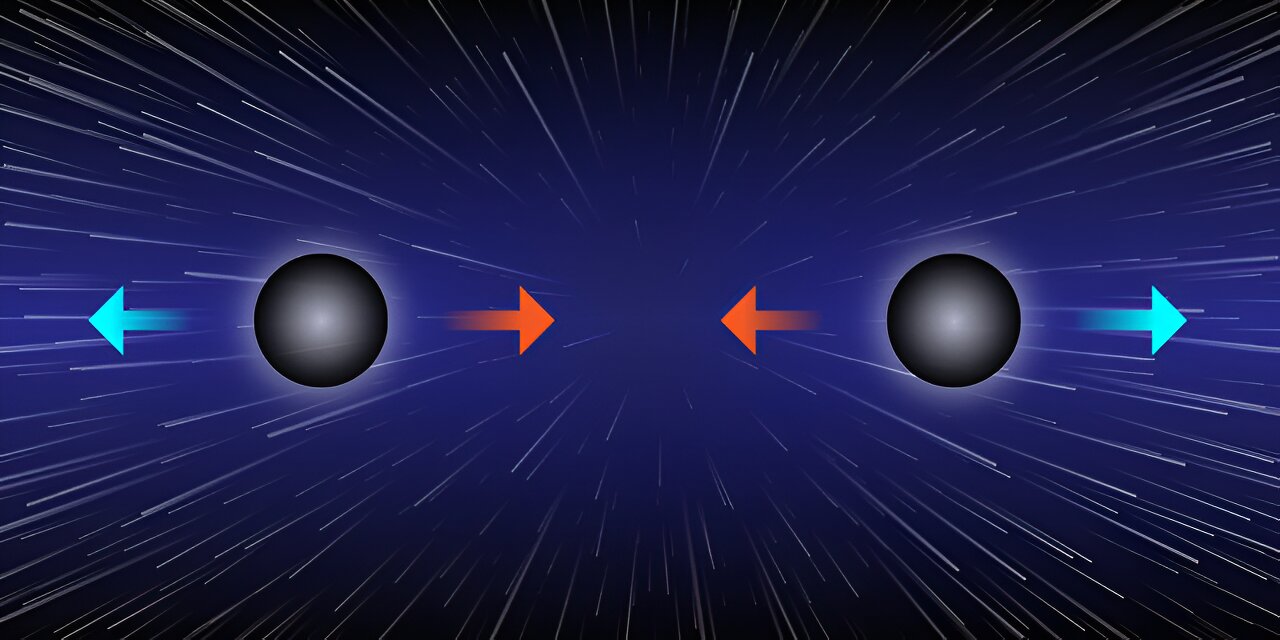
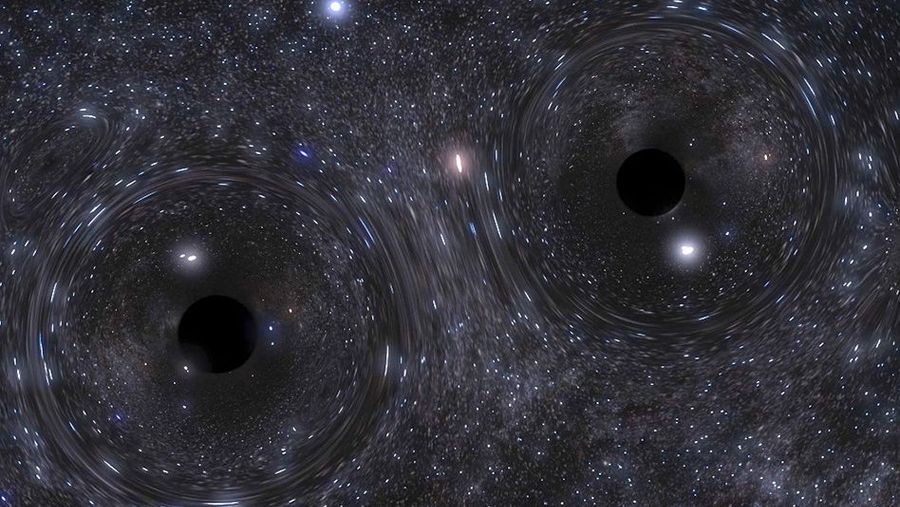
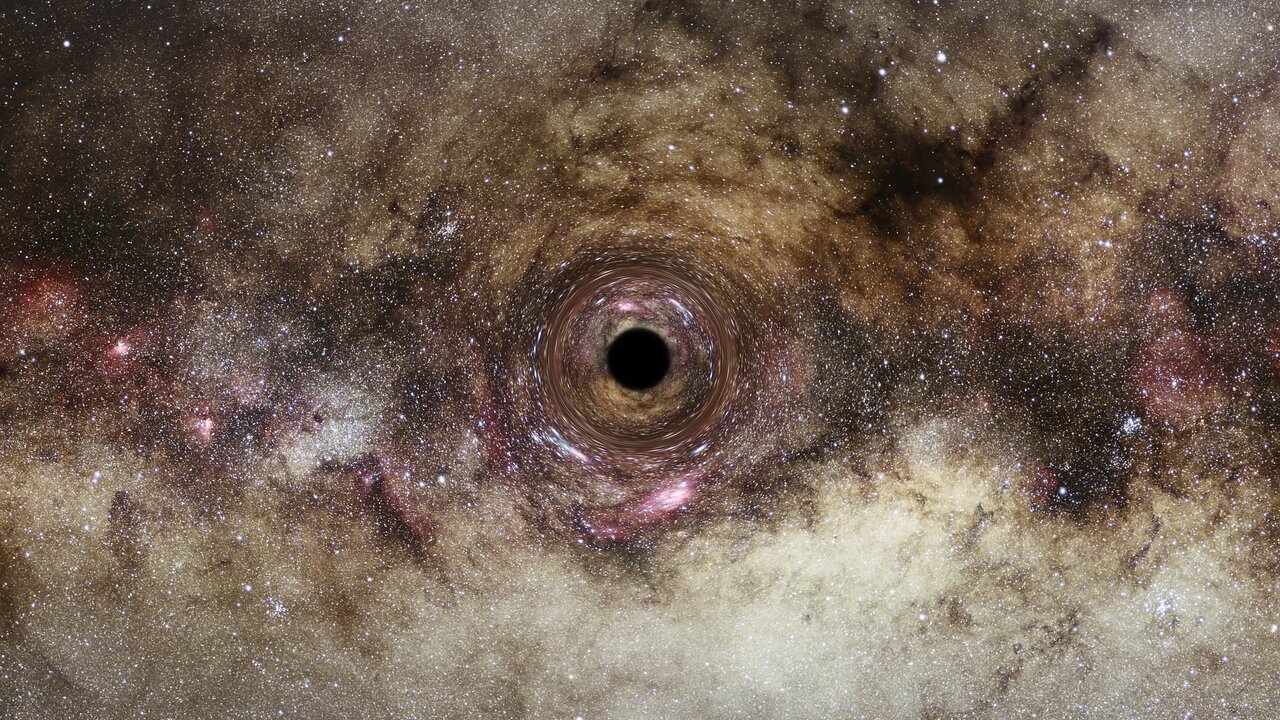
Researchers have proposed that black holes could exist in perfectly balanced pairs, held in equilibrium by a cosmological force in an ever-expanding universe. This theory challenges conventional ideas about black holes and suggests that pairs of black holes could masquerade as a single black hole when viewed from a distance. The study shows that two static black holes can exist in equilibrium, with their gravitational attraction offset by the expansion associated with a cosmological constant. The findings open up possibilities for further exploration of black hole dynamics in an accelerating universe.

"Dark Energy: Enabling Perfect Pairings of Black Holes in Binary Systems"

Originally Published 2 years ago — by Space.com

Featured image for "Dark Energy: Enabling Perfect Pairings of Black Holes in Binary Systems"
Source: Space.com

Binary black holes may be more stable than previously thought, thanks to the action of dark energy. The expansion of the universe caused by dark energy helps black holes in binary pairs maintain a safe distance from each other. As black holes move, they create gravitational waves that carry angular momentum away from the system, causing the black holes to spiral together and eventually collide. However, the researchers found that two non-rotating black holes could exist in equilibrium, with the gravitational attraction between them counteracted by expansion. This means that from a distance, a pair of black holes would look like a single black hole. The researchers believe their solution could also apply to rotating black holes and more complex black hole systems.

Neutron Star Collisions Shed Light on Universe's Expansion

Originally Published 2 years ago — by SciTechDaily

Featured image for Neutron Star Collisions Shed Light on Universe's Expansion
Source: SciTechDaily

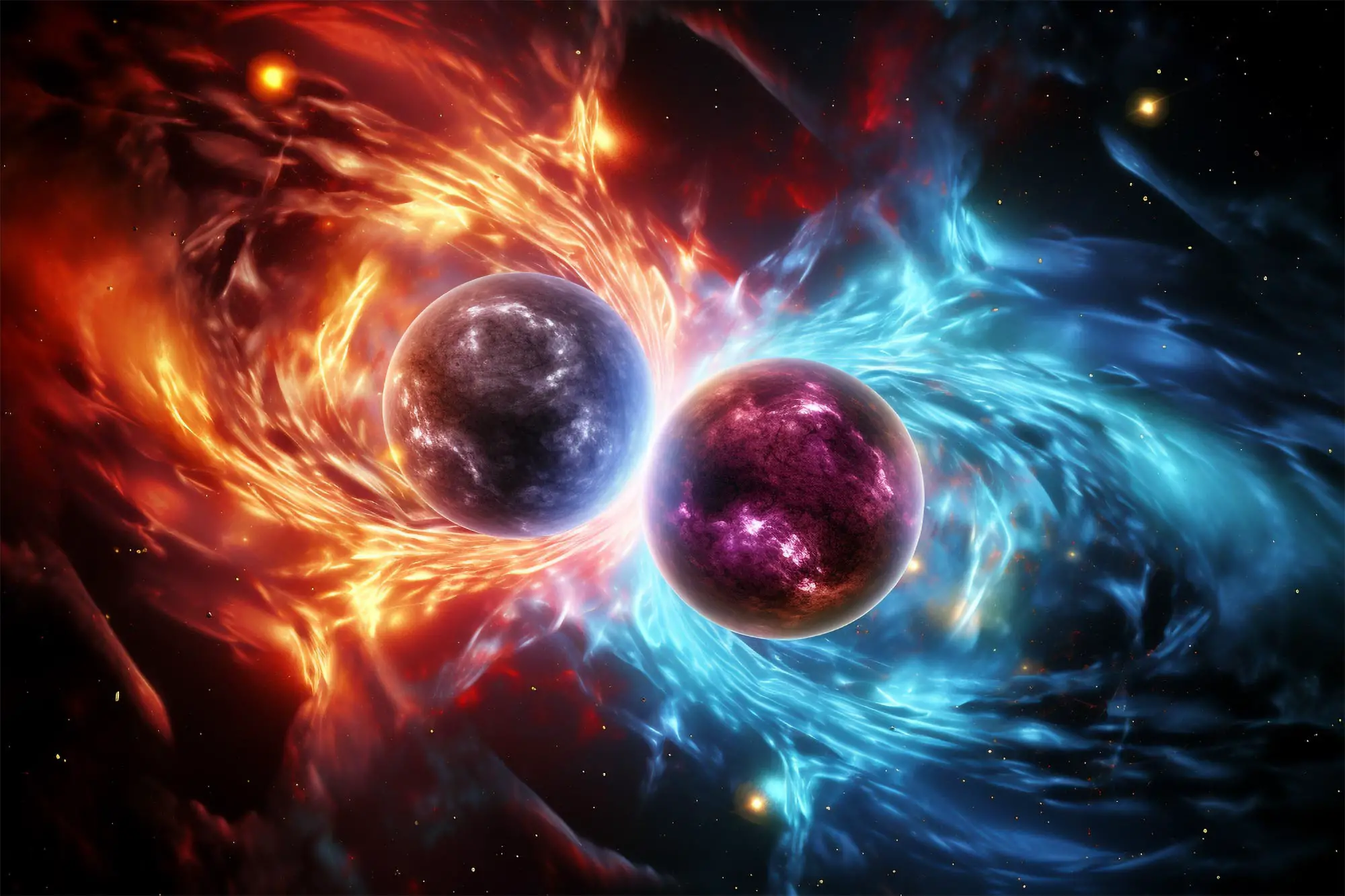
Astrophysicists from the Niels Bohr Institute propose using kilonovae, explosions from merging neutron stars, as a novel method to address discrepancies in measuring the expansion rate of the universe. The current methods, using supernovae and analyzing cosmic background radiation, yield slightly different results. By studying the symmetry and simplicity of kilonovae, researchers can calculate the distance to galaxies containing them, providing an independent method for measuring distances. Preliminary findings show promising results, but more examples are needed for validation.

"Neutron Star Collisions: A Key to Measuring Universe Expansion"

Originally Published 2 years ago — by Universe Today

Featured image for "Neutron Star Collisions: A Key to Measuring Universe Expansion"
Source: Universe Today

Astrophysicists from the Niels Bohr Institute have proposed a novel method for measuring the expansion of the universe by observing colliding neutron stars, known as kilonovae. The researchers argue that this method can help resolve the discrepancy between measurements of the Hubble Constant obtained through supernovae and the Cosmic Microwave Background (CMB). By measuring the distance to kilonovae and comparing their luminosity to the light received on Earth, astronomers can calculate the Hubble Constant without the need for calibration or correction factors. While more examples are needed to establish a robust result, this method shows promise in providing consistent measurements of cosmic expansion.

Unveiling the Universe's Expansion Rate through Symmetrical Star Explosions and Colliding Neutron Stars

Originally Published 2 years ago — by Livescience.com

Featured image for Unveiling the Universe's Expansion Rate through Symmetrical Star Explosions and Colliding Neutron Stars
Source: Livescience.com

Scientists propose that the collision and merger of neutron stars, resulting in a kilonova explosion, could provide a third method to determine the expansion rate of the universe, known as the Hubble constant. The symmetrical nature of kilonovas contradicts previous models and allows for precise calculations of their luminosity. By comparing the brightness of kilonovas at the point of explosion to the amount of light that reaches Earth, scientists can measure the distance to galaxies hosting kilonovas and determine cosmic distances. This method offers advantages over supernova-based measurements, which can be less consistent. Further research is needed to establish this method as a robust way to determine the Hubble constant.

Explosions from dead stars unveil universe's expansion rate

Originally Published 2 years ago — by Yahoo Life

Featured image for Explosions from dead stars unveil universe's expansion rate
Source: Yahoo Life

Scientists propose using the collision and merger of neutron stars, known as kilonovas, as a third method to determine the Hubble constant and resolve the discrepancy between supernova and cosmic microwave background measurements. The symmetrical and spherical nature of kilonovas allows for precise calculations of their luminosity, which can be used to determine the distance to galaxies hosting these explosions. This method bypasses uncertainties associated with supernova measurements and provides a "clean" system to study cosmic distances, although more examples are needed to establish a robust result.

"Neutron Star Collisions: A Novel Method for Measuring Universe Expansion"

Originally Published 2 years ago — by Phys.org

Featured image for "Neutron Star Collisions: A Novel Method for Measuring Universe Expansion"
Source: Phys.org

Astrophysicists from the Niels Bohr Institute propose a novel method to measure the expansion of the universe by studying colliding neutron stars. By analyzing the symmetry and simplicity of the resulting kilonovae explosions, researchers can calculate the distance to galaxies containing kilonovae, providing an independent method to determine distances. This new approach may help resolve the discrepancy between the two primary methods currently used to measure the expansion of the universe, known as the Hubble constant. However, more examples are needed to establish a robust result.

"James Webb Telescope Unveils Ancient Supernova and Massive Quiescent Galaxy, Unraveling Cosmic Enigmas"

Originally Published 2 years ago — by Livescience.com

Featured image for "James Webb Telescope Unveils Ancient Supernova and Massive Quiescent Galaxy, Unraveling Cosmic Enigmas"
Source: Livescience.com

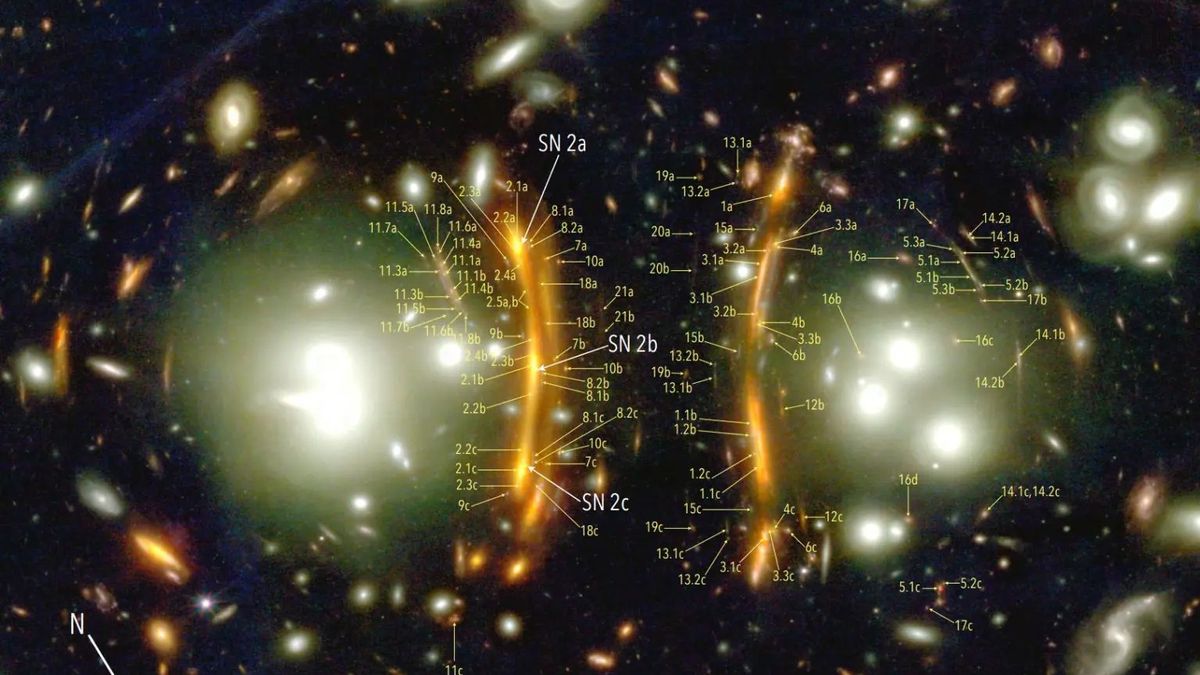
The James Webb Space Telescope has captured images of a rare, warped supernova named SN H0pe, which appears three times due to gravitational lensing. This supernova, located 16 billion light-years away, could help solve the Hubble tension, a discrepancy between two methods of estimating the rate of the universe's expansion. SN H0pe is a type 1a supernova, known as a "standard candle," which allows astronomers to measure the universe's expansion. By studying more distant standard candles, researchers hope to finally resolve the Hubble tension.

"Rare Supernova Unveiled Through Einstein's Theory and Cosmic Magnifying Glasses"

Originally Published 2 years ago — by Livescience.com

Featured image for "Rare Supernova Unveiled Through Einstein's Theory and Cosmic Magnifying Glasses"
Source: Livescience.com

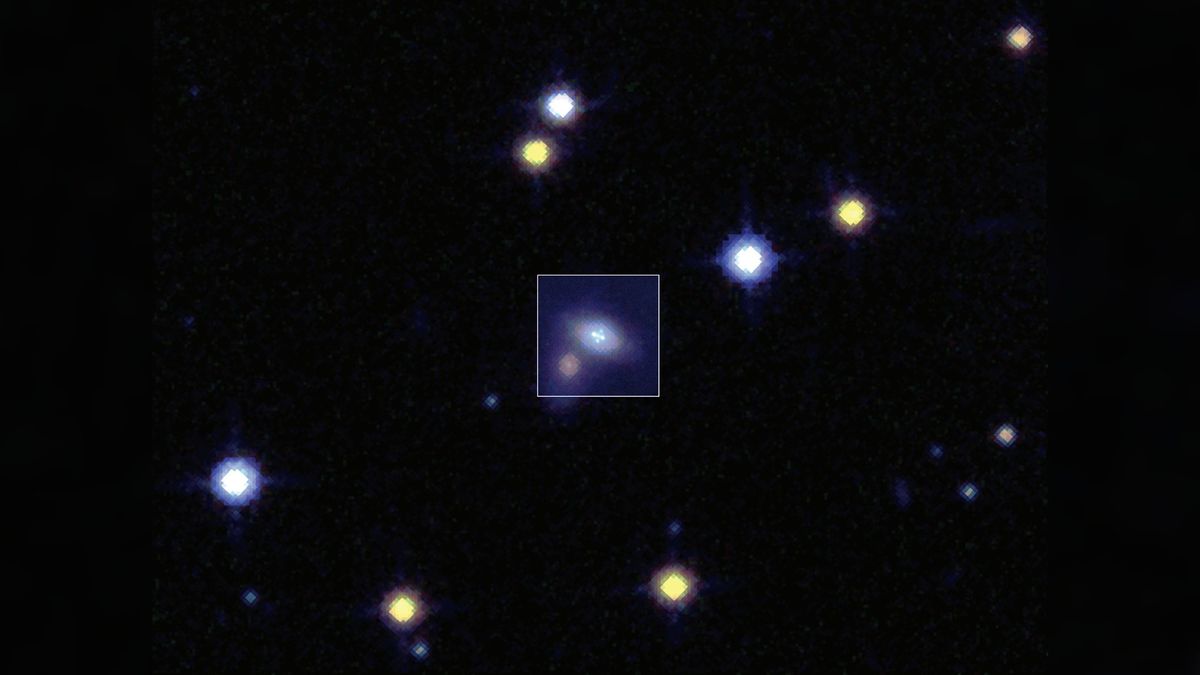
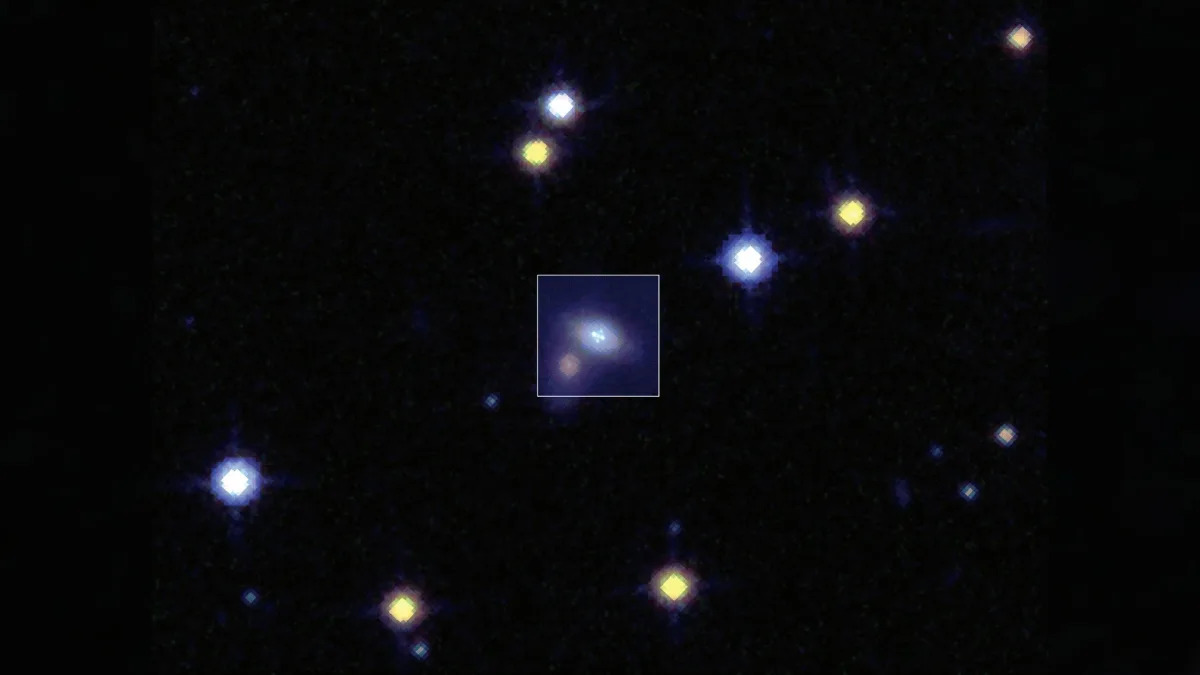
The light of a supernova, known as SN Zwicky, was magnified by a distant galaxy's gravitational lens, revealing details about stellar explosions, an unseen population of galaxies, and the expansion of the universe. The supernova was split into four images, with two being brighter than expected due to microlensing effects. The lensed supernova will provide a new data point in efforts to chart the expansion of the universe. The discovery paves the way to find more rare lensed supernovas in future big surveys, such as the Vera C. Rubin Observatory.

"Rare Supernova Unveiled Through Einstein's Theory and Cosmic Magnifying Glasses"

Originally Published 2 years ago — by Yahoo Life

Featured image for "Rare Supernova Unveiled Through Einstein's Theory and Cosmic Magnifying Glasses"
Source: Yahoo Life

The light of a rare type Ia supernova, SN Zwicky, was magnified by up to 25 times by the gravitational lensing of a distant galaxy, revealing details about the explosion and an unseen population of galaxies. The lensing also split the supernova into four images, with two appearing brighter than expected due to microlensing events. SN Zwicky belongs to a class of supernovas called "standard candles," which can be used to determine distance in space and chart the expansion of the universe. The discovery paves the way for finding more rare lensed supernovas in future surveys by the Vera C. Rubin Observatory.

Rare Quadruply Lensed Supernova Discovered with Cosmic Magnifying Glass.

Originally Published 2 years ago — by Space.com

Featured image for Rare Quadruply Lensed Supernova Discovered with Cosmic Magnifying Glass.
Source: Space.com

The Zwicky Transient Facility (ZTF) at Palomar Observatory has discovered a rare, quadruply-lensed supernova, known as SN Zwicky, which was magnified by a distant galaxy's gravitational lens. The lens split the supernova into four images, revealing clues about the distribution of masses of stars in the core of the lensing galaxy. The lensed supernova will also provide a new and important data point in efforts to chart the expansion of the universe through measurements of its brightness and luminosity. The next few years will see the beginning of work by the Vera C. Rubin Observatory in Chile, which is tasked with scanning the entire sky in high-resolution multiple times each night, searching for anything that goes bump in the dark, including lensed supernovas and their faint lensing galaxies.

Unraveling the Mystery of the Big Bang's Survival Against Black Hole Collapse.

Originally Published 2 years ago — by Universe Today

Featured image for Unraveling the Mystery of the Big Bang's Survival Against Black Hole Collapse.
Source: Universe Today

The early universe didn't collapse into a black hole because there was nothing to collapse into. To make a black hole, you need a difference in density from place to place. Even though the early universe was incredibly dense, it was also incredibly uniform. The expansion of the universe in its early days prevented all the matter from collapsing.